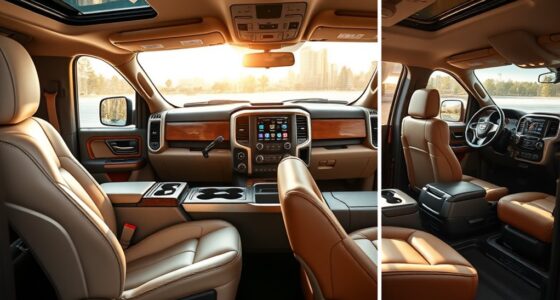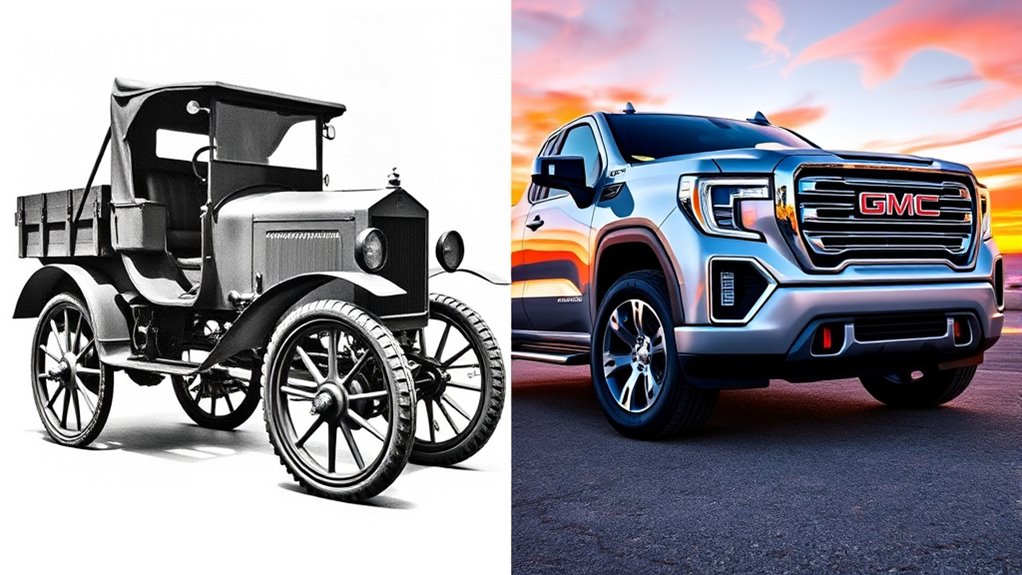

GMC trucks started as rugged, reliable workhorses built during wartime and quickly gained a reputation for durability. Over the years, they evolved with sleek designs, innovative platforms, and shared components that made them stronger and more versatile. Today, GMC combines toughness with luxury and advanced tech, appealing to drivers seeking both performance and style. To discover how these trucks transformed from basic work machines into premium vehicles, explore further details.
Key Takeaways
- GMC originated in 1900, initially focusing on durable gasoline trucks and supporting military logistics during WWI.
- Mid-century models combined rugged utility with sleek, modern designs, highlighting innovations like jetpod grilles and independent suspension.
- The company adopted platform sharing and advanced frame structures, enhancing durability, safety, and manufacturing efficiency.
- GMC evolved from basic work trucks to offering premium trims like Denali, integrating modern technology and luxury features.
- Modern GMC trucks balance toughness with style, featuring high-tech systems, superior comfort, and a distinctive premium brand identity.

Motor Max 2019 GMC Sierra 1500 Denali Crew Cab Pickup Truck, Black 79362BK – 1/27 Scale Diecast Model Toy Car,unisex-children
1/27 scale diecast model measuring 8x3x3 inches
As an affiliate, we earn on qualifying purchases.
As an affiliate, we earn on qualifying purchases.
The Beginnings: From Rapid Motor to GMC

The story of GMC trucks begins in 1900 with the Grabowsky Motor Company, founded by brothers Max and Morris Grabowsky in Detroit. You quickly realize that this small company aimed to build reliable gasoline-powered vehicles, focusing on trucks from the start. In 1902, they moved to Pontiac, Michigan, and renamed themselves the Rapid Motor Vehicle Company, signaling a shift toward commercial vehicles. When William C. Durant acquired Rapid in 1909, he saw the potential to expand into the burgeoning automotive industry. This purchase laid the groundwork for the GMC brand, as Durant integrated the company into General Motors. From this point, you see the origins of GMC as a brand dedicated to durable, gasoline-powered trucks, setting the stage for future innovations.

oEdRo Tri-Fold Truck Bed Soft Tonneau Cover Compatible with 2019-2026 Chevy Silverado 1500 / GMC Sierra 1500 New Body Style, Fleetside 5.8 Feet Bed w/o Multi-Flex Tailgate
PREFECT FIT: This truck tonneau cover is compatible with 2019 2020 2021 2022 2023 2024 2025 2026 Chevy…
As an affiliate, we earn on qualifying purchases.
As an affiliate, we earn on qualifying purchases.
Military Roots and Wartime Expansion
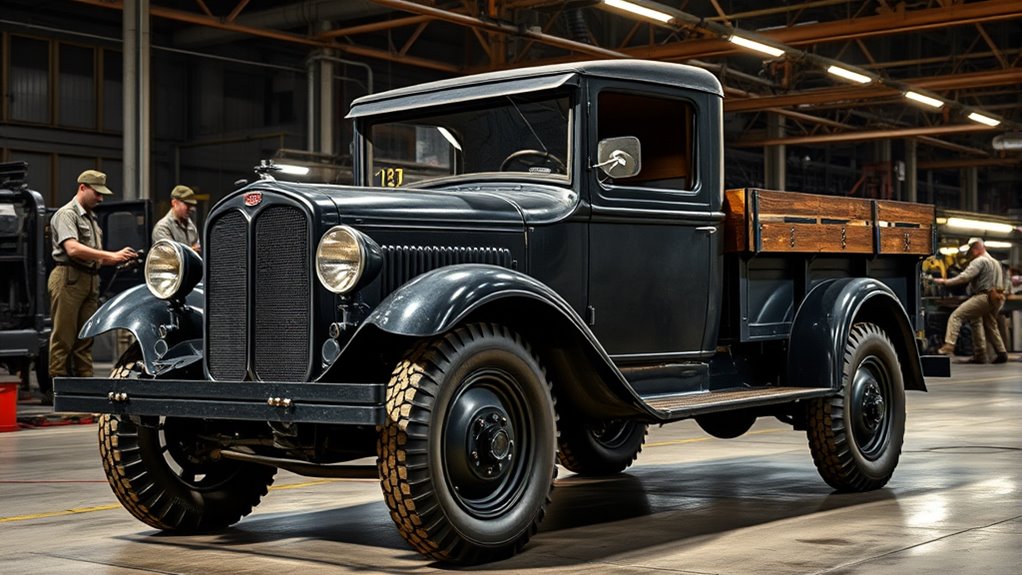
During World War I and the post-war years, GMC trucks played a crucial role in military logistics and transportation. In 1916, your GMC truck crossed the country from Seattle to New York in just thirty days, demonstrating its reliability. By 1918, over 90% of GMC’s production was dedicated to the war effort, delivering more than 8,500 trucks to the U.S. government. The Model 16 3/4-ton truck and modified troop carriers supported military operations worldwide. These trucks proved essential for transporting troops, equipment, and supplies. Their durability and performance established GMC’s reputation as a dependable military vehicle manufacturer. This wartime expansion laid the foundation for GMC’s future as a leader in both commercial and military vehicle markets. Additionally, the innovations developed during this period contributed to advancements in vehicle durability, influencing future military and civilian truck designs. The technological improvements made during wartime also helped GMC adapt to changing market demands, ensuring its vehicles remained relevant in both military and civilian sectors. Furthermore, these innovations fostered the development of more versatile trucks, which could be adapted for various applications beyond military use.

Set of 4 (FOUR) Evoluxx Rotator A/T Truck/SUV All-Terrain Off-Road Radial Tires-275/60R20 275/60/20 275/60-20 115T Load Range SL 4-Ply OWL Outlined White Letters
Treadlife: 55,000 miles
As an affiliate, we earn on qualifying purchases.
As an affiliate, we earn on qualifying purchases.
Design Innovations and Mid-Century Milestones
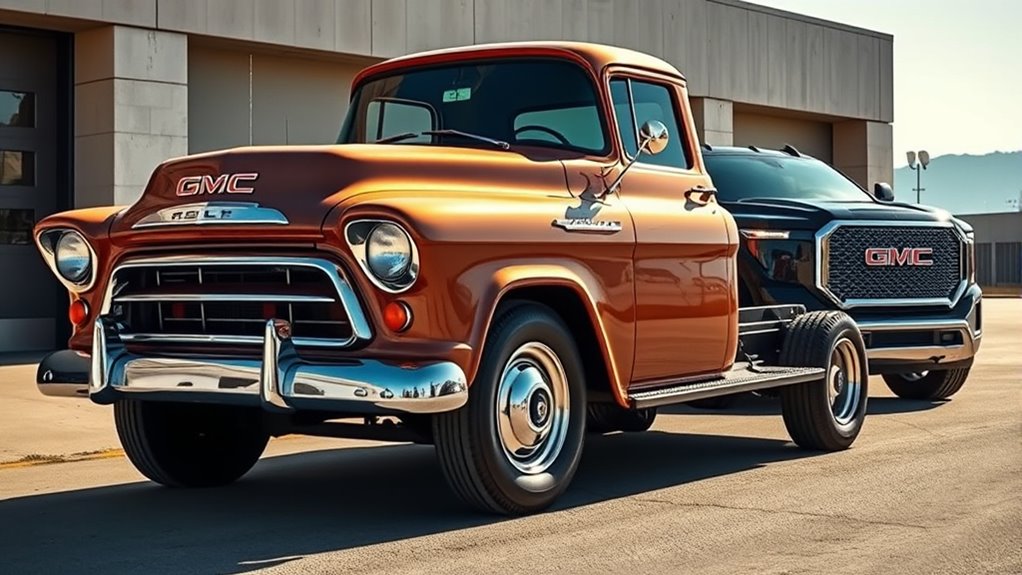
You’ll notice that GMC trucks introduced sleek styling elements like swooping fenders and sloping grilles during the 1940s, marking a shift toward more modern designs. Technological changes, such as independent front suspension and full-width hoods, transformed both the look and performance of these vehicles. These innovations set the stage for the bold, angular styles that would define mid-century GMC trucks. Additionally, safety features became more prominent as manufacturers focused on protecting drivers and passengers during this era, reflecting a broader industry trend toward automotive safety standards. This period also saw a focus on Free Floating design principles, which contributed to the aesthetic and functional evolution of GMC trucks. Moreover, the adoption of performance enhancements helped improve handling and durability, further cementing GMC’s reputation for reliability. Furthermore, manufacturing techniques evolved to support these design and safety innovations, ensuring better quality control and consistency.
Sleek Styling Elements
Have you ever noticed how GMC trucks evolved to combine rugged utility with sleek, eye-catching design? During the mid-century, GMC introduced bold styling elements that set their trucks apart. Features like swooping fenders and sloping grilles gave trucks a modern, streamlined look, moving away from boxy designs of earlier decades. The 1960 GMC 1000 half-pickup showcased a full-width hood, adding a sense of sophistication. Later, the introduction of jetpod grilles and pinched waist creases refined the trucks’ appearance, emphasizing style alongside strength. Independent front suspension improved handling, but the visual upgrades made GMC trucks stand out on the road. These design innovations helped GMC balance durability with a sleek, contemporary aesthetic, appealing to drivers seeking both rugged performance and eye-catching style. Incorporating design innovations, such as aerodynamic shapes and modern styling cues, further elevated GMC trucks’ visual appeal and set new industry standards.
Technological Design Shifts
Technological design shifts in GMC trucks marked a significant move toward integrating innovation with practicality. During the mid-20th century, GMC introduced key features that transformed truck aesthetics and performance. The 1940s saw swooping fenders and sloping grilles, giving trucks a more modern look. In 1960, the GMC 1000 half-pickup debuted with a full-width hood, signaling a shift toward bold, functional styling. The 1970s brought the first square-body designs, using computer simulation to refine components and improve durability. Innovations like wrap-around windshields, independent front suspension, and powerful Big Block engines enhanced both comfort and performance. These technological shifts laid the foundation for GMC’s evolution from utilitarian workhorses into vehicles that blend rugged capability with advanced design features. Additionally, the adoption of computer-aided design techniques revolutionized how trucks were engineered, enabling more precise and innovative features to meet consumer demands.
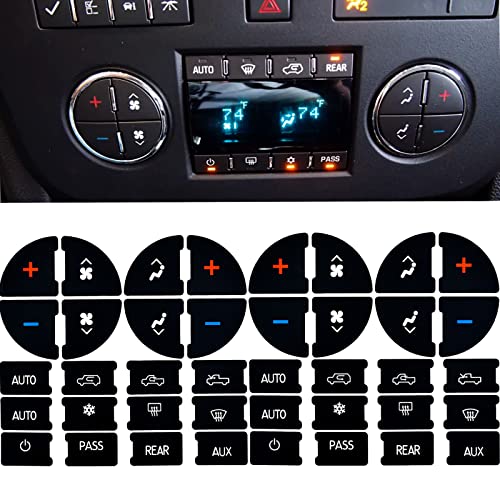
2 Packs AC Dash Button Repair Kit -Compatible with Chevy, Best for Fixing Ruined Faded A/C Control Buttons – Decal Replacement Fits Select 07-14 GM Vehicles – Car SUV Van Truck Accessories
As an affiliate, we earn on qualifying purchases.
As an affiliate, we earn on qualifying purchases.
The Rise of the C/K Series and Modern Platforms
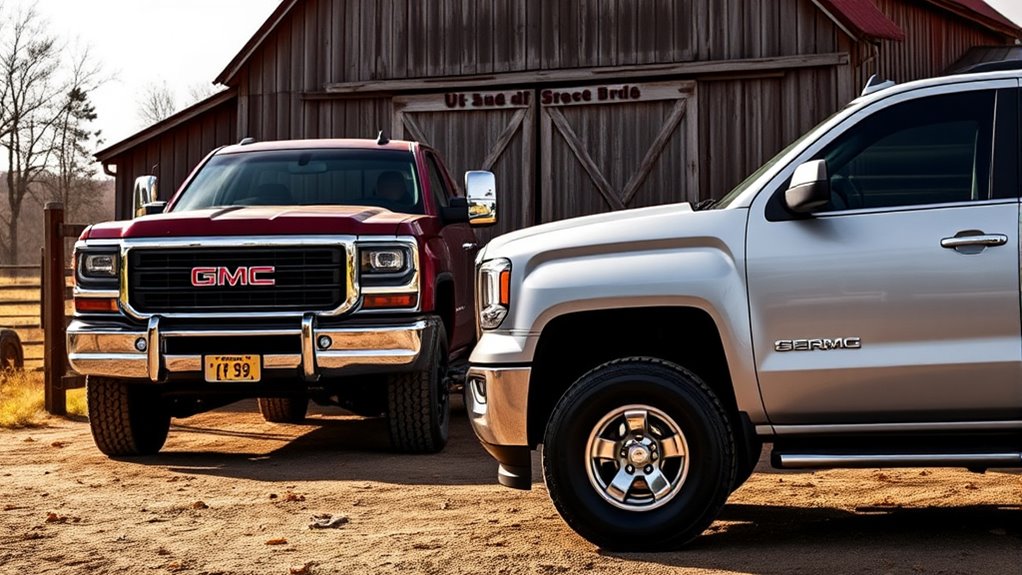
You’ll see how GMC revolutionized truck design with innovative frame structures and platform sharing strategies during the rise of the C/K series. These advancements allowed for better durability, versatility, and production efficiency. As we explore this period, you’ll understand how these engineering choices set the foundation for modern GMC trucks. Additionally, the adoption of return policies by retailers facilitated customer confidence and streamlined vehicle and parts exchanges during this era. Incorporating quality assessment techniques helped ensure that the trucks met higher standards of performance and longevity, further solidifying GMC’s reputation. Moreover, manufacturing practices such as proper piercing care and hygiene during assembly contributed significantly to the overall durability and trust in GMC’s engineering standards.
Innovative Frame Designs
The C/K series marked a significant breakthrough in truck frame design by introducing the drop-center ladder frame, which enhanced strength while reducing weight. This innovative design allowed for better load distribution and improved durability, making GMC trucks more reliable on tough jobs. The drop-center layout created a lower center of gravity, improving stability and handling. As technology advanced, GMC adopted unibody construction for specific models, integrating the frame and body for increased rigidity and safety. Modern platforms now emphasize high-strength steel and modular designs, enabling easier manufacturing and customization. These innovations have helped GMC maintain durability and performance standards, blending ruggedness with modern engineering. Today’s GMC trucks benefit from these foundational advancements, ensuring they meet both work demands and luxury expectations seamlessly.
Platform Sharing Strategies
Platform sharing became a key strategy for GMC during the rise of the C/K series, allowing you to maximize efficiency and consistency across your truck lineup. This approach enabled you to develop multiple models with shared components, reducing costs and streamlining production. Key aspects include:
- Utilizing the same ladder frame architecture across various trims and sizes, which simplified manufacturing and maintenance.
- Sharing powertrain options, such as the robust Chevrolet V8 engines, across different models for performance consistency.
- Implementing design elements like the wrap-around windshield and shared interior components, creating a cohesive brand identity.
- This platform sharing strategy also facilitated easier updates and modifications, ensuring GMC could quickly adapt to evolving market trends and technological advancements. Additionally, leveraging shared components helped maintain quality standards and simplified inventory management. Incorporating modular design principles further enhanced flexibility and customization options for different models. The use of common platforms allowed GMC to efficiently expand its lineup while controlling costs and maintaining brand integrity. This approach also supported cost reduction, enabling GMC to offer competitive pricing while maintaining high standards of quality.
This strategy allowed GMC to respond faster to market demands, improve quality control, and introduce innovative features seamlessly across models, establishing a strong foundation for both traditional and modern platforms.
The Rounded Line and Market Differentiation
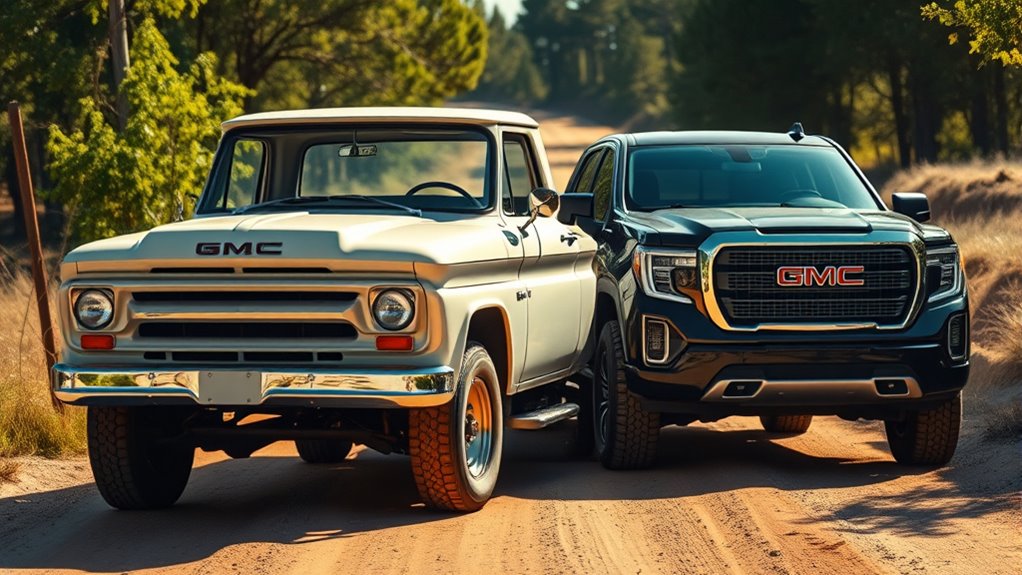
During the 1970s, GMC introduced the Rounded Line series trucks, marking a significant shift in the brand’s design and market positioning. These trucks featured smooth, rounded edges, contrasting sharply with the angular styles of earlier models. This design change helped GMC stand out from competitors and appealed to buyers seeking a more modern, distinctive look. The Rounded Line series became the standard for both GMC and Chevrolet trucks, lasting over thirty years. GMC used this platform to differentiate itself through marketing strategies targeting commercial buyers, emphasizing durability and versatility. While sharing platforms with Chevrolet, GMC maintained unique styling cues like grilles and engine options, reinforcing its image as a premium, professional-grade brand. This era solidified GMC’s identity as a manufacturer blending rugged utility with refined design. Additionally, the success of the Rounded Line contributed to establishing the brand’s reputation for market differentiation and catering to diverse customer needs. The design evolution also reflected broader industry trends toward modern aesthetics in truck manufacturing.
Transition to Luxury and Modern Advancements

As GMC shifted focus toward luxury and modern technology, the brand embraced premium features and refined design elements to appeal to a broader audience. You now experience innovations like:
- Advanced driver-assistance systems for safer driving
- High-quality interior materials and ergonomic layouts
- Cutting-edge infotainment with seamless smartphone integration
These enhancements elevate GMC trucks from reliable workhorses to sophisticated lifestyle vehicles. The introduction of Denali trim marked a turning point, emphasizing premium craftsmanship and upscale amenities. Modern advancements also include improved aerodynamics, fuel efficiency, and lightweight materials that boost performance. GMC’s focus on innovation ensures that you enjoy a blend of rugged durability and refined comfort, making every drive more enjoyable. Additionally, air quality features and cabin filtration systems contribute to a healthier driving environment. This transformation reflects GMC’s commitment to evolving with your needs, combining modern technology with timeless toughness.
Frequently Asked Questions
How Did Gmc’s Military Involvement Influence Its Civilian Truck Designs?
Your GMC truck’s military involvement profoundly shaped its civilian designs by introducing durable, reliable features like robust frames and powerful engines. During wartime, you benefit from innovations such as improved suspension and enhanced capacity, which later made civilian models more versatile and tough. These military-grade advancements ensured your GMC trucks could handle tough conditions, blending military durability with everyday utility and leading to more resilient, capable civilian trucks.
What Were the Key Technological Advancements in GMC Trucks During the 1970S?
You’ll be surprised by GMC’s 1970s innovations that transformed its trucks. The introduction of the third-generation C/K series in 1972 brought a bold, sharp design using computer simulation, revolutionizing testing and development. This era also saw powerful engines like the 454-cubic-inch Big Block Chevrolet V8 and new features like independent front suspension, elevating performance and comfort. These advancements set the stage for GMC’s modern reputation.
How Did the GMC Denali Trim Redefine Luxury in Trucks?
You see, the GMC Denali trim redefines luxury by offering premium features like refined interiors, advanced technology, and exclusive styling elements. It elevates your driving experience with high-quality materials, modern comforts, and sophisticated details that set it apart from standard trucks. With Denali, you get a blend of rugged utility and upscale elegance, making it ideal for those who want both performance and a touch of luxury in their vehicle.
What Role Did Computer Simulation Play in Gmc’s 1972 Redesign?
You’re curious about GMC’s 1972 redesign, and computer simulation played a pivotal part. It allowed you to precisely test components and optimize the overall design, ensuring a safer, sleeker, and more sophisticated truck. This technological triumph helped GMC shift from rounded lines to sharp, angular styles, saving time and costs. By embracing this innovative instrument, GMC substantially sharpened its style and strengthened its stance in the competitive truck market.
How Has GMC Maintained Brand Differentiation From Chevrolet Over the Years?
You see, GMC has kept its distinct identity from Chevrolet by emphasizing premium features, unique styling, and targeted marketing strategies. You notice GMC offers upscale trims like Denali, focusing on luxury and refinement, unlike Chevrolet’s more economy-oriented approach. They also differentiate through exclusive design details, performance options, and branding efforts that highlight GMC’s reputation for durability combined with sophistication, making it stand out as a premium choice in the truck market.
Conclusion
Now, you’ve traveled through GMC’s incredible journey, transforming from humble workhorses into the kings of luxury on wheels. It’s like witnessing a miracle—trucks that once just hauled loads now turn heads with sleek designs and high-end features. GMC has truly defied expectations, proving that even the toughest trucks can become the most luxurious, glamorous machines on the road. Next time you see one, remember—you’re looking at a legend reborn, more powerful and stylish than ever before!