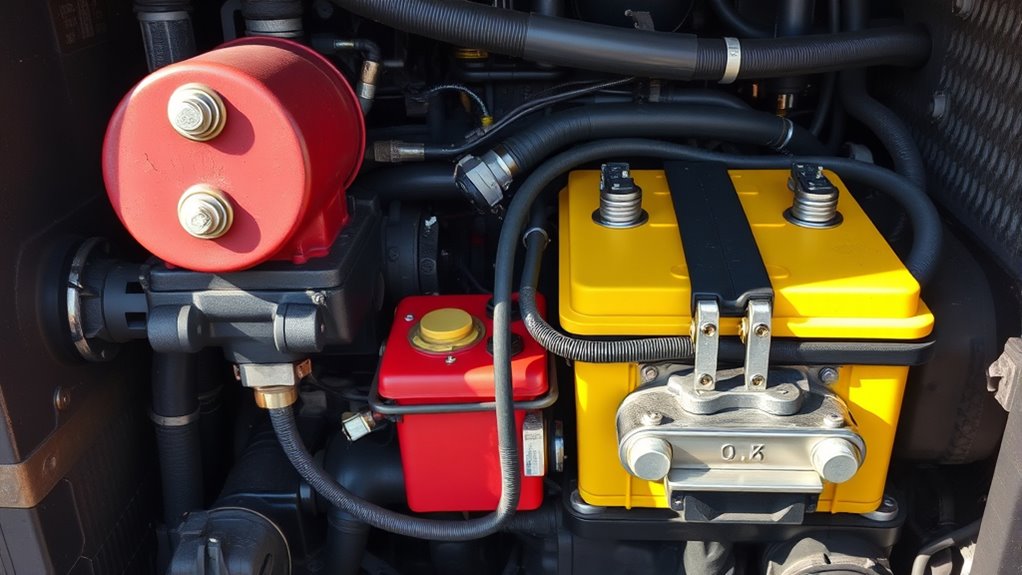
You’ll notice some trucks have two batteries because diesel engines need more cranking power to start reliably, especially in cold weather. Dual batteries provide extra electrical capacity, helping the engine turn over smoothly and powering heavy accessories without draining the system. They also offer redundancy, reducing the risk of being stranded due to a dead battery. If you want to understand how dual batteries support tough driving conditions, keep exploring this topic further.
Key Takeaways
- Diesel engines require higher cranking power and stronger electrical boosts for reliable starting, especially in cold weather.
- Dual batteries provide redundancy, ensuring the truck can start even if one battery fails.
- Heavy electrical loads from glow plugs, heaters, and accessories demand additional power sources.
- Having two batteries prevents electrical drain from affecting engine start and supports aftermarket electronics.
- Dual batteries enhance overall reliability, performance, and longevity of diesel trucks in demanding conditions.

VEVOR Split Charge Relay Kit, 6mtr 12V, Automatic Dual Battery Isolator Kit with 140AMP Voltage Sense Relay VSR, Compatible with RV Marine Car Vehicle Truck Caravan Camper Yacht ATV UTV Boats Workshop
Dual Battery Isolator: The smart battery isolator cuts in at 13.3 volts and cuts out at 12.8 volts…
As an affiliate, we earn on qualifying purchases.
As an affiliate, we earn on qualifying purchases.
The Needs of Diesel Engines and Electrical Demands

Diesel engines require more cranking power than gasoline engines because they operate at higher compression ratios. This means you need a stronger electrical boost to turn over the engine, especially in cold weather. Two batteries provide the extra cranking amps necessary for reliable starts, even in extreme conditions. Heavy-duty trucks often have larger electrical loads, like glow plugs, block heaters, and additional accessories, which demand more power. Dual batteries help meet these peak electrical demands without stressing a single battery. They ensure a consistent power supply, reducing the risk of a failed start. By sharing the load, these batteries make sure your engine fires up smoothly every time, regardless of temperature or electrical system demands. Additionally, the capacity for high electrical loads in diesel trucks makes dual batteries an essential feature for maintaining reliable operation.

Dual Battery Isolator Kit Heavy Duty 300 AMP 1000 AMP Peak Voltage Sensitive Relay VSR for 12 Volt Systems – Works with All Batteries Types Including Lithium and LiFePO4
Do you have more than 150 amp hour capacity of auxiliary battery? Do you need even MORE power…
As an affiliate, we earn on qualifying purchases.
As an affiliate, we earn on qualifying purchases.
Benefits of Dual Batteries in Heavy-Duty Truck Applications
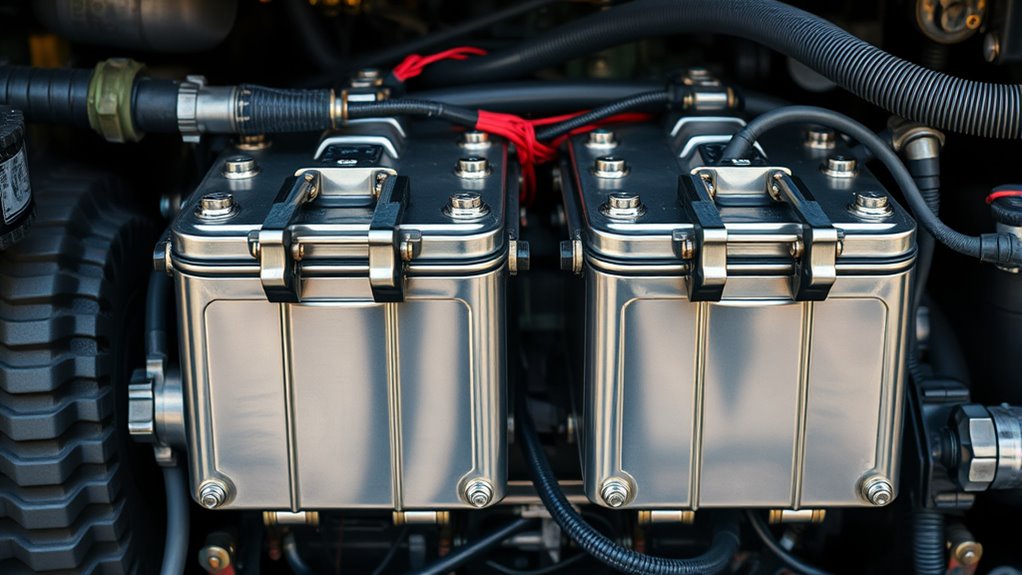
Dual batteries in heavy-duty trucks offer essential benefits for reliable operation and performance. They guarantee your engine starts smoothly, even in extreme cold or tough conditions, by providing the high cranking amps needed for diesel engines. This redundancy reduces the risk of being stranded due to a dead battery, giving you peace of mind on long trips or remote jobsites. Additionally, dual batteries support heavy electrical loads from accessories, aftermarket electronics, and auxiliary systems, preventing power drain from affecting engine start-up. Isolating the batteries protects the cranking power, ensuring you can always start reliably. Plus, having a backup power source helps extend battery life and maintains consistent operation under demanding conditions, making dual batteries a practical and crucial feature for heavy-duty truck applications.

Dual Battery Isolator Kit 12V – 140 Amp Multi-voltage 12v or 24v Kit (VSR) for Dual Battery Setup – Automatic Disconnect Switch for Car, Truck, RV, UTV, ATV, Marine – Battery Wiring Kit
Advanced Dual Battery Isolator Multi-voltage 12v or 24v – Designed for superior performance, this dual battery kit ensures…
As an affiliate, we earn on qualifying purchases.
As an affiliate, we earn on qualifying purchases.
Frequently Asked Questions
Can I Upgrade My Single Battery to Dual Batteries Easily?
Yes, you can upgrade your single battery to dual batteries, but you’ll need to make some modifications. You should install an appropriate battery tray, wiring, and an isolator or relay system to manage the batteries properly. confirm your alternator can handle charging both batteries. It’s best to consult your truck’s manual or a professional to ensure compatibility and proper installation, preventing electrical issues and ensuring reliable performance.
Do Dual Batteries Increase Fuel Consumption?
Like a well-tuned orchestra, dual batteries keep your truck running smoothly, but they don’t directly increase fuel consumption. Instead, they support your vehicle’s electrical demands, especially in cold weather or with heavy accessories. You might use slightly more energy to charge both batteries, but your engine’s fuel efficiency remains largely unchanged. Proper maintenance guarantees peak performance without sacrificing fuel economy, letting you focus on the road ahead.
How Often Should I Check or Replace Dual Batteries?
You should check your dual batteries at least every three to six months, especially if you’re frequently using your truck in harsh conditions. Look for signs like slow cranking, corrosion, or low voltage. Replace them if they’re more than three to five years old or show significant wear. Regular maintenance guarantees reliable starts, prevents breakdowns, and keeps your electrical system running smoothly.
Are Dual Batteries Necessary for Gas-Powered Trucks?
Dual batteries aren’t usually necessary for gas-powered trucks, unless you have heavy electrical accessories or frequently operate in extreme cold. Gas engines have lower compression ratios and require less cranking power, so a single battery often suffices. However, if you added multiple electronics or work in harsh environments, dual batteries can improve reliability and guarantee your truck starts reliably every time.
Can Dual Batteries Improve Overall Vehicle Lifespan?
Yes, dual batteries can improve your vehicle’s lifespan. By distributing electrical loads, they reduce strain on each battery, preventing premature wear. If one battery weakens, the other still provides power, minimizing stress on your electrical system. Plus, they help guarantee reliable starts in cold weather or heavy-duty use, which keeps your engine running smoothly longer. Proper maintenance and balanced usage are key to maximizing their lifespan benefits.

OPTIMA Batteries High Performance 34/78 RedTop Sealed AGM Car, Truck, and SUV Starting Battery, 800 CCA, Dual SAE and GM Terminals, Maintenance Free, Versitile Mounting
BATTERY SPECS: 12-Volt, 800 Cold Cranking Amps, Size: 10.06" Long x 6.94" Wide x 7.88" Tall, Weight: 38.8…
As an affiliate, we earn on qualifying purchases.
As an affiliate, we earn on qualifying purchases.
Conclusion
By adding a second battery, you boost your truck’s reliability, especially in cold starts or when running multiple accessories. Did you know that heavy-duty trucks with dual batteries can deliver up to 30% more cranking power? This extra juice guarantees your diesel engine fires up smoothly every time, even in the harshest conditions. So, if you want your truck to perform reliably and avoid unexpected stalls, dual batteries are a smart upgrade worth considering.