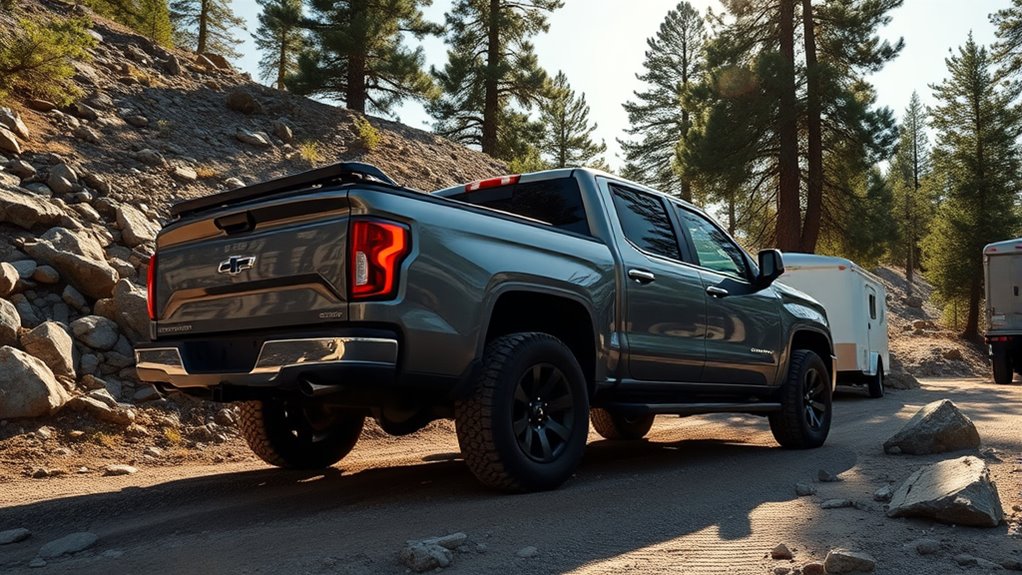

You should use Tow/Haul mode when you’re towing heavy trailers, hauling large loads, or driving on steep inclines and declines. It helps improve control, reduces brake wear, and prevents overheating by adjusting transmission shift points and enhancing engine braking. This mode is ideal for challenging terrain or long-distance highway hauling. If you want to maximize safety, efficiency, and vehicle longevity, it’s worth understanding how and when to activate Tow/Haul properly.
Key Takeaways
- Use Tow/Haul Mode when towing heavy loads or hauling large trailers for better control and engine performance.
- Activate it before driving on steep inclines or declines to enhance engine braking and reduce brake wear.
- Engage Tow/Haul during long-distance highway hauling to maintain engine RPM and prevent overheating.
- Avoid using it during light loads or normal city driving to prevent unnecessary fuel consumption and rough shifts.
- Turn off Tow/Haul once heavy towing or hauling is completed to optimize fuel efficiency and comfort.
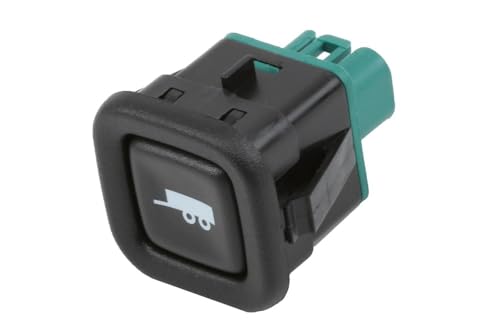
GM Genuine Parts 15860532 Automatic Transmission Tow/Haul Switch
Some GM Genuine Parts may have formerly appeared as ACDelco GM Original Equipment (OE)
As an affiliate, we earn on qualifying purchases.
As an affiliate, we earn on qualifying purchases.
Towing Heavy Trailers and Large Loads
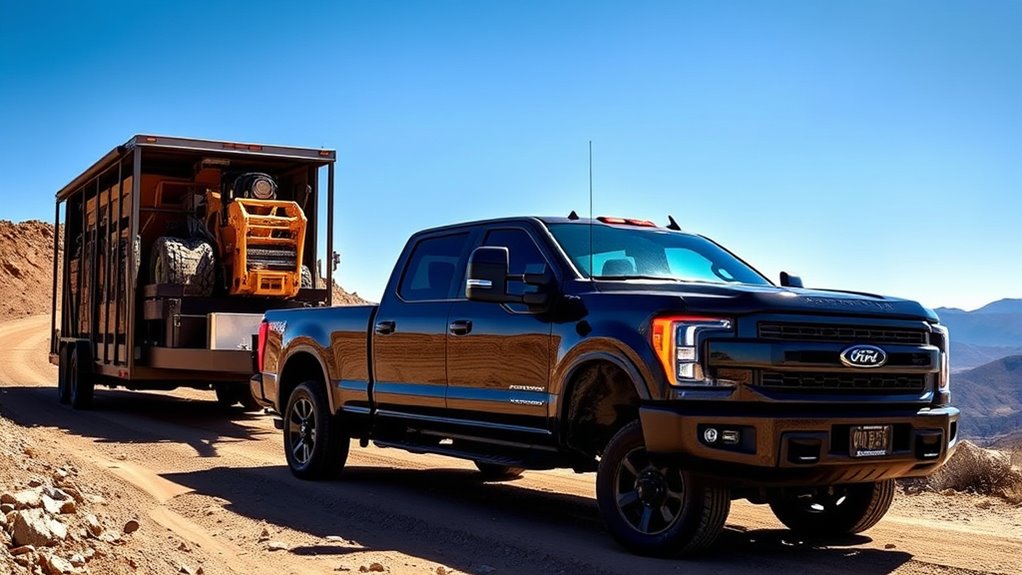
Are you towing heavy trailers or large loads? In these situations, Tow/Haul mode is your best ally. It adjusts your transmission shift points to keep the engine in its essential power range, giving you more torque when hauling substantial weight. This means later upshifts and earlier downshifts, guaranteeing your truck responds quickly and maintains power. The mode also increases engine RPM without speeding up your vehicle, helping you climb hills or accelerate smoothly. Plus, it enhances engine braking, which is vital for controlling your load on descents and reducing brake wear. Using Tow/Haul mode during heavy towing ensures your transmission stays cooler, reduces shift cycling, and provides a safer, more controlled driving experience. It’s specifically designed for handling large, demanding loads with confidence. High-performance transmission settings optimize how your truck behaves under stress, making towing safer and more efficient.

KJE Heavy Duty Car Trailer Tie Down Straps 4 Pack Kit – 2" x 8' Ratchet Straps + J-Hooks with Clip, 2" x 36'' Axle Straps – 10,000lbs Break Strength – Use for Car, Truck, UTV Transport
2023 NEW STYLE PROFESSIONAL TRAILER STRAP – Used for Car, Truck, UTV Transportation.
As an affiliate, we earn on qualifying purchases.
As an affiliate, we earn on qualifying purchases.
Navigating Steep Inclines and Declines

When tackling steep inclines and declines, using Tow/Haul mode helps improve engine braking and control your speed. This reduces the reliance on your brakes, preventing overheating and excessive wear. Properly managing these terrain changes keeps you safer and helps preserve your truck’s braking system. Additionally, utilizing energy-efficient cloud servers can support real-time monitoring and navigation systems to optimize your driving strategy during challenging terrains.
Improved Engine Braking
Traversing steep inclines and declines can challenge your truck’s braking system, but engaging Tow/Haul mode considerably enhances engine braking to maintain control. When you activate Tow/Haul, your transmission shifts to lower gears earlier on descents, increasing engine RPMs and creating more resistance against the vehicle’s momentum. This added engine braking reduces reliance on your brake pedal, preventing overheating and brake fade during long downhill stretches. With better control of speed, you can descend safely at a steady pace without frequent brake application. Tow/Haul mode also stabilizes transmission heat, helping prevent damage caused by prolonged heavy braking. Additionally, modern kitchen technology offers innovative solutions for vehicle safety features that further support controlled driving in challenging conditions. Overall, it offers a safer, more efficient way to manage downhill driving, giving you confidence and control over your truck’s braking performance.
Controlled Speed Management
Controlling steep inclines and declines requires precise speed regulation to guarantee safety and vehicle stability. When driving downhill, use engine braking provided by Tow/Haul mode to maintain a steady speed without overusing your brakes. This mode downshifts early, increasing engine RPM and helping slow the vehicle naturally. On steep ascents, it keeps the engine in its ideal power range, preventing sluggishness and gear hunting. By managing transmission shift points, Tow/Haul mode helps you maintain consistent speed on challenging terrain. It also stabilizes your vehicle’s momentum, reducing the risk of sudden acceleration or deceleration. This controlled speed management enhances safety, minimizes brake wear, and keeps your truck stable, especially when towing or carrying heavy loads on steep inclines or declines.
Reduced Brake Wear
Using Tow/Haul mode considerably reduces brake wear when maneuvering steep inclines and declines by relying on engine braking instead of your brake system. When descending a hill, the mode shifts the transmission into lower gears, increasing engine RPM and providing natural resistance. This process slows your vehicle without applying constant brake pressure, preventing overheating and brake fade. On steep inclines, Tow/Haul mode keeps the transmission in a higher torque range, helping you maintain consistent speed without excessive brake use. By managing engine braking effectively, it minimizes the stress on your brake components, prolonging their lifespan. Additionally, proper transmission use can enhance fuel efficiency during towing. This not only enhances safety but also reduces the need for frequent brake repairs, making your towing experience smoother and more controlled on challenging terrain.

Tekonsha 8507120 Brakeman IV, Time-Delay Brake Controller For Trailers with 1-4 Axles, Compatible with Ford, GM, Chevy, Dodge, RAM, Toyota, Jeep. Wiring harness sold separately.
TIME-DELAYED DIGITAL BRAKE CONTROLLER: Applies braking power that ramps up, or increases over a period of time, at…
As an affiliate, we earn on qualifying purchases.
As an affiliate, we earn on qualifying purchases.
Driving in Stop-And-Go Traffic With a Heavy Load
When you’re stuck in stop-and-go traffic with a heavy load, engaging Tow/Haul mode can improve your transmission response and overall control. It keeps engine power steady and reduces gear hunting, making your drive smoother and safer. Using this mode helps you maintain better control and protect your vehicle during frequent stops. Additionally, understanding backup power options for your vehicle can ensure safety during unexpected outages or emergencies.
Improved Transmission Response
Driving in stop-and-go traffic with a heavy load can challenge your truck’s transmission, often causing frequent gear shifts and sluggish response. Tow/Haul mode adjusts shift points, keeping the engine in its ideal power range. This results in quicker, smoother gear changes, reducing lag during acceleration or deceleration. It also minimizes gear hunting, which can cause unnecessary wear.
Here’s how Tow/Haul mode enhances response:
| Benefit | How It Works | Impact |
|---|---|---|
| Faster Shifts | Alters shift points for quicker gear changes | Smoother acceleration and deceleration |
| Reduced Gear Hunting | Limits unnecessary gear cycling | Less wear and more consistent response |
| Maintains Power | Keeps engine RPM within prime range | Better torque delivery under load |
| Improved Control | Manages transmission heat and shifts | Increased responsiveness and safety |
Enhanced Control and Safety
In stop-and-go traffic with a heavy load, maintaining control and safety becomes more challenging. Using Tow/Haul mode helps you stay in control by optimizing transmission shift points, reducing gear hunting, and providing steadier power delivery. It keeps the engine in its ideal RPM range, ensuring smooth acceleration and deceleration, which minimizes sudden movements that could cause trailer sway or loss of control. Additionally, engine braking is enhanced, helping you slow down safely on hills without overusing your brakes. This reduces brake wear and prevents overheating, especially on long stops or descents. Properly activating Tow/Haul mode can also improve fuel efficiency by optimizing engine performance under load. Overall, Tow/Haul mode offers better stability and responsiveness, giving you confidence in tight traffic conditions with a heavy load while safeguarding your vehicle and other road users.

TRANSGO Automatic Transmission Shift Kit, SHIFT KIT, Valve Body Repair Kit, Valve/Shim/Spacers/Springs, GM 4L60E, Kit
increased durability while providing short smooth shifts as well as a more efficient TCC apply
As an affiliate, we earn on qualifying purchases.
As an affiliate, we earn on qualifying purchases.
Long-Distance Highway Hauling
Long-distance highway hauling demands consistent power and stability, especially when carrying heavy loads over long stretches. Using Tow/Haul mode helps maintain ideal engine RPMs, ensuring steady torque delivery without constant shifting. It keeps the transmission in the right gear range, reducing gear hunting and improving fuel efficiency. With increased engine braking, Tow/Haul mode helps control vehicle speed downhill, minimizing brake wear and overheating. It stabilizes transmission temperature, protecting your drivetrain during prolonged towing. This mode also enhances throttle response, making it easier to accelerate smoothly and maintain steady speed on inclines. Additionally, thermal behavior management in Tow/Haul mode helps prevent overheating of critical components during extended use. Overall, Tow/Haul mode offers better control, reduces mechanical stress, and boosts safety during long-distance highway hauling, making it an essential feature when you’re towing heavy loads for extended periods.
When Not to Use Tow/Haul Mode
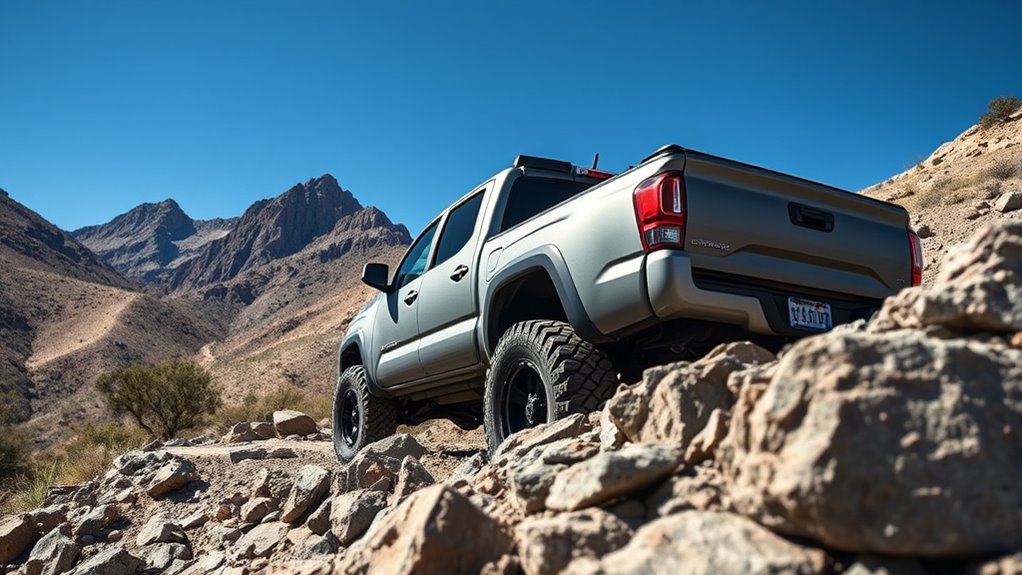
While Tow/Haul mode is highly beneficial for heavy towing and hauling, there are situations where it’s best to avoid activating it. If you’re driving with light loads or just normal daily traffic, using Tow/Haul can cause unnecessary engine RPMs and reduce fuel efficiency. In icy or slippery conditions, the increased engine braking might cause rear-wheel traction loss, making your vehicle harder to control. Also, if you’re not towing or hauling anything significant, activating Tow/Haul may lead to rougher shifts and a less comfortable ride. Some vehicles lock out overdrive gears in Tow/Haul mode, which can result in higher engine speeds and more noise. For everyday driving, sticking to normal mode helps improve fuel economy and provides smoother handling. Additionally, choosing the correct driving mode can help optimize your vehicle’s performance and longevity during different driving conditions.
Activating and Managing Tow/Haul Mode Effectively
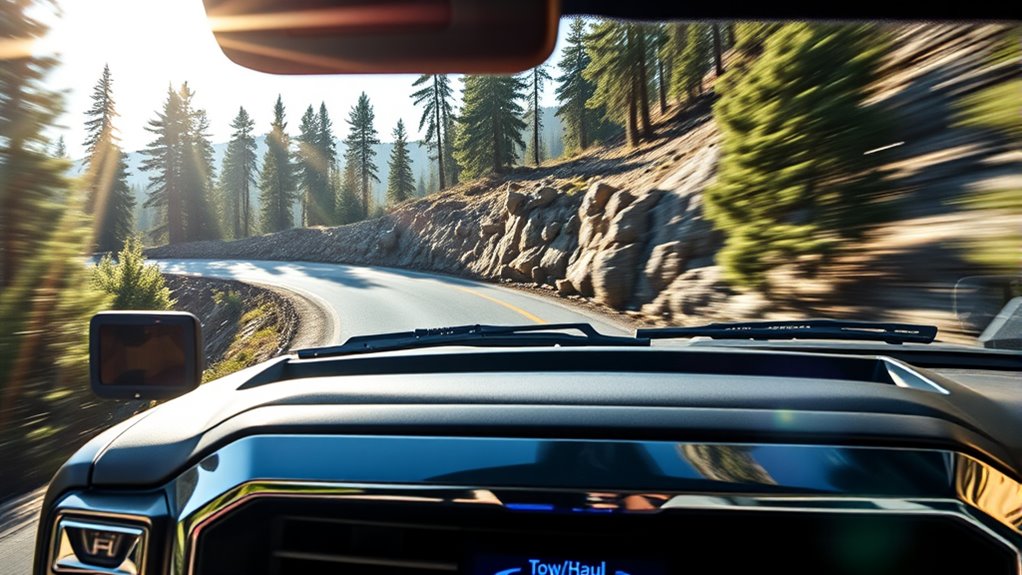
Activating Tow/Haul mode is straightforward and designed for quick engagement when you need it most. Usually, you’ll find a dedicated button on your dashboard or console—press it before starting your trip or when you begin towing. For peak performance, activate Tow/Haul mode early, especially before climbing hills or hauling heavy loads, so the transmission can adapt to the increased demands. During towing, monitor how your truck responds; if it shifts more smoothly and feels more controlled, you’re managing it well. Remember, you can turn it off when you’re done with heavy loads to improve fuel economy. Always consult your owner’s manual for specific instructions, as activation procedures and features may vary by vehicle. Proper management ensures you get the most benefit safely and efficiently.
Frequently Asked Questions
Can I Use Tow/Haul Mode for Everyday City Driving?
You can use tow/haul mode for everyday city driving, but it’s not ideal. This mode increases engine RPMs, alters shift points, and provides more torque, which can lead to higher fuel consumption and potentially faster wear on your transmission. Unless you’re hauling a heavy load or driving on steep terrain, it’s better to turn it off for normal city driving to save fuel and reduce unnecessary strain on your vehicle.
Does Tow/Haul Mode Improve Fuel Efficiency?
While Tow/Haul mode can seem like a helpful tool, it doesn’t really boost fuel efficiency. Instead, it alters shift points and engine behavior to handle heavy loads better, which often leads to higher RPMs and increased fuel consumption. If you’re aiming to save fuel during regular driving, it’s better to keep this mode off. Use it only when towing or hauling heavy loads for maximum performance and safety.
Is Tow/Haul Mode Suitable for Icy or Slippery Roads?
No, tow/haul mode isn’t suitable for icy or slippery roads. It increases engine braking and throttle response, which can cause rear-wheel traction loss and reduce stability on slick surfaces. You might lose control or have difficulty maintaining traction. It’s best to turn it off in these conditions, drive more cautiously, and rely on gentle acceleration and braking to stay safe. Always prioritize safety over towing features on icy roads.
How Does Tow/Haul Mode Affect Transmission Lifespan?
Using tow/haul mode can extend your transmission’s lifespan by reducing unnecessary shifting and mechanical stress. It stabilizes transmission temperature, prevents overheating, and minimizes wear caused by frequent gear changes. When you activate it during heavy towing or hauling, you help maintain ideal engine and transmission performance. However, avoid using it for light loads or regular driving, as it can cause extra wear and decrease fuel efficiency over time.
Can Tow/Haul Mode Be Used With Manual Transmissions?
You can’t use Tow/Haul mode with a manual transmission, and that’s essential to know. This mode is designed specifically for automatic transmissions, where it alters shift points for better control under heavy loads. If you’re driving a manual, you’ll need to manually adjust your driving style—using lower gears and careful throttle control—since the truck won’t automatically optimize for towing. Ignoring this could lead to transmission stress or damage.
Conclusion
Knowing when to switch on tow/haul mode transforms your trek into a safer, smoother sail. By boosting brake response, balancing the load, and easing engine effort, tow/haul mode turns tough tasks into trouble-free trips. Use it wisely during heavy hauling, hilly hurdles, and hectic highway hours. Remember, resisting the rush and recognizing when not to activate it keeps your journey joyful and just right. Mastering tow/haul mode maximizes your truck’s potential and your peace of mind.