
By 2025, expect the trucking industry to see rapid growth in electric and autonomous vehicles, driven by stricter emissions and safety regulations. Electric trucks will dominate more fleets, supported by new tech and infrastructure investments. Autonomous systems will improve safety and efficiency, while industry consolidation and private fleets grow. If you want insights on how these shifts will shape logistics and opportunities, there’s much more to explore ahead.
Key Takeaways
- Electric trucks will significantly increase market share, driven by stricter emissions standards and technological advancements.
- Autonomous driving and AI integration will enhance safety, efficiency, and reduce operational costs.
- Industry consolidation and private fleet growth will reshape market dynamics and competitiveness.
- Stricter safety and emissions regulations will lead to higher compliance costs but foster innovation.
- Expansion of charging infrastructure and regulatory incentives will accelerate electric truck adoption worldwide.
The Expanding Global Market and Regional Growth Drivers
The global trucking market is experiencing significant growth driven by regional factors and increasing demand for freight transportation. You’ll notice Asia-Pacific expanding rapidly due to rising manufacturing and consumer markets, while Europe accelerates its shift to zero-emission trucks fueled by strict regulations. The U.S. remains a major player, with steady growth supported by e-commerce and infrastructure investments. Emerging markets in Latin America and Africa show promising potential as economies develop and freight needs rise. Overall, the market size is projected to reach $2.2 trillion by 2025 and continue expanding toward $3.4 trillion by 2030. This growth is driven not only by rising freight volumes but also by regional initiatives, economic recovery, and technological advancements making trucking more efficient and sustainable across different parts of the world. Additionally, European cloud innovation supports the development of sustainable logistics solutions, further enhancing regional competitiveness and environmental goals.
Regulatory Shifts Accelerating Zero-Emission Vehicle Adoption

Regulatory changes are pushing you to adopt zero-emission trucks faster, with stricter emissions standards and mandatory reporting requirements. Incentives and penalties are shaping manufacturer strategies and fleet decisions, making electric trucks more attractive. Staying compliant means embracing these shifts now to avoid fines and stay ahead of industry regulations. Understanding home and small-shop power systems can help you better navigate the infrastructure needs for electric vehicle adoption.
Stricter Emissions Standards
Stricter emissions standards are accelerating the shift toward zero-emission vehicles in the trucking industry. Governments worldwide are imposing tighter regulations to cut CO2 emissions, requiring a 15% reduction by 2025 and 30% by 2030, compared to 2019-20 levels. Manufacturers must produce more zero-emission trucks to meet these targets, or face fines and penalties. Emissions reporting and mileage charging are becoming mandatory, further driving demand for electric trucks. These regulations increase compliance costs but also create incentives for fleet operators to adopt cleaner technologies. As a result, you’ll see a rapid changeover toward electric and zero-emission trucks, with regulatory pressure pushing industry players to innovate and invest in sustainable solutions to stay competitive. The push for High-Performance Projectors also highlights the importance of adopting advanced technologies to meet modern standards and expectations.
Incentives for Zero-Emission Trucks
As governments implement stronger emissions policies, incentives for zero-emission trucks are gaining momentum, encouraging fleet operators to adopt cleaner technologies. Many regions offer tax credits, rebates, and grants that markedly reduce upfront costs for electric and hydrogen trucks. Some governments also provide access to low-interest loans and special infrastructure grants, easing the shift for fleets. Additionally, zero-emission trucks count double toward regulatory targets, further motivating adoption. Fleet operators benefit from reduced fuel and maintenance costs, making these vehicles more economically attractive. Public-private partnerships are expanding, and corporate commitments to sustainability are incentivized through these programs. As a result, the momentum for zero-emission trucks accelerates, shaping a cleaner, more sustainable freight industry in the coming years.
Regulatory Enforcement and Reporting
Government agencies are ramping up enforcement of emissions reporting and compliance standards, making it harder for fleets to ignore environmental regulations. You’ll face stricter audits, mandatory disclosures, and higher penalties for non-compliance. Emissions data must be accurate and timely, with reporting frameworks like CSRD becoming more exhaustive. Mileage charging and carbon pricing are also gaining traction, incentivizing cleaner operations. These regulatory pressures push you to adopt zero-emission trucks faster, as failure to comply results in fines and restricted access to markets. Additionally, stricter safety and speed regulations increase operational costs, compounding the need for proactive environmental strategies. Staying ahead requires investing in transparent reporting systems and cleaner technologies, ensuring your fleet remains compliant and competitive as enforcement intensifies worldwide.
The Rise of Electric Trucks: Market Dynamics and Opportunities
Electric trucks are rapidly gaining traction as a key driver of innovation and sustainability in the freight industry. You’ll notice this shift as electric trucks are projected to grow from just 2% of the fleet in 2025 to a significant market presence by 2030, with the market expanding to $40 billion. Manufacturers like Daimler and DAF are ramping up production, supported by stricter CO2 regulations and incentives for zero-emission vehicles. This pivot not only helps meet regulatory targets but also offers lower operating costs and reduced emissions. As electric trucks become more mainstream, you’ll see increased investments in charging infrastructure and technological advancements. This growth opens new opportunities for fleet owners, making electric trucks a strategic choice for sustainable and cost-effective freight operations.
Autonomous and AI Technologies Transforming Fleet Operations
Autonomous and AI technologies are reshaping fleet operations by improving safety and reducing costs. You’ll see more trucks equipped with sensors and cameras, enabling safer highway driving and better accident prevention. As these innovations become standard, your fleet can operate more efficiently while cutting expenses related to labor and safety risks. Additionally, net worth of industry professionals is increasingly tied to technological adoption and innovation.
Enhanced Safety Through Automation
As autonomous and AI technologies become more integrated into fleet operations, safety is steadily improving through advanced sensing, real-time data analysis, and predictive systems. These innovations help you detect hazards early, optimize driving patterns, and prevent accidents. Autonomous systems use cameras, radar, and lidar to monitor surroundings continuously, alerting or even taking control when necessary. Fleet managers leverage AI to analyze data and predict potential issues before they escalate, reducing risk. The table below highlights key safety benefits and their impact:
| Benefit | Technology Used | Result |
|---|---|---|
| Hazard detection | Sensors, cameras | Fewer accidents |
| Driver monitoring | AI-powered analytics | Improved driver behavior |
| Route optimization | Real-time data analysis | Safer, efficient routes |
| Predictive maintenance | Machine learning | Reduced breakdowns |
| Automated emergency response | AI algorithms | Faster incident handling |
Cost Savings via AI
Implementing AI and autonomous technologies can substantially cut fleet operating costs by streamlining processes and reducing expenses. You’ll benefit from optimized routing, which minimizes fuel consumption and wear on vehicles. AI-driven maintenance predicts issues before they become costly repairs, lowering downtime and repair bills. Autonomous trucks reduce labor costs by decreasing the need for drivers on long-haul routes, enabling 24/7 operation without fatigue concerns. Sensors, cameras, and AI systems improve safety, reducing accident-related costs and insurance premiums. Fleet management becomes more efficient, with real-time data providing insights into vehicle performance and utilization. As adoption grows, AI helps you stay competitive by lowering margins and increasing profitability, especially amid rising regulatory and environmental compliance costs. Incorporating auditory processing training into driver education programs can further enhance safety and communication on the road. Overall, AI transforms fleet operations into more efficient, cost-effective systems.
Profitability Challenges and Opportunities in a Changing Industry

The trucking industry faces significant profitability challenges driven by stricter emissions standards, rising operating costs, and a shift toward zero-emission vehicles. These factors increase expenses and compliance burdens, squeezing margins. However, opportunities exist to turn these challenges into advantages:
- Invest in alternative powertrains and electric trucks to benefit from regulatory incentives and future-proof your fleet.
- Adopt autonomous and AI technologies to reduce labor costs and improve safety, boosting competitiveness.
- Focus on private fleet expansion for better routing control and service stability, enhancing profit margins.
- Incorporating free floating concepts can also help optimize route efficiency and reduce unnecessary mileage, further saving costs.
While costs rise, embracing innovation and strategic shifts can help you navigate the evolving landscape. Staying adaptable and proactive is essential to maintaining profitability amid tightening margins and increasing industry consolidation.
Evolving Freight Volumes and Capacity Constraints

Freight volumes in the U.S. trucking industry have shown signs of stabilization after a prolonged period of softness, yet capacity constraints continue to tighten. This means you might face fewer shipments, but your available trucks won’t expand easily. Lower Class 8 builds and weak carrier profitability keep capacity limited, even as freight demand slowly rebounds. The industry is balancing on a knife’s edge—volumes stay subdued, but operational costs rise due to tighter supply. While tractor inventories normalize, vocational segments lag behind, adding to the complexity. This evolving landscape demands agility as you navigate fluctuating freight needs and constrained capacity. Incorporating capacity management strategies is crucial in adapting to these ongoing challenges.
Impact of Stricter Emissions and Safety Regulations on Operations

Stricter emissions and safety regulations mean you’ll face higher compliance costs and need to adapt your operations accordingly. Incentives for electric and autonomous trucks can help offset expenses and improve efficiency, but integrating new safety tech requires significant investment. Staying ahead of these changes is essential to maintaining profitability and competitive advantage. Additionally, understanding wave and wind factors can be crucial for optimizing truck performance and ensuring safety in various operational conditions.
Increased Compliance Costs
As emissions and safety regulations become more stringent, trucking companies face rising compliance costs that directly impact their operations. These costs include investments in new equipment, technology upgrades, and staff training. You’ll need to adapt quickly to avoid penalties and stay competitive. Key areas affected include:
- Vehicle upgrades to meet lower emissions standards, often requiring costly retrofits or new trucks.
- Safety compliance involving advanced driver-assistance systems and safety protocols, increasing capital and operational expenses.
- Reporting and documentation for emissions and safety audits, demanding additional administrative resources.
- Staying ahead of regulatory changes often requires integrating smart technology into fleet management to enhance compliance tracking and reporting capabilities.
These increased expenses push you to optimize routes, improve fuel efficiency, and adopt new technologies. Managing compliance becomes a pivotal part of maintaining profitability in an evolving regulatory landscape.
Electric and Autonomous Incentives
With tightening emissions and safety regulations, trucking companies are increasingly motivated to adopt electric and autonomous technologies, as these incentives help offset rising compliance costs. Electric trucks are projected to grow markedly, with their market reaching $40 billion by 2030. Autonomous tech adoption is also accelerating, with over half of large fleets integrating AI and semi-autonomous features. These shifts are driven by stricter emissions targets, such as a 15% reduction by 2025, and regulations like emissions reporting and CO2 pricing. To understand the impact, consider the table below:
| Incentive Type | Effect on Operations | Industry Impact |
|---|---|---|
| Electric Vehicles | Lower fuel costs, compliance aid | Faster adoption, market growth |
| Autonomous Tech | Reduced labor costs, safety boosts | Industry consolidation, new entrants |
| Regulatory Incentives | Speed up green transition | Increased capital investment |
Safety Technology Integration
The push for enhanced safety and emissions standards forces trucking companies to adopt advanced safety technology at a rapid pace. These regulations drive investments in systems that improve safety and compliance, including advanced safety features like collision avoidance and lane-keeping. Real-time telematics for monitoring emissions, speed, and driver behavior also become increasingly vital. Automated braking and stability controls are implemented to prevent accidents. These innovations help you meet tighter emissions targets while reducing accident risks and operating costs. As regulations evolve, integrating such technology becomes essential for staying compliant and competitive. They also support lower insurance premiums and boost fleet safety records. Expect continued investment in smarter, more connected safety tech that enhances operational efficiency and aligns with regulatory demands.
Industry Consolidation and the Role of Private Fleets

Industry consolidation is accelerating as players seek to strengthen their market positions amid rising regulatory costs and shifting profitability. Larger firms are acquiring smaller carriers to expand their network, improve efficiency, and better manage compliance expenses. Private fleets are gaining prominence, offering greater routing control, stability, and cost savings, which appeal to shippers facing tighter margins. This shift reduces the number of independent operators and increases market concentration.
| Segment | Key Trend | Impact on You |
|---|---|---|
| Mergers & Acquisitions | Industry consolidates rapidly | More competitive environment |
| Private Fleets | Growing market share | Increased control and flexibility |
| Regulatory Costs | Higher compliance expenses | Need for strategic adaptation |
| Market Power | Larger players dominate | Smaller operators face pressures |
| Efficiency Gains | Focus on integrated logistics | Enhanced service, reduced costs |
Technological Innovations Reshaping Truck Design and Functionality
Technological innovations are fundamentally transforming truck design and functionality, enabling vehicles to become smarter, safer, and more efficient. You’ll see advanced features like AI-driven safety systems, connected telematics, and automated driving capabilities becoming standard. These innovations improve operational efficiency, reduce accidents, and lower costs. Key developments include:
Technological innovations are transforming trucks into smarter, safer, and more efficient vehicles with advanced AI, telematics, and lightweight designs.
- Implementation of AI, sensors, and cameras for autonomous highway driving and route optimization
- Integration of IoT and telematics for real-time fleet management and predictive maintenance
- Adoption of lightweight materials and modular designs to enhance fuel efficiency and ease repairs
These technologies are reshaping how trucks operate, making them more adaptable to regulatory demands and market needs. As a result, you’ll experience a smarter, more connected trucking industry that’s prepared for the challenges of the coming years.
Strategic Implications for Stakeholders in the Next Five Years
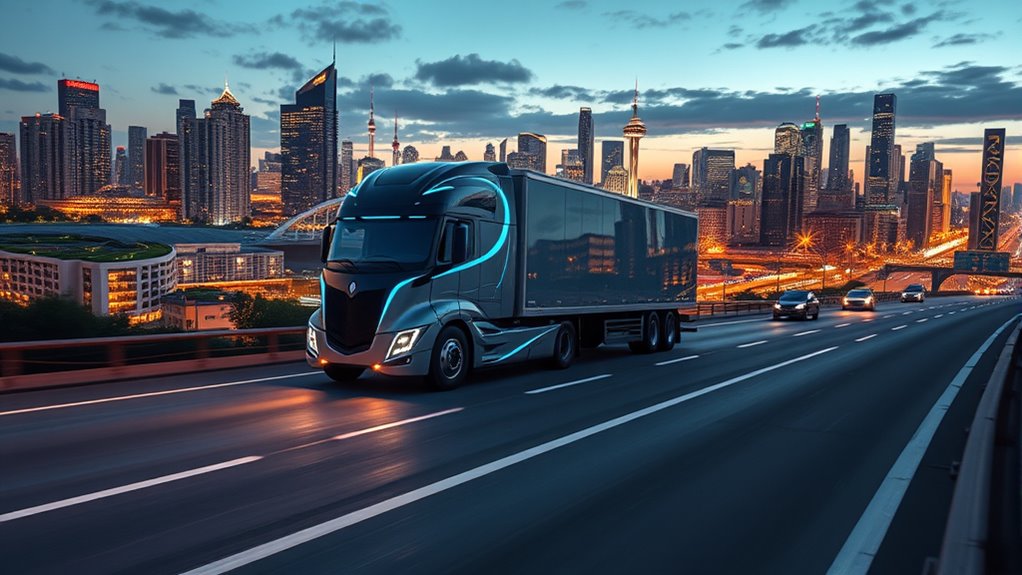
Advancements in truck technology are reshaping the strategic landscape for all stakeholders, demanding proactive responses to evolving regulatory, environmental, and market pressures. You need to prioritize compliance with stricter emission standards and adapt your fleet to electric and autonomous solutions. Investing in zero-emission vehicles and AI-driven systems will be critical for maintaining competitiveness and avoiding penalties. Expect increased costs from regulations, but also opportunities for innovation and efficiency gains. Collaborate with manufacturers and technology providers to stay ahead of industry shifts. Private fleets may gain an edge through better routing and service stability, while carriers should focus on optimizing capacity amid tightening markets. Embracing these changes now will position you for sustainable growth and resilience in the rapidly evolving trucking ecosystem.
Frequently Asked Questions
How Will Electric and Autonomous Trucks Impact Overall Industry Profitability?
Electric and autonomous trucks will reshape industry profitability by reducing operating costs and increasing efficiency. You’ll see profits grow from alternative powertrains and advanced tech, even as stricter regulations push up compliance costs. While some profit pools shrink due to emissions standards, others expand with innovations. Embracing these technologies will help you stay competitive, lower costs, and capitalize on new revenue streams driven by cleaner, smarter transportation solutions.
What New Regulations Could Significantly Alter Fleet Operating Costs?
They say forewarned is forearmed, so be ready for new regulations that could impact your fleet costs considerably. Stricter emissions standards, CO2 reduction targets, and mandatory reporting will increase compliance expenses. Zero-emission vehicle mandates and mileage charging will push investments in electric trucks. Additionally, safety and speed limit regulations will raise operational costs. Staying ahead of these changes helps you adapt, control expenses, and remain competitive in an evolving industry landscape.
How Will Private Fleets Influence Market Competition and Service Quality?
You’ll find private fleets increasingly influence market competition by offering better control over routing, scheduling, and service quality. They tend to be more agile, invest in advanced tech, and adapt quickly to regulatory changes. By doing so, they often outperform third-party carriers, pushing industry standards higher. This dynamic enhances overall service levels while challenging traditional players to innovate and improve efficiency, ultimately benefiting shippers and customers alike.
What Technological Advancements Will Most Shape Truck Design in the Next Five Years?
You’ll see autonomous driving tech, AI, and advanced sensors profoundly shaping truck design over the next five years. Expect more semi-autonomous features, improved safety systems, and connectivity options that enhance efficiency. Electric powertrains will become standard, requiring new battery and cooling systems. Manufacturers will prioritize aerodynamics and lightweight materials to boost range and reduce emissions, all while integrating smarter dashboards and driver-assist features to meet evolving regulatory and operational demands.
How Are Capacity Constraints Expected to Affect Freight Pricing and Availability?
You’ll notice freight prices and availability tighten as capacity becomes limited, especially since tractor inventories are normalizing after a slow build schedule. With freight volumes remaining soft and carrier profitability weak, your costs might rise, and delays could increase. About 1 in 10 new trucks sold will be semi-autonomous by 2025, but current capacity constraints mean you’ll need to plan ahead to guarantee timely deliveries and competitive pricing.
Conclusion
As you navigate the evolving trucking landscape, expect innovation to reshape your operations, from electric and autonomous tech to stricter regulations. Think of the industry like a moving train—fast, unstoppable, and driven by new technologies. Embracing these changes now positions you ahead of the curve, turning challenges into opportunities. Just as a well-maintained engine keeps a train on track, remaining adaptable will ensure your success in the next five years.