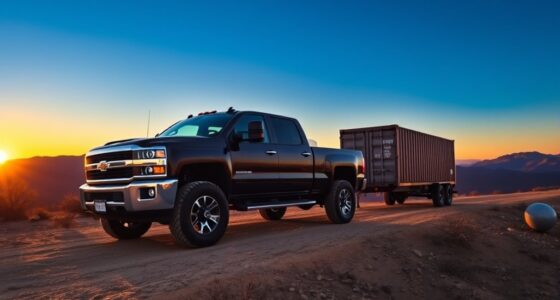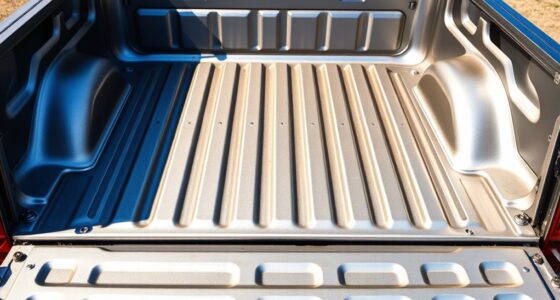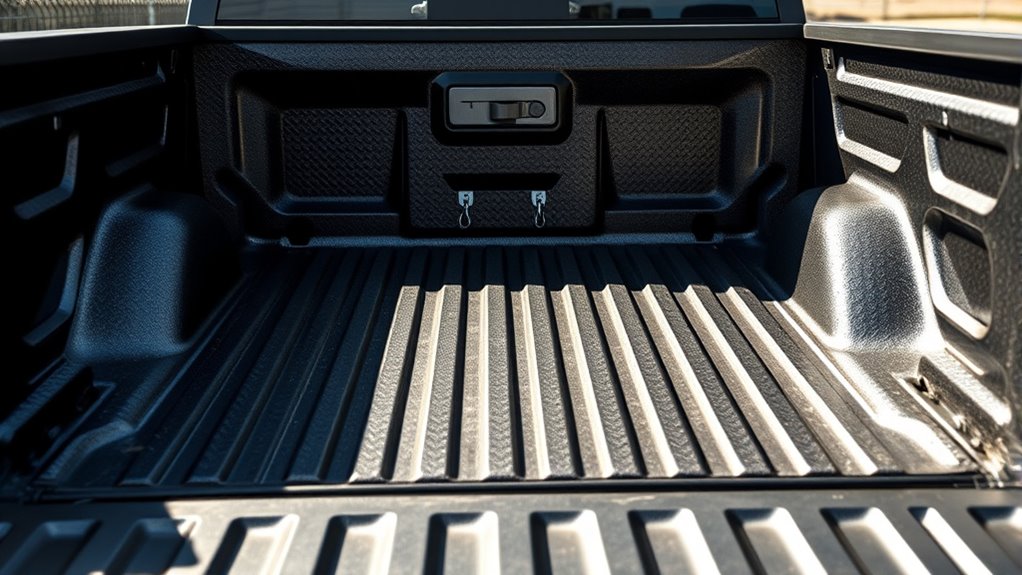

In the ultimate truck bed glossary, you’ll find terms like fleetside and stepside, which define different side styles, as well as dropside and flatbeds for versatile loading. You’ll learn about standard lengths, wheelbase, and cab-to-axle measurements that help you choose the right size. Plus, key concepts like payload, GVWR, and bed support features ensure you’re equipped for safe, durable hauling. Keep going, and you’ll discover everything you need to know for your truck bed setup.
Key Takeaways
- Understand different bed types such as Fleetside, Stepside, and Dropside to choose the best for your needs.
- Know standard bed lengths (5.5 to 8 ft) and their ideal use cases for cargo capacity and maneuverability.
- Learn about bed features like headboard, stake pockets, D-rings, and covers for cargo security and management.
- Recognize structural supports including braces, cross members, and headache racks that enhance durability and safety.
- Familiarize with payload capacity, GVWR, and wheelbase to ensure proper bed selection and load handling.

MOSTPLUS Roll-Up Soft Vinyl Truck Bed Tonneau Cover Compatible with 2002-2018 Dodge Ram 1500 2003-2023 Ram 2500 3500 No RamBox On Top (6.4/6.5 FT Feed Bed) Fleetside-Only fit 2019-2023 Classic
·Compatible with 2009-2018 Ram 1500 ; Compatible with 2019-2023 Ram 1500 Classic ; Compatible with 2003-2023 Ram 2500…
As an affiliate, we earn on qualifying purchases.
As an affiliate, we earn on qualifying purchases.
Types of Truck Beds

Are you familiar with the different types of truck beds available? There are several styles designed for specific needs. Fleetside beds have flat, cab-width sides, offering maximum cargo space and easy access. Stepside beds feature rounded fenders with built-in steps, making it easier to reach the bed. Dropside beds have hinged sides that fold down, simplifying loading and unloading. Flatbeds are aftermarket options with open, wide surfaces, ideal for heavy or oversized loads. Enclosed service bodies fully enclose the cargo area, providing security and weather protection. Each type serves different purposes, from everyday hauling to specialized trades, and choosing the right one depends on your cargo, usage, and preferences. Understanding these options helps you pick a bed that fits your truck and your needs perfectly. Additionally, knowing the types of truck beds can improve your ability to select the best configuration for your specific requirements.

Bed Rail Stake Pocket Covers for GMC Chevy Silverado Sierra 1500 2019-2024 2025 2026, GMC Sierra 2500 3500HD 2020-2024 2025 2026, Truck Caps Rear Holes Plugs Covers Black
【Compatible Truck Models】Our bed rail stake pocket covers Fit for 2019 – 2024 2025 2026 Chevy Silverado 1500,…
As an affiliate, we earn on qualifying purchases.
As an affiliate, we earn on qualifying purchases.
Standard Bed Lengths and Their Uses
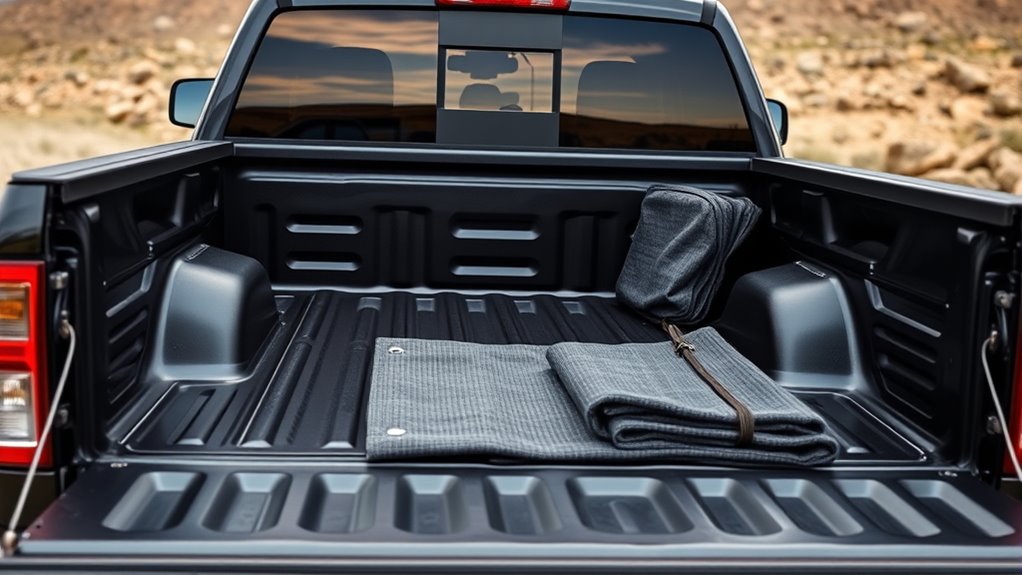
Choosing the right bed length depends on what you plan to carry and how maneuverable your truck needs to be. Short beds are great for easier handling and parking, while longer beds maximize cargo space for bigger loads. Understanding common lengths and their best uses helps you pick the perfect fit for your specific needs. Additionally, selecting a suitable outdoor setup can enhance your truck’s utility for outdoor activities and adventures.
Common Lengths and Purposes
Standard truck bed lengths typically range from 5.5 to 8 feet, with each size serving different hauling needs. A shorter bed, like 5.5 or 6.5 feet, offers easier maneuverability, perfect for tight spaces and city driving. A 6.5-foot bed balances cargo space with agility, ideal for general work and daily use. An 8-foot bed provides maximum capacity, perfect for transporting large or long items. Consider these options:
- You’ll get more room for bulky gear with the 8-foot bed, but expect reduced maneuverability.
- The 6.5-foot bed is versatile, fitting most vehicles and cargo types.
- The shorter beds excel in tight spots, making city driving and parking easier while sacrificing some cargo space.
- Standard truck bed lengths typically range from 5.5 to 8 feet, with each size serving different hauling needs.
Choose based on your hauling volume and driving environment.
Optimal Use Cases
Different truck bed lengths suit specific hauling needs, making it important to match the size to your typical cargo and driving environment. If you mostly carry smaller loads or need maneuverability, a short bed (around 5.5 to 6.5 feet) offers better handling and easier parking. It’s ideal for daily driving and light-duty tasks. For larger, bulkier items, an 8-foot long bed provides increased cargo capacity, perfect for construction materials or equipment. If you frequently transport longer items like ladders or pipes, a long bed maximizes space without sacrificing stability. Consider your typical loads and space requirements when choosing a bed length to ensure your truck handles your tasks efficiently while maintaining ease of driving. Matching the bed to your needs helps optimize both performance and convenience. Additionally, understanding appropriate projection technology can enhance your overall driving and cargo management experience.
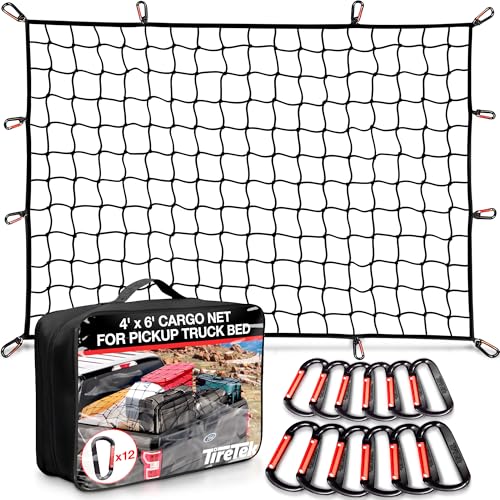
Cargo Net for Pickup Truck Bed (4'x6' Stretches to 8'x12') Double Thick Heavy Duty Pickup Truck Bed Organizer Accessories – 12 Metal Carabiners, Bungee Mesh Accessory with Strap Hooks
Heavy duty cargo net – Extra thick 5 mm LATEX CORE bungee webbing, 4'x6' bungee cargo net stretches…
As an affiliate, we earn on qualifying purchases.
As an affiliate, we earn on qualifying purchases.
Fleetside vs. Stepside Bed Styles
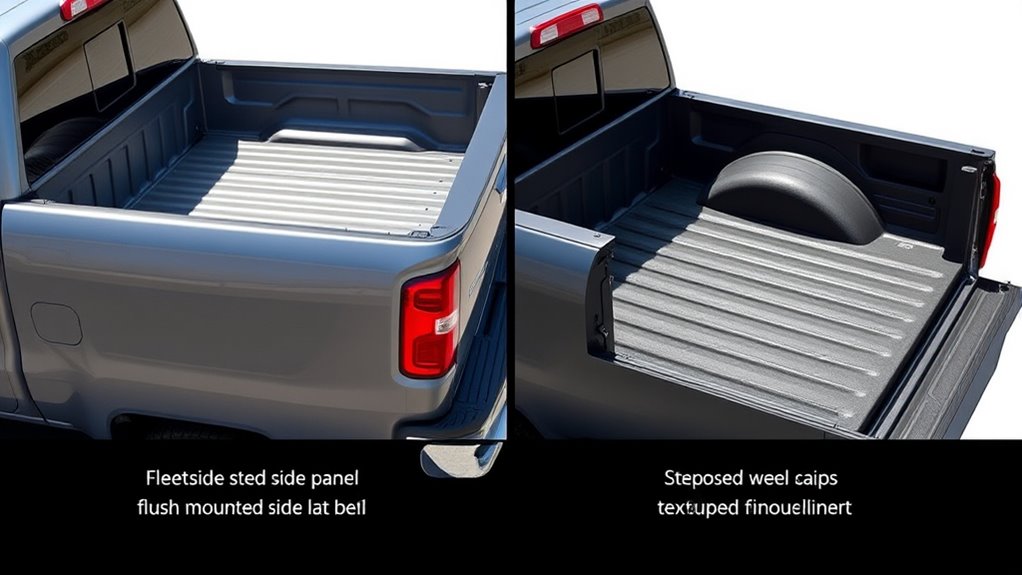
Fleetside and stepside beds offer distinct styles that impact both appearance and functionality. Fleetside beds have flat, smooth sides that align with the truck’s body, giving a sleek, modern look. They provide a wider cargo space and easier access for loading. Stepside beds feature bulbous fenders with a step for easier bed access, offering a classic, vintage appeal. They’re ideal if you want a rugged, nostalgic vibe. Consider these key differences: 1. Aesthetic appeal: Fleetside for modern, streamlined looks; stepside for vintage charm. 2. cargo space: Fleetside offers more room due to flat sides. 3. Ease of access: Stepside’s built-in step simplifies reaching into the bed. Additionally, understanding Free Floating setups can influence how you modify or customize your truck bed. Choose based on your style preference and practical needs.

VEVOR Platform Truck, 2000 lbs Capacity Steel Flatbed Cart, 47" Length x 24" Width x 32" Height Flat Dolly, Hand Trucks with 5" Nylon Casters, Heavy-Duty Utility Push Carts for Luggage Moving
Robust 2000 lb Bearing Capacity: Length: 47 inches. Width: 24 inches. The construction of the platform truck is…
As an affiliate, we earn on qualifying purchases.
As an affiliate, we earn on qualifying purchases.
Dropside and Flatbed Configurations
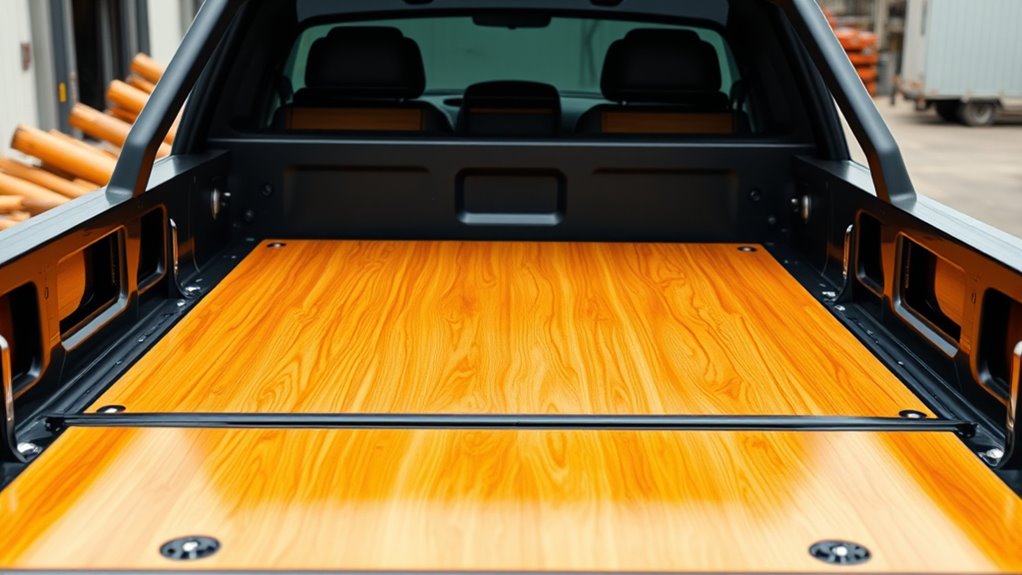
Dropside beds are highly versatile because you can lower their sides for easy loading and unloading. Flatbeds offer broad utility, making them ideal for transporting large or irregularly shaped loads. Both configurations adapt well to different tasks, depending on your specific cargo needs. Incorporating smart appliances and connected systems can further enhance their efficiency and safety during operation.
Versatility of Dropside Beds
Have you ever considered how the unique design of dropside beds enhances their versatility for various hauling needs? With hinged sides that lower, you gain quick access to your cargo and flexible loading options. This feature makes dropside beds ideal for:
- Heavy loads — easily slide or lift bulky items without hassle.
- Irregular cargo — accommodate odd-shaped or oversized items with lowered sides.
- Efficient unloading — save time and effort with sides that fold down flat, creating a wider opening.
This adaptability means you can switch from transporting construction materials to landscaping supplies effortlessly. Dropside beds excel in scenarios demanding quick access and flexibility, making your trucking tasks smoother and more efficient. Their design transforms your truck into a true multi-purpose workhorse, especially when combined with energy-efficient design features, which contribute to sustainable operations.
Flatbed Utility and Uses
Flatbed trucks offer a versatile platform for hauling a wide range of loads, thanks to their open, unobstructed surface. With a flatbed, you can easily load large, awkward, or oversized items like lumber, machinery, or construction materials. Dropside configurations enhance accessibility by allowing you to lower sides for quick loading and unloading, making them ideal for heavy-duty tasks. Flatbeds also support accessories like stake pockets and D-rings, helping you secure cargo safely. These beds are favored in construction, farming, and transport industries because they accommodate different cargo types and sizes. Whether you’re transporting pallets, equipment, or bulk materials, flatbeds and dropsides give you flexibility, efficiency, and ease of use, making them essential for various hauling needs. Properly managing your truck bed is key to safe and efficient transportation.
Enclosed Service Bodies and Utility Beds
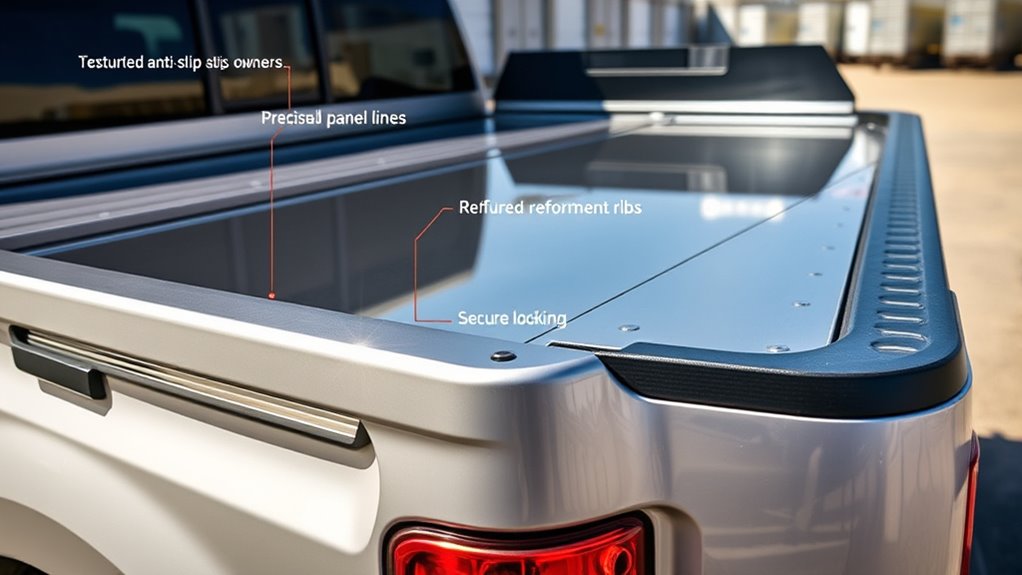
Ever wondered what makes enclosed service bodies and utility beds ideal for work trucks? They’re designed to keep tools and equipment secure, protected from weather, and organized for quick access. Here’s why they stand out:
- Enhanced Security — Lockable compartments prevent theft and ensure your gear stays safe.
- Weather Resistance — Fully enclosed structures shield your tools from rain, snow, and dirt.
- Optimized Organization — Compartments and shelves improve efficiency, saving you time on every job.
- Durability and Material Quality — Built with materials resistant to corrosion and wear, these beds are designed to withstand tough working conditions and extend the lifespan of your equipment.
These beds are tailored for trades like electricians, plumbers, and contractors who need durability and security. Instead of risking damage or theft, you get peace of mind knowing your equipment is protected and ready when you are. An enclosed service body transforms your truck into a mobile workshop built for toughness and reliability.
Bed Accessories: Stake Pockets and D-Rings
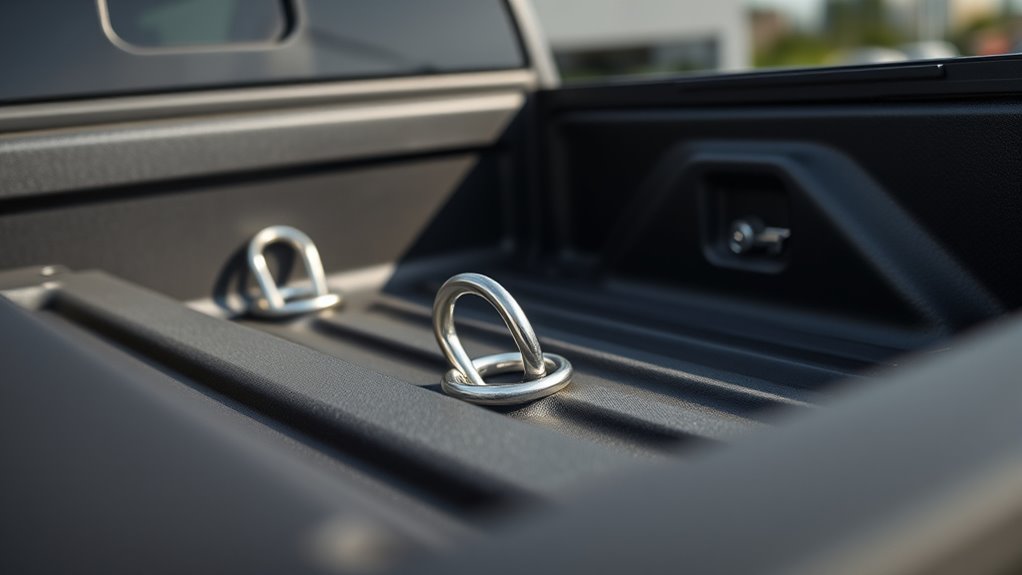
Did you know that stake pockets and D-rings are essential accessories for securing cargo on your truck bed? Stake pockets are holes along the bed’s top edge, allowing you to insert removable stakes or uprights to create a customizable cargo barrier. D-rings are metal rings mounted directly into the bed or attached via brackets, providing anchor points for tie-down straps. Together, they give you versatile options to secure loads of all shapes and sizes, preventing shifting or damage during transport. Stake pockets enable flexible rack or barrier setups, while D-rings offer strong, reliable tie-down points. Proper use of these accessories increases safety and guarantees your cargo stays put, whether you’re hauling construction materials, furniture, or equipment. They’re simple, effective tools for any truck owner. Additionally, using connected equipment like tie-down anchors and accessories can enhance your cargo management efficiency and safety during transport.
Headache Racks and Header Boards
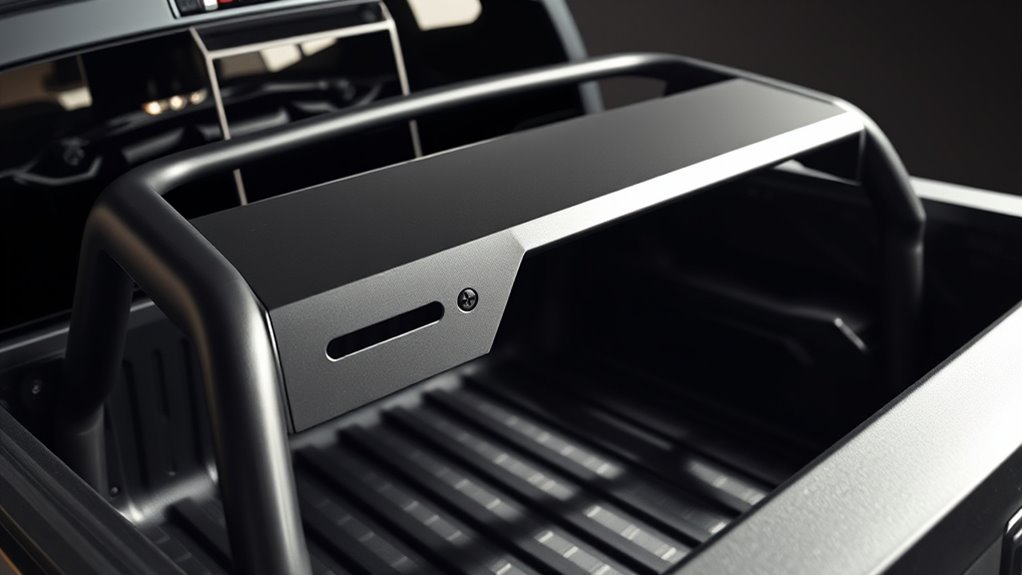
Have you ever wondered how to protect your truck’s cab and secure loose cargo effectively? That’s where headache racks and header boards come in. These sturdy metal guards sit behind your cab, shielding it from shifting loads that could cause damage or injury. They also serve as a stable mounting point for accessories. Consider these benefits:
- Enhanced Safety – Prevents cargo from hitting the cab during sudden stops or turns.
- Cargo Management – Provides a secure platform for straps and tie-downs, giving you peace of mind.
- Protection & Durability – Built tough to withstand impacts and harsh conditions, ensuring long-term use.
Choosing the right rack or header board keeps your truck secure, your cab safe, and your cargo firmly in place.
Structural Supports: Subframes, Braces, and Supports
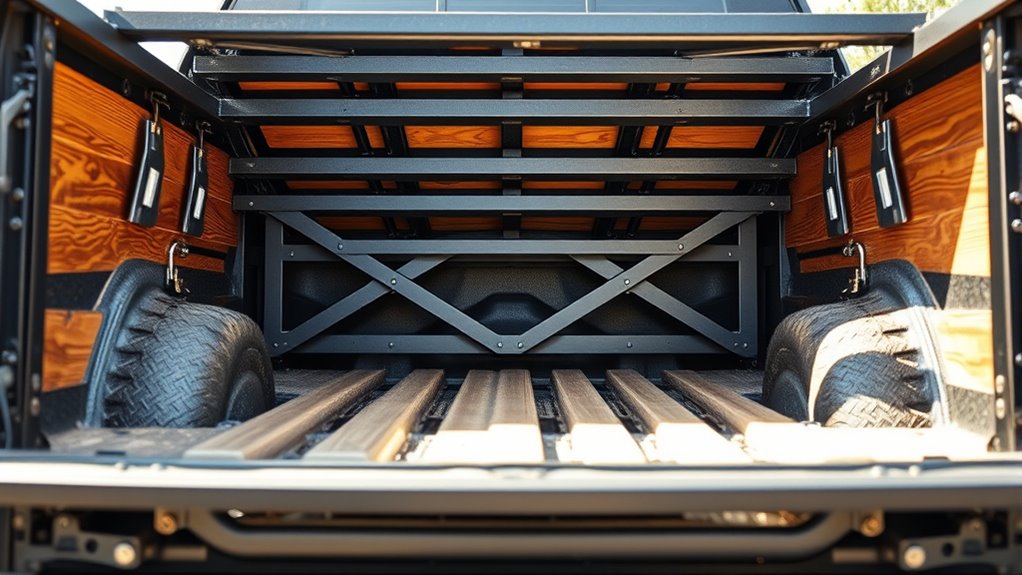
Subframes play a vital role in supporting your truck bed, providing added strength and stability. Braces help prevent flexing and shifting, especially during heavy loads or rough drives. Understanding how these supports work can help you maintain your truck’s integrity and safety over time.
Role of Subframes
Subframes play a crucial role in maintaining the structural integrity of a truck bed by providing added support between the chassis and the bed itself. They act as a backbone, ensuring the bed stays sturdy during heavy loads and rough driving. Without a proper subframe, your truck could suffer from sagging, misalignment, or even frame damage. When you look at your truck, remember these three key benefits:
- Enhanced stability—keep your cargo secure no matter the terrain.
- Improved durability—protect the chassis from stress and wear.
- Better load distribution—prevent warping and ensure safety during transport.
A well-designed subframe keeps your truck strong, reliable, and ready for whatever you haul.
Function of Braces
Braces and supports serve as essential structural elements that reinforce your truck bed, ensuring it can handle heavy loads without bending or warping. They maintain the bed’s shape during transport, preventing damage and prolonging its lifespan. Braces are typically metal or sturdy materials that connect key points, distributing weight evenly. Supports help prevent flexing, especially when carrying bulky or uneven cargo. Properly installed braces improve stability and safety, reducing risk of bed deformation. Here’s an example of common braces and supports:
| Type | Purpose |
|---|---|
| Cross Braces | Stabilize side-to-side movement |
| Bed Supports | Reinforce the floor for heavy loads |
| Header Supports | Protect cargo from shifting |
Bed Covers: Tonneau Covers and More
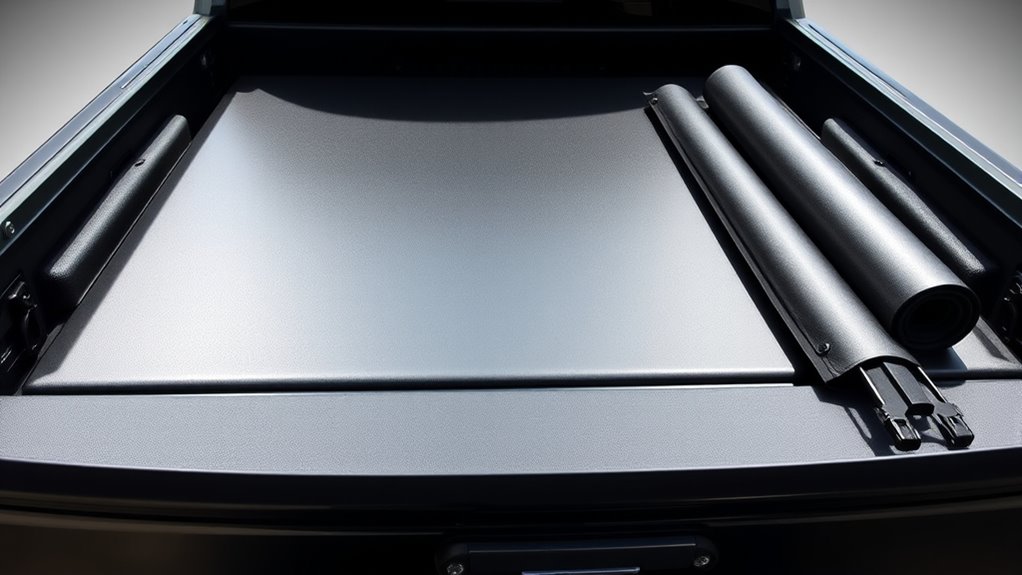
Have you ever contemplated how a tonneau cover can protect your cargo and boost your truck’s efficiency? With a good cover, you can keep your gear safe from weather, theft, and road debris. Choosing the right cover can also improve your truck’s aerodynamics, saving fuel. Here are three reasons to consider one:
A tonneau cover protects your cargo, boosts efficiency, and keeps valuables safe from weather and theft.
- Enhanced Security: Keeps valuables out of sight and protected from theft.
- Weather Resistance: Shields cargo from rain, snow, and mud, preventing damage.
- Improved Efficiency: Reduces air drag, increasing fuel economy on the road.
Beyond tonneau covers, you’ll find options like snap-on covers, roll-up models, and retractable systems, each offering different levels of convenience and protection. Picking the right bed cover can transform your truck’s utility and security in everyday use.
Specialized Utility and Heavy-Duty Beds
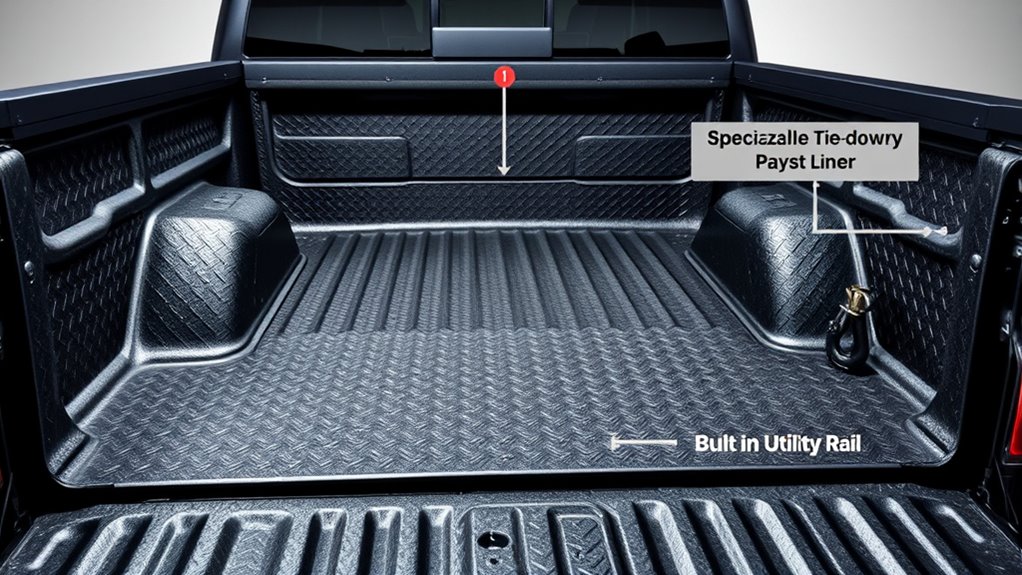
When you need a bed that handles tough jobs and carries specialized equipment, a utility or heavy-duty bed is the ideal choice. These beds are built for durability and functionality, often featuring integrated toolboxes, compartments, or mounts for equipment like air compressors or welders. They come in various configurations, including service bodies with enclosed storage and flatbeds designed for heavy loads. Heavy-duty beds typically have reinforced frames, thicker steel construction, and additional support structures to withstand rigorous use. They’re perfect for tradespeople, contractors, or anyone needing to transport bulky, heavy, or specialized gear securely. These beds enhance your truck’s versatility, allowing you to customize it for specific tasks and industries, making your vehicle more efficient and capable in demanding environments.
Cargo Securing Devices and Load Security
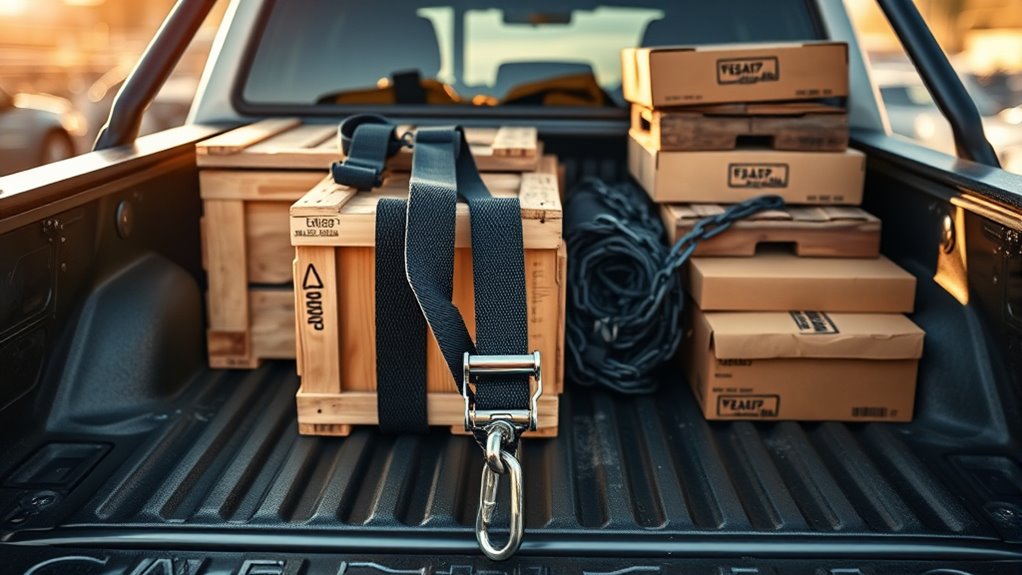
Securing cargo properly is essential to prevent shifting, falling, or damaging your load during transit. When you use the right cargo securing devices, you gain peace of mind and protect your truck, load, and others on the road. Here are three critical tools you should have:
- Ratchet Straps: Offer maximum tension and security for heavy or bulky items.
- D-rings: Anchor points that keep straps in place and prevent movement.
- Tie-downs: Versatile and essential for securing loads of all shapes and sizes.
Bed Support Components: Leaf Springs and Suspensions
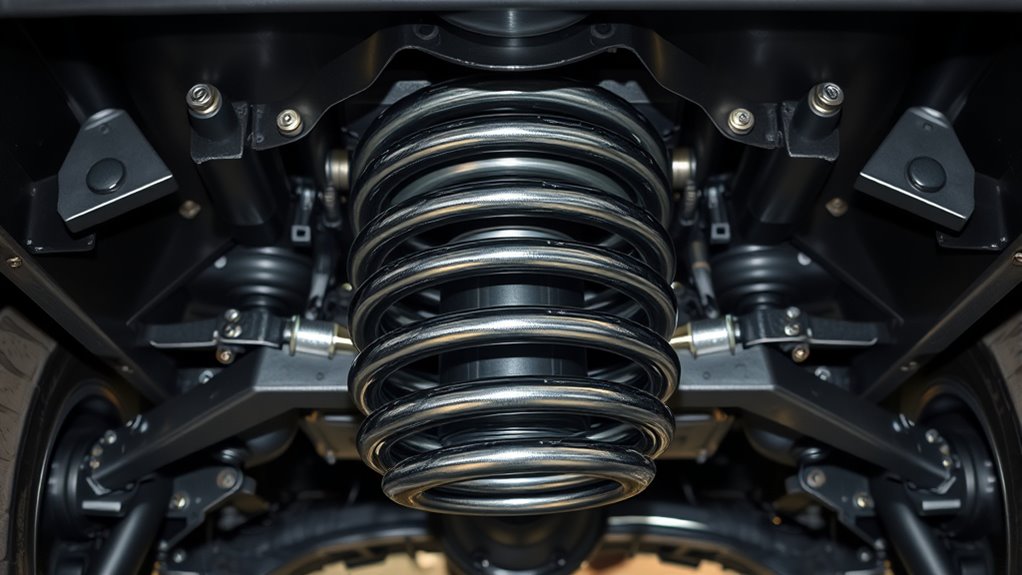
Bed support components like leaf springs and suspensions play a crucial role in maintaining stability and handling, especially when carrying heavy loads in the truck bed. Leaf springs are stacked metal strips that support the axle and absorb shocks from rough terrain or heavy cargo. Suspensions, including shock absorbers and coil springs, work together to keep your truck stable, smooth out bumps, and enhance control. Properly functioning leaf springs prevent sagging and maintain the correct ride height, ensuring your payload stays secure and the truck handles safely. Regular inspection of these components is essential—they wear out over time and can lead to poor handling or damage. Upgrading to heavy-duty leaf springs or advanced suspensions can improve load capacity and driving comfort for demanding jobs.
Key Measurements: Wheelbase, CA, and Payload
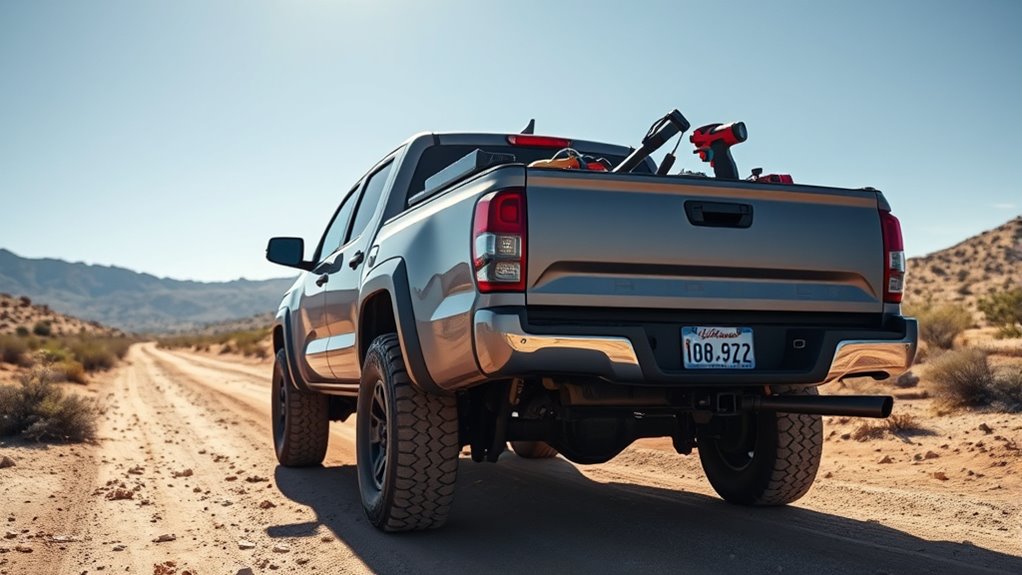
Your truck’s wheelbase affects how it handles turns and stability on the road. The cab-to-axle (CA) measurement determines which bed sizes fit your truck properly, ensuring compatibility. Understanding payload limits helps you stay within safe weight capacities and avoid overloading your vehicle.
Wheelbase Impact on Handling
The wheelbase of a truck considerably influences its handling and stability on the road. A longer wheelbase provides a smoother ride and better straight-line stability, making highway driving safer. Conversely, a shorter wheelbase enhances maneuverability, ideal for tight turns and city driving. Here’s what you should feel:
- Confidence when cruising at high speeds, thanks to improved stability.
- Agility for steering through crowded streets and sharp corners with ease.
- Control in challenging terrains, where a balanced wheelbase helps maintain traction.
Your choice affects your driving experience—whether you crave stability or nimbleness. Understanding how wheelbase impacts handling helps you select the right truck for your needs, ensuring every drive feels just right.
CA and Bed Compatibility
Understanding how cab-to-axle (CA) measurements relate to wheelbase is essential for ensuring proper bed compatibility and safe payload capacity. The CA measurement indicates the distance from the cab to the rear axle, directly influencing which bed length fits your truck. A longer CA typically corresponds with a longer wheelbase, allowing for larger beds, like an 8-foot option, without overextending the chassis. Conversely, a shorter CA limits bed length and may restrict certain configurations. Matching the CA with your desired bed ensures proper mounting points, clearance, and weight distribution. Incorrect pairing can lead to fitment issues or compromised payload capacity. Always verify your truck’s CA against the bed specifications to optimize compatibility, safety, and overall vehicle performance.
Payload Limits Explained
Payload limits determine how much weight your truck can safely carry, and key measurements like wheelbase and cab-to-axle (CA) play a crucial role in this. Your payload capacity affects everything from safety to performance.
To maximize your truck’s potential, consider these factors:
- Wheelbase influences stability and load distribution, impacting how much weight you can carry comfortably.
- Cab-to-axle (CA) distance determines bed length compatibility, affecting your cargo capacity and handling.
- Payload rating indicates the maximum load, including passengers, gear, and cargo, that your truck can handle without risking damage or safety.
Understanding these measurements helps you plan your hauling needs accurately. Respect your truck’s limits to ensure safe, efficient transport, and avoid costly damage or accidents. Your vehicle’s longevity depends on it.
Weight Ratings and Capacity Terms
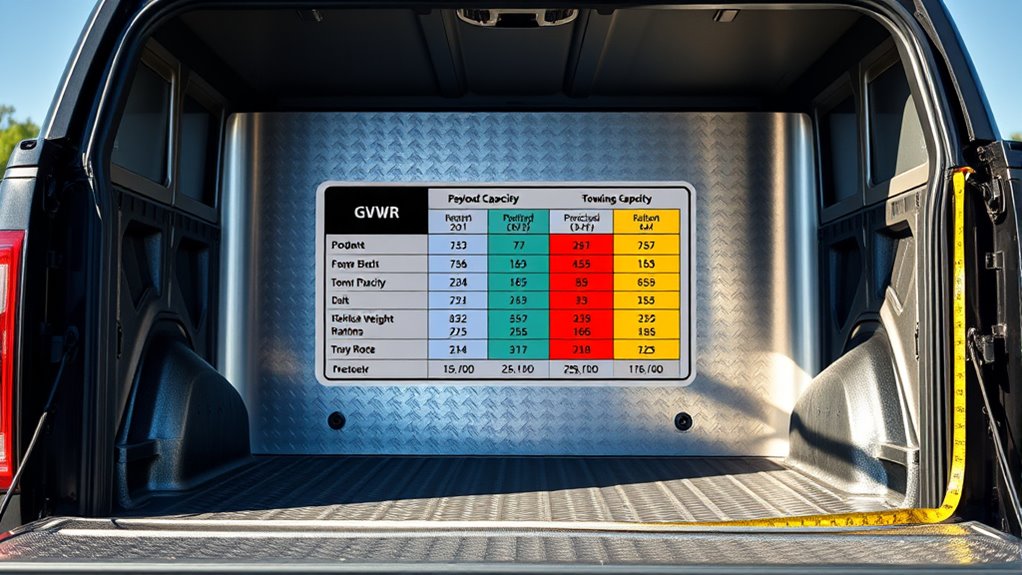
Weight ratings and capacity terms are essential for guaranteeing your truck handles loads safely and efficiently. Understanding these figures helps you avoid overloading, which can damage your vehicle or cause accidents. The Gross Vehicle Weight Rating (GVWR) indicates the maximum weight your truck can safely carry, including cargo, passengers, and equipment. Payload capacity refers specifically to how much weight your truck can carry in the bed and cabin without exceeding the GVWR. Curb weight is the truck’s weight when empty, with all fluids and standard equipment. Knowing your truck’s wheelbase and cab-to-axle (CA) measurement helps determine load distribution and compatibility with various bed lengths. Always check these ratings before hauling heavy loads to ensure safety and compliance with manufacturer guidelines.
Bed Support Features for Safety and Durability
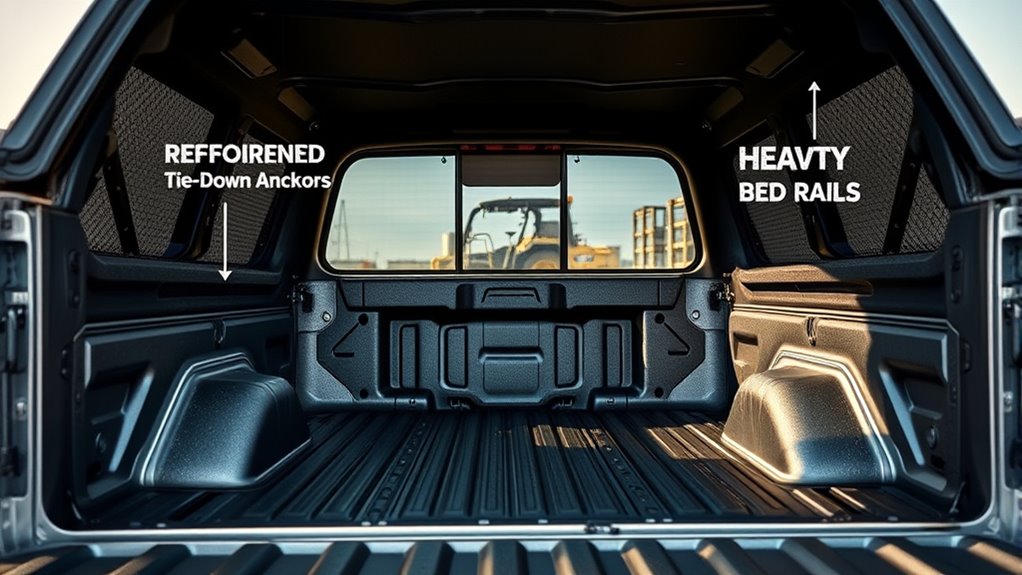
Bed support features are essential components that enhance the safety and durability of your truck bed during hauling and everyday use. These features ensure your cargo stays secure and your truck remains structurally sound.
Bed support features are vital for safety and durability during hauling and daily use.
- Subframes: They sit between the chassis and bed, boosting strength and preventing sagging under heavy loads.
- Headache Racks: These steel guards protect the cab from shifting cargo, reducing the risk of damage or injury.
- Braces and Supports: They stabilize loads, preventing movement that could cause accidents or bed damage.
Customization and Aftermarket Bed Options
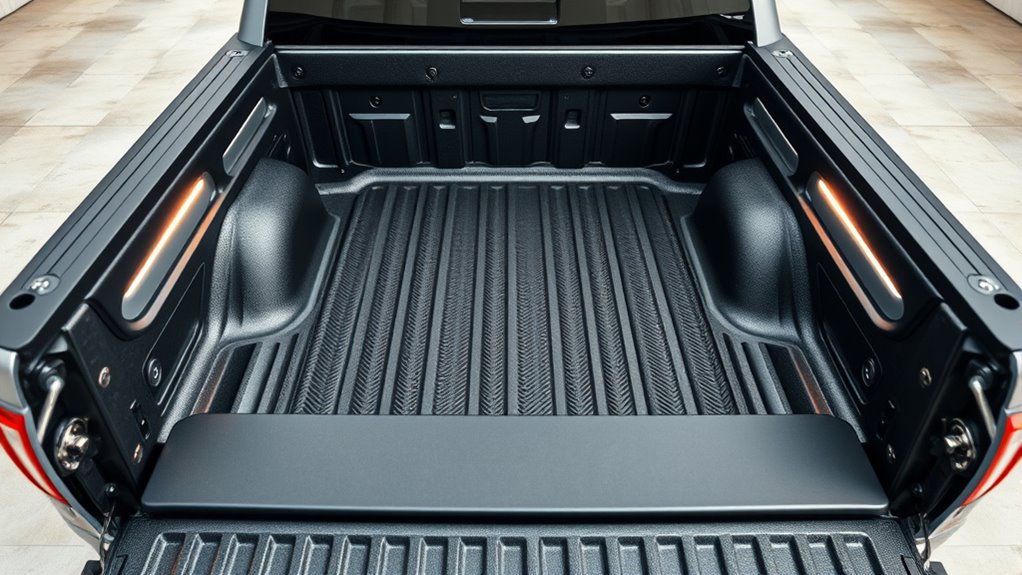
When customizing your truck bed, aftermarket options let you tailor your vehicle to suit specific needs and improve functionality. You can add tonneau covers to protect your cargo from weather and theft, or install bed liners for durability against scratches and dents. Stake pockets and D-rings help secure loads safely, while headache racks provide extra cab protection and cargo management. For easier access, consider steps or side-mounted storage compartments. Flatbeds and utility bodies expand cargo space and organization, especially for work-related tasks. Some owners upgrade with specialized lighting, tie-down systems, or adjustable bed extenders to maximize utility. These aftermarket modifications allow you to personalize your truck bed for work, recreation, or daily use, making your vehicle more efficient, secure, and suited to your lifestyle.
Frequently Asked Questions
How Do I Choose the Right Truck Bed Length for My Needs?
To choose the right truck bed length, consider your cargo needs and how often you’ll haul large items. Short beds, around 5.5 to 6.5 feet, are easier to maneuver and park but hold less. Long beds, about 8 feet, offer more cargo space but may be harder to handle. Think about your typical loads, vehicle storage, and parking space to pick the best fit for your lifestyle.
What Are the Advantages of Fleetside Versus Stepside Beds?
Think of fleetside beds as a sleek, open book, offering wide, flat pages for easy loading and unloading, symbolizing practicality and versatility. Stepside beds, with their bulbous fenders, resemble a cozy cottage that adds charm but limits space. Fleetside beds excel for carrying large or bulky items, providing a smooth surface, while stepside beds bring a stylish, nostalgic flair, perfect if you want a touch of classic character in your truck.
Can I Customize My Truck Bed With Aftermarket Accessories?
Yes, you can customize your truck bed with aftermarket accessories. You might add stake pockets for straps, D-rings for cargo securement, or tonneau covers for protection. Headache racks can shield the cab, while toolboxes and utility compartments boost storage. Flatbeds and dropsides can be modified for easier loading. These upgrades let you tailor your truck bed to fit your specific needs, making your truck more functional and efficient.
What Safety Features Are Important for Heavy-Duty Truck Beds?
Are you prioritizing safety on your heavy-duty truck bed? Key features include headache racks, which prevent cargo from shifting into the cab, and tie-down points like stake pockets and D-rings to secure loads. Reinforced braces and supports add stability, while proper lighting ensures visibility. Don’t overlook safety accessories—these features protect you and your cargo, making every haul safer and more secure. Wouldn’t you want peace of mind on every trip?
How Do Bed Accessories Impact Cargo Securing and Load Security?
Bed accessories substantially improve your cargo securing and load security. Stake pockets allow you to attach straps and racks, keeping items stable. D-rings serve as anchor points for tie-downs, preventing shifting during transit. Headache racks and braces provide added support and protection, reducing cargo movement. By using these accessories properly, you enhance safety, minimize damage, and guarantee your load stays secure, especially during sudden stops or rough terrain.
Conclusion
Now that you know the key terms and features, you can confidently choose, customize, and maintain your truck bed. Understand the differences, evaluate your needs, and prioritize safety and durability. Whether you’re hauling, working, or customizing, remember that knowledge empowers your decisions. Stay informed, stay prepared, and enjoy making your truck bed work for you, just the way you want it—because your truck is more than just a vehicle; it’s your versatile, dependable workspace.