
Your truck’s towing capacity shows how much weight it can safely pull, including the trailer and its contents. It’s determined by key ratings like GVWR, GCWR, and payload. Factors like engine power, suspension, and modifications affect this limit. Overloading can cause mechanical failure or safety issues. To keep your truck running smoothly, understand these ratings and follow safety tips. If you want to know how to calculate your truck’s towing capabilities, keep exploring.
Key Takeaways
- Towing capacity is the maximum trailer weight a vehicle can safely pull, based on engine power, frame, suspension, and manufacturer ratings.
- It is determined by subtracting curb weight and payload from the vehicle’s GCWR to ensure safe towing limits.
- Key weight ratings include GVWR (max loaded weight) and GCWR (max combined weight with trailer).
- Overloading beyond your truck’s towing capacity can cause mechanical failure, brake issues, and safety hazards.
- Always consult your vehicle’s owner manual and adhere to manufacturer guidelines for accurate towing capacity.

LUMITECO 12'' Dual Head Tire Pressure Gauge, Heavy Duty Truck Tire Gauge Range 10-150PSI 1-10Bar for Tire Pressure Checker, Straight-On Tire Air Gauge Extended Tube for Semi Truck, RV, Car, Motorcycle
【EXTENDED REACH DUAL HEAD】LUMITECO 12" pencil-style pressure gauge is designed with the Integrated Straight foot air chuck and…
As an affiliate, we earn on qualifying purchases.
As an affiliate, we earn on qualifying purchases.
Understanding Towing Capacity and Its Importance
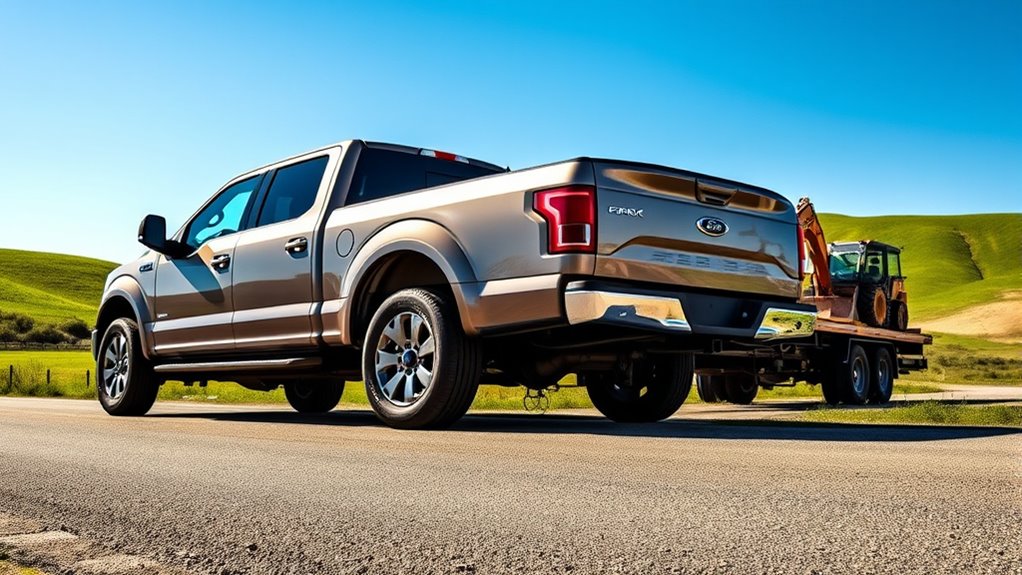
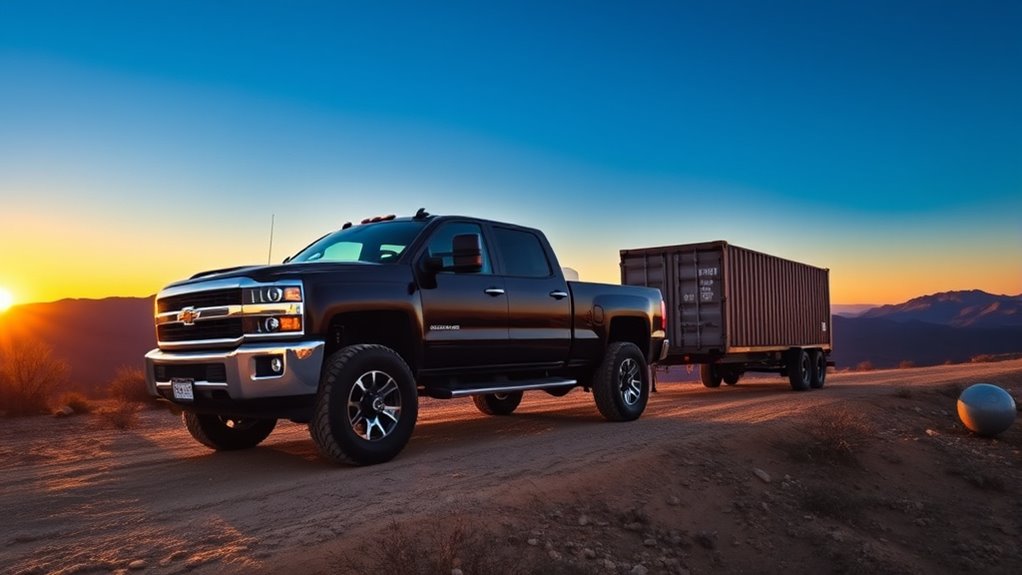
Have you ever wondered why knowing your vehicle’s towing capacity is essential? It’s because towing beyond this limit can cause serious safety issues, mechanical failure, and costly repairs. Towing capacity is the maximum weight your vehicle can pull safely, including the trailer and its contents. This limit is set by the manufacturer based on factors like engine power, frame strength, and suspension. Knowing your towing capacity helps you choose the right trailer and load it properly, ensuring safe driving. It also prevents overloading, which can affect handling, braking, and stability. By respecting these limits, you protect yourself, your vehicle, and others on the road. Always check your owner’s manual or door jamb sticker for this crucial information before towing anything.

VEVOR Weight Distribution Hitch, 12000 lbs Max Towing & 1200 lbs Max Tongue, Weight Distributing Hitches Kit with Sway Control Includes 2 in Shank & 2-5/16 in Ball, Load Leveling Hitch for Trailers
Powerful Towing: This weight distribution hitch includes a 2-5/16 inch (58.5 mm) hitch ball rated for 1200 lbs…
As an affiliate, we earn on qualifying purchases.
As an affiliate, we earn on qualifying purchases.
Key Weight Ratings and What They Mean
Understanding key weight ratings helps you stay within safe towing limits and prevent damage. Your GVWR sets the maximum weight your vehicle can handle, while the GCWR shows the total weight your vehicle can pull with a trailer attached. It’s important to distinguish between payload capacity and towing capacity to ensure you’re not overloading your vehicle’s interior or its towing system. Additionally, knowing your vehicle’s vetted specifications can help you choose the right equipment and avoid potential safety issues. Consulting your vehicle’s owner’s manual can provide detailed insights into these ratings and how they apply to your specific model. Being aware of the piercing materials used in your vehicle’s towing accessories can also impact durability and safety. Regularly reviewing product guidelines ensures your equipment functions correctly and maintains safety standards. Recognizing proper installation procedures is crucial to prevent accidents and prolong equipment life.
Understanding GVWR Limits
Gross Vehicle Weight Rating (GVWR) is a crucial key weight rating that tells you the maximum weight your vehicle can safely handle when fully loaded. This includes passengers, cargo, fluids, and any added aftermarket equipment. Exceeding the GVWR can compromise vehicle safety, cause mechanical failures, and lead to costly repairs. It’s essential to stay within this limit to ensure safe handling and braking. Your GVWR is specified by the manufacturer and can be found on the vehicle’s placard, usually on the driver’s side door jamb or in the owner’s manual. Knowing your GVWR helps you plan loads appropriately and prevents overloads that could jeopardize your safety and the longevity of your truck. Always weigh your load to stay within this critical limit. Understanding your GVWR ensures proper load management and safe towing practices. Being aware of your vehicle’s weight ratings is vital for safe driving and preventing potential road hazards. Additionally, understanding the importance of reconditioning batteries and other vehicle components can help maintain your truck’s performance over time.
Significance of GCWR
The Gross Combined Weight Rating (GCWR) is a critical key weight rating that indicates the maximum total weight your vehicle can safely handle when towing a trailer. It includes your truck’s weight, passengers, cargo, and the trailer’s weight. Knowing your GCWR helps prevent overloading, which can lead to mechanical failure or dangerous driving conditions. Staying within this limit ensures your vehicle’s engine, transmission, brakes, and suspension operate efficiently. It also maintains safety for you and others on the road. Always check your vehicle’s GCWR before towing heavy loads. Exceeding it can cause undue stress on your truck’s components, risking breakdowns or accidents. Understanding this rating keeps you towing safely and within your vehicle’s capabilities. Additionally, many modern trucks are equipped with safety features that assist in monitoring weight limits, further helping you stay within safe towing parameters. Incorporating adaptive towing systems can enhance safety by providing real-time adjustments and alerts based on your vehicle’s load and performance. Properly understanding and adhering to the GCWR ensures optimal vehicle performance and longevity, especially when handling heavy loads or complex towing setups. Being aware of weight distribution is also essential to maintain vehicle stability and control during towing.
Payload vs. Towing
While towing and payload capacities are related, they serve different purposes and are vital for safe vehicle operation. Towing capacity tells you how much weight your truck can pull, including trailers and their contents. Payload capacity, on the other hand, is what your truck can carry inside—passengers, cargo, and added equipment. Overloading either can cause serious safety issues, mechanical failure, or accidents. For example, understanding the off-road top speed of your vehicle can help you plan safe driving speeds in different terrains. Additionally, knowing your vehicle’s glycolic acid benefits can contribute to better maintenance and vehicle care, ensuring longevity. Proper weight distribution and water safety awareness are essential for safe towing practices. It’s also important to understand how weight ratings are determined and what they include, so you can accurately assess your vehicle’s capabilities. Be aware of these key points: – Exceeding payload can compromise suspension and brakes. – Overloading the trailer affects towing stability. – Proper weight distribution is essential for safety. – Respecting weight ratings keeps you and others safe on the road. To ensure safe towing, always refer to your vehicle’s manual and consult with professionals if you’re unsure about your capacities. Understanding both ratings ensures you use your truck responsibly and avoid costly damage or dangerous situations.
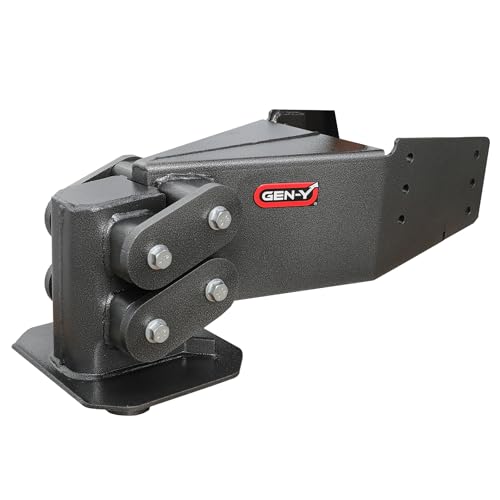
GEN-Y Hitch Rhino Fifth Wheel King Pin Box, 2.5K – 4.5K LBS Pin Weight, 30,000 LBS Towing Capacity – Check Fitment Chart
Built-In Mechanical Tongue Weight Scale for Balanced Safe Loading
As an affiliate, we earn on qualifying purchases.
As an affiliate, we earn on qualifying purchases.
How to Calculate Your Vehicle’s Towing Capacity
To accurately determine your vehicle’s towing capacity, you need to understand the key weight ratings listed by the manufacturer. Make sure you use precise measurements of your vehicle’s curb weight and payload to avoid overloading. Always follow the manufacturer’s guidelines to guarantee safe and reliable towing. Additionally, familiarizing yourself with safety checklists can help ensure all towing components are properly maintained and functioning correctly. Reviewing alarm clock reviews can also assist in choosing the right alarm system to keep you punctual and prepared for your towing adventures. Understanding Vetted principles can further assist in maintaining your vehicle’s optimal performance and safety during towing. Being aware of the weight of wind turbine blades can also offer perspective on how different loads and equipment might impact your vehicle’s towing capacity over time.
Understand Key Ratings
Wondering how to determine your vehicle’s towing capacity? It’s essential to understand key weight ratings to stay safe and avoid damage. Your owner’s manual and door jamb sticker list critical figures:
- Gross Vehicle Weight Rating (GVWR): Max weight your truck can handle, including everything inside.
- Gross Combined Weight Rating (GCWR): Total weight of vehicle, trailer, passengers, and cargo.
- Curb Weight: Truck’s weight with all fluids, no passengers or cargo.
- Payload Capacity: Max weight you can carry inside, including passengers and gear.
Knowing these ratings helps you gauge what your vehicle can tow without risking safety. Always keep within these limits to prevent mechanical failure or accidents. Understanding these figures empowers you to tow confidently and responsibly. Properly interpreting vehicle specifications is crucial for safe towing practices.
Use Accurate Measurements
Accurate measurements are vital to determine your vehicle’s true towing capacity and guarantee safe hauling. To do this, gather key data like your vehicle’s curb weight, GVWR, and payload capacity. Use a reliable scale to weigh your vehicle fully loaded and include the trailer’s weight. Calculating your towing capacity involves subtracting the curb weight and payload from the GCWR. Keep in mind, choosing the lowest-rated component in your towing system is essential for safety. Use the table below to identify important weight ratings:
| Rating Type | What It Means |
|---|---|
| Gross Vehicle Weight | Max weight your vehicle can handle |
| GCWR | Max combined weight of vehicle, trailer, and cargo |
| Payload Capacity | Max weight your vehicle can carry inside |
Accurate measurements help prevent overloads and guarantee safe towing.
Follow Manufacturer Guidelines
Following your vehicle manufacturer’s guidelines is essential for accurately calculating your towing capacity. Ignoring these instructions can lead to dangerous situations, mechanical failures, or legal issues. Always refer to your owner’s manual or the sticker on the driver’s side door jamb for specific ratings. This ensures you’re towing within safe limits and protecting yourself, your vehicle, and others.
Remember:
- Your vehicle’s towing capacity is based on tested, standardized data.
- Exceeding limits risks brake failure, frame damage, or accidents.
- Manufacturer guidelines account for your vehicle’s engine, transmission, and frame strength.
- Always double-check ratings before attaching a trailer.
Sticking to official specifications isn’t just about safety; it’s about peace of mind and enjoying your towing experience without worry. Follow these guidelines to tow smartly and responsibly.

Tekonsha 8508220 Brake-EVN Proportional Brake Controller for Trailers with 1-4 Axles, Compatible with Ford, GM, Chevy, Dodge, RAM, Toyota. Wiring Harness is NOT Included.
COMPATIBILITY: The BRAKE-EVN electric brake controller is compatible with a wide range of vehicles including Ford, GM, Chevy,…
As an affiliate, we earn on qualifying purchases.
As an affiliate, we earn on qualifying purchases.
Factors That Influence Towing Performance
Many factors directly impact your vehicle’s towing performance, and understanding them can help you tow safely and efficiently. Engine power and torque are vital; more horsepower means better ability to handle heavier loads, while torque provides the pulling force needed for acceleration and hill climbing. The transmission and gear ratios also matter, as specialized towing transmissions improve power delivery and reduce strain on your engine. Frame strength and suspension quality determine how much weight your vehicle can support without damage or instability. Your vehicle’s size and class influence its towing range, with heavier-duty trucks generally capable of pulling more. Finally, aftermarket modifications, such as lift kits or added equipment, can reduce towing capacity if they affect weight distribution or structural integrity. Knowing these factors helps you choose the right setup for safe towing.
Differentiating Between Payload and Towing Capacity
Understanding the difference between payload and towing capacity is essential for safe vehicle operation. Payload refers to what your truck can carry inside, like passengers and cargo, while towing capacity indicates how much weight your vehicle can pull behind it. Confusing the two can lead to dangerous overloads or damage.
To clarify, consider these points:
- Payload is the weight your truck can hold inside, including passengers and gear.
- Towing capacity is about pulling trailers, boats, or other heavy loads.
- Overloading payload can strain your suspension and brakes.
- Exceeding towing limits risks mechanical failure and accidents.
Knowing these distinctions helps you plan loads responsibly and avoid risking safety or vehicle integrity. Always check your owner’s manual to stay within the specified limits.
Tips for Safe and Effective Towing
To tow safely and effectively, you need to follow best practices that protect both your vehicle and other road users. Start by always checking your vehicle’s towing capacity and never exceeding it. Distribute the trailer’s weight evenly, aiming for 10-15% of the total weight as tongue weight. Use proper hitching techniques, ensuring everything is securely connected. Maintain a safe speed, especially on curves and hills. Regularly inspect your trailer, hitch, and brakes before and during trips. Here’s a quick reference:
| Tip | Action | Reason |
|---|---|---|
| Check weight limits | Confirm GCWR, GTW, and payload | Prevents overloading |
| Use proper hitching | Attach and secure all connections | Ensures stability |
| Drive cautiously | Reduce speed and increase following distance | Enhances safety |
| Inspect equipment | Regularly check brakes, lights, tires | Avoid breakdowns and accidents |
| Plan your route | Avoid steep grades and sharp turns | Maintains control |
Frequently Asked Questions
How Does Towing Capacity Vary Between Different Vehicle Models?
You’ll find towing capacity varies considerably between vehicle models due to engine power, frame strength, transmission, and suspension design. Heavy-duty trucks generally tow more than light-duty models because they’re built for higher loads. Factors like aftermarket modifications or added equipment can also affect capacity. Always check your specific vehicle’s manual or manufacturer’s ratings, and never exceed the listed limits to guarantee safety and prevent mechanical failure.
Can Aftermarket Modifications Increase or Decrease Towing Capacity?
Aftermarket modifications can decrease your towing capacity if they add weight or weaken key components like the frame or suspension. Conversely, some upgrades, such as performance transmissions or reinforced frames, may improve towing ability. However, you should always check with the manufacturer before making modifications, as improper changes might void warranties or cause safety issues. Stick to approved upgrades to guarantee your truck maintains its ideal towing capacity.
What Are the Signs of Overloading a Trailer or Vehicle?
You’ll notice signs of overloading your trailer or vehicle when the handling feels uneven, and steering becomes difficult or unresponsive. You might see excessive sway, tire blowouts, or brake failure. The vehicle could overheat, and you may experience increased stopping distances. Unusual noises, sagging suspension, or warning lights on the dashboard also signal overloading. Always check your weights and stay within safe limits to prevent accidents and damage.
How Do Weather Conditions Affect Towing Safety and Capacity?
Imagine driving through a rainstorm or on icy roads—weather conditions can seriously impact your towing safety and capacity. Wet, slick surfaces reduce traction, making your truck harder to control, especially when pulling heavy loads. Strong winds can sway your trailer, and freezing temperatures may weaken components. Always adjust your driving, reduce loads if needed, and check your vehicle’s specific guidelines to stay safe in adverse weather.
Is Towing Capacity the Same for All Types of Trailers?
No, towing capacity isn’t the same for all trailer types. Your vehicle’s limit depends on the trailer’s weight, size, and purpose. For example, a lightweight camper trailer requires less towing capacity than a heavy-duty boat or cargo trailer. Always check your truck’s towing specifications and verify the trailer’s weight stays within those limits. Overloading can damage your vehicle and compromise safety, so match your trailer to your truck’s rated capacity.
Conclusion
Now that you know how towing capacity works, you can hit the road with confidence—just like the pioneers of old, who relied on their trusty wagons. Remember, understanding your truck’s limits keeps you safe and ensures your cargo arrives intact. Don’t forget to double-check those weight ratings and factor in the conditions. With this knowledge, you’re prepared to tow smartly, making every haul a smooth journey, no matter if it’s a modern pickup or a trusty steed of yesteryear.