To properly tie down cargo in your truck bed, choose the right tie-down devices like ratchet straps or chains that match your load’s size and weight. Always secure the cargo to fixed, sturdy points, applying steady tension without overtightening. Distribute the weight evenly, ensuring heavier items are centered over axles. Conduct a thorough inspection before your trip, checking for wear and tightness. If you want to guarantee safety and compliance, keep learning more about each step.
Key Takeaways
- Use appropriate tie-down devices with a Working Load Limit (WLL) of at least 50% of your cargo weight.
- Secure cargo to fixed, sturdy points with proper hardware, ensuring even tension without overtightening.
- Distribute weight evenly across the truck bed to prevent shifting and maintain vehicle balance.
- Regularly inspect straps, chains, and hardware for wear, damage, and proper attachment before and during transit.
- Use edge protectors, tarps, and secondary restraints to prevent damage and ensure load stability and safety.

Rhino USA Integrated Cargo Magic Bed-Mounted Retractable Ratchet Straps for Ford Trucks (2015+ F-150 & 2017+ F-250) – BoxLink Compatible, Removable, 360° Swivel, Heavy-Duty Tie Downs
FORD BOXLINK COMPATIBLE (2015+ TRUCKS) Designed specifically for 2015+ Ford F-150 and 2017+ F-250 pickup trucks, this system…
As an affiliate, we earn on qualifying purchases.
As an affiliate, we earn on qualifying purchases.
Understanding Federal Regulations for Cargo Securement
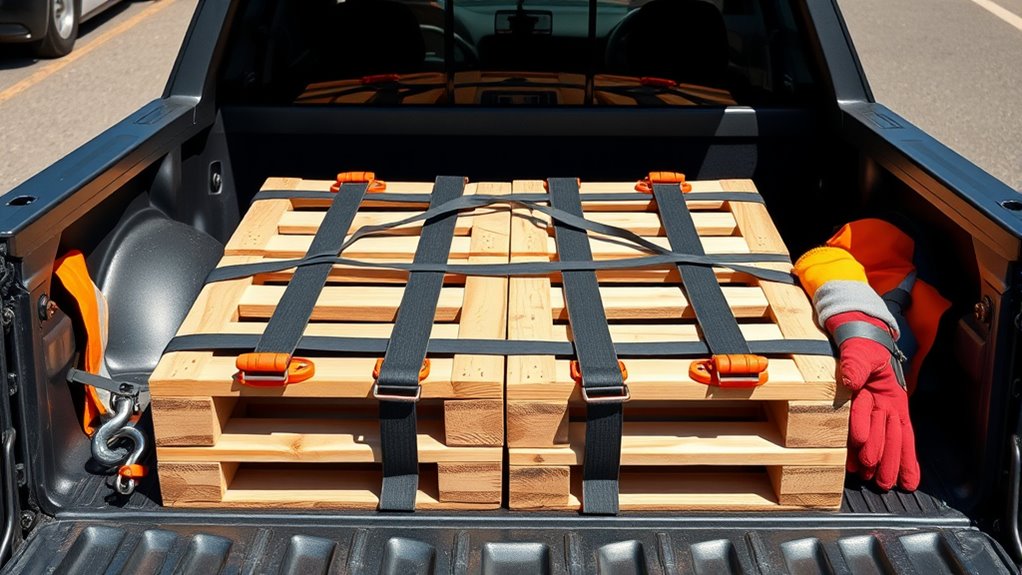
Understanding federal regulations for cargo securement is essential to guarantee your load stays safe and compliant during transit. The FMCSA sets clear rules on how many tie-downs you need based on cargo size and weight. For cargo up to 5 feet and 1,100 pounds, just one tie-down is enough. Heavier or longer loads require more—two for up to 10 feet, plus additional tie-downs for every extra 10 feet. The aggregate working load limit of your tie-downs must be at least half the cargo’s weight to prevent shifting. Regular inspections are critical; check for frays, cuts, or wear, and replace damaged devices immediately. Proper attachment points, like hooks or rings, ensure your cargo stays stable, and adherence to these regulations keeps you legal and safe on the road. Safe cargo securement practices are vital to prevent accidents and ensure compliance with federal safety standards.

Iumcin Chain Load Binder with 9 Chain Links – Heavy Duty Ratchet Chain Tightener for Truck, Trailer, Farm Equipment, Cargo Securement
【Heavy-Duty Load Binder with 9-Link Chain】Forged from premium carbon steel, the ratchet load binder is paired with a…
As an affiliate, we earn on qualifying purchases.
As an affiliate, we earn on qualifying purchases.
Selecting the Right Tie-Down Devices for Your Cargo
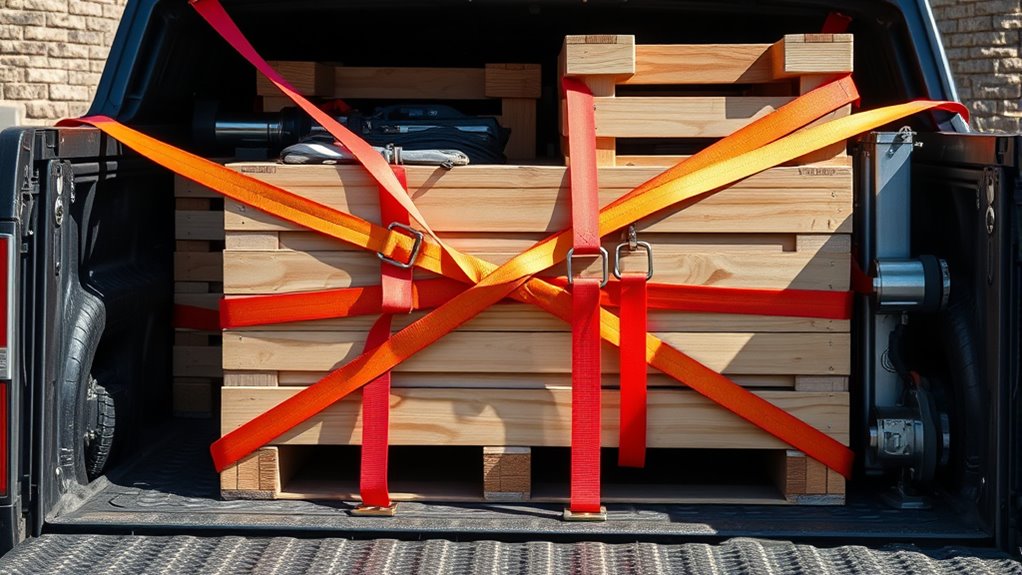
Choosing the right tie-down devices is key to securely fastening your cargo and preventing movement during transit. You need to select equipment suitable for your load’s size, weight, and type. Consider the following options:
Proper tie-down device selection ensures cargo safety and secure transit.
- Ratchet straps for heavy, irregular, or bulky cargo
- Rope or cord for lightweight, less critical loads
- Chains with hooks for high-strength securement needs
- Winch or tensioning devices for ideal tightness
- Edge protectors to prevent strap damage on sharp surfaces
Always match the device’s working load limit (WLL) to at least 50% of your cargo weight. Use proper attachment points, and ensure devices are in good condition, free of wear or damage. Proper selection maximizes safety and compliance during transport. Additionally, understanding the proper use of securement hardware helps prevent accidents and ensures your cargo remains stable.

gemigard 24pcs Flatbed Cargo Edge Corner Protectors Strap Corner Protectors Fit for 4'' Winch Ratchet Straps To Protect Cargo and Straps
【Easy to use】Edge Corner Protectors are easy to use and protect your cargo and straps.It can effectively increase…
As an affiliate, we earn on qualifying purchases.
As an affiliate, we earn on qualifying purchases.
Determining the Correct Number of Tie-Downs Based on Cargo Size and Weight
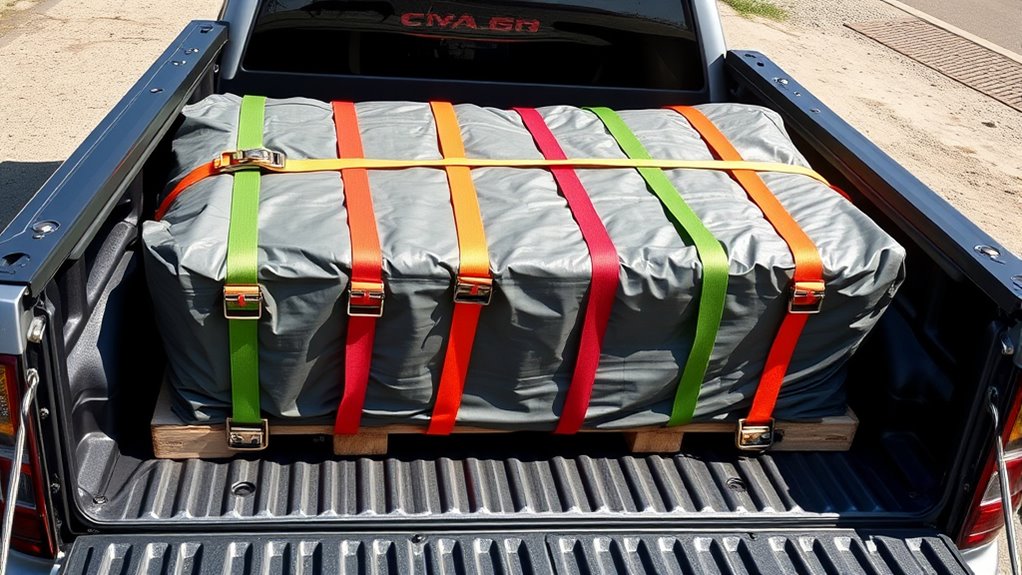
The number of tie-downs you need depends primarily on your cargo’s size and weight, as well as the length of the load. According to regulations, lighter loads up to 1,100 lbs and 5 feet or less typically require just one tie-down. Heavier or longer cargo demands more. For example, loads over 1,100 lbs or exceeding 10 feet need at least two tie-downs, plus one additional for every 10 feet beyond 10 feet. Use the following guide:
| Cargo Length & Weight | Minimum Tie-Downs Needed |
|---|---|
| ≤5 ft, ≤1,100 lbs | 1 tie-down |
| ≤10 ft, >1,100 lbs | 2 tie-downs |
| >10 ft, >1,100 lbs | 2 + 1 per additional 10 ft |
Ensure the securement matches these standards for safety and compliance. Properly cargo securement is crucial to prevent accidents and ensure your load remains safe during transit.

Hicarer 4 Set 3/8 Inch Tie Down Hardware Kit Heavy Duty Truck Camper Tie Down Anchor for Trailer Truck Bed
Unyielding Durability: Crafted from high-strength galvanized steel, this tie down hardware kit guarantees unmatched durability and reliability for…
As an affiliate, we earn on qualifying purchases.
As an affiliate, we earn on qualifying purchases.
Proper Placement and Distribution of Cargo in Your Truck Bed
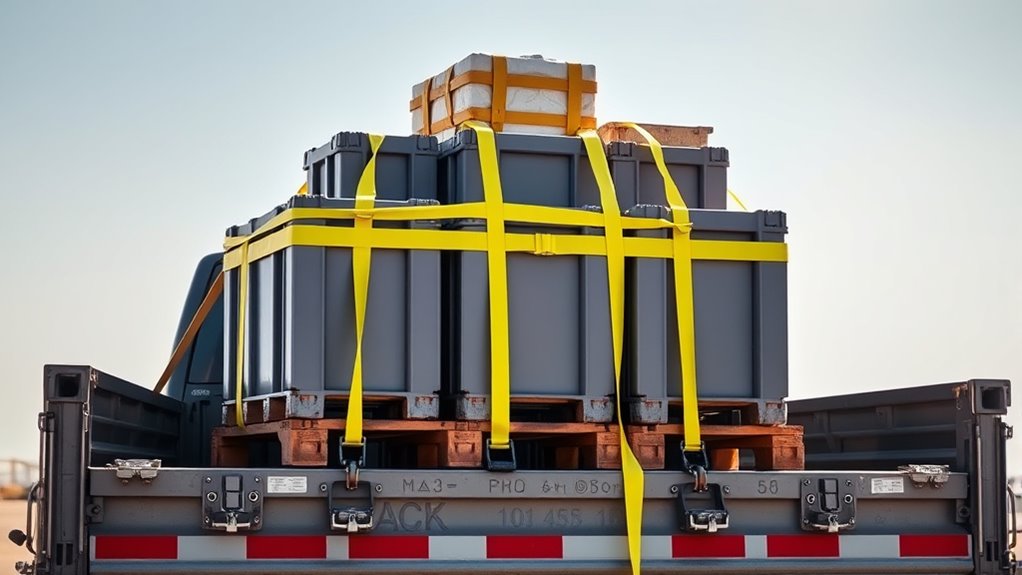
To keep your truck safe and stable, you need to focus on even load distribution across the bed. Proper placement of cargo helps prevent shifting and maintains vehicle balance during transit. Strategic tie-down points make certain your load stays secure and complies with safety regulations. Additionally, implementing simple organizational strategies can help you achieve a more efficient and secure cargo setup.
Even Load Distribution
Proper load distribution is essential for safe and stable transportation, as uneven cargo placement can compromise vehicle handling and increase the risk of accidents. When placing your cargo, ensure weight is balanced across the truck bed to maintain control. Distribute heavier items toward the center and low, close to the truck’s floor to lower the center of gravity. Avoid piling cargo on one side or at the rear, which can cause swaying or tipping. Proper load distribution also helps prevent damage to the truck bed and reduces strain on tie-downs. To achieve this, consider:
- Positioning heavy items evenly on both sides
- Keeping the load centered over the axles
- Placing lighter items on top or at the edges
- Securing the load tightly to prevent shifting
- Regularly checking for balance during loading
- Being aware of energy-efficient load management to optimize vehicle performance and safety
Strategic Tie-Down Placement
Effective tie-down placement starts with understanding how to distribute your cargo evenly across the truck bed. You want to position heavy items close to the cab and center of the vehicle to maintain balance. Place lighter or irregularly shaped cargo toward the sides or corners, but make sure it’s secured firmly. Use the truck bed’s tie-down points strategically—attach straps in a crisscross pattern to prevent shifting in multiple directions. Avoid concentrating all tension in one area, which can cause damage or load movement. Ensure tie-downs are placed inboard of rub rails when possible, protecting them from external forces. Proper placement creates a stable load, reduces strain on individual tie-downs, and helps keep your cargo secure during transit.
Techniques for Attaching and Tightening Tie-Downs Effectively

Attaching and tightening tie-downs correctly is crucial to guarantee your cargo stays secure during transit. To do this effectively, ensure your devices are compatible with the cargo and vehicle. Use the proper attachment points, such as hooks or rings, and confirm they’re secure before tightening. When tightening, apply steady tension until the strap or chain “snaps” tight without overtightening, which can damage equipment. Regularly inspect for wear, fraying, or damage during the process. Keep these tips in mind:
- Choose the correct type of tie-down for your cargo.
- Attach to fixed, sturdy points on the vehicle.
- Use tensioning devices like ratchets for consistent tightness.
- Avoid overtightening to prevent strap damage.
- Double-check all connections and tension before transit.
Additionally, understanding the importance of cargo securement can help prevent accidents and ensure safety on the road.
Using Edge Protectors and Additional Restraints for Safety
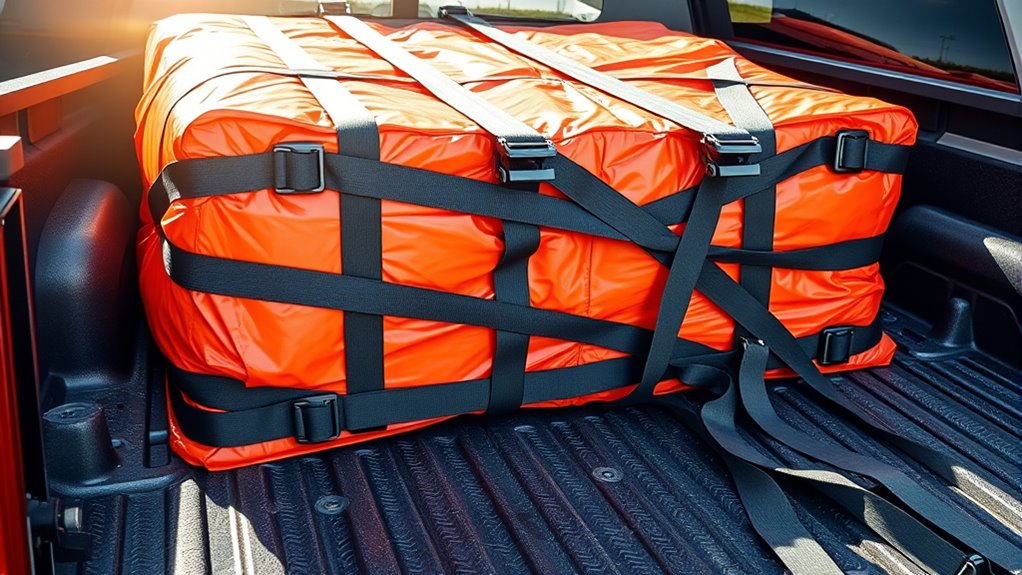
Using edge protectors and additional restraints helps safeguard your cargo and straps from damage during transit. They also improve the overall securement by reducing wear and preventing slipping or shifting. Incorporating these safety tools ensures your load stays stable and compliant with regulations. Additionally, properly tensioned restraints with high input lag ratings can enhance control over your cargo, especially during sudden stops or turns.
Protects Cargo and Straps
Protecting your cargo and straps during transit is essential to guarantee safety and prevent damage. Using edge protectors and extra restraints safeguards both your load and tie-downs from abrasion, cutting, or crushing. Edge protectors distribute tension evenly and prevent straps from fraying or breaking, extending their lifespan. Additional restraints, like corner guards or secondary tie-downs, add layers of security against shifting or falling hazards. Properly employing these tools ensures compliance with safety standards and reduces the risk of accidents. Incorporating load‑planning tools can further optimize your cargo securement strategy.
- Use edge protectors at contact points to prevent strap damage
- Add secondary restraints for heavy or irregular loads
- Secure cargo with corner guards to avoid abrasion
- Regularly inspect all protective devices for wear or damage
- Keep extra restraints on hand for emergency replacements
Enhances Securement Effectiveness
To maximize the security of your cargo, incorporating edge protectors and additional restraints is vital. Edge protectors prevent straps from fraying, cutting, or crushing against sharp or rough surfaces on the cargo. They distribute pressure evenly, reducing strap wear and potential failure. Using extra restraints like secondary tie-downs, chains, or ratchets adds layers of security, especially for irregularly shaped or heavy loads. These supplementary restraints help maintain stability by preventing shifting during transit. Proper placement is essential; position edge protectors where straps contact rough edges and ensure all restraints stay tight without overtightening. Additionally, understanding the fundamentals of load securement can help improve your overall cargo safety. This approach minimizes cargo movement, reduces the risk of strap damage, and enhances overall securement effectiveness, keeping your load safe and compliant with safety regulations.
Conducting Pre-Trip Inspections of Securement Devices

Before hitting the road, you need to thoroughly inspect all securement devices to guarantee they’re in good condition and properly attached. Check for any signs of wear, frays, or cuts on straps, chains, or ropes. Confirm that all tie-downs are tight and correctly anchored to secure points. Look for damaged or missing hardware, such as hooks, rings, or ratchets. Ensure labels indicating the Working Load Limit (WLL) are visible and legible. Verify edge protectors are in place to prevent abrasion. Make sure cargo isn’t shifting or loose. Carry spare straps or chains in case replacements are needed. Regular inspection helps prevent accidents, ensures compliance, and guarantees safe transport. Additionally, ensuring the use of proper securement techniques is essential for maintaining cargo safety during transit.
Maintaining and Replacing Tie-Downs for Optimal Performance
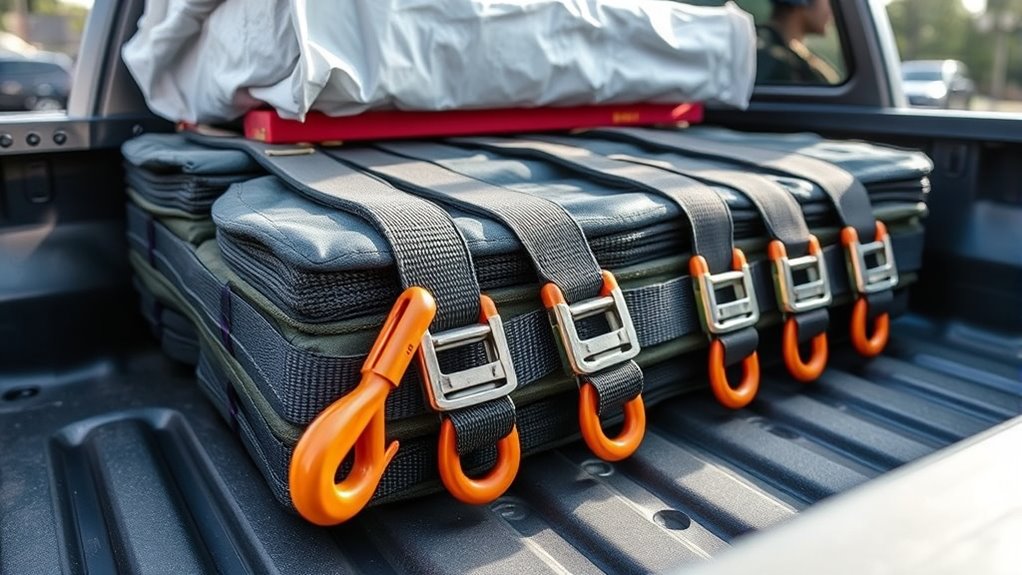
Regular maintenance of your tie-downs is essential to keep them performing safely and effectively throughout your trip. Regularly inspect for frays, cuts, rust, or corrosion, and replace any worn or damaged straps immediately. Keep a stock of spare tie-downs to swap out when needed, ensuring your load remains secure. Proper storage after use prevents unnecessary wear. Use a simple maintenance checklist to track your inspections:
| Maintenance Idea | Action |
|---|---|
| Visual Inspection | Check for tears, rust, damage |
| Replacement | Swap damaged straps immediately |
| Cleaning | Wipe down to remove dirt and debris |
| Storage | Store in a dry, accessible place |
| Record-Keeping | Log inspections and replacements |
Consistent upkeep guarantees your tie-downs stay reliable and compliant.
Practical Tips for Safe Loading, Covering, and Handling Cargo

Ensuring safe loading, covering, and handling of cargo begins with proper preparation and attention to detail. Before loading, clean your truck bed to prevent slipping or damage. When loading, distribute weight evenly to keep the vehicle stable and prevent overloading. Use secure attachment points on the vehicle and avoid shifting during transit. Cover open loads with tarps or nets to prevent debris loss and enhance safety. Always double-check tie-down tension and attachment points before starting your trip. Consider adding extra tie-downs or protective devices for irregular or heavy cargo. Keep these tips in mind:
Properly secure and cover your cargo for safe, damage-free transport.
- Plan load placement for balance and stability
- Use edge protectors to prevent strap damage
- Avoid over-tightening to prevent cargo damage
- Secure rolling items with chocks or wedges
- Inspect covers and tie-downs regularly during transit
Complying With Special Regulations and Handling Unique Cargo Types

When you’re handling heavy loads or odd-shaped cargo, special regulations come into play to make certain safety and compliance. You need to use the correct securing methods, tie-down counts, and equipment tailored to these unique items. Failing to follow these rules can lead to unsafe conditions and potential violations, so understanding and applying them is essential.
Regulations for Heavy Loads
Transporting heavy loads or specialized cargo requires strict adherence to additional regulations beyond standard tie-down requirements. You must guarantee your securement methods meet specific federal standards to prevent accidents. For example, heavy loads often need more tie-downs, with the aggregate Working Load Limit (WLL) at least 50% of the cargo’s weight. Properly distributing weight and using appropriate devices is critical. Key considerations include:
- Using extra tie-downs when cargo exceeds certain length or weight thresholds.
- Ensuring tie-downs are inspected regularly for wear and replaced if damaged.
- Attaching to fixed, certified points on the vehicle.
- Preventing cargo from shifting, dropping, or leaking.
- Complying with state-specific rules for heavy or specialized loads to avoid penalties.
Always verify your securement plan aligns with federal and local regulations before transit.
Securing Odd-Shaped Cargo
Securing odd-shaped cargo presents unique challenges because standard tie-down methods may not provide adequate stability. Irregular shapes are prone to shifting or slipping if not properly restrained. To handle this, use a combination of direct and indirect tie-downs, attaching straps to secure points on the cargo and the vehicle. Use adjustable ratchets or tensioning devices to ensure a snug fit without over-tightening, which could damage the load. Place edge protectors where straps contact rough or sharp surfaces to prevent abrasion. Distribute tension evenly across multiple attachment points to maintain balance. For fragile or uneven items, add padding or cushioning. Always double-check that all tie-downs are tight, secure, and compliant with federal and local regulations before hitting the road.
Frequently Asked Questions
How Often Should I Inspect My Tie-Downs During Transit?
You should inspect your tie-downs at least once every 150 miles or every 3 hours of driving, whichever comes first. Additionally, check them whenever you stop for fuel, rest breaks, or bathroom breaks. During these inspections, look for signs of wear, frays, or damage. Tighten or replace any tie-downs if needed. Regular checks help guarantee your cargo stays secure and your trip remains safe.
Can I Use Bungee Cords for Cargo Securement?
You shouldn’t rely on bungee cords for cargo securement, especially for heavy or valuable loads. Bungee cords lack the strength and stability needed to prevent cargo from shifting or falling during transit. Instead, use proper tie-down straps, chains, or ratchets that meet federal regulations and have appropriate working load limits. Always inspect your securements regularly and replace any damaged or worn straps to guarantee your cargo stays safe and secure throughout your trip.
What Are the Penalties for Improper Cargo Securement?
Imagine your cargo as a delicate kite soaring in unpredictable winds. If you neglect proper securement, authorities like the FMCSA act as the stern wind, ready to pull the kite down. Penalties can include hefty fines, points on your license, or even suspension. You might also face legal liability if cargo shifts or causes accidents. Always secure your load correctly to keep your journey smooth and avoid these costly consequences.
How Do I Secure Irregularly Shaped or Bulky Cargo?
To secure irregularly shaped or bulky cargo, you should use extra tie-downs and distribute them evenly across the load. Use straps, chains, or ropes with tensioning devices that can conform to the cargo’s shape. Add edge protectors to prevent damage to the straps, and use chocks or wedges for rolling items. Always double-check tension and attachment points before travel to guarantee the load stays safe and stable.
Are There Specific Regulations for Securing Hazardous Materials?
Imagine your cargo as a fragile treasure, demanding utmost care. Federal regulations require hazardous materials to be securely contained and properly labeled, with specific tie-down methods to prevent leaks or spills. You must follow the Department of Transportation (DOT) guidelines, using approved packaging, placards, and securement devices. Regular inspections and documentation are essential, ensuring every tie-down withstands sudden stops or turns, keeping everyone safe and avoiding costly violations.
Conclusion
By following these steps, you’re building a fortress of safety around your cargo, protecting everyone on the road. Properly securing your load isn’t just a rule; it’s the backbone of safe driving. Remember, a well-tied cargo is like a steady ship—ready to weather any storm. Keep safety your top priority, and you’ll navigate every journey with confidence and peace of mind. Your commitment keeps everyone’s road safe and sound.