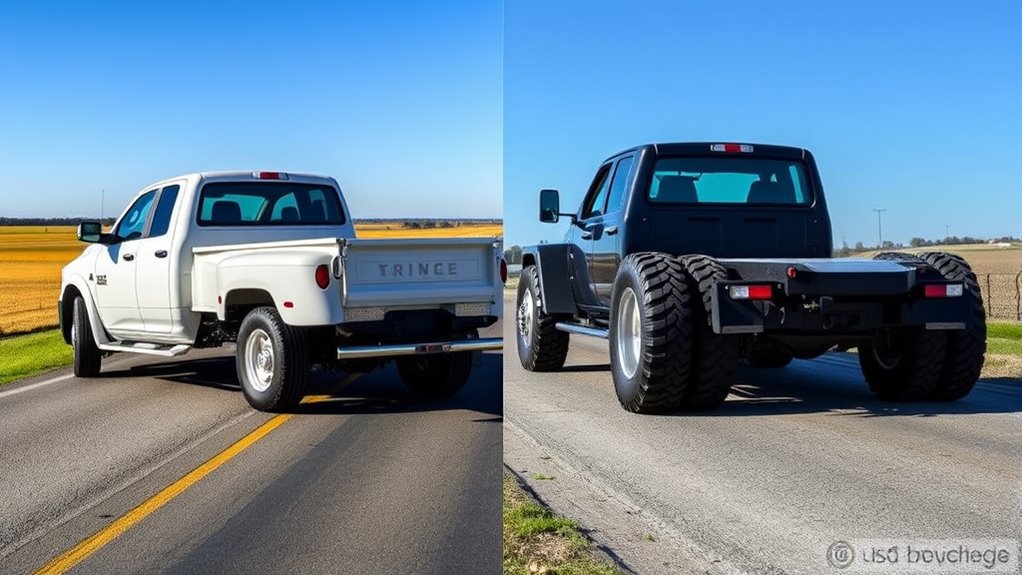

If you frequently tow heavy loads or need maximum stability, a dually truck might be best for you, thanks to its extra rear wheels and better load support. If you mostly drive in the city, do light hauling, or need easier maneuverability, a single rear wheel truck suits your needs better. Consider your typical work environment and load demands; continue exploring to find the perfect fit for your driving lifestyle.
Key Takeaways
- Dually trucks offer greater load capacity, stability, and safety for heavy towing and long-distance hauling.
- SRW trucks excel in urban environments with better maneuverability and easier parking in tight spaces.
- Dually trucks are wider, longer, and less maneuverable, suited for heavy-duty tasks on rough terrain.
- SRW vehicles are more fuel-efficient, less costly to maintain, and ideal for light-duty and city driving.
- Choose based on your typical load, driving environment, and need for stability versus maneuverability.
Towing Power and Load Capacity Differences
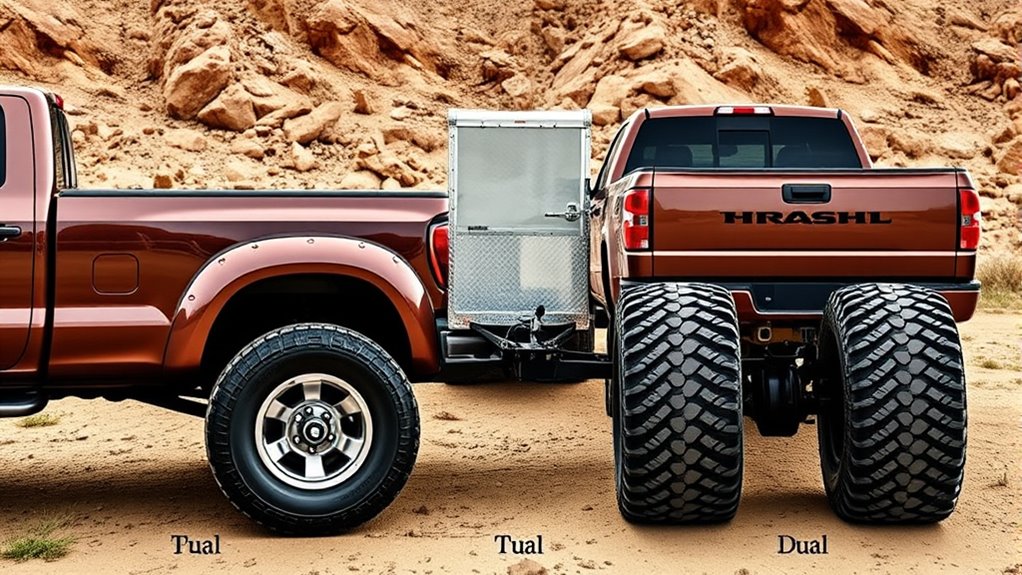
When comparing towing power and load capacity, dually trucks clearly outperform single rear wheel (SRW) models. They can tow over 31,000 pounds, almost double the SRW’s typical limit of around 18,500 pounds. This is due to the extra set of rear wheels, which distribute weight more effectively. With four tires supporting the load, the vehicle handles heavier trailers with greater stability and less strain on individual tires and suspension. Dually setups also improve tongue weight management, making heavy loads more stable and reducing bouncing. Additionally, their wider footprint offers better traction on uneven terrain or poor road conditions. Proper load distribution is essential for maintaining safety and stability during heavy hauling. If heavy hauling and maximum load capacity are priorities, a dually truck provides the power and stability you need for demanding tasks.
Stability and Safety Features
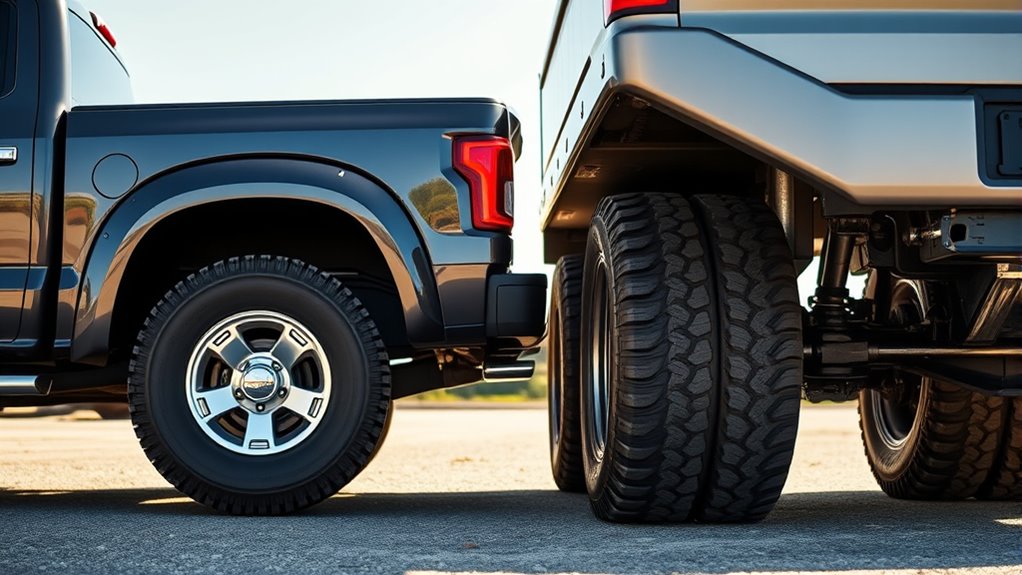
The wider stance of dually trucks enhances overall stability and safety during towing by reducing trailer sway and improving handling at highway speeds. This increased stability helps you maintain control, especially in crosswinds or sudden maneuvers, making towing safer and more predictable. Dually trucks distribute weight more evenly across four rear tires, decreasing stress on individual tires and axles, which reduces the risk of tire blowouts or mechanical failures under heavy loads. They also handle steep inclines and uneven terrain better due to improved traction and balance. Additionally, the Free Floating design allows for easier maintenance and better adaptability to varying load conditions. Overall, this setup minimizes trailer sway, enhances braking performance, and provides a more secure towing experience, giving you peace of mind when hauling large or heavy trailers over long distances.
Maneuverability and Handling Challenges
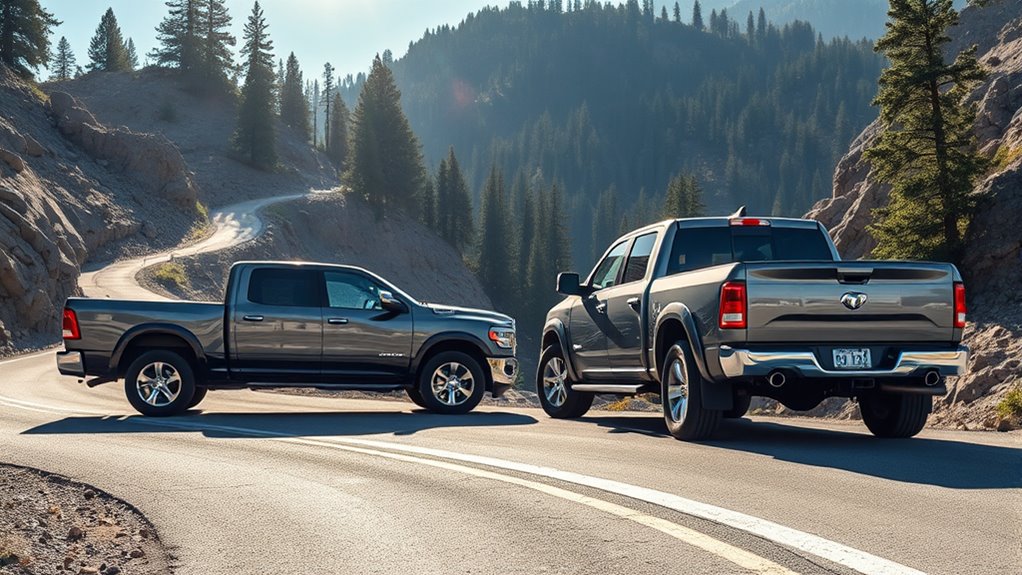
When it comes to maneuverability, you’ll find that single rear wheel trucks handle tight spaces more easily thanks to their narrower build and smaller turning radius. Dually trucks, however, require more room for turns due to their wider stance and longer wheelbase, making parking and steering through confined areas more challenging. This difference can profoundly impact your daily driving, especially in urban environments or job sites with limited space. Additionally, understanding modern vehicle technology can help drivers choose models with features that assist in maneuvering and safety.
Tight Space Navigation
Moving through tight spaces can be a significant challenge with dually trucks due to their increased width and longer wheelbase. The wider rear track and extra tires make maneuvering in narrow parking spots, alleyways, or crowded job sites more difficult. Turning radius is larger, requiring more room to make U-turns or navigate sharp corners. Parking in tight garages or parallel parking becomes more stressful, especially if you’re used to a narrower vehicle. Additionally, width restrictions at toll booths or drive-thrus can cause inconvenience or require careful planning. The longer wheelbase also affects backing up and positioning, demanding more skill and attention. If tight space navigation is a daily concern, a single rear wheel truck offers better agility and easier handling in confined environments. Smart technology can also assist with parking and maneuvering, making tight-space driving more manageable.
Wider Turning Radius
A wider turning radius is one of the main handling challenges you’ll face with dually trucks. The extra width from dual rear wheels means you need more space to make turns, especially in tight areas. This longer wheelbase and broader stance make parking and maneuvering more difficult. You’ll notice it’s harder to navigate narrow streets, drive through tight parking lots, or pull into small spaces. To help you understand, here’s a quick overview:
| Aspect | Effect | Tip |
|---|---|---|
| Turning Radius | Larger, requires more space | Plan routes ahead of time |
| Maneuverability | Less agile in tight spots | Use wider turns and wider lanes |
| Parking | Challenging in confined spaces | Look for larger parking areas |
| Drive-thru access | May be difficult | Check vehicle dimensions first |
| Overall Handling | More effort needed | Practice cautious turning |
This wider footprint demands extra attention during everyday driving. Additionally, the increased width can impact safety considerations by affecting visibility and stability.
Fuel Economy and Operating Expenses
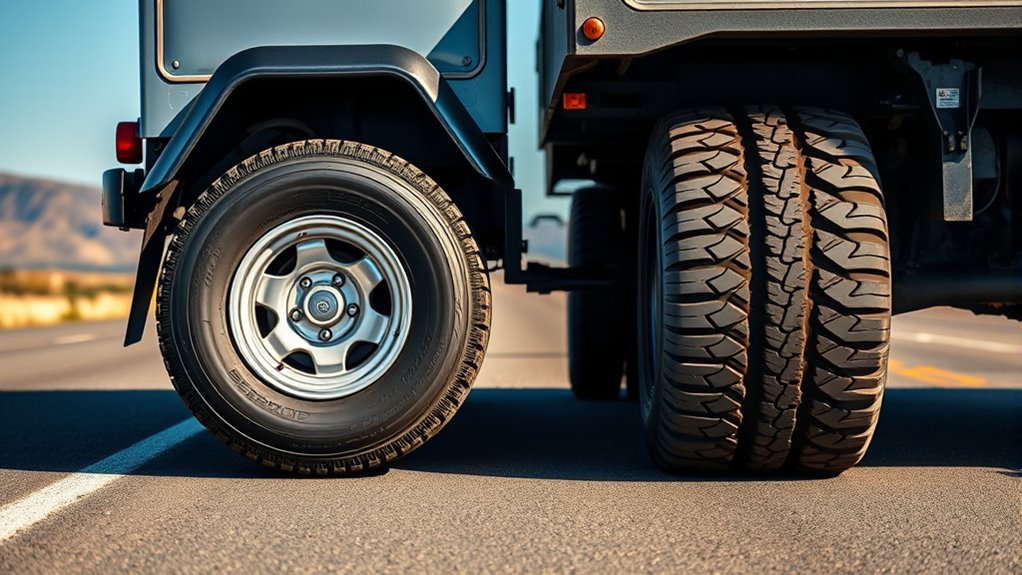
Dually trucks tend to consume more fuel and incur higher operating costs compared to single rear wheel (SRW) models. The extra wheels and heavier weight increase rolling resistance, which reduces fuel efficiency. You’ll also face higher maintenance costs for the additional tires, with four rear tires needing regular inspection and replacement compared to just two on SRW trucks. The heavier weight of duallys means more strain on the engine and drivetrain, often leading to increased wear and tear. Some models use different final drive ratios, further decreasing fuel economy. Plus, wider vehicles can lead to parking fees, toll charges, and restrictions that add to your expenses. Overall, expect higher fuel and maintenance costs if you choose a dually over an SRW for daily or lighter-duty use. Additionally, vehicle weight can impact handling and tire longevity, further contributing to operating expenses.
Best Uses and Practical Applications
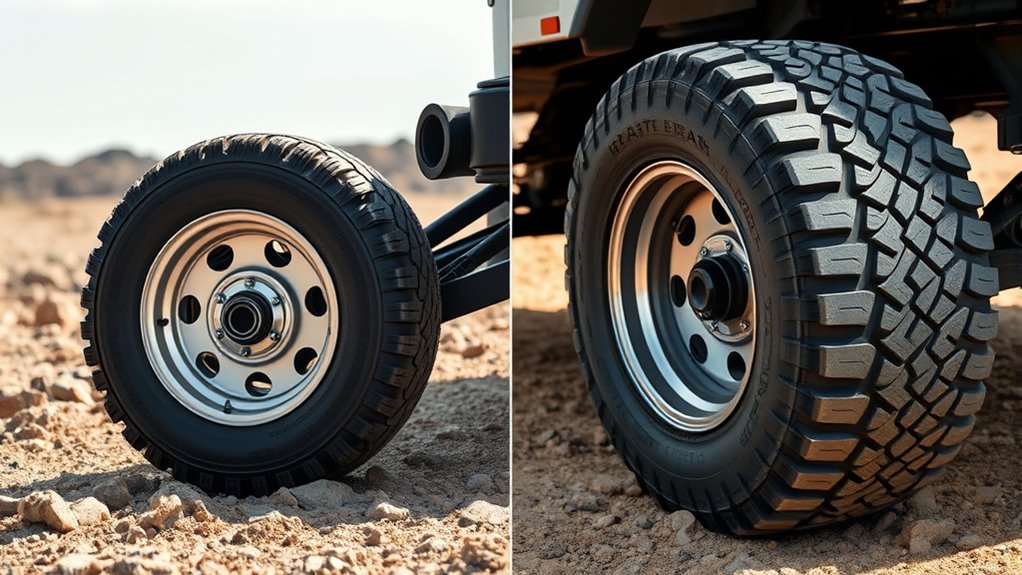
If you frequently tow heavy loads like RVs or heavy equipment, a dually truck offers better stability and load capacity. For light-duty tasks or city driving, a single rear wheel truck provides easier maneuverability and better fuel efficiency. Consider your typical use to choose the setup that best fits your practical needs. Additionally, understanding the mechanics behind quorum sensing can give you insight into how different systems coordinate behavior, much like how various vehicle components work together for optimal performance.
Heavy Towing Scenarios
Heavy towing scenarios demand maximum stability, load capacity, and reliability, making dually trucks the ideal choice for such demanding tasks. With towing capacities exceeding 31,000 pounds, duallys handle large RVs, horse trailers, and heavy equipment with ease. The four rear tires distribute weight more evenly, reducing strain on suspension and tires, which enhances safety and durability. The wider footprint improves traction on uneven terrain and poor road conditions, giving you better control. The increased stability minimizes trailer sway and improves handling at highway speeds or on winding roads. While they require more space for parking and maneuvering, dually trucks excel in delivering confidence and safety when hauling heavy loads over long distances or challenging terrains. Proper vehicle maintenance and adherence to safety protocols can further ensure optimal performance and safety during heavy towing. If heavy towing is your primary need, a dually is the practical, reliable choice.
Urban and Light Use
For urban and light use, a single rear wheel (SRW) truck typically offers the best balance of maneuverability, convenience, and efficiency. Its narrower width makes parking, steering through tight streets, and fitting into garages easier, saving you time and effort. The smaller turning radius allows for smoother handling in crowded areas and confined spaces. Plus, SRW trucks are lighter, which means better fuel economy and lower operating costs—ideal for daily commuting and moderate hauling. They’re also more comfortable to drive on city streets and offer easier access to drive-thrus, toll booths, and narrow lanes. If your typical tasks involve light loads, urban driving, or regular city errands, an SRW truck provides the agility and practicality you need without sacrificing capability. Additionally, understanding projector contrast ratios can help you optimize your home cinema setup for better picture quality.
Vehicle Dimensions and Design Factors
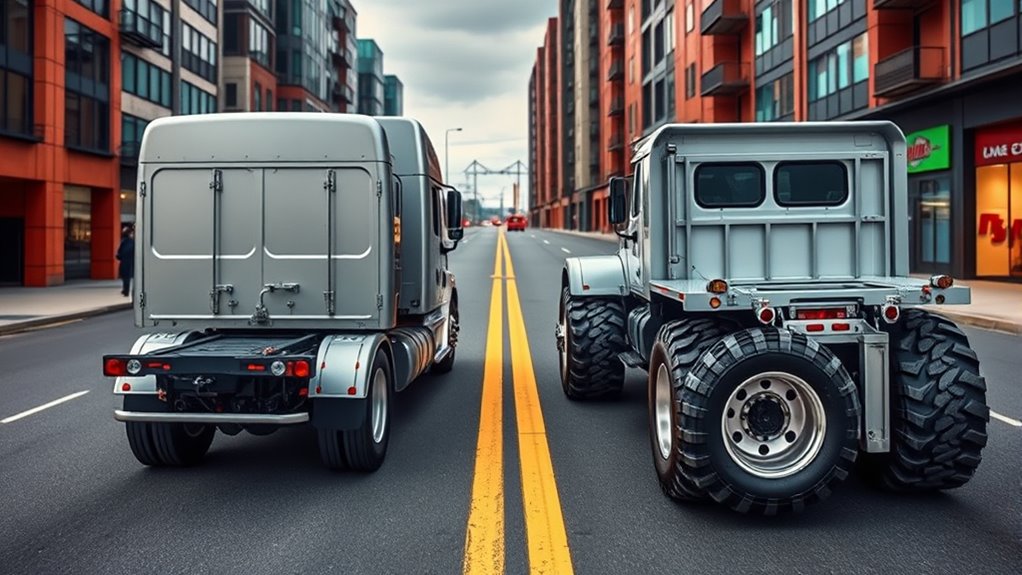
Vehicle dimensions and design factors play a vital role in how a truck fits into your daily routine and workspace. Dually trucks are longer and wider due to their extended wheelbases and dual rear wheels, impacting parking and garage space. The wider rear track requires broader fender flares, adding to overall width, which can make steering narrow roads or tight spots more challenging. They often feature reinforced frames to support increased weight and have different suspension tuning for stability. In contrast, SRW trucks are more compact, closer in width to passenger vehicles, and easier to maneuver in urban settings. Consider your typical driveway, parking, and access points when choosing between the two, as vehicle dimensions directly influence usability and convenience in your daily environment. Smart vehicle design also considers ease of access and adaptability to various driving conditions, which can be crucial for your comfort and safety.
Cost of Maintenance and Repairs
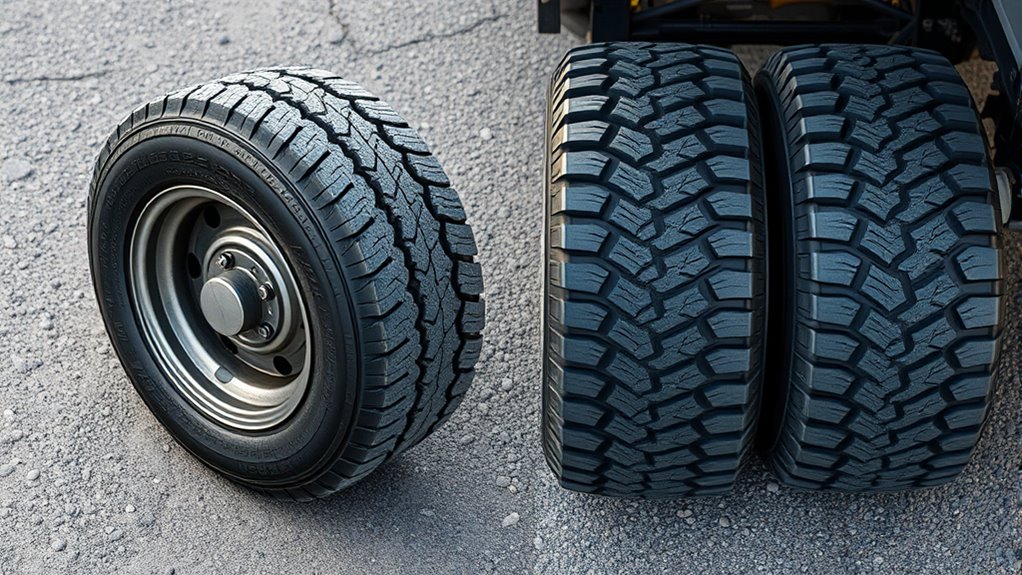
Dually trucks tend to incur higher maintenance and repair costs compared to single rear wheel models due to their additional components and increased wear. The extra set of tires means you’ll spend more on replacements and alignments, especially since four tires wear out faster under heavy loads. The dual rear axle setup also increases the complexity of repairs, requiring more labor and parts like brake systems, suspension, and differential components. Additionally, dually trucks often have reinforced frames and axles that can be more expensive to service over time. Routine maintenance, such as tire rotations, brake inspections, and fluid changes, costs more because of the larger, more intricate systems involved. Overall, expect higher expenses to keep a dually truck in good condition compared to a single rear wheel model.
Making the Right Choice for Your Needs
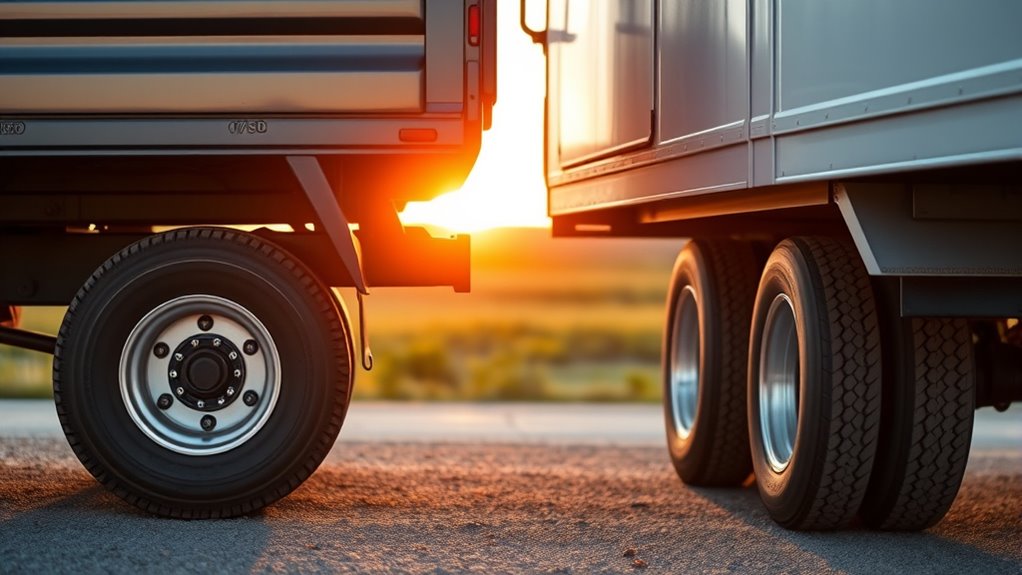
Choosing between a single rear wheel and a dually depends on your specific towing and load requirements. If you regularly haul heavy loads, tow large trailers, or need maximum stability, a dually is the better choice. Its wider stance and increased load capacity provide safer, more stable towing, especially over long distances or rough terrain. However, if your tasks involve moderate towing, urban driving, or frequent maneuvering in tight spaces, a single rear wheel offers better agility, easier parking, and better fuel efficiency. Consider your typical loads, driving environment, and how often you’ll tow. Also, think about vehicle dimensions and infrastructure compatibility. Ultimately, choosing the right setup balances your load demands with your daily driving needs and comfort.
Frequently Asked Questions
How Do Dually Trucks Perform in Off-Road Conditions?
In off-road conditions, dually trucks perform well in stability and traction due to their wider stance and weight distribution. You’ll find they handle uneven terrain better, reducing trailer sway and improving grip on rough surfaces. However, their increased width and longer wheelbase make maneuvering more challenging, especially in tight spots. If you prioritize stability over agility and often tackle rugged terrain, a dually can be a reliable, stable choice.
Are Dually Trucks Suitable for Urban and Tight Parking Areas?
Dually trucks aren’t ideal for urban and tight parking areas because their wider width and longer wheelbase make maneuvering more difficult. You’ll need extra space for turning and parking, and they might not fit comfortably in narrow streets or tight spots. If you frequently navigate city streets or congested areas, a single rear wheel truck offers greater agility, easier parking, and better overall convenience for urban driving.
What Are the Insurance Considerations for Dually Versus SRW Trucks?
You should expect higher insurance premiums for dually trucks compared to SRWs because they’re seen as higher risk due to their increased size, weight, and towing capacity. The added complexity of dual wheels, wider footprint, and potential for more damage in accidents also contribute to higher coverage costs. You’ll want to factor in these factors when budgeting for insurance, especially if you frequently tow heavy loads or operate in challenging conditions.
Can I Retrofit an SRW Truck to a Dually Setup Later?
Yes, you can retrofit your SRW truck to a dually setup, but it involves significant work. You’ll need to upgrade the rear axle, wheels, tires, and possibly the suspension and fenders to accommodate the wider dual wheels. It’s a complex process that requires professional installation and careful planning. Keep in mind, some models may have structural limitations or compatibility issues, so consult with a specialist before proceeding.
How Does Trailer Size Compatibility Differ Between SRW and Dually Trucks?
Trailer size and compatibility can considerably differ between SRW and dually trucks. With SRWs, you’ll find more flexibility, fitting narrower trailers and easier access in tight spaces. Dually trucks, however, excel with larger, heavier trailers thanks to their increased stability, weight capacity, and traction. If you’re towing big loads regularly, a dually offers more dependable support. But for smaller trailers, an SRW truck provides easier maneuverability and more manageable dimensions.
Conclusion
Choosing between a single rear wheel and a dually depends on your towing needs and daily driving. Some believe that duallys always offer better stability, but recent studies show that proper suspension and weight distribution can make singles just as safe. Consider your typical loads, maneuvering space, and budget. Ultimately, the right choice aligns with your specific needs—so don’t assume bigger is always better; do your research and select wisely.