If you prioritize maneuverability and urban driving, a short bed truck is a great choice because it’s easier to park and handle in tight spaces. On the other hand, if you need maximum cargo capacity and plan to transport large or heavy items, a long bed offers more space and versatility. Understanding these pros and cons helps you pick the right size for your needs—keep going to discover more details about each option.
Key Takeaways
- Short beds offer better maneuverability and easier parking in urban environments, ideal for daily city driving.
- Long beds provide maximum cargo capacity for large or bulky items, suitable for heavy-duty tasks.
- Short beds are lighter and more fuel-efficient, while long beds tend to increase fuel costs due to added weight.
- Long beds are less maneuverable in tight spaces and may complicate parking and tight turns.
- Proper vehicle size awareness and regulation compliance are essential when choosing between short and long beds.

MOSTPLUS 5.5FT Quad Fold Soft Truck Bed Tonneau Cover On Top Compatible for Ford F150 2015-2025 2026 F-150 Bed Fourth Fold Styleside Bed Cover 67Inch
Truck bed Compatible for Ford F-150 2015 2016 2017 2018 2019 2020 2021 2022 2023 2024 2025 2026,…
As an affiliate, we earn on qualifying purchases.
As an affiliate, we earn on qualifying purchases.
Advantages and Disadvantages of Short Bed Trucks

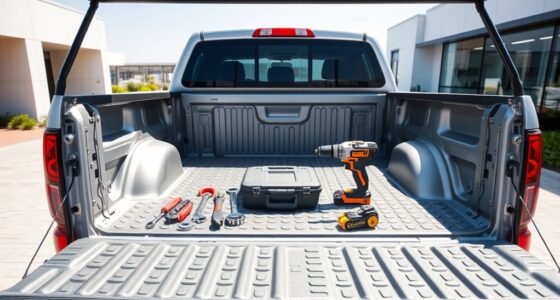
Short bed trucks offer significant advantages, especially if you prioritize ease of maneuverability and urban driving. Their compact size makes parking easier and handling in tight spaces less stressful. You’ll find it simpler to navigate crowded streets and narrow alleys, saving time and reducing frustration. The shorter length also provides a tighter turning radius, which is a huge benefit in city environments. Additionally, short beds tend to be lighter, which can marginally improve fuel efficiency. They’re compatible with a wide range of aftermarket accessories, like tonneau covers and bed liners, making customization straightforward. Aesthetically, short beds often look sleeker and more balanced with crew cab configurations. Overall, they’re a practical choice for daily drivers and recreational users who value convenience and agility over maximum cargo capacity.

HERCULINER HCL1B8 Roll-on Bed Liner Kit,Black, 1 Gal.
J-B Weld Herculiner Truck Bed Liner: Is The Original Do-It-Yourself Truck Bed Liner. Just 3 Easy Steps: Prep,…
As an affiliate, we earn on qualifying purchases.
As an affiliate, we earn on qualifying purchases.
Benefits and Drawbacks of Long Bed Trucks
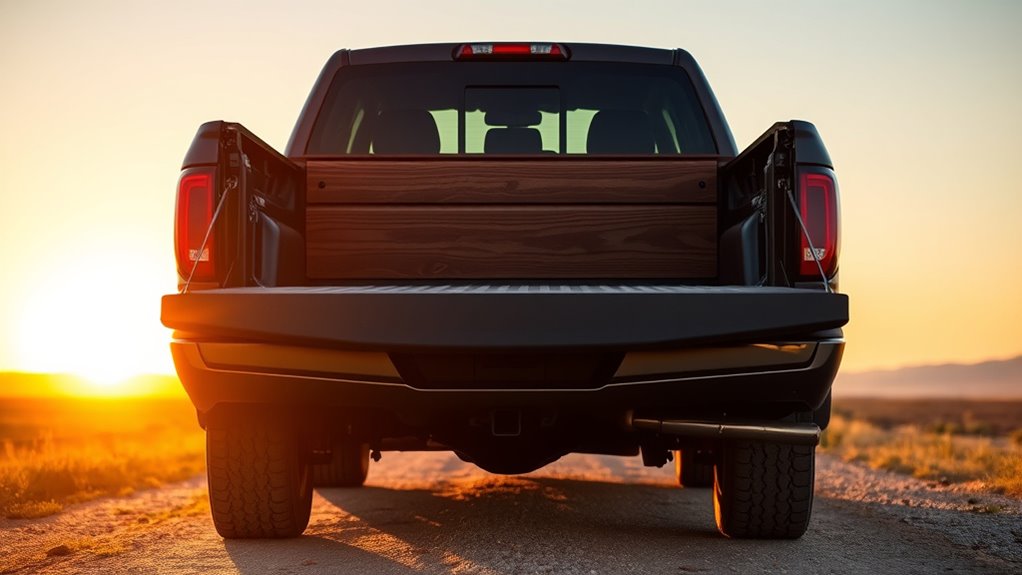
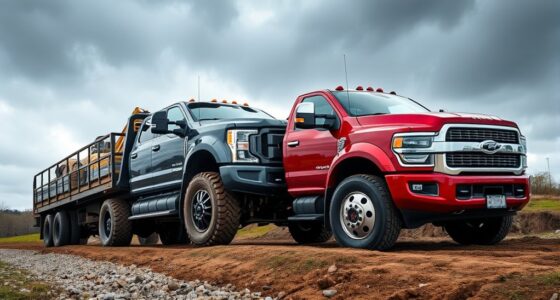
Long bed trucks excel when your priorities include maximum cargo capacity and versatility. With an 8-foot bed, you can transport large, bulky items like lumber, tools, or equipment without overhang concerns. This makes them ideal for construction, farming, or hauling heavy loads. You’ll appreciate the ability to carry longer items flat and securely, simplifying load management. Additionally, choosing the right backup power system can help keep your worksite or home running smoothly during outages. However, their size can be a drawback in urban settings, reducing maneuverability and complicating parking. Fuel economy also tends to decline due to increased weight and size. If you frequently tow trailers or need maximum cargo space, a long bed offers significant advantages. But if you mostly drive in city environments or prioritize ease of use, the added length may be more hassle than it’s worth. Considering vehicle dimensions and how they impact daily driving can help you make the best choice. Moreover, understanding truck bed sizes can assist in selecting the most suitable vehicle for your specific needs. Being aware of the weight distribution is also important to ensure safe and balanced driving with larger trucks. Additionally, awareness of road regulations regarding truck length limits can prevent legal issues on certain routes or areas.

LOVEETA® 6.3 Ft Magnetically Mounted Cargo Grabber Reach Retriever Tool – 3.0 New Upgraded Extendable Pickup Truck Bed Accessories, Multi-Use Truck Bed Reach Tool (Jet Black) – 2 Hooks 1 Mounted Plate
【 𝟑.𝟎 𝐌𝐚𝐠𝐧𝐞𝐭𝐢𝐜 𝐏𝐨𝐰𝐞𝐫𝐏𝐮𝐥𝐥 𝐏𝐫𝐨 𝐓𝐞𝐥𝐞𝐬𝐜𝐨𝐩𝐢𝐧𝐠 𝐑𝐞𝐭𝐫𝐢𝐞𝐯𝐚𝐥 𝐇𝐨𝐨𝐤 】: After a full year of dedicated development, we are…
As an affiliate, we earn on qualifying purchases.
As an affiliate, we earn on qualifying purchases.
Frequently Asked Questions
How Does Bed Size Affect Towing Capacity?
Your truck’s bed size can influence towing capacity, mainly by affecting weight distribution and overall vehicle weight. A longer bed adds more weight, which can slightly reduce towing capacity due to increased curb weight. However, long beds also provide extra space for hauling gear or mounting equipment, which can support heavier trailers. Overall, bed size impacts towing indirectly by influencing vehicle weight and load management, but other factors like engine and suspension are more critical.
Are Long Beds Harder to Park in Urban Areas?
Yes, long beds are harder to park in urban areas. Their increased length makes maneuvering and parking tight spaces more challenging. You’ll notice a bigger turning radius and limited visibility, especially when parallel parking or steering through crowded streets. If you frequently drive in the city, a long bed can be inconvenient, requiring extra caution and effort. Shorter beds offer better agility and ease of parking in tight urban environments.
Can Short Beds Handle Large or Oversized Loads?
Short beds struggle with large or oversized loads because their limited length restricts the size and weight of items you can haul. You can’t lay long materials flat or fit bulky equipment easily. If you frequently carry oversized items, you’ll need a longer bed to handle them safely and efficiently. Short beds are better suited for smaller loads, daily commuting, and recreational use, not heavy-duty hauling.
Do Bed Sizes Impact Fuel Efficiency Significantly?
Bed sizes do impact your fuel efficiency, but it’s like a ripple in a pond—small but noticeable. Short beds are lighter and more aerodynamic, helping you save a bit on gas. Long beds add weight and create more wind resistance, which can sap your mileage. If you’re aiming for better fuel economy, a shorter bed might be the better choice, especially if your hauling needs are modest.
Are Aftermarket Accessories Compatible With All Truck Bed Sizes?
You’ll find that most aftermarket accessories are compatible with standard bed sizes, but not necessarily all. You need to check specific measurements like length, width, and mounting points for covers, racks, or liners. Some accessories may fit multiple sizes, but others are designed for particular bed dimensions. Always verify compatibility with your truck’s exact bed size before purchasing to confirm a proper fit and ideal functionality.

Tmat Truck Bed Organizer Storage System Slide Out Mat (Universal Fit for Short Beds 5'6" to 5'9")
ORGANIZED CARGO, YOUR WAY – Tmat is a modular truck bed mat system with adjustable blockers designed to…
As an affiliate, we earn on qualifying purchases.
As an affiliate, we earn on qualifying purchases.
Conclusion
So, whether you choose a short bed to impress with agility or a long bed to conquer cargo, remember—your truck’s size might just be the only thing that fits all your ego. Short beds are perfect for zipping through city streets, while long beds laugh in the face of limited space. In the end, pick what suits your lifestyle—just don’t blame us when your vehicle becomes the star of every parking lot showdown.