
Most pickups can run on biodiesel if their engines are compatible and you follow manufacturer guidelines. Modern trucks, especially from 2007 onward, often handle B20 blends without issues, but older models or higher blends like B100 may need modifications or OEM approval. Checking your owner’s manual or manufacturer info is essential before switching fuels. If you keep these tips in mind, you’ll discover more ways to make biodiesel work smoothly in your truck.
Key Takeaways
- Most modern pickups (post-2007) can safely run on B20 biodiesel without modifications.
- Older trucks (pre-2007) may require engine upgrades or OEM approval for higher biodiesel blends.
- Check your vehicle’s owner manual or manufacturer guidelines to confirm biodiesel compatibility.
- Biodiesel blends like B5 and B20 are generally compatible with existing diesel engines.
- Using higher biodiesel content (like B100) often needs engine modifications and manufacturer approval.
Top picks for "pickup biofuel biodiesel"
Open Amazon search results for this keyword.
As an affiliate, we earn on qualifying purchases.
What Is Biodiesel and How Is It Made?
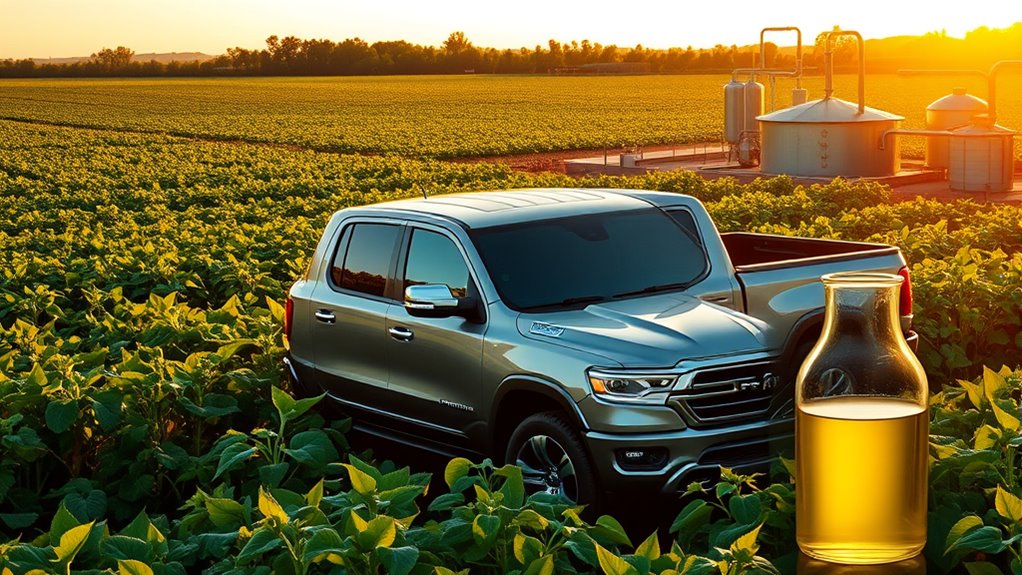
What exactly is biodiesel, and how is it produced? Biodiesel is a renewable fuel made from natural resources like vegetable oils, animal fats, or recycled restaurant grease. It’s created through a process called transesterification, where oils or fats react with methanol in the presence of a catalyst such as sodium hydroxide or potassium hydroxide. This chemical reaction separates the glycerin from the oil, resulting in biodiesel and glycerin as a byproduct. The biodiesel produced can be used directly in diesel engines or blended with petroleum diesel. Because it’s made from renewable sources, biodiesel offers an environmentally friendly alternative to traditional diesel, helping reduce greenhouse gas emissions and dependence on fossil fuels. Additionally, modern energy-efficient ceiling fans can complement biodiesel-powered vehicles by improving overall energy consumption in transportation and home cooling systems.
Types of Biodiesel Blends and What They Mean

Biodiesel blends are categorized by the percentage of biodiesel they contain, which directly affects their performance and compatibility. For example, B5 contains 5% biodiesel mixed with 95% petroleum diesel, while B20 has 20% biodiesel. B100 is pure biodiesel, made entirely from renewable sources. The higher the biodiesel percentage, the more it can impact fuel properties like energy content, cold weather performance, and engine wear. Most modern diesel engines can handle B5 and B20 without issues, but higher blends may require modifications or OEM approval. Understanding these blends helps you choose the right option for your truck’s performance, fuel economy, and longevity. Always check your vehicle’s specifications before switching to a different biodiesel blend. Fuel compatibility is an important factor to consider when selecting biodiesel blends to ensure optimal engine performance and longevity.
Compatibility of Pickup Trucks With Biodiesel

Your pickup truck’s compatibility with biodiesel depends on its engine and manufacturer approvals. Most modern pickups can run on B20 or lower without modifications, but higher blends like B100 may require upgrades or special approval. Always check your owner’s manual or manufacturer guidelines to guarantee safe and effective biodiesel use. Additionally, understanding the compatibility of different fuel blends is crucial for optimal engine performance and longevity.
Engine Compatibility Standards
Many pickup trucks today can run on biodiesel, but compatibility depends on the engine’s age and design. Most modern diesel engines from 2007 onward are designed to handle B20 or lower blends without modifications. If your truck is from 1994 to 2006, you might need fuel system upgrades to safely use higher biodiesel levels. Pre-1994 engines generally aren’t compatible and may suffer damage if biodiesel is used. Always check your owner’s manual or OEM guidelines to confirm whether your truck is approved for biodiesel use. Some manufacturers offer specific models with built-in B20 capability. Using biodiesel outside the recommended standards could void your warranty or harm your engine, so verify compatibility before filling up. Additionally, Free Floating systems can influence how well your engine manages alternative fuels like biodiesel.
B20 and B100 Use
Pickup trucks can often run on B20 biodiesel blends without modifications if they are from 2007 or newer, as most modern diesel engines are designed to handle this level of biodiesel. B20 contains 20% biodiesel and 80% petroleum diesel, making it compatible with many vehicles built after 2007. However, it’s essential to check your owner’s manual or manufacturer’s guidelines to confirm compatibility, especially if your truck is from an earlier model year. While B20 is widely accepted, using B100 (100% biodiesel) usually requires engine modifications and OEM approval. Keep in mind that higher biodiesel blends can impact cold-weather performance and storage, so plan accordingly if you decide to run B100 regularly. Additionally, always verify engine compatibility before switching to higher biodiesel blends to avoid potential issues.
Manufacturer Approvals
Are your truck’s manufacturer approvals compatible with biodiesel? Many modern pickups can handle B20 without issues, but always verify your specific model. Some manufacturers, like Ford, approve B20, while others may require modifications for higher blends. Check your owner’s manual or OEM guidelines before fueling up. Using unsupported biodiesel blends can void warranties or damage engines. Keep in mind that older trucks often aren’t rated for biodiesel use, especially above B5. To clarify compatibility, consider this table:
| Manufacturer | Approved B20 use | Notes |
|---|---|---|
| Ford | Yes | Approved for B20 |
| Ram | Optional B20 | May need upgrade |
| Chevrolet | No | Not officially approved |
| Freightliner | Yes | Suitable for B100 in fleet |
| Toyota | No | Not compatible |
Always consult your vehicle’s documentation for the most accurate info. Additionally, fuel compatibility can vary depending on the engine type and age, so it’s essential to verify with your vehicle’s specifications.
Benefits of Using Biodiesel in Your Vehicle

Using biodiesel in your vehicle can markedly cut down harmful emissions, making your driving more eco-friendly. It also boosts engine lubricity, which helps reduce wear and extend your engine’s life. Plus, since biodiesel is made from renewable sources, you’re supporting sustainable fuel options that lessen dependence on fossil fuels. Incorporating air quality considerations into your vehicle choices can further enhance the health benefits of using biodiesel.
Environmental Emission Reductions
Choosing biodiesel for your vehicle can considerably reduce harmful emissions, making your driving more environmentally friendly. Biodiesel burns cleaner than petroleum diesel, emitting fewer particulates, carbon monoxide, and unburned hydrocarbons. This means your pickup produces less smog-forming pollution, improving air quality. Additionally, biodiesel markedly lowers greenhouse gas emissions because it’s made from renewable sources that absorb CO2 during growth. When you use biodiesel, you help reduce your vehicle’s carbon footprint and combat climate change. Biodiesel also produces fewer sulfur emissions, which contribute to acid rain and respiratory problems. Overall, switching to biodiesel helps create a healthier environment by cutting down on the pollutants that harm air quality, human health, and our planet’s climate. Using biodiesel can also extend the life of your engine and fuel system, thanks to its superior lubricating properties benefits of alternative fuels.
Engine Lubricity Benefits
Biodiesel considerably enhances engine lubrication compared to conventional diesel, which helps protect critical components and extend engine life. This improved lubricity reduces metal-to-metal contact, decreasing wear on fuel pumps, injectors, and valves. As a result, your engine runs smoother and lasts longer. Here’s what you can expect:
- Reduced component wear: Less friction means fewer parts wear out prematurely.
- Lower maintenance costs: Less engine damage translates to fewer repairs.
- Enhanced engine efficiency: Proper lubrication helps maintain ideal performance.
- Better cold weather operation: Lubricity remains effective in lower temperatures, preventing sticking and damage.
– Using biodiesel’s lubricity benefits, you protect your engine and improve overall durability, making it a smart choice for your pickup’s longevity. Additionally, biodiesel’s natural lubricants can help prevent corrosion and keep fuel system parts cleaner over time.
Renewable Fuel Source
Have you considered how switching to biodiesel can benefit both your vehicle and the environment? Biodiesel is a renewable fuel made from vegetable oils, animal fats, or recycled restaurant grease, reducing reliance on finite fossil fuels. Using biodiesel helps lower greenhouse gas emissions, contributing to cleaner air and a healthier planet. It’s domestically produced, supporting local agriculture and reducing dependence on imported oil. Biodiesel also offers better lubrication, which can extend engine life and reduce maintenance costs. Since it’s renewable, your vehicle can run on a sustainable resource that won’t deplete over time. Additionally, biodiesel’s compatibility with existing engines allows many vehicles to utilize it with little to no modifications. Plus, blending biodiesel with conventional diesel allows you to enjoy these benefits without significant modifications. By choosing biodiesel, you’re making a positive impact on the environment while keeping your vehicle running efficiently.
Potential Challenges and Considerations

Switching to biodiesel can present several challenges that you should consider before making the switch. First, cold weather can cause biodiesel to gel, leading to fuel flow issues; you may need additives or heaters. Second, higher biodiesel blends might degrade older engine parts, especially rubber seals and plastics, requiring maintenance. Third, fuel quality varies, so contaminated or improperly processed biodiesel can clog filters and harm your engine. Fourth, using blends above B5 or B20 without OEM approval could void your warranty, so always verify manufacturer guidelines. Being aware of these considerations helps you avoid unexpected problems, ensure smooth operation, and make the most of biodiesel’s benefits while minimizing risks. Proper planning and regular maintenance are key to a successful switch.
How to Check if Your Pickup Supports Biodiesel

To determine if your pickup can run on biodiesel, start by checking the owner’s manual or OEM specifications. Look for mentions of biodiesel compatibility, B20 approval, or any restrictions on fuel types. If the manual states your engine supports B5 or B20, you’re likely good to go with those blends. Some manufacturers specify that higher blends, like B100, require engine modifications or are not recommended. If you can’t find information in the manual, visit the manufacturer’s website or contact your dealer directly. Additionally, check for any labels or stickers inside the fuel door or near the fuel cap, which might indicate approved biodiesel use. Confirming compatibility guarantees you avoid potential engine or warranty issues.
Storage Tips for Biodiesel Fuel

Proper storage of biodiesel fuel is vital to maintain its quality and performance over time. To keep your biodiesel in top shape, consider these tips:
Proper storage is essential to preserve biodiesel quality and ensure optimal performance over time.
- Store fuel in airtight, opaque containers to prevent oxidation and light exposure.
- Keep the fuel in a cool, dry place away from heat sources or direct sunlight.
- Use a fuel stabilizer designed for biodiesel if storing for more than a few months.
- Regularly check for signs of contamination, such as sediment or cloudiness, and drain any water that may accumulate at the bottom of the tank.
Understanding OEM Warranties and Biodiesel Use

Understanding OEM warranties is essential when using biodiesel, as many manufacturers set specific guidelines that can affect your vehicle’s coverage. Check your owner’s manual or contact the manufacturer to confirm which biodiesel blends are approved. Most OEMs, like Ford, approve B5 for all diesel engines and B20 for certain models, but higher blends may void your warranty unless explicitly approved. If you plan to use B100 or blends above the recommended level, get written confirmation from the manufacturer. Failing to follow these guidelines could lead to warranty denial if you experience engine issues related to biodiesel use. Staying informed ensures you avoid unexpected costs and keeps your vehicle protected while benefiting from cleaner, renewable fuel options.
Frequently Asked Questions
Can Biodiesel Affect My Pickup’s Fuel Economy?
Yes, biodiesel can affect your pickup’s fuel economy. Since B100 has about 8% less energy content than standard diesel, your truck might get slightly fewer miles per gallon. Blends like B20 may have a minimal impact, but higher blends can reduce efficiency. Keep in mind, factors like engine condition and cold weather performance also influence fuel economy when using biodiesel.
How Does Cold Weather Impact Biodiesel Use in Pickups?
Cold weather makes biodiesel’s icy grip painfully clear—your pickup’s fuel can gel, stopping you in your tracks. Ironically, while biodiesel’s cleaner burns, winter’s chill can clog your fuel lines, forcing you to add additives or heaters. You might think your engine’s tough, but high biodiesel blends need extra care in cold climates. Always check your owner’s manual and prep your fuel to keep your truck moving smoothly year-round.
Are There Modifications Needed for Older Pickup Trucks?
Older pickup trucks from 1994 to 2006 may need fuel system modifications to run on higher biodiesel blends like B20. You might have to upgrade components such as seals and filters, since biodiesel can degrade rubber and plastics used in older fuel systems. Always check your owner’s manual or consult a mechanic to guarantee compatibility, and consider these adjustments to avoid potential engine issues.
Will Biodiesel Void My Truck’s Warranty?
Yes, using biodiesel can void your truck’s warranty if you exceed the OEM-approved blends, like B5 or B20, without approval. Most manufacturers approve B5, but higher blends might not be covered unless specifically approved. Always check your owner’s manual or contact the manufacturer first. If you use blends beyond approved levels without proper modifications or approval, you risk losing warranty coverage and potential engine issues.
How Often Should I Change Fuel Filters When Using Biodiesel?
You should change your fuel filters more frequently when using biodiesel, especially in the beginning, like in the days of yore. Biodiesel can clean out deposits, which might clog filters. Expect to change filters every 10,000 to 15,000 miles or sooner if you notice reduced performance or filtering issues. Regular maintenance helps prevent engine problems, ensuring smooth operation and taking care of your ride, just like the good old days.
Conclusion
Thinking about running your pickup on biodiesel? It’s like planting a garden—you’ll need the right seeds, proper care, and a little know-how. With some preparation and awareness, you can help your truck thrive on renewable fuel while reducing your carbon footprint. Just remember, like tending a garden, patience and attention to detail will guarantee your biodiesel journey is smooth, sustainable, and rewarding. Your pickup’s future is brighter when fueled by nature’s own energy.