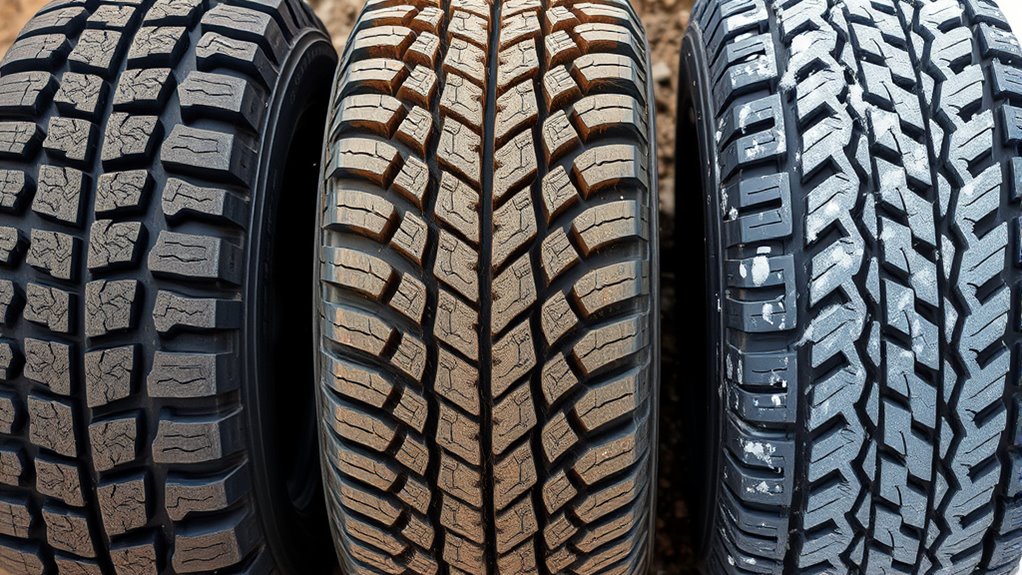

If you’re choosing between mud, all-terrain, and snow tires, consider your main driving conditions. Mud tires excel off-road on dirt and rocky trails but perform poorly on ice and snow. All-terrain tires offer versatility on light mud, snow, and ice, with a good balance of on- and off-road grip. Snow tires are best for winter conditions, providing superior traction on ice and snow. Keep exploring to find out which option suits your needs best.
Key Takeaways
- Mud tires excel off-road in mud and rocky terrains but perform poorly on snow and ice.
- All-terrain tires offer versatile performance across light mud, snow, and ice with better on-road comfort.
- Snow tires are specialized for winter conditions, providing superior traction and safety on snow and ice surfaces.
- Certification symbols like the 3PMSF indicate tire suitability for winter driving, mainly for all-terrain and snow tires.
- Choose tires based on your primary driving environment: mud and rocks for mud tires, mixed terrains for all-terrain, and winter roads for snow tires.

Set of 4 Forceum M/T 08 Plus Mud Off-Road LT235/75R15 Tires – 104/101Q Load Range C 6-Ply BSW
Treadlife: N/A
As an affiliate, we earn on qualifying purchases.
As an affiliate, we earn on qualifying purchases.
Performance and Suitability for Different Terrains
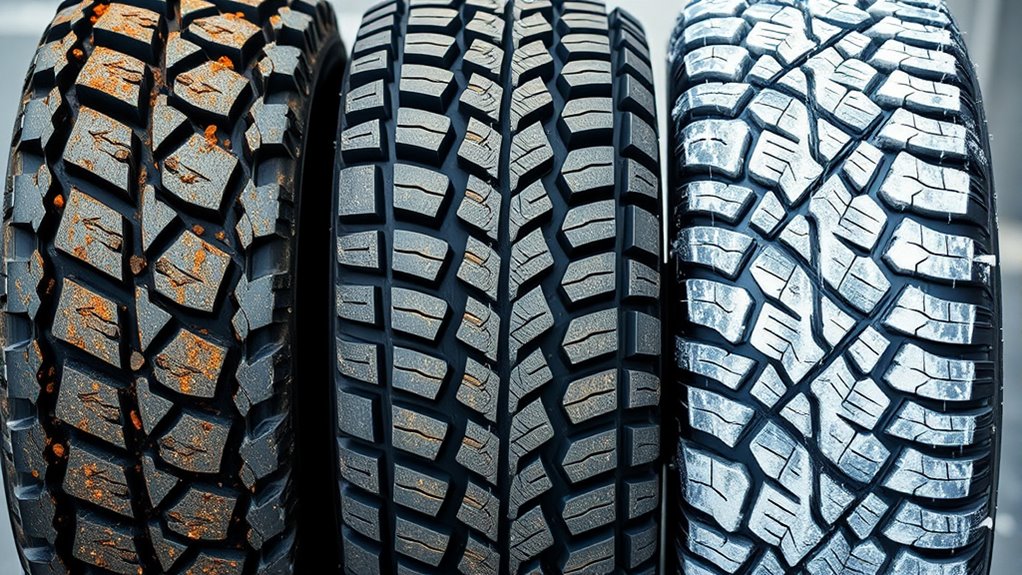
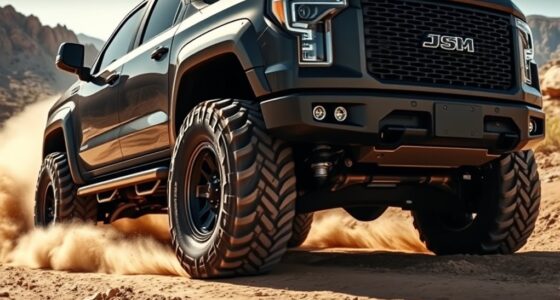
When choosing between mud tires, all-terrain tires, and snow tires, understanding their performance on different terrains is essential. Mud tires excel off-road in deep mud, loose dirt, and rocky trails thanks to their aggressive, widely spaced lugs that provide maximum traction and self-cleaning ability. However, they perform poorly on snow and ice, as their stiff rubber and large tread blocks don’t bite into icy surfaces. All-terrain tires offer a versatile balance; they perform well on light mud, snow, and ice, thanks to tighter tread patterns and siping that improve grip. Snow tires are specialized for winter conditions, delivering superior traction on snow, ice, and cold pavement. They’re less effective off-road but provide unmatched safety and control in winter environments.

Prinx HiCountry A/T2 All Terrain 265/70R17 115T Light Truck Tire
Designed for use on Jeeps, light trucks, and SUVs
As an affiliate, we earn on qualifying purchases.
As an affiliate, we earn on qualifying purchases.
Rubber Composition and Tread Design Features
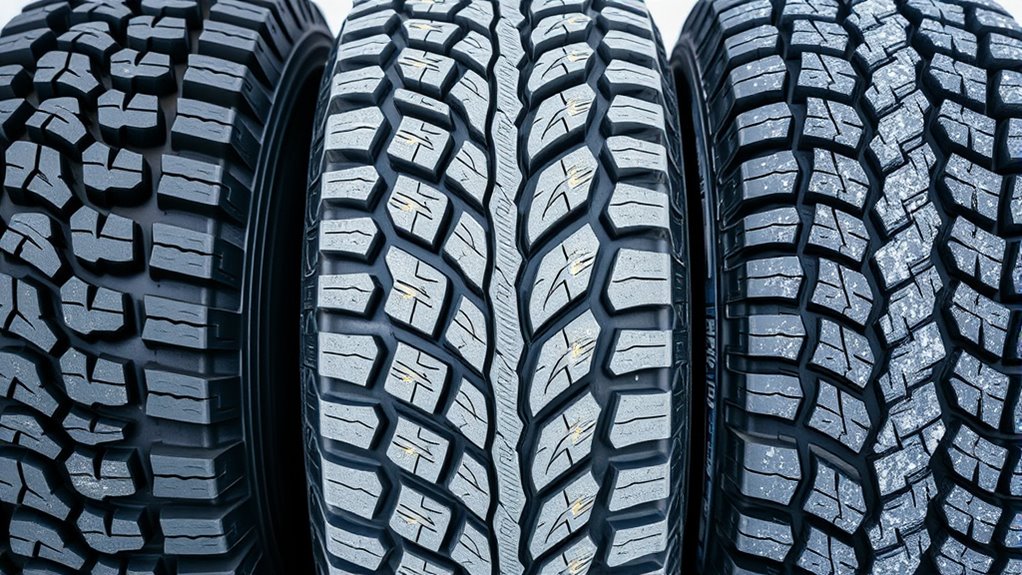
The rubber compounds and tread designs of mud, all-terrain, and snow tires are tailored to optimize their respective performance in different conditions. Mud tires use stiff, carbon black-reinforced rubber, making them durable off-road but less flexible in cold weather. Their large, widely spaced lugs excel at self-cleaning mud but provide poor grip on icy surfaces. All-terrain tires incorporate silica into their rubber, enhancing flexibility and grip in wet and snowy conditions. Their tighter tread blocks and siping improve traction on snow and ice while maintaining durability on varied terrains. Snow tires feature high silica content and complex tread patterns with dense siping, keeping the rubber soft and flexible below freezing. These design features maximize grip, braking, and stability in winter conditions.

Antego 13×5.00-6 Non-Directional Snow Tires (Set of 2) – Tailored for Superior Winter Grip
Set of 2
As an affiliate, we earn on qualifying purchases.
As an affiliate, we earn on qualifying purchases.
Safety Ratings and Certification Considerations
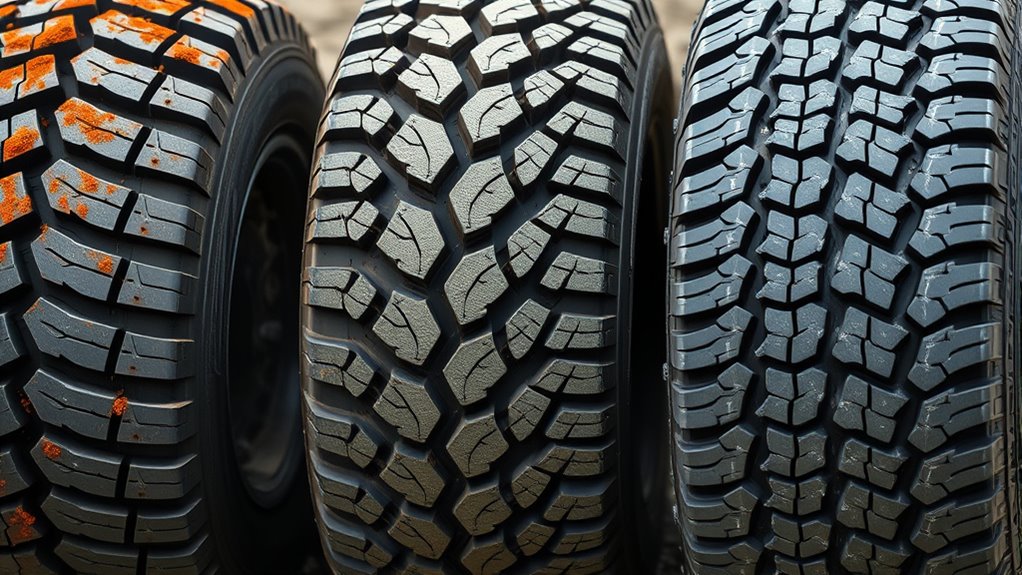
Safety ratings and certifications play a essential role in choosing the right tires because they provide standardized measures of performance in various conditions. The 3-Peak Mountain Snowflake (3PMSF) symbol is critical for winter tires, indicating they meet minimum snow traction standards. Most mud tires lack this certification, so they’re not reliable in snow and ice. All-terrain and snow tires often carry this symbol, ensuring better safety on winter roads. For icy conditions, some tires are studdable, but many mud and all-terrain tires aren’t compatible. Load ratings and sidewall strength also matter, especially for off-road or heavy-duty use. Always check for these certifications and ratings to match your driving environment, ensuring your tires deliver ideal safety and performance when you need it most. Additionally, certification standards help consumers compare tire safety and reliability across different brands and models.

Firestone Winterforce 2 UV Studdable Winter/Snow Tire 225/70R16 103 S
Built to Keep You Working Through the Winter
As an affiliate, we earn on qualifying purchases.
As an affiliate, we earn on qualifying purchases.
Frequently Asked Questions
Can Mud Tires Be Modified for Winter Driving Conditions?
Yes, you can modify mud tires for winter driving, but it’s not ideal. Adding metal studs can improve traction on ice, but mud tires aren’t designed for cold weather. Their stiff rubber compounds harden below 45°F, reducing grip. To stay safe, it’s better to switch to dedicated snow tires with high silica compounds and snow-specific treads, especially in icy or snowy conditions, rather than relying solely on modifications.
How Do All-Terrain Tires Perform on Icy Roads Without Studs?
All-terrain tires perform reasonably well on icy roads without studs thanks to their tighter tread patterns and siping, which help grip snow and ice better than mud tires. They flex and bite into icy surfaces, providing improved traction and control. However, they’re not as effective as dedicated snow tires with high silica compounds and specialized designs. For ideal safety in icy conditions, consider switching to winter tires or adding studs where permitted.
Are Snow Tires Suitable for Off-Road Muddy Trails?
Snow tires aren’t ideal for off-road muddy trails. Their soft rubber compounds and dense siping are designed for snow and ice, not mud. The tread pattern isn’t aggressive enough to self-clean mud effectively, which can cause your tires to clog and lose traction. If you’re tackling muddy trails regularly, all-terrain or mud tires are better suited, offering the durability and grip you need for off-road conditions.
What Is the Typical Lifespan of Mud Versus Snow Tires?
Mud tires typically last between 20,000 to 50,000 miles, but their lifespan drops if you use them mainly on pavement. Snow tires, on the other hand, usually wear out faster, around 15,000 to 25,000 miles, especially if used year-round. While mud tires are built for toughness off-road, snow tires focus on grip in winter, meaning their rubber compounds and tread wear more quickly when driven on dry, warm surfaces.
Do All-Terrain Tires Require Seasonal Switching for Optimal Performance?
You should switch your all-terrain tires seasonally for peak performance. In winter, they may not provide enough grip on ice and deep snow, especially if they lack the 3PMSF certification. During warmer months, they perform well on pavement, offering better wear and handling. By switching tires seasonally, you guarantee safety, maximize traction, and extend the lifespan of your tires, making driving safer and more efficient year-round.
Conclusion
Choosing the right tires isn’t just about the terrain—it’s about your safety and confidence on every drive. Whether you’re steering through muddy trails, rocky roads, or snowy streets, the perfect tread can make all the difference. Coincidentally, understanding the subtle differences in rubber and design helps you make smarter choices. When you match your tires to your adventures, you’ll not only enhance performance but also enjoy peace of mind, no matter where the road takes you.