To increase your truck’s payload safely, start by understanding its weight limits and avoid exceeding manufacturer specs. Upgrade suspension components like heavy-duty springs and shocks, and reinforce the frame for better support. Use high load-rated tires and lightweight wheels, while also practicing weight reduction by removing unnecessary accessories. Guarantee all upgrades are properly installed and maintain regular safety checks. If you keep exploring, you’ll discover more tips to maximize capacity without risking safety.
Key Takeaways
- Verify and stay within the truck’s GVWR by reducing unnecessary accessories and using lightweight aftermarket parts.
- Upgrade suspension components like heavy-duty springs and shocks to improve load handling and reduce sag.
- Use high load-rated tires and lightweight wheels to support increased payload safely.
- Enhance brake systems with larger rotors and high-performance calipers for better stopping power under heavier loads.
- Conduct regular safety inspections of all upgraded components to ensure continued vehicle stability and safety during increased payloads.
Understanding Your Truck’s Payload Capacity and Limitations

Understanding your truck’s payload capacity is essential for safe and efficient hauling. Your payload capacity is the maximum weight your truck can carry safely, determined by the manufacturer based on frame strength and vehicle specifications. It’s calculated by subtracting the curb weight from the Gross Vehicle Weight Rating (GVWR). Exceeding this limit risks damage, safety hazards, and legal issues. Keep in mind, modifications like suspension upgrades or wheel changes don’t increase this capacity; they improve handling and stability within the existing limits. Always check your truck’s GVWR and current weight before loading. Staying within these limits ensures your truck performs reliably, prolongs its lifespan, and keeps you safe on the road. Knowing your payload capacity is the first step to smarter, safer hauling. Understanding your truck’s payload capacity helps you make informed decisions and avoid potential hazards.
Upgrading Suspension Components for Better Support

Upgrading your truck’s suspension components is a proven way to enhance support and stability when hauling heavier loads. Heavy-duty springs, air bag systems, and frame reinforcements distribute weight more evenly, reducing sag and improving ride quality. You can also add crossmembers and bracing to strengthen the frame further. Here’s a quick overview:
| Component | Benefit | Recommended Use |
|---|---|---|
| Heavy-duty springs | Increased load support | Full loads or towing |
| Air bag suspension | Adjustable support | Varying load conditions |
| Frame reinforcements | Frame strength and durability | Heavy hauling |
| Crossmembers | Structural integrity | Prevent flexing |
| Air shocks | Reduced spring sag | Heavy loads, rough terrain |
These upgrades help you carry more payload safely without compromising handling or risking damage. Additionally, incorporating sound science principles can optimize suspension performance for different driving conditions.
Choosing the Right Tires and Wheels for Heavy Loads
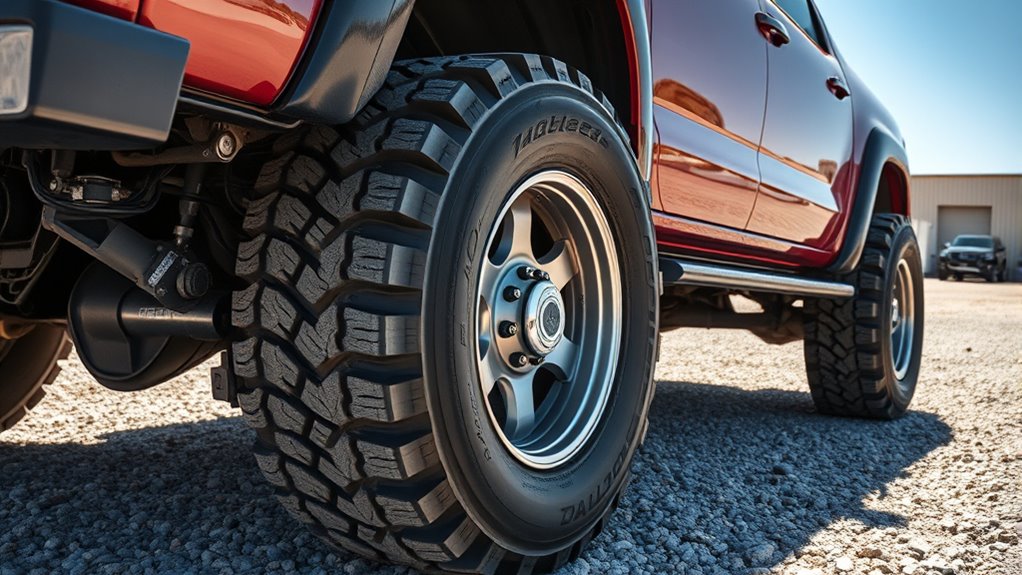
Choosing the right tires and wheels is key to safely increasing your truck’s payload capacity. Higher load-range tires and lightweight aluminum wheels work together to boost load limits and handling. Make sure they’re compatible and meet safety standards to prevent issues on the road. Additionally, selecting tires with a high refresh rate and low input lag can improve overall performance, especially when hauling heavy loads over long distances.
Load-Range Tire Selection
Selecting the right tires and wheels is essential when increasing your truck’s payload capacity, as they directly impact load handling and safety. You need tires with a higher load range, such as Load Range E or F, which are designed to support heavier weights safely. These tires typically have a 10-ply or higher construction, offering increased durability and strength. Pair these with wheels rated for elevated weight capacities to maximize performance. Upgrading to load-range tires and stronger wheels helps you access higher gross axle weight ratings (GAWRs), ensuring your truck can handle heavier loads without risking blowouts or wheel failures. Always verify that your tire and wheel choices match your truck’s specifications and load requirements, maintaining safety and vehicle integrity on the road. Additionally, understanding load capacity ratings is crucial for making informed upgrades that ensure your vehicle’s safety and compliance with regulations.
Wheel Material Benefits
The material of your wheels plays a crucial role in supporting heavy loads safely and efficiently. Aluminum wheels are lighter than steel, reducing overall vehicle weight and freeing up payload capacity. They also resist corrosion better, extending wheel life under tough conditions. Steel wheels, however, are more durable and better withstand impacts, making them ideal for rough terrains and heavy-duty use. Some alloys combine strength and weight savings, offering a balanced option. Choosing the right material depends on your hauling environment and priorities. Lighter wheels improve handling and fuel efficiency, while stronger materials enhance durability under heavy loads. Ensuring your wheels are rated for high load capacities and compatible with your tires is essential for safety and maximum payload support. Incorporating European cloud innovation into your vehicle management or logistics systems can also help optimize payload efficiency and maintenance scheduling.
Compatibility and Safety
Ensuring your tires and wheels are compatible with your truck’s payload upgrades is essential for safety and performance. You need to choose tires that have the appropriate load ratings, such as load range E or higher, to handle increased weights safely. Upgrading to higher load-rated tires without matching wheels can compromise stability, so select wheels rated for the same or greater weight capacity. Aluminum rims can reduce weight and improve handling, but guarantee they’re compatible with your tires’ bead seats and lug patterns. Always verify that your tires and wheels meet or exceed your truck’s Gross Axle Weight Rating (GAWR). Proper compatibility prevents blowouts, uneven wear, and handling issues, keeping you safe when hauling heavier loads. Understanding pool terminology can help you better grasp the importance of proper load ratings and compatibility standards.
Implementing Weight Reduction Strategies to Maximize Capacity

Maximizing your truck’s payload capacity starts with strategic weight reduction. Every pound you remove from the vehicle increases your cargo capacity without risking safety or exceeding limits. Start by eliminating unnecessary accessories like side steps, bed extenders, or extra trim pieces that add weight but aren’t essential. Removing the tailgate can save approximately 60 pounds, while taking out rear seats frees up another 60 to 70 pounds. Consider replacing heavy factory parts with lighter aftermarket options, such as aluminum wheels or lightweight bumpers. Be mindful of the total weight; always stay within the Gross Vehicle Weight Rating (GVWR). Electric power generation with bike generators can be a practical alternative to traditional energy sources, especially in off-grid situations. These small, deliberate steps help you maximize payload safely while maintaining vehicle integrity and performance.
Enhancing Braking Systems for Increased Safety and Performance

Upgrading your brake components is essential to handle the added stress from increased payloads safely. Make certain to have a professional evaluate your system to guarantee compatibility with your modifications. Proper system assessment helps you maintain peak performance and safety during heavy loads. Additionally, consider seasonal maintenance to ensure your braking system remains in optimal condition year-round.
Upgraded Brake Components
Enhancing your truck’s braking system is essential when increasing payload capacity, as heavier loads put more stress on your brakes. Upgraded brake components, such as larger rotors, high-performance calipers, and premium brake pads, improve stopping power and heat dissipation. These components reduce brake fade during prolonged or heavy braking, ensuring safer operation under load. Consider installing slotted or drilled rotors to enhance cooling and debris removal, which helps maintain consistent braking performance. Upgraded brake lines made from braided stainless steel can improve hydraulic response, providing more immediate and reliable stopping force. Additionally, choosing protective styling benefits and high-quality materials can extend the lifespan of your brake system components. While these upgrades increase safety and performance, always verify compatibility with your truck’s suspension and load modifications. Proper installation and regular maintenance are critical to maximizing the benefits of your upgraded braking system.
Proper System Evaluation
To guarantee your braking system performs reliably after modifications, it’s essential to conduct a thorough evaluation before and after any upgrades. Begin by inspecting existing components for wear, corrosion, and proper operation. Check brake pads, rotors, lines, and fluid levels. Document baseline performance through brake testing, noting stopping distances and pedal feel. After upgrades, re-evaluate these metrics to ensure improvements align with safety standards. Confirm compatibility between new brake parts and your suspension or payload modifications. Use professional diagnostic tools if possible to measure brake force distribution and heat dissipation. Regular inspections and test drives help identify issues early, preventing safety risks. This systematic approach ensures your braking system supports increased payload capacity without compromising safety or performance. Additionally, understanding braking system fundamentals can help you make informed decisions about upgrades and maintenance.
Using Load Distribution Products to Improve Stability

Using load distribution products is an effective way to improve your truck’s stability when hauling heavy loads. Helper springs like Sumo Springs and Timbrens reduce spring sag and keep the truck level, enhancing ride comfort and safety. Torklift Stableloads provide extra support for the suspension, helping to maintain factory ride characteristics while handling heavier cargo. Hellwig Big Wig rear sway-bars decrease body roll and improve handling during turns when loaded, making driving safer and more controlled. Load distribution hitches spread weight more evenly across the frame and suspension, preventing uneven stress and potential damage. These products work together to stabilize your truck, improve handling, and reduce the risk of accidents, all while preserving ride quality and ensuring your vehicle remains within safe operating limits.
Ensuring Compatibility of Upgrades With Manufacturer Specifications

Before making any truck upgrades, verifying that each modification complies with your vehicle’s manufacturer specifications is vital. You must guarantee your chosen enhancements don’t exceed load ratings or compromise safety. Check your owner’s manual and consult with your dealer or manufacturer for compatibility. This step prevents voiding warranties or causing damage. Use the table below to compare potential upgrades with your truck’s specs:
| Upgrade Type | Compatibility Check |
|---|---|
| Suspension Systems | Confirm load capacity and fitment |
| Tire and Wheel Mods | Match load ratings and size specifications |
| Frame Reinforcements | Guarantee compatibility with existing frame structure |
| Braking System | Verify system can handle increased loads |
| Load Distribution Items | Confirm proper fit and load capacity limits |
Staying within manufacturer guidelines keeps your truck safe and reliable.
Properly Installing Frame Reinforcements and Crossmembers
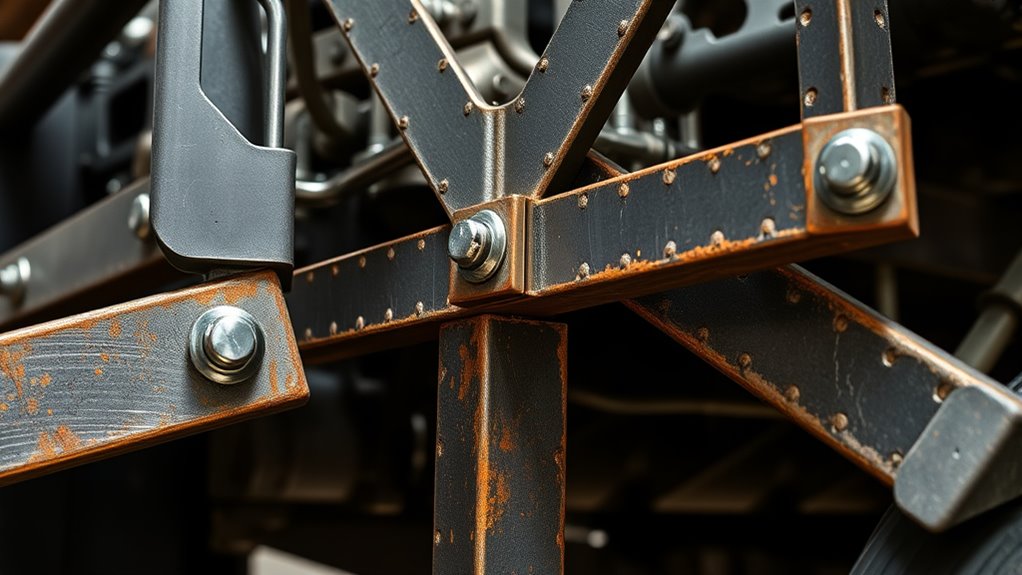
When installing frame reinforcements and crossmembers, you need to choose the right materials that match your truck’s specifications for strength and durability. Follow correct procedures to guarantee the reinforcements are securely fitted and properly aligned, preventing potential issues down the road. Paying close attention to structural alignment helps maintain vehicle integrity and maximizes the effectiveness of your upgrades.
Selecting Reinforcement Materials
Choosing the right reinforcement materials is essential for making certain your frame reinforcements and crossmembers provide the strength and durability needed for increased payloads. You want materials that can handle heavy stress without bending or cracking. High-strength steel, such as DOM (Drawn Over Mandrel) tubing or alloy steel, offers excellent toughness and longevity. Aluminum might be lighter, but it usually lacks the durability for heavy-duty reinforcement. For crossmembers, thick steel plates or reinforced steel tubing are ideal choices. Confirm the materials are corrosion-resistant, especially if you operate in harsh environments. Verify compatibility with your truck’s frame type and consult manufacturer recommendations when possible. Selecting quality reinforcement materials ensures your upgrades will stand up to increased loads and extend the lifespan of your truck’s structure.
Correct Installation Procedures
Proper installation of frame reinforcements and crossmembers is key to guaranteeing your upgrades deliver maximum strength and safety. Begin by thoroughly cleaning and inspecting the frame to remove rust and debris. Follow manufacturer instructions precisely, using the recommended tools and torque specifications. Verify all bolts and welds are secure and properly aligned to avoid stress concentrations. Use the correct materials for welding or bolting, and double-check placement before finalizing. Proper installation prevents flexing and ensures load distribution remains even.
| Step | Task | Key Consideration |
|---|---|---|
| 1 | Prepare the frame | Clean and inspect for damage |
| 2 | Position reinforcements | Accurate alignment to avoid flexing |
| 3 | Secure with bolts/welds | Use proper torque and materials |
| 4 | Final inspection | Confirm all components are tight and aligned |
Ensuring Structural Alignment
To guarantee your frame reinforcements and crossmembers are installed correctly, focus on achieving precise structural alignment throughout the process. Start by thoroughly inspecting your frame for any existing damage or misalignment before beginning. Use proper lifting equipment to keep the frame stable and level during installation. When attaching reinforcements and crossmembers, follow manufacturer specifications carefully, ensuring bolts and welds are secure and correctly positioned. Regularly check alignment with a straightedge or laser level to verify the frame remains true. Proper alignment prevents stress concentrations, which could lead to cracks or failure under load. Take your time during installation, double-check measurements, and ensure all components are properly aligned before finishing. Correct alignment is key to maintaining safety and maximizing the effectiveness of your upgrades.
Leveraging Air Suspension and Shocks for Load Management
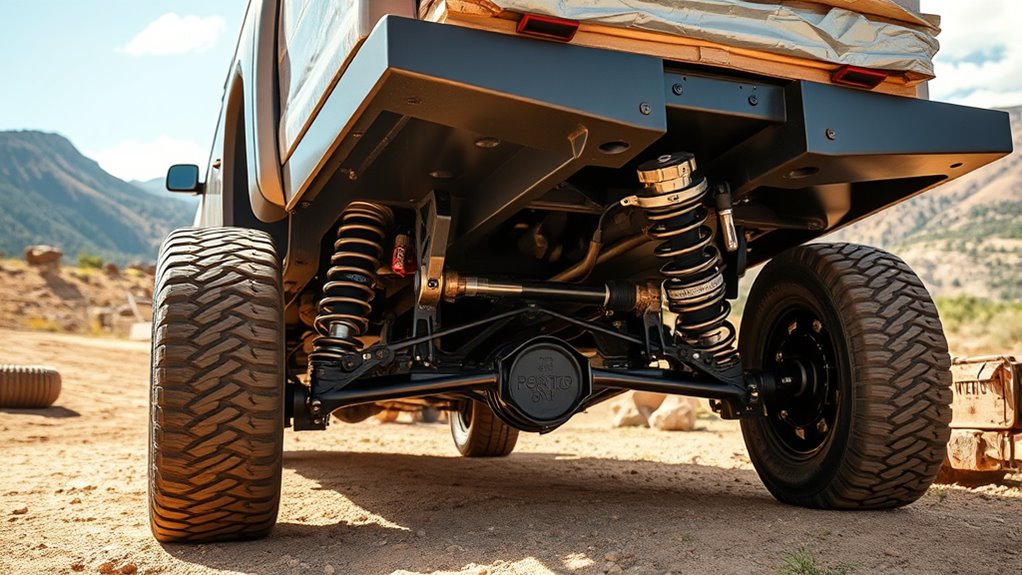
Air suspension systems and shocks are essential tools for managing load stability and ride quality when hauling heavy cargo. With air bags, you can adjust pneumatic pressure to support heavier loads, reducing spring sag and maintaining a level truck bed. This adjustment improves handling, prevents uneven tire wear, and minimizes stress on frame components. Air shocks enhance ride comfort by controlling bounce and sway during transport, especially on rough roads. You can inflate or deflate these shocks based on load weight, optimizing suspension performance for safety and stability. Proper use of air suspension and shocks allows you to carry more weight confidently while protecting your truck’s structure. Keep an eye on pressure levels and regularly inspect components to guarantee ongoing effectiveness and safety during load management.
Regular Maintenance and Safety Checks After Modifications

After upgrading your suspension, shocks, or other components, regular maintenance and safety checks become vital to guarantee everything continues to perform correctly. You should inspect the upgraded parts regularly for signs of wear, damage, or leaks. Check tire pressure and load ratings to ensure they align with your modifications, especially if you’ve installed higher load-rated tires or air suspension systems. Monitor brake performance and pad wear to maintain safety during heavy loads. Tighten bolts, bushings, and fittings to prevent loosening over time. Keep an eye on suspension alignment to avoid uneven tire wear and handling issues. Performing routine safety checks ensures your modifications remain effective, prolongs component lifespan, and keeps your truck safe and capable for increased payloads.
Frequently Asked Questions
Can Suspension Upgrades Increase My Truck’s Payload Beyond the Manufacturer’s Rated Capacity?
Suspension upgrades can’t increase your truck’s payload beyond the manufacturer’s rated capacity. They improve handling, stability, and support for heavy loads within existing limits. Adding heavier-duty springs, air bag systems, or frame reinforcements helps distribute stress and prevent damage, but you must stay within the GVWR and payload limits. Always check your truck’s specifications and never surpass the maximum weight ratings to ensure safety and vehicle integrity.
Do Tire and Wheel Modifications Affect My Truck’s GVWR or Payload Limits?
Tires and wheels might boost your truck’s capacity on paper, but they don’t actually change the GVWR or payload limits. You’re upgrading load-rated tires and lighter rims to improve handling and safety under heavier loads, yet the manufacturer’s weight restrictions remain fixed. Think of it as enhancing performance within existing boundaries—your modifications optimize weight distribution and safety, but the overall maximum payload still hinges on the truck’s original specifications.
Are Weight Reduction Strategies Safe Without Compromising Vehicle Integrity?
Yes, weight reduction strategies are safe when done correctly, as they help you stay within your truck’s GVWR and payload limits. Removing unnecessary accessories or lighter materials reduces overall weight without compromising vehicle integrity. Just make certain you don’t remove essential structural components or safety features. Always verify that modifications don’t exceed manufacturer specifications, and consult a professional if you’re unsure. This way, you maintain safety and maximize payload capacity effectively.
How Do Load Distribution Products Impact Handling During Heavy Loads?
Load distribution products improve handling during heavy loads by evenly spreading weight across your truck’s frame and suspension. You’ll notice reduced body roll, less sag, and more stability when towing or hauling. Helper springs, sway bars, and load hitches work together to keep your truck balanced and controlled. This stability enhances safety and confidence, especially on rough or uneven roads, ensuring your truck handles heavy loads smoothly and predictably.
Can I Combine Multiple Modifications Without Voiding My Vehicle Warranty?
Yes, you can combine multiple modifications without voiding your vehicle warranty if you choose reputable brands and follow manufacturer recommendations. Always consult your warranty terms and work with professionals who understand your truck’s specifications. Keep detailed records of all upgrades, and avoid modifications that explicitly nullify warranties, like some engine or exhaust changes. Staying within authorized upgrade parameters helps ensure your warranty remains intact while improving your truck’s performance.
Conclusion
So, after all these upgrades, you might think your truck can handle anything—like lifting a mountain or towing a spaceship. But remember, no matter how beefed-up your ride is, ignoring your manufacturer’s limits can turn your dream truck into a nightmare. Stay smart, respect the specs, and keep safety your top priority. Because sometimes, the best upgrade is knowing when to stop before you turn your trusty truck into a rolling demolition derby.