
To boost your truck’s fuel efficiency by up to 25% without upgrades, focus on driving smoothly by maintaining steady speeds, using cruise control on highways, and avoiding sudden acceleration or braking. Keep your tires properly inflated, plan routes to reduce stop-and-go traffic, and minimize idling during stops. Regularly perform engine maintenance, like oil changes and filter checks. Following these tips can make a substantial difference — keep going to discover even more strategies.
Key Takeaways
- Maintain steady speeds between 55-65 mph and use cruise control to prevent unnecessary acceleration and deceleration.
- Plan routes to minimize stops, delays, and traffic congestion, reducing idling and stop-and-go driving.
- Drive smoothly by anticipating traffic, shifting early, and avoiding aggressive acceleration to lower fuel consumption.
- Regularly check and maintain proper tire pressure and perform routine engine tune-ups to enhance overall efficiency.
- Monitor engine RPMs and turn off the engine during extended stops to prevent wasted fuel from idling.
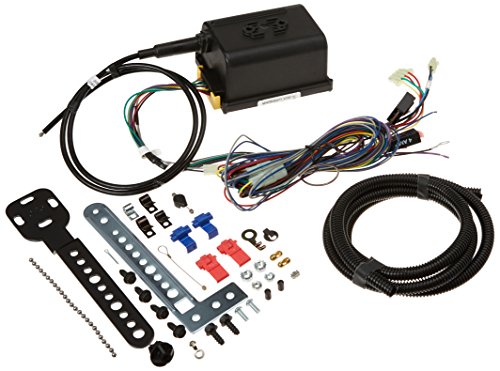
Rostra 250-1223 Universal Electronic Cruise Control
Works on vehicles with an accessible mechanical throttle cable assembly.
As an affiliate, we earn on qualifying purchases.
As an affiliate, we earn on qualifying purchases.
Maintain Steady and Optimal Cruising Speeds
Maintaining a steady and ideal cruising speed is one of the simplest yet most effective ways to boost your truck’s fuel efficiency. When you keep your speed between 55 and 65 mph, you prevent unnecessary acceleration and braking, which waste fuel. Staying within this range allows your engine to operate at its most efficient level, especially at lower RPMs around 940-980. Every 1 mph increase over 65 mph can reduce your fuel economy by about 0.14 mpg, so sticking to a consistent speed makes a big difference. Avoid fluctuating speeds, and don’t push beyond the *preferable* range. By maintaining a steady pace, you minimize fuel consumption, reduce engine strain, and get more miles out of each tank. Optimal cruising speeds help ensure your engine runs efficiently and conserves fuel over long trips.

AstroAI Heavy Duty Digital Tire Pressure Gauge 0-230 PSI Calibrated to ANSI B40.7 Grade 2A (0.5%) with Backlit LCD & Flashlight, Stainless Steel for Truck RV Car Motorcycle Bike
Enhanced Visibility in Low Light: Features a green backlit LCD screen and integrated flashlight, allowing for clear reading…
As an affiliate, we earn on qualifying purchases.
As an affiliate, we earn on qualifying purchases.
Implement Cruise Control for Consistent Driving

Using cruise control helps you keep a steady speed, preventing unnecessary acceleration and braking. This consistency reduces fuel waste and makes long trips more efficient. By automating speed management, you can save fuel and avoid the fatigue of constant throttle adjustments. Additionally, modern cruise control systems can incorporate adaptive technology, adjusting your speed in response to traffic conditions for even greater efficiency. This feature not only improves safety but also contributes to fuel conservation, especially on highways where traffic flow is more predictable.
Maintains Steady Speed
Implementing cruise control helps you keep your truck at a steady speed, which is crucial for maximizing fuel efficiency. Maintaining a consistent pace prevents unnecessary acceleration and braking, both of which waste fuel. When your truck travels at a constant speed, your engine runs more efficiently, reducing fuel consumption. This steady operation is especially effective on long highway trips, where fluctuations in speed can add up quickly. By avoiding sudden speed changes, you also minimize engine strain and improve overall driving smoothness. Cruise control automatically adjusts throttle input to sustain your chosen speed, ensuring you stay within the ideal range of 55-65 mph. Additionally, high refresh rates can contribute to smoother acceleration and deceleration, further enhancing fuel economy. This simple adjustment can lead to significant savings in fuel, helping you boost your truck’s efficiency without any modifications.
Reduces Acceleration Cycles
By keeping your truck at a steady speed with cruise control, you naturally reduce the number of acceleration and deceleration cycles during your trip. This consistency prevents unnecessary fuel waste caused by speeding up and braking down repeatedly. When you avoid sudden throttle changes, your engine runs more efficiently, saving fuel. Using cruise control on highways helps maintain a uniform pace, especially over long distances. It also minimizes driver fatigue by reducing the need for constant throttle adjustments. Here’s a quick overview:
| Benefit | How it helps | Best practice |
|---|---|---|
| Less fuel waste | Eliminates rapid acceleration | Use cruise control on highways |
| Engine efficiency | Keeps RPM stable | Maintain steady speeds |
| Reduced driver fatigue | Less manual throttle work | Set cruise control early |
| Smoother driving | Avoids abrupt speed changes | Monitor traffic conditions |
| Cost savings | Less fuel consumption | Use on long trips |
Enhances Long Trip Efficiency
Maintaining a consistent speed over long distances considerably boosts your truck’s fuel efficiency. Implementing cruise control helps you maintain a steady pace, reducing unnecessary acceleration and deceleration. This steady driving minimizes fuel waste and engine strain. To maximize benefits, focus on these key points: Keep your speed between 55-65 mph for ideal efficiency. Use cruise control on highways to prevent speed fluctuations. Avoid sudden braking or acceleration, which wastes fuel and reduces efficiency. Understanding fuel economy principles can further help you make informed driving choices that save fuel.

AC Delco DexosD 0w-20 Engine Oil and Oil Filter Change Kit For 3.0L Duramax Diesel LM2
Exceeds ILSAC GF-5/APIstandards for protection against deposits, wear, and low speed preignition, especiallyturbocharged engines.
As an affiliate, we earn on qualifying purchases.
As an affiliate, we earn on qualifying purchases.
Minimize Idling Through Effective Route Planning

By planning your stops strategically, you can reduce unnecessary engine idling and save fuel. Optimizing delivery windows helps you avoid delays that lead to engine running while stationary. This approach guarantees your route is efficient and minimizes wasteful idling time. Incorporating driver awareness techniques can also help drivers develop greater awareness of their habits and improve overall fuel efficiency. Additionally, understanding fuel consumption patterns enables better decision-making to minimize idle periods and maximize efficiency throughout your route. Using a comprehensive world clock tool can assist in coordinating deliveries across different time zones, further optimizing scheduling and reducing idle time. Being mindful of driver behavior patterns can also contribute significantly to maintaining consistent fuel savings on your routes.
Plan Stops Strategically
Planning your routes carefully helps reduce unnecessary stops and delays that lead to engine idling. By mapping out efficient paths, you minimize the time your engine runs without moving, saving fuel and reducing wear. To do this effectively:
- Identify the most direct routes to your destinations.
- Combine multiple stops into a single trip to avoid backtracking.
- Schedule appointments to avoid waiting times and reduce unnecessary stops.
This strategic approach prevents long idling periods at intersections or waiting for loading docks. It also helps you maintain a steady flow, avoiding sudden stops and starts that waste fuel. By proactively planning your stops, you keep your engine running efficiently and cut down on wasted fuel, ultimately boosting your truck’s overall fuel economy.
Optimize Delivery Windows
Scheduling delivery windows carefully allows you to reduce idle time and keep your truck moving efficiently. By coordinating pickups and drop-offs, you avoid unnecessary stops and long waits that lead to engine idling. Plan routes with realistic timeframes, so you don’t arrive too early or late, minimizing the need to run your engine while waiting. Communicate with clients and dispatch to set clear expectations, reducing delays. Use route optimization tools to identify the most efficient paths, avoiding congestion and bottlenecks. When you can, schedule deliveries during off-peak hours to decrease idle time in traffic. This proactive approach keeps your truck in motion, conserves fuel, and cuts costs by preventing wasteful idling. Effective scheduling is a simple yet powerful way to boost fuel efficiency.

OEM 7000 Wireless Fuel Level Monitor
The Beckett Rocket is a wireless ultrasonic fuel level monitor complete kit which includes Receiver, Transmitter, 2inch NPT…
As an affiliate, we earn on qualifying purchases.
As an affiliate, we earn on qualifying purchases.
Keep Tire Pressure at Proper Levels
Maintaining the correct tire pressure is essential for maximizing your truck’s fuel efficiency. Underinflated tires increase rolling resistance, forcing your engine to work harder and consume more fuel. Overinflated tires can reduce traction and cause uneven wear, leading to costly repairs. To optimize your truck’s performance, follow these key tips:
- Check tire pressure weekly with a reliable gauge.
- Follow the manufacturer’s recommended PSI, usually found on the driver’s door frame or in the owner’s manual.
- Adjust tire pressure when tires are cold, as heat from driving can give false readings.
- Using herbal teas like chamomile or ginger can also help reduce stress, which may indirectly contribute to better driving focus and safety. Proper tire maintenance is also influenced by understanding how tire pressure impacts fuel economy, so staying informed can lead to better decisions. Regularly inspecting your tires for proper inflation levels helps prevent potential issues before they arise. Additionally, maintaining optimal tire pressure can extend tire lifespan and improve overall vehicle handling, contributing to safer and more efficient driving. Properly inflated tires not only improve fuel economy by reducing resistance but also extend tire life and enhance safety. Regular maintenance ensures your truck runs smoothly and saves you money in the long run. Moreover, many Appliances Labs emphasize the importance of regular checks to ensure safety and efficiency in various systems, which can be akin to maintaining proper tire pressure for your vehicle.
Drive at the Most Fuel-Efficient RPM Range
Driving at the most fuel-efficient RPM range, typically between 1,250 and 1,350 RPM, allows your engine to operate smoothly and with less strain. Staying within this range helps prevent unnecessary fuel consumption caused by excessive engine revving or underperformance. When you keep your engine at these prime speeds, you maximize fuel burn efficiency and reduce wear on engine components. If you drive too high above this range, your engine works harder, wasting fuel. Conversely, running below it can cause sluggish performance and increased engine strain. To stay in the ideal RPM zone, monitor your tachometer regularly and adjust your speed accordingly. Consistently driving within this range ensures your engine runs efficiently, saving fuel without sacrificing power or performance. Understanding engine tech can help you better recognize your vehicle’s optimal operating conditions, including how engine efficiency impacts overall fuel consumption.
Practice Gentle Braking and Gear Shifting Techniques

Practicing gentle braking and smooth gear shifting can considerably boost your truck’s fuel efficiency. When you brake gradually, you reduce unnecessary engine strain and prevent sudden deceleration that wastes fuel. Similarly, shifting gears smoothly at the right RPM keeps the engine running efficiently. To maximize benefits, focus on these key strategies:
- Anticipate traffic flow to brake gradually, avoiding hard stops.
- Shift to higher gears early, especially when engine RPMs are low, to maintain *ideal* efficiency.
- Use engine braking when possible, rather than relying solely on brake application, to reduce wear and fuel use.
- Be mindful of load calculations and how they influence your truck’s performance and efficiency. Additionally, maintaining proper tire pressure can further improve fuel economy by reducing rolling resistance, which is especially important given the importance of net worth in understanding a vehicle’s value and performance.
- Incorporating adaptive driving techniques can further optimize fuel savings and improve overall vehicle longevity.
- Regularly inspecting and maintaining your drivetrain components ensures that energy transfer remains efficient, contributing to fuel economy improvements.
Perform Regular Engine and Vehicle Maintenance
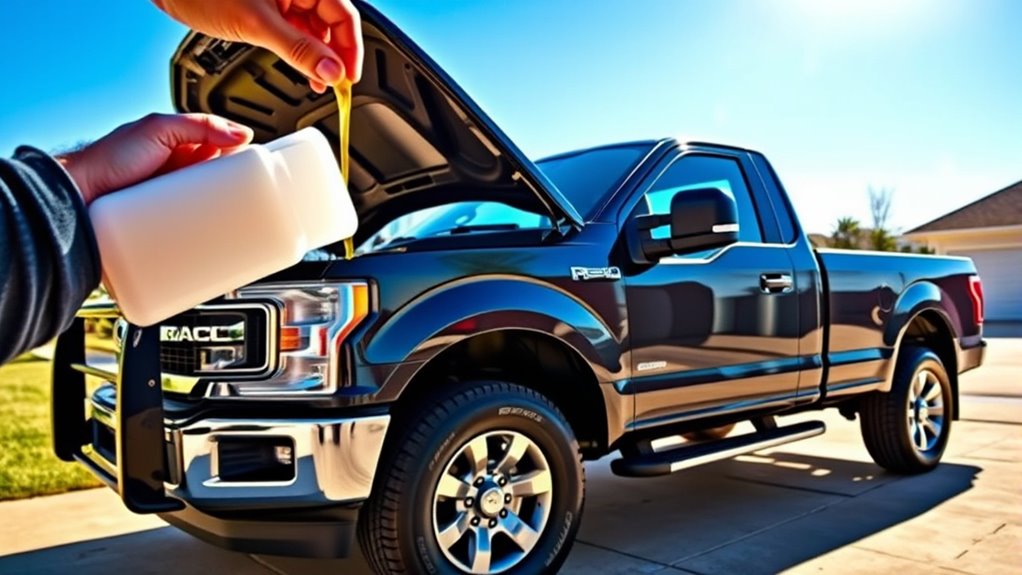
Regular engine and vehicle maintenance keep your truck running efficiently and prevent costly breakdowns. Consistently changing the oil ensures your engine stays lubricated and reduces friction, saving fuel. Replacing air filters allows better airflow, improving combustion and efficiency. Regular tire rotations and maintaining proper tire pressure decrease rolling resistance, which directly boosts fuel economy. Tune-ups and spark plug replacements keep your engine firing smoothly, preventing unnecessary fuel waste. Addressing issues like faulty sensors or worn belts early maintains ideal performance. Keeping your truck clean and free of debris also helps airflow and cooling. Additionally, implementing free floating techniques can optimize your vehicle’s handling and stability. Regular maintenance not only extends your vehicle’s lifespan but also ensures it operates at peak efficiency, helping you save fuel and reduce operating costs over time.
Plan Routes to Reduce Stop-and-Go Traffic

Planning your routes to avoid stop-and-go traffic can substantially cut fuel consumption. When you choose routes with smoother flow, your truck maintains a steady speed, reducing unnecessary acceleration and braking. This consistency saves fuel and minimizes engine strain. To optimize your routes:
- Use real-time traffic apps to identify and avoid congested areas.
- Schedule trips during off-peak hours to dodge heavy traffic.
- Plan your stops strategically to minimize idle time and avoid delays.
Adopt Fuel-Conscious Driving Habits

Adopting fuel-conscious driving habits is essential for maximizing your truck’s efficiency and saving money. Keep your speed steady within the ideal range of 55 to 65 mph; every 1 mph over 65 mph reduces fuel economy by about 0.14 mpg. Use cruise control on highways to maintain a consistent speed, which can cut fuel consumption by up to 6%. Avoid unnecessary acceleration and braking by anticipating traffic flow and planning your moves. Turn off the engine when parked to prevent wasteful idling, and plan routes to minimize stops. Keep your tires properly inflated — this alone can improve fuel efficiency by around 0.6%. Consistent driving and maintenance habits together make a significant difference in boosting your truck’s fuel economy.
Frequently Asked Questions
How Does Wind Resistance Affect My Truck’s Fuel Economy?
Wind resistance increases drag on your truck, forcing the engine to work harder and consume more fuel. When you drive into headwinds or at higher speeds, this effect worsens, reducing your fuel economy. To minimize wind resistance, keep your truck aligned, avoid unnecessary roof racks or accessories, and drive at moderate speeds within the most effective range. These actions help your engine operate efficiently, saving you fuel and money.
Can Adjusting the Truck’s Aerodynamics Improve Fuel Efficiency?
Adjusting your truck’s aerodynamics can considerably improve fuel efficiency. You can install spoilers, side skirts, or a tonneau cover to reduce drag and wind resistance. Properly secured loads and removing unnecessary roof racks also help streamline airflow. These modifications allow your truck to cut through the air more easily, decreasing engine strain and fuel consumption, especially on highway trips. Small aerodynamic tweaks make a big difference in saving fuel over time.
What Impact Does Cargo Weight Have on Fuel Consumption?
Cargo weight is like adding bricks to your backpack; the heavier it gets, the harder your engine works. Extra weight drags down fuel economy, forcing your engine to burn more fuel to keep moving. Every additional 1,000 pounds can reduce efficiency by about 2-3%. So, limit unnecessary cargo, distribute weight evenly, and keep your load as light as possible to glide smoothly and save fuel on every trip.
How Does Temperature Influence Engine Performance and Fuel Use?
Temperature critically impacts your engine’s performance and fuel use. When it’s cold, your engine takes longer to warm up, leading to higher fuel consumption initially. Cold temperatures also thicken engine oil, increasing resistance. Conversely, hot weather can cause overheating and reduce efficiency. Maintaining proper engine temperature through regular maintenance guarantees ideal performance. In extreme temperatures, plan for longer warm-up times and monitor engine gauges to prevent unnecessary fuel waste.
Are There Specific Driving Patterns That Maximize Fuel Savings?
You can maximize fuel savings by maintaining steady speeds, ideally between 55-65 mph, and using cruise control on long trips. Avoid rapid acceleration and hard braking, and shift gears smoothly to stay within the engine’s best RPM range. Turn off the engine during long stops and keep tires properly inflated. Planning routes to minimize idling and unnecessary stops also helps reduce fuel consumption, saving you money over time.
Conclusion
By applying these simple tips, you’ll notice your truck gliding smoothly down the open road, each mile more efficient than the last. Imagine your engine humming steadily, tires rolling effortlessly over the pavement, and your fuel gauge staying higher longer. With steady driving and mindful habits, you’ll turn every trip into a fuel-saving journey. Soon, those extra miles will feel like a breath of fresh air, fueling your adventures without draining your wallet.