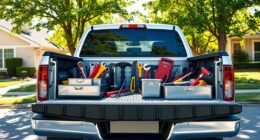
Whether your HOA can ban you from working out of your truck bed depends on local laws, your community’s covenants, and how the vehicle is used. Generally, restrictions focus on appearance, branding, and commercial intent. If you’re using your truck personally and without visible work signs or equipment, you may have protection under state laws. To understand the rules that apply to your situation and avoid violations, keep going for more detailed insights.
Key Takeaways
- Recent laws, like Florida’s Bill 1203, protect non-commercial trucks used personally from HOA bans.
- HOAs can restrict vehicles with visible commercial branding or equipment, but not purely personal-use trucks.
- Using your truck bed for work may be restricted if it displays commercial signage or modifications indicating business use.
- Enforcement must align with current legal protections; outdated restrictions may expose HOAs to legal challenges.
- Homeowners generally have the right to use their trucks for personal purposes, including working out of the truck bed, unless lawfully restricted.
Understanding HOA Vehicle Restrictions and Local Laws
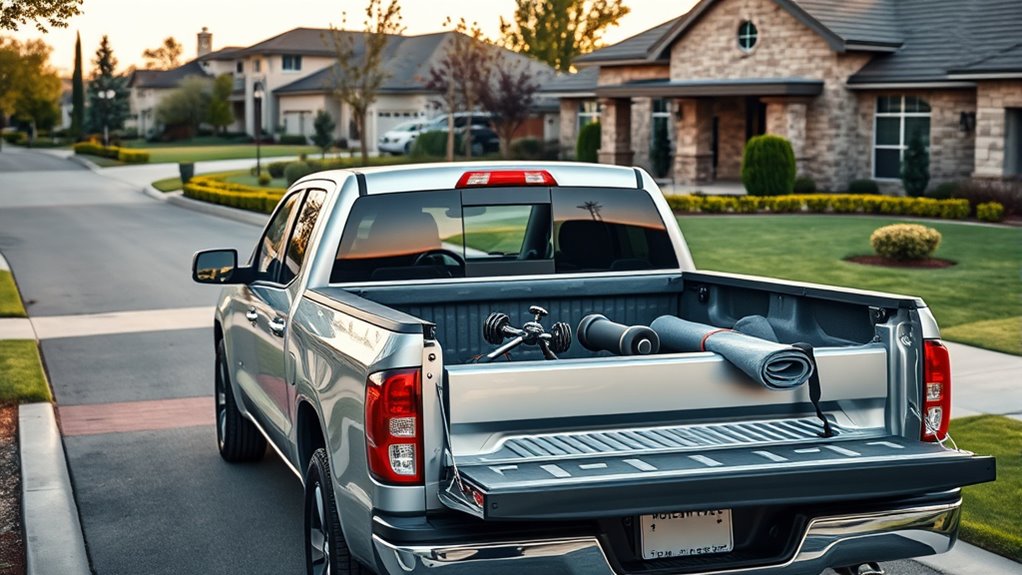
Understanding HOA vehicle restrictions requires knowing how local laws interact with community covenants. You need to recognize that HOAs derive their authority from CC&Rs, which often give them broad control over vehicle appearances and parking. However, state laws can limit these restrictions, especially for non-commercial pickup trucks. For example, Florida’s Bill 1203, effective July 2024, prevents HOAs from banning non-commercial trucks in driveways. Courts have also upheld restrictions on recreational and commercial vehicles, but distinctions matter. If your truck is used for personal purposes and lacks commercial markings, local laws may protect your right to park and work from it. Knowing these legal nuances helps you understand when your HOA’s restrictions are enforceable and when state protections kick in. Additionally, the type of vehicle you own can influence how restrictions are applied and whether legal exemptions are available.
Differentiating Between Work and Commercial Vehicles
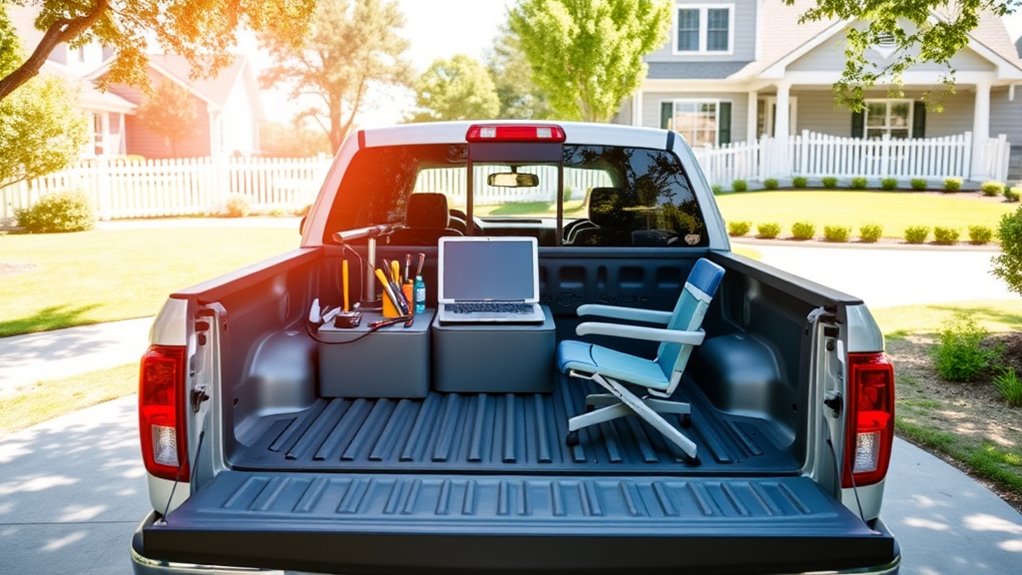
Differentiating between work and commercial vehicles is essential when steering through HOA restrictions, as the key factor lies in how the vehicle is classified under state law. Commercial vehicles are typically defined by specific criteria, such as business registration, signage, or equipment indicating a commercial purpose. For example, trucks with company logos, branded decals, or mounted equipment often fall into this category, which HOAs can restrict. Conversely, non-commercial trucks used privately, even if they occasionally carry work tools, are generally protected by state laws that prevent HOAs from banning non-commercial pickup trucks. The distinction hinges on purpose, appearance, and legal classification, not just physical features or size, making it critical to understand how your vehicle is categorized under local regulations. Understanding the definition of commercial vehicles can help clarify whether your truck falls under restrictions or protections.
How HOAs Can Enforce Vehicle Appearance and Purpose Rules
HOAs enforce vehicle appearance and purpose rules by focusing on how vehicles look and what they convey about their use, rather than just their size or parking location. They examine elements like branding, decals, signage, and modifications that suggest a commercial or work purpose. For example, a truck with visible company logos or extensive equipment might be seen as used for business, prompting restrictions. Conversely, a plain pickup used for personal errands typically isn’t targeted. HOAs also consider how the vehicle’s overall appearance impacts community aesthetics. They may set guidelines on vehicle modifications, cleanliness, and stored items in truck beds. Enforcement often involves notices or warnings, giving you a chance to correct issues before fines or legal action occur. Additionally, understanding vehicle regulations and HOA enforcement policies can help residents navigate these rules more effectively.
The Role of Vehicle Size and Dimensions in HOA Restrictions
Vehicle size and dimensions play a key role in HOA restrictions, often limiting parking based on length, height, or weight. While size alone isn’t enough, visible equipment or modifications can trigger concerns about vehicle purpose and community appearance. Understanding how these factors influence enforcement helps clarify what’s acceptable within your neighborhood’s rules. Additionally, considerations around Free Floating can impact whether certain modifications or accessories are permitted without violating HOA standards.
Dimension Limits Enforcement
While vehicle size and dimensions are often visible and easy to measure, enforcing dimension limits requires careful attention to specific restrictions set by HOAs. These limits typically specify maximum vehicle length, height, and weight allowed within community boundaries. Enforcement involves verifying that vehicles exceed these limits through visual inspection or documentation like height stickers or weight permits. HOAs may use regular patrols or complaint-driven processes to identify violations. When a vehicle exceeds the prescribed dimensions, the HOA can issue notices requiring compliance within a set timeframe. Consistent enforcement helps maintain community aesthetics and safety. Additionally, understanding the regulations related to vehicle dimensions can help homeowners better navigate HOA restrictions and avoid violations. However, if restrictions are applied unevenly or without regard to legal protections, homeowners might challenge the enforcement, arguing it’s arbitrary or discriminatory.
Size vs. Purpose
Size and dimensions alone don’t determine whether a vehicle violates HOA restrictions; instead, the purpose and appearance of the vehicle play a crucial role. An oversized truck isn’t automatically prohibited if it’s used for personal reasons and looks like a typical vehicle. Conversely, a smaller truck with equipment, branding, or modifications indicating work use may violate rules, even if it fits in your driveway. HOAs often focus on how the vehicle presents itself, not just its size. A large, visibly commercial vehicle can be restricted, but a personal truck carrying tools or equipment for occasional use usually isn’t. Ultimately, the visual impact and intent behind the vehicle are key factors in HOA enforcement decisions.
Visible Equipment Concerns
Visible equipment mounted or stored on a truck can substantially influence HOA restrictions, regardless of the vehicle’s overall dimensions. HOAs often scrutinize equipment like ladders, toolboxes, or racks that are easily seen. They may view these as aesthetic or safety concerns, prompting restrictions or bans. Additionally, the emphasis on European cloud innovation highlights the importance of modern, energy-efficient solutions that can help residents meet community standards while utilizing innovative technology. Even if your truck fits in the driveway, visible equipment can trigger restrictions based on appearance and community standards.
What Constitutes a Commercial Use of a Pickup Truck
A pickup truck is considered to be used commercially when it’s primarily employed for business purposes rather than personal use. If you’re using your truck to carry tools, equipment, or supplies for work, it likely falls into the commercial category. Visible signage, decals, or branding also indicate a commercial use. Even if you don’t have formal commercial registration, mounting ladders, racks, or toolboxes can trigger a commercial classification. Simply using your truck for personal errands but occasionally transporting work gear doesn’t automatically make it a commercial vehicle—state laws often protect non-commercial trucks from restrictions. However, if your truck is used mainly for work-related activities, especially with clear business markings, your HOA may have grounds to restrict or regulate its parking or appearance. Understanding vehicle classifications can help determine how your truck use might be viewed legally.
Common Misconceptions About Vehicle Fit and HOA Bans

Many homeowners believe that if their vehicle fits within their driveway or parking space, it automatically complies with HOA rules. But size alone isn’t the main factor. HOAs don’t just look at whether a vehicle fits; they consider its purpose, appearance, and how it impacts community aesthetics. For example, a pickup truck with visible work equipment or branding often triggers restrictions, even if it fits comfortably. Conversely, a non-commercial truck used for personal reasons, without logos or equipment, is usually protected by law. Many assume that parking in their driveway guarantees approval, but HOAs focus on character and intended use. This misconception leads homeowners to overlook the real reasons behind vehicle restrictions, which are rooted in community standards rather than mere dimensions.
Legal Risks for HOAs Enforcing Outdated Vehicle Restrictions
When you enforce outdated vehicle restrictions, you risk facing legal challenges from residents who rely on recent state laws for protection. Conflicts with these laws can lead to costly lawsuits and damage your HOA’s credibility. To avoid liability, it’s vital to update policies and guarantee enforcement aligns with current legal standards. Additionally, understanding vetted wave and wind considerations can help ensure your HOA’s regulations remain compliant with environmental and safety guidelines.
Legal Challenges From Residents
Enforcing outdated vehicle restrictions can expose HOAs to significant legal risks, especially as residents challenge these rules based on recent changes in state law. You might face legal action if residents argue that your restrictions violate protections for non-commercial pickup trucks or other recent legal standards. They can contest violations, seek fines, or pursue lawsuits, which could lead to costly litigation. Additionally, residents may cite the following:
- Recent amendments in state law that protect non-commercial trucks from restrictions
- Court rulings favoring residents’ rights to park personal-use vehicles
- Specific community protections outlined in governing documents that conflict with outdated policies
- The potential for legal defenses based on distinctions between commercial and non-commercial vehicles
- Floating on Water and the importance of understanding how recreational activities can influence community rules and legal interpretations.
Ignoring these legal developments increases your exposure to disputes and financial liabilities.
Conflicts With State Laws
Ignoring recent changes in state laws can expose your HOA to significant legal risks when enforcing outdated vehicle restrictions. Many states now protect non-commercial pickup trucks from restrictions, making it illegal to prohibit residents from working out of their truck beds simply based on appearance or past covenants. For example, Florida’s Bill 1203, effective July 1, 2024, prevents HOAs from restricting parking of non-commercial trucks in driveways. Enforcing restrictions that conflict with these laws can lead to costly litigation, fines, and liability for the HOA. Courts may view such enforcement as discriminatory or illegal, especially if residents challenge violations. To avoid legal trouble, your HOA must stay updated on current laws and modify policies accordingly, ensuring restrictions are both reasonable and compliant.
Enforcement Liability Risks
Continuing to enforce outdated vehicle restrictions on residents who are protected by current laws can expose your HOA to significant legal liability. If residents challenge violations, your HOA risks costly litigation and reputational damage. Courts may find your enforcement unreasonable or discriminatory, especially if laws now protect certain vehicle types. You could face:
- Fines and legal defense costs if challenged in court
- Loss of authority to enforce restrictions that conflict with state laws
- Liability for damages if residents claim wrongful enforcement
- Mandatory removal of restrictions found to be unlawful or outdated
To minimize risks, ensure your enforcement aligns with current legal standards and avoid blanket bans that violate protected rights. Regularly review and update community policies to reflect evolving laws and community standards.
Frequently Asked Questions
Can I Park My Work Truck in My Driveway Legally?
You can generally park your work truck in your driveway legally, especially if it’s a non-commercial pickup truck used for personal purposes. State laws like Florida’s Bill 1203 protect non-commercial trucks from HOA restrictions. However, if your truck is visibly used for business, with logos or equipment, your HOA might have grounds to restrict or regulate its parking. Always check your community’s specific rules and applicable state laws to be sure.
Do HOA Rules Vary by State Regarding Pickup Trucks?
Yes, HOA rules regarding pickup trucks do vary by state. Some states, like Florida, have laws protecting non-commercial trucks parked in driveways, while others allow HOAs to restrict or ban certain vehicles based on size, appearance, or use. You should check your state’s laws and your community’s CC&Rs to understand what restrictions apply. Keep in mind, legal protections for personal trucks are increasing, but restrictions on commercial vehicles remain common.
How Do I Challenge an HOA Violation Related to My Truck?
To challenge an HOA violation related to your truck, review your community’s CC&Rs and state laws, especially if recent protections apply. Gather evidence showing your truck’s non-commercial use and any legal rights. Contact the HOA board with a written dispute, citing relevant laws and community rules. Attend meetings to present your case, and consider seeking legal advice if the violation persists or you face fines.
Are There Specific Signs That Indicate a Vehicle Is Commercial?
Yes, there are signs that indicate a vehicle is commercial. Look for branding, decals, logos, or signage that display a company name or contact info. Equipment mounted on the truck, such as ladders, tool racks, or large cargo areas, also suggest a commercial purpose. Additionally, visible business signage or large quantities of work tools in the bed can signal that the vehicle is used for business, not personal use.
What Penalties Can an HOA Impose for Violating Vehicle Restrictions?
When you violate HOA vehicle restrictions, penalties can hit like a ton of bricks. They may issue violation notices, giving you a set timeframe—often 60 days—to comply. If you don’t, fines can escalate up to $5,000 or more, depending on your community’s rules. Repeated violations might lead to legal action, liens, or even towing. Always stay within your HOA’s limits to avoid these costly pitfalls.
Conclusion
Ultimately, knowing your HOA’s rules is like holding the key to harmony in your community. While it might seem like a simple matter of working out of your truck bed, the truth is, understanding the line between personal use and commercial restrictions can save you from unnecessary conflicts. Don’t let outdated rules be the shadow over your everyday life—clarify, communicate, and stay informed. After all, isn’t peace of mind worth more than any parking permit?