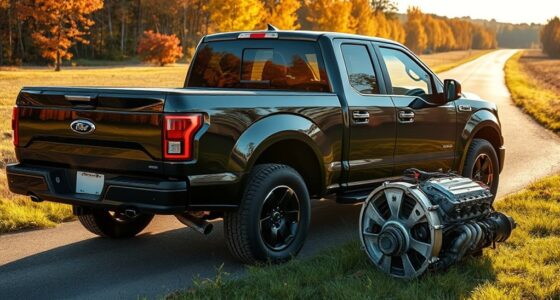
The terms half-ton, 3/4-ton, and 1-ton trucks originate from early payload ratings that indicated how much weight a vehicle could carry, roughly 1,000, 1,500, and 2,000 pounds, respectively. Today, these labels mainly serve as general size and capability indicators, not exact load limits. Many trucks now exceed their original ratings, and classifications focus more on gross vehicle weight. If you keep exploring, you’ll discover how these labels relate to truck classes and what suits your needs best.
Key Takeaways
- These terms originated from early 20th-century payload labels indicating approximate weight capacities.
- They now serve as general size categories, not precise payload limits.
- Half-ton trucks typically handle around 1,000 pounds; three-quarter-ton and one-ton trucks are heavier.
- They correlate with truck classifications based on gross vehicle weight rating (GVWR).
- Modern usage emphasizes capability and classification over exact payload figures.

Chevrolet ½-ton C/K-Series Pickup Trucks 1973-1987: – “Built to Stay Tough” (Those were the days)
As an affiliate, we earn on qualifying purchases.
As an affiliate, we earn on qualifying purchases.
The Origins of Ton Ratings in Trucks

The origins of ton ratings in trucks trace back to the early 20th century, when manufacturers used payload capacity as a practical way to categorize their vehicles. Back then, labels like half-ton, three-quarter-ton, and one-ton directly reflected how much weight the truck could carry—about 1,000, 1,500, and 2,000 pounds, respectively. These designations weren’t about gross vehicle weight; they focused on payload limits. This simple classification helped buyers understand a truck’s capabilities without complex specifications. Over time, these terms became shorthand for truck size and intended usage. Although today’s vehicles often exceed these payloads, the original ton ratings stayed rooted in their payload-based origins, serving as a straightforward way to compare truck capacity in an era when hauling was central to their design. Recognizing how payload capacity influences truck classification can help buyers select the right vehicle for their needs. Additionally, modern advancements in vehicle technology have led to upgraded engineering, which can alter how these ratings are interpreted today. These updates reflect ongoing vehicle design innovations, ensuring that classification terms continue to evolve with industry standards. Understanding the historical context of these terms can also clarify current industry terminology.
3/4-ton truck payload capacity
As an affiliate, we earn on qualifying purchases.
As an affiliate, we earn on qualifying purchases.
How Modern Vehicles Use Ton Ratings Today
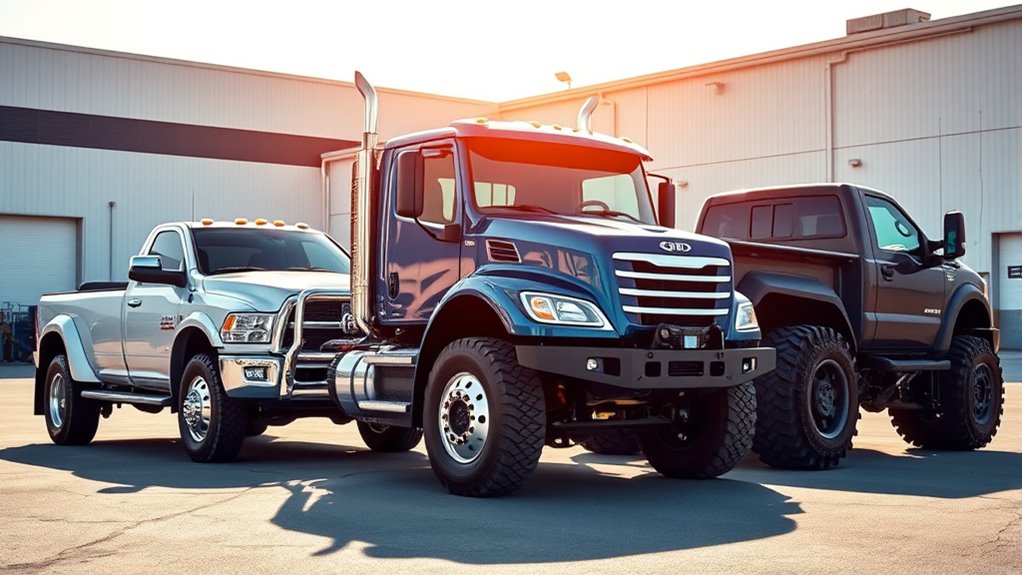
Although modern trucks still use ton ratings in their marketing, these designations no longer strictly define their payload capacities. Instead, they serve as general indicators of size and capability. You’ll find that many trucks labeled as half-ton can carry well over 1,000 pounds, and three-quarter-ton or one-ton models often exceed their historical payload ratings. These ratings help you compare trucks’ size and purpose rather than their exact load limits. Manufacturers now focus on gross vehicle weight ratings (GVWR) to specify actual load capacities, which vary based on the model, engine, and configuration. As a result, ton ratings act more as shorthand for truck classification, giving you a quick sense of the vehicle’s size and overall strength without limiting your expectations of payload or performance. Understanding vehicle classifications is important for making informed decisions about truck capabilities, especially when considering payload capacities that are now more accurately represented by GVWR figures. Additionally, truck weight ratings are updated regularly to reflect advancements in vehicle design and safety standards.

1 Ton Truck Pallet Pulling Scissor Clamp Puller Grip Gripper W/ 20ft Tow Strap
As an affiliate, we earn on qualifying purchases.
As an affiliate, we earn on qualifying purchases.
Understanding Truck Classifications and Their Significance
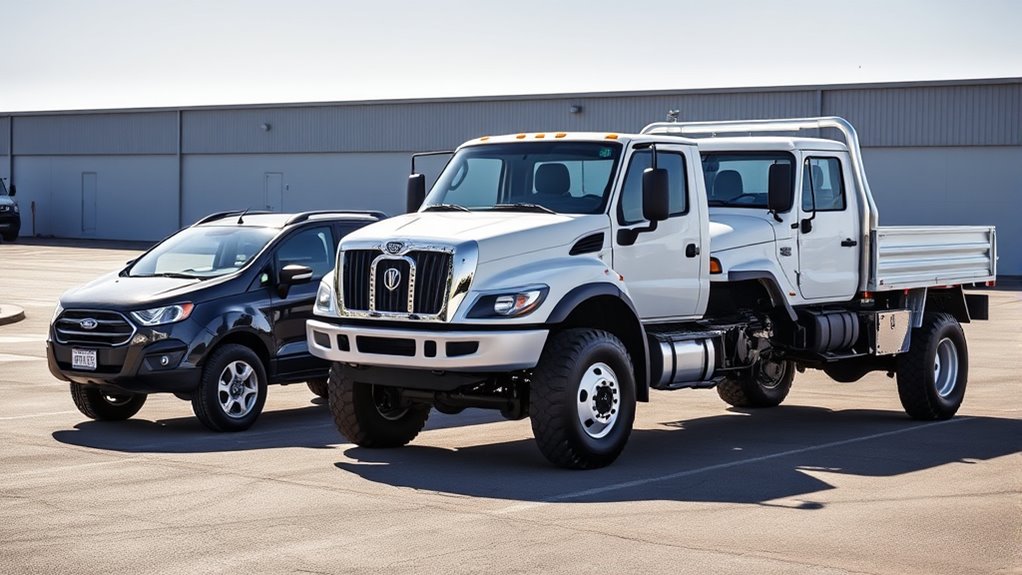
Understanding truck classifications is essential because they help you gauge a vehicle’s size, capability, and appropriate用途. These classifications, like Class 2A, 2B, and 3, are based on GVWR, giving you a clear picture of a truck’s strength and usage. Half-ton trucks, often in Class 2A, suit light-duty tasks and daily driving. Three-quarter-ton models, in Class 2B, handle heavier loads and tougher jobs. One-ton trucks, in Class 3, are built for demanding work like towing and hauling large payloads. Although ton ratings originated from payload capacities, today they serve more as marketing terms, which can sometimes lead to misunderstandings about a truck’s actual capabilities. Knowing the classifications helps you select the right truck for your needs, whether for personal use, work, or heavy-duty applications. Accurate classification guarantees safety, efficiency, and proper vehicle performance. Additionally, vehicle classifications provide insight into a truck’s intended use and compliance with safety standards. Recognizing the classification standards can also aid in ensuring your vehicle meets legal and industry requirements.

PartLogix Air Pressure Gauge Kit for Semi Truck Trailer Suspension Onboard Load Scales Solution
This kit includes everything you need to add pressure gauge to air bag of your semi truck or…
As an affiliate, we earn on qualifying purchases.
As an affiliate, we earn on qualifying purchases.
Examples of Popular Half-Ton, 3/4-Ton, and One-Ton Models
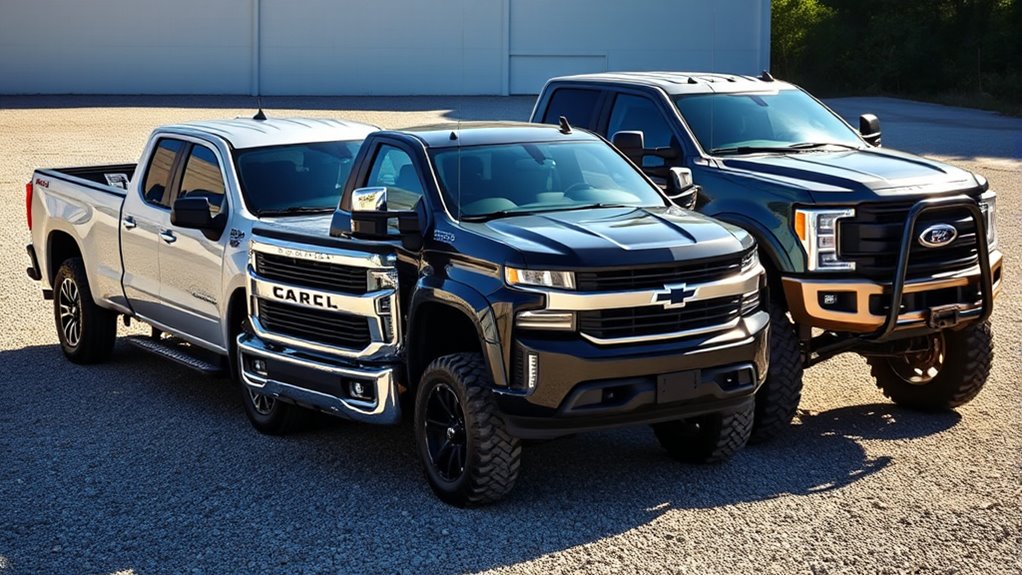
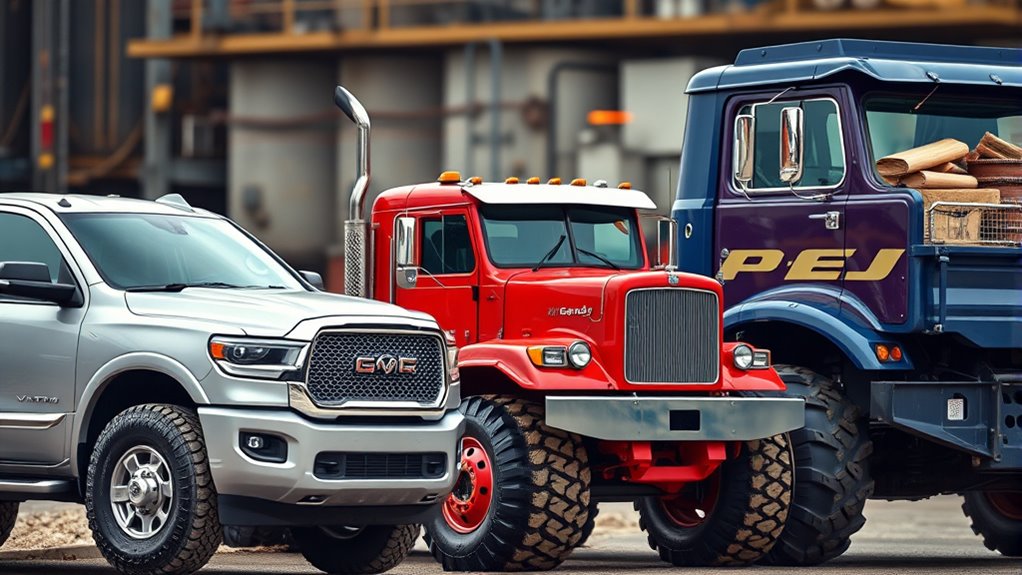
Popular half-ton trucks include models like the Ford F-150, Chevrolet Silverado 1500, Ram 1500, Toyota Tundra, and Nissan Titan, which are widely favored for their versatility and daily driving comfort. These trucks are excellent for light-duty tasks, commuting, and occasional hauling. Moving up, three-quarter-ton models such as the Ford F-250, Chevrolet Silverado 2500, Ram 2500, GMC Sierra 2500HD, and Nissan Titan XD offer increased payload and towing capacity, making them suitable for heavier workloads. For the heaviest tasks, one-ton trucks like the Ford F-350, Chevrolet Silverado 3500, Ram 3500, GMC Sierra 3500HD, and Ford F-450 provide robust power and durability. These trucks are ideal for commercial use, large towing jobs, and demanding construction or agricultural work. Understanding truck classifications can help buyers select the right vehicle for their needs, especially since these categories are based on vehicle capacity and intended use. Additionally, classification standards are established to ensure consistency across manufacturers and models. Recognizing vehicle classification standards can also aid in comparing trucks across different brands and models for more informed decisions. Incorporating AI-driven analytics can further assist buyers by providing insights into vehicle performance and suitability for specific tasks.
What to Consider When Choosing the Right Truck Size
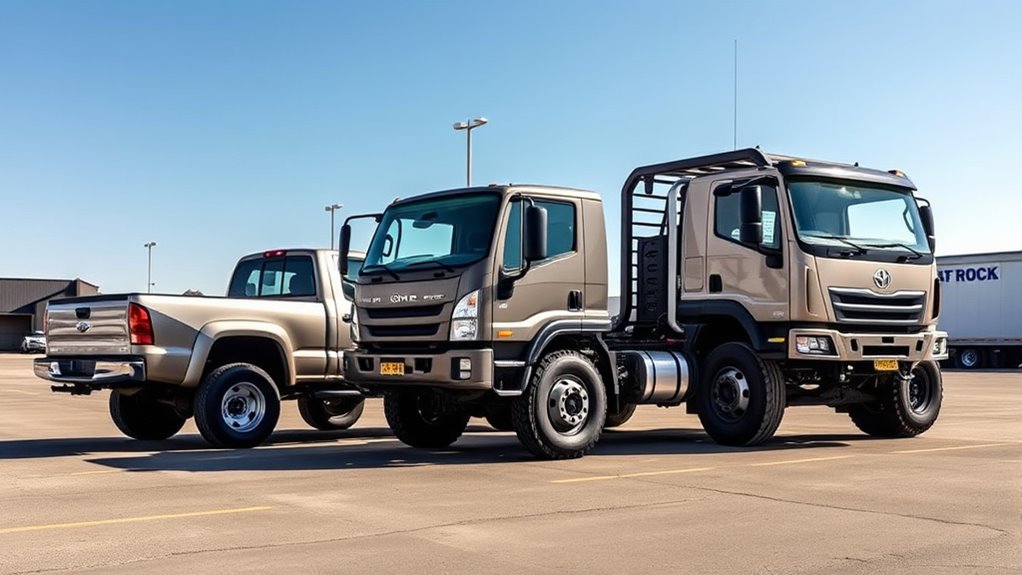
Choosing the right truck size depends largely on your specific needs and how much you plan to haul or tow. Consider the weight of your typical loads and the towing capacity required for your trailer or equipment. If you mostly carry lighter loads or daily commuting, a half-ton truck like the Ford F-150 or Silverado 1500 might suffice. For heavier towing or frequent hauling, a three-quarter-ton or one-ton truck like the Silverado 2500 or F-350 offers greater capacity and durability. Also, think about your environment—urban driving versus off-road use—and whether you need features like towing packages or payload enhancements. Matching your workload with the truck’s capabilities guarantees safety, efficiency, and longevity. Don’t forget to review manufacturer specifications and test drive different models to make an informed choice.
Frequently Asked Questions
Are Modern Truck Ton Ratings Legally Regulated or Just Marketing Terms?
Modern truck ton ratings are just marketing terms, not legally regulated standards. You can’t depend on them to determine actual payload capacity because manufacturers often design trucks to exceed these traditional labels. Instead, focus on the GVWR (Gross Vehicle Weight Rating) provided by the manufacturer, which is a legal limit. This helps you understand the true capacity and ensures you stay within safe and legal load limits.
How Does Payload Capacity Vary Within the Same Ton Classification?
Did you know some modern half-ton trucks can carry over 2,000 pounds? You might be surprised to learn that payload capacity within the same ton classification varies widely depending on the make, model, and setup. This means one half-ton truck could haul less than 1,000 pounds, while another can handle double that. Always check specific vehicle specs, because payload capacity isn’t fixed and can differ markedly even within the same category.
Can a Half-Ton Truck Carry More Than 1,000 Pounds Today?
Yes, a half-ton truck can carry more than 1,000 pounds today. Modern trucks are designed with advanced engineering and materials that allow them to surpass traditional payload limits. Manufacturers often market these vehicles as “half-ton,” but actual payload capacities frequently go beyond 1,000 pounds, sometimes reaching 1,500 pounds or more. Always verify the specific model’s payload rating to guarantee it meets your hauling needs.
What Is the Difference Between GVWR and Payload Capacity?
GVWR, or Gross Vehicle Weight Rating, is the maximum weight your truck can safely handle, including its own weight plus cargo and passengers. Payload capacity is the actual maximum weight you can carry in the truck’s bed and cabin without exceeding safety limits. You should always stay within payload limits to avoid damage or safety issues, even if your vehicle’s GVWR allows for more weight.
Do All Trucks in a Ton Category Have Similar Towing Capabilities?
Not all trucks in a ton category have similar towing capabilities. You should check each truck’s specific towing capacity, which varies based on engine, transmission, and configuration. While the ton rating gives a general idea of size and strength, it doesn’t guarantee the same towing power across different models. Always review the manufacturer’s specs to guarantee the truck meets your towing needs.
Conclusion
Understanding truck ratings helps you choose the right vehicle for your needs. Remember, don’t judge a book by its cover—sometimes, a smaller truck can do the job just as well as a bigger one. By knowing what these terms mean, you’ll make smarter decisions and find a truck that fits your lifestyle. Keep these insights in mind, and you’ll be well on your way to driving confidently with the right truck for you.