Yes, a half-ton truck can tow some fifth wheels, but it depends on the specific model’s towing and payload capacities. Most half-tons tow between 9,000 and 14,000 pounds, with payloads around 1,700 to 3,300 pounds—so lighter fifth wheels weighing 7,600 to 9,600 pounds may be manageable if weights stay within limits. To ensure safe towing, you need to take into account trailer weight, hitch capacity, and proper weight distribution. Continue exploring to learn how to make the best towing choices.
Key Takeaways
- Many half-ton trucks can tow fifth wheels up to around 12,000 pounds GVWR with proper equipment.
- Check your truck’s maximum towing capacity and payload to ensure compatibility with the trailer’s weight.
- Fifth wheel dry weights typically range from 7,600 to 9,600 pounds, requiring careful weight management.
- Always include a safety margin of at least 10% below the truck’s maximum ratings to prevent overload risks.
- For heavier fifth wheels or larger trailers, consider upgrading to a 3/4-ton or 1-ton truck for safe towing.
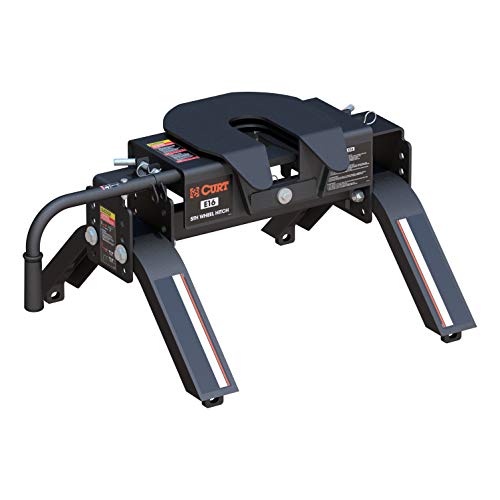
CURT 16115 E16 5th Wheel Hitch, 16,000 lbs
DUAL-PIVOT HEAD. This CURT 5th wheel hitch features a dual-pivoting head that provides 10 degrees of lateral movement…
As an affiliate, we earn on qualifying purchases.
As an affiliate, we earn on qualifying purchases.
Understanding Towing Capacities of Half-Ton Trucks

Understanding towing capacities of half-ton trucks is essential for safe and effective hauling. You need to know that modern half-ton trucks typically handle between 9,000 and 14,000 pounds. For instance, the 2025 Ford F-150 with a 3.5L EcoBoost V6 and max towing package can tow up to 14,000 pounds. Keep in mind that payload capacities vary from about 1,783 to 3,325 pounds, depending on engine, cab style, and drive type. Towing capacity isn’t fixed; it depends on the specific truck model, configuration, and added towing packages. Always verify your truck’s exact ratings before towing. Additionally, understanding towing capacities is crucial for safe operations. Overestimating can lead to unsafe situations, damage, or legal issues, so it’s vital to understand your truck’s limits thoroughly.

Rhino USA Adjustable Trailer Hitch (Fits 2-Inch Receiver) – Heavy Duty Aluminum Tow Hitches with 6-Inch Drop/Rise for Truck (12,500 LBS GTW) – Weatherproof Double Anti-Theft Locking Hitch Pin (Silver)
AMERICAN OWNED, FAMILY OPERATED – Join the Rhino Family & Support a USA based Father/Son Business!
As an affiliate, we earn on qualifying purchases.
As an affiliate, we earn on qualifying purchases.
Typical Fifth Wheel Weights and Dimensions

Understanding the typical weights and dimensions of fifth wheels helps you choose the right match for your truck. Most fifth wheels weigh between 7,600 and 9,600 pounds when dry, with GVWRs under 12,000 pounds. Dimensions usually range from 27 to 35 feet in length, making size an important factor for safe towing with a half-ton truck. Additionally, being aware of towing capacity techniques can assist in effective communication during towing and setup.
Average Fifth Wheel Weight
Most fifth wheels designed for half-ton trucks weigh between 7,600 and 9,600 pounds when unloaded, making them manageable for many lighter-duty vehicles. Their dry weights typically fall within this range, but it’s vital to account for the added cargo, water, and personal belongings, which increase the total weight. The GVWR of these trailers usually stays under 12,000 pounds, with pin weights around 1,500 to 2,000 pounds, roughly 20% of the trailer’s total weight. These weights make them suitable for lighter half-ton trucks, provided you stay within the vehicle’s towing and payload limits. Always check the specific model’s dry weight and GVWR to ensure safe towing. Remember, exceeding recommended limits increases safety risks and can cause damage to your truck.
Common Fifth Wheel Dimensions
Fifth wheel trailers designed for half-ton trucks typically weigh between 7,600 and 9,600 pounds unloaded, making them manageable for many lighter-duty vehicles. These trailers usually have a GVWR under 12,000 pounds and feature pin weights under 2,000 pounds, which is essential for safe towing with a half-ton truck. Their dry weights commonly fall between 7,612 and 9,639 pounds, with cargo capacities ranging from about 2,081 to 3,616 pounds. Lengths vary from approximately 27 to 35 feet, with floorplans that include bunkhouses, rear kitchens, and slide-outs for added comfort. Knowing these dimensions helps you choose a fifth wheel compatible with your truck’s towing and payload limits, ensuring safe and efficient travel. Additionally, understanding future entertainment trends can enhance your planning for long trips by integrating entertainment options that align with upcoming innovations. Being aware of payload capacity is crucial when selecting a fifth wheel to prevent overloading your vehicle and ensure safety. Always check the specific model’s specifications before towing.

VEVOR Weight Distribution Hitch, 12000 lbs Max Towing & 1200 lbs Max Tongue, Weight Distributing Hitches Kit with Sway Control Includes 2 in Shank & 2-5/16 in Ball, Load Leveling Hitch for Trailers
Powerful Towing: This weight distribution hitch includes a 2-5/16 inch (58.5 mm) hitch ball rated for 1200 lbs…
As an affiliate, we earn on qualifying purchases.
As an affiliate, we earn on qualifying purchases.
Key Factors Affecting Towing Performance
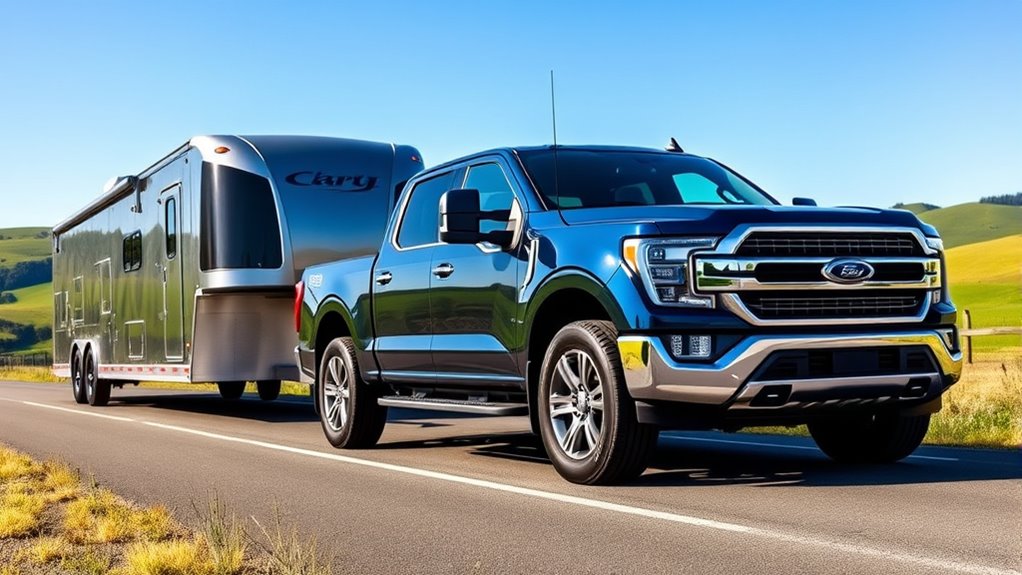
Several key factors directly influence your towing performance, and paying attention to them helps guarantee safe and efficient hauling. First, know your truck’s maximum towing capacity and payload ratings, and never exceed them. The engine, transmission, and driveline specifications determine how much weight your truck can handle safely. Additionally, the trailer’s weight, especially its GVWR and pin weight, must stay within your truck’s limits. Proper weight distribution is vital; uneven loads can cause instability. Tire condition and pressure also impact traction and braking. Finally, your truck’s hitch setup and braking system should be appropriate for the trailer size. Being aware of your vehicle’s floating on water capabilities can help in understanding how different conditions might affect your towing experience. By understanding and managing these factors, you optimize safety, reduce wear, and ensure a smoother towing experience.

Trailer Tongue Weight Scale 2000 lbs Capacity – RV Hitch Load Gauge with Waterproof Storage Case – Portable Towing Safety Tool Accessories Kit for Trucks, Travel Trailers, Campers, Cargo & Boat
Accurate Weight Measurement: Introducing our Trailer Tongue Weight Scale,a reliable tool for safe towing practices.With 2000 LBS Capacity,…
As an affiliate, we earn on qualifying purchases.
As an affiliate, we earn on qualifying purchases.
Safety Margins and Overloading Risks
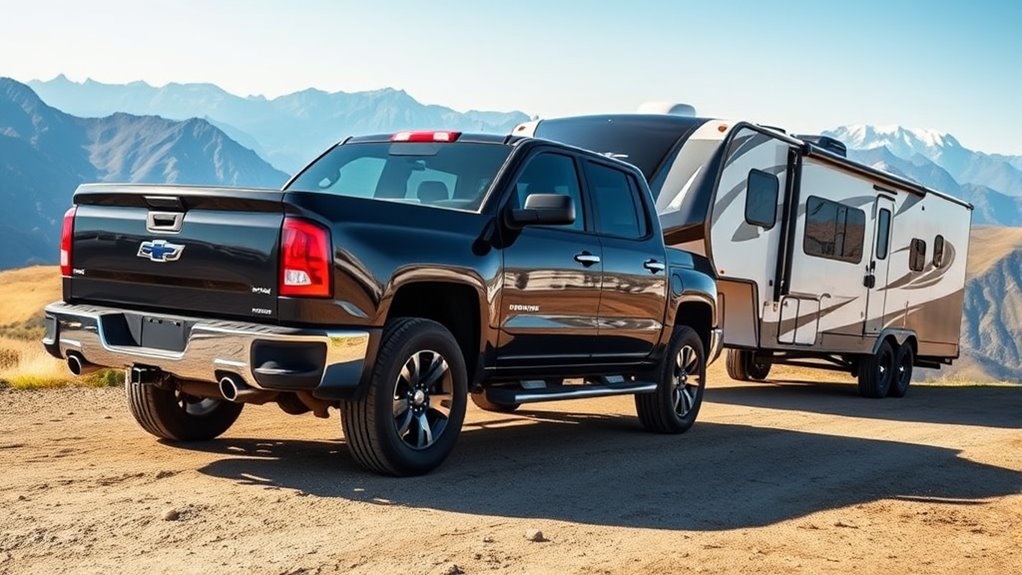
You need to stay within your truck’s towing capacity to avoid dangerous overloads. Overloading can cause brake failure, damage your engine, and compromise vehicle handling. That’s why it’s essential to keep a safety margin—aim for at least 10% below the maximum limit—to guarantee safe and reliable towing.
Towing Capacity Limits
While it might be tempting to tow right up to your truck’s maximum capacity, doing so considerably increases safety risks. Overloading your half-ton truck can compromise stability, braking, and handling, making driving more dangerous. It also puts excessive strain on your engine, transmission, and brakes, raising the risk of mechanical failure. Experts recommend maintaining a safety margin—about 10% below your truck’s maximum towing capacity—to ensure safe operation. Exceeding these limits can lead to costly repairs and reduce your vehicle’s lifespan. Always verify your specific truck’s towing and payload ratings before hauling any trailer. Staying within safe limits helps prevent accidents, protects your investment, and ensures a more comfortable towing experience. Remember, safe towing isn’t just about reaching capacity; it’s about staying well below it. Understanding towing limits is crucial for maintaining vehicle safety and performance. Additionally, proper weight distribution can significantly improve towing stability and safety.
Overload Damage Risks
Overloading your half-ton truck can cause immediate and long-term damage to its key components. Excess weight strains the engine, transmission, brakes, and suspension, risking costly repairs and compromised safety. Pushing beyond recommended limits also reduces handling, increases brake distances, and raises the chance of losing control. To illustrate, consider the following risks:
| Damage Type | Potential Consequences | Warning Signs |
|---|---|---|
| Engine & Transmission | Overheating, premature failure | Unusual noises, warning lights |
| Brakes | Reduced stopping power | Longer stopping distances |
| Suspension & Tires | Premature wear, blowouts | Uneven tire wear, vibrations |
| Frame & Chassis | Structural stress, cracks | Cracks, misalignment |
Always stay below capacity, maintaining a safety margin to protect your vehicle and ensure safe towing. Properly understanding vehicle load capacity is essential to avoid these risks and ensure longevity and safety.
Safety Margin Importance
Maintaining a safety margin when towing with a half-ton truck is essential to prevent accidents and damage. Pushing your vehicle to its maximum capacity increases the risk of brake failure, loss of control, and mechanical wear. Experts recommend staying at least 10% below the truck’s rated towing capacity to account for unexpected road conditions, added cargo, or trailer weight variations. This additional safety buffer** helps guarantee stability, efficient braking, and overall safety. Overloading or towing near the limit leaves little margin for error, risking serious accidents and costly repairs. Always verify your truck’s specific ratings and use manufacturer guidelines to determine safe towing limits. Properly understanding vehicle weight ratings and the importance of safety margins** ensures you stay within safe operational limits and avoid unintentional overloading. Recognizing towing capacity and adhering to recommended safety margins is crucial for maintaining vehicle performance and longevity.
Selecting Compatible Fifth Wheel Models
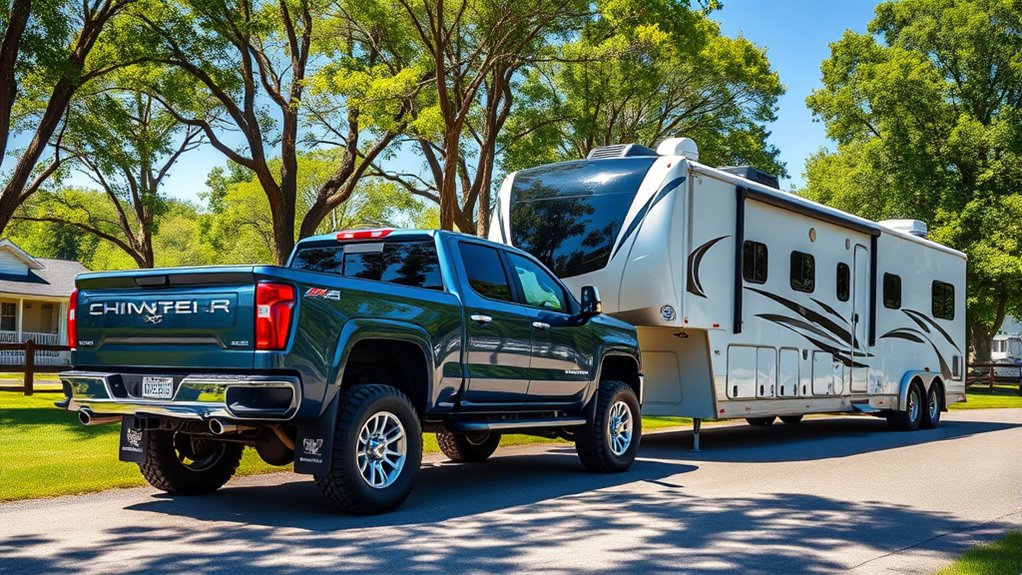
Choosing a fifth wheel that’s compatible with your half-ton truck requires matching the trailer’s weight and features to your vehicle’s towing and payload capacities. Focus on trailers with a GVWR under 12,000 pounds and pin weights below 2,000 pounds to stay within safe limits. Check the dry weight of the fifth wheel, aiming for models under 10,000 pounds, which are easier to tow and manage. Consider models like the Keystone Cougar or Jayco Eagle, which are designed for lighter towing demands. Always verify that the trailer’s weight, including cargo and fluids, stays below your truck’s maximum payload and towing ratings. Selecting a model with a manageable hitch weight ensures better stability and safer towing, reducing the risk of overloading your vehicle. Additionally, understanding weight distribution helps optimize towing performance and vehicle safety. Properly balanced towing setup can further enhance safety and handling during your journey, especially when considering hitch types and their compatibility with your truck. Being aware of your vehicle’s towing capacity is essential to prevent potential damage and ensure a smooth towing experience. Knowing your payload capacity is equally important to avoid exceeding your truck’s limits and to maintain control.
Essential Specifications for Safe Towing
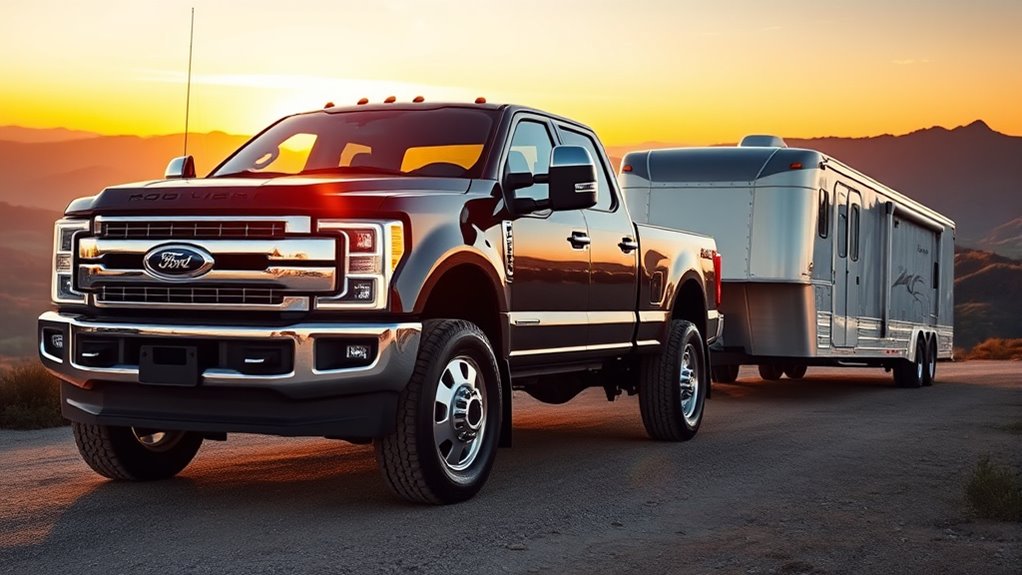
To tow a fifth wheel safely with a half-ton truck, you need to pay close attention to key specifications such as the trailer’s GVWR, hitch weight, and your vehicle’s towing and payload capacities. Confirm the fifth wheel’s GVWR and pin weight stay well below your truck’s maximum towing and payload limits. Typically, half-ton trucks can manage trailers with dry weights under 10,000 pounds and pin weights under 2,000 pounds. Check your truck’s specific ratings, including maximum towing capacity and payload capacity, to avoid overloading. Remember, exceeding these limits can compromise stability, braking, and overall safety. Always factor in additional cargo, passengers, and fluids. Using the manufacturer’s towing guide and maintaining a safety margin of about 10% helps ensure safer, more reliable towing. Understanding trailer weight distribution is also crucial for maintaining vehicle control and safety during towing. Additionally, being aware of vehicle-specific ratings helps prevent accidents caused by overestimating your truck’s capabilities. It is also helpful to consider the type of hitch, as different hitches distribute weight differently and can influence towing capacity. Properly distributing weight ensures your truck handles the load effectively and reduces wear on critical components. Paying attention to proper hitch setup can further enhance safety and towing efficiency.
Calculating Payload and Hitch Weights

Understanding how to accurately calculate payload and hitch weights is essential for safe and effective towing. You need to verify your truck can handle the combined weight of the trailer, cargo, passengers, and fluids. To do this effectively:
- Weigh your truck with all gear, passengers, and fluids onboard to determine your actual payload capacity.
- Calculate the trailer’s hitch weight, which is typically 20% of the trailer’s total weight, and ensure it stays within your truck’s hitch rating.
- Add the hitch weight to your cargo weight to verify it doesn’t exceed your payload capacity.
Always use a scale for precise measurements and consult your vehicle’s manufacturer guidelines. Proper calculations help avoid overloading and maintain safe towing conditions.
Recommendations for Responsible Towing Practices
Practicing responsible towing starts with respecting your vehicle’s limits and making safety a priority. Always verify your truck’s specific towing and payload ratings before hitching a fifth wheel. Stay at least 10% below maximum capacities to ensure safety margins. Distribute the weight evenly across the trailer and use proper hitching techniques to maintain stability. Regularly inspect your truck’s braking system, tires, and suspension to ensure they’re in good condition. Avoid sudden maneuvers or high speeds, especially on steep inclines or rough roads. Be mindful of added cargo, passengers, and fluids that increase weight. Planning your route and allowing extra time for stopping and turning reduces risks. Remember, responsible towing protects your vehicle, your cargo, and everyone on the road.
Upgrading Vehicles for Heavier Fifth Wheels

If you’re considering towing heavier fifth wheels than your current half-ton truck can manage, upgrading your vehicle is essential for safe and reliable hauling. Here are three key steps:
- Choose a 3/4-ton or 1-ton truck—these models offer higher towing capacities, typically exceeding 16,000 pounds, and better payload ratings for heavier loads.
- Upgrade your suspension and brakes—heavy-duty shocks, sway bars, and brake systems improve stability and stopping power when towing larger trailers.
- Select an appropriate engine and towing package—look for models with powerful engines like the 6.2L V8 or diesel options, along with factory-installed towing packages to maximize capacity.
Upgrading guarantees your vehicle can handle increased weight safely, reducing risks and enhancing your towing experience.
Frequently Asked Questions
Can I Tow a Fifth Wheel That Exceeds My Truck’s Maximum Towing Capacity?
You shouldn’t tow a fifth wheel that exceeds your truck’s maximum capacity. Doing so risks damaging your vehicle, compromising safety, and possibly invalidating insurance. Always check your truck’s towing and payload ratings and guarantee the trailer’s weight, including pin and cargo, stays well below those limits. If your fifth wheel exceeds your truck’s capacity, consider upgrading to a heavier-duty truck like a 3/4-ton or 1-ton to tow safely.
How Does Weather Affect Towing Safety With a Half-Ton Truck and Fifth Wheel?
Weather critically impacts your towing safety with a half-ton truck and fifth wheel. Rain, snow, or icy conditions reduce traction, making it harder to control your vehicle. Strong winds can cause sway, especially with large trailers. Always slow down in adverse weather, increase following distances, and verify your brakes and tires are in top condition. Consider postponing towing during severe weather to prevent accidents and ensure safe travel.
What Maintenance Is Required Specifically for Towing a Fifth Wheel?
Think of your truck and fifth wheel as a team running a marathon—regular maintenance keeps them in sync. You should regularly check and replace engine oil, transmission fluid, and brake systems, especially before long trips. Inspect tires for wear and proper pressure, and make certain lights and brakes function correctly. Proper maintenance prevents breakdowns and keeps you safe, much like a runner preparing for a race to finish strong.
Are There Legal Restrictions on Towing Weight Limits for Half-Ton Trucks?
Yes, there are legal restrictions on towing weight limits for half-ton trucks. You must comply with local and federal regulations, which often specify maximum gross vehicle weight ratings (GVWR) and trailer weight limits. Exceeding these limits can lead to fines, penalties, or insurance issues. Always check your truck’s towing capacity, ensure your trailer’s weight stays within legal limits, and follow safety guidelines to avoid legal trouble.
How Does Towing Influence Fuel Economy and Vehicle Wear Over Time?
Towing can reduce your fuel economy by up to 30%, depending on the trailer size and driving conditions. Over time, consistently hauling heavy loads puts extra strain on your vehicle’s engine, transmission, and brakes, accelerating wear and tear. You might notice more frequent repairs and decreased reliability. To protect your truck’s longevity, stay within recommended towing limits, perform regular maintenance, and avoid towing at maximum capacity constantly.
Conclusion
Just like Icarus reached too close to the sun, pushing your half-ton truck beyond its limits risks a fall. Know your truck’s capacity, choose the right fifth wheel, and respect safety margins. By staying within your vehicle’s limits, you’ll enjoy smooth journeys and peace of mind. Remember, the road is a journey, not a race—towing responsibly keeps your adventures soaring, not falling. Tread wisely, and your travels can be legendary.