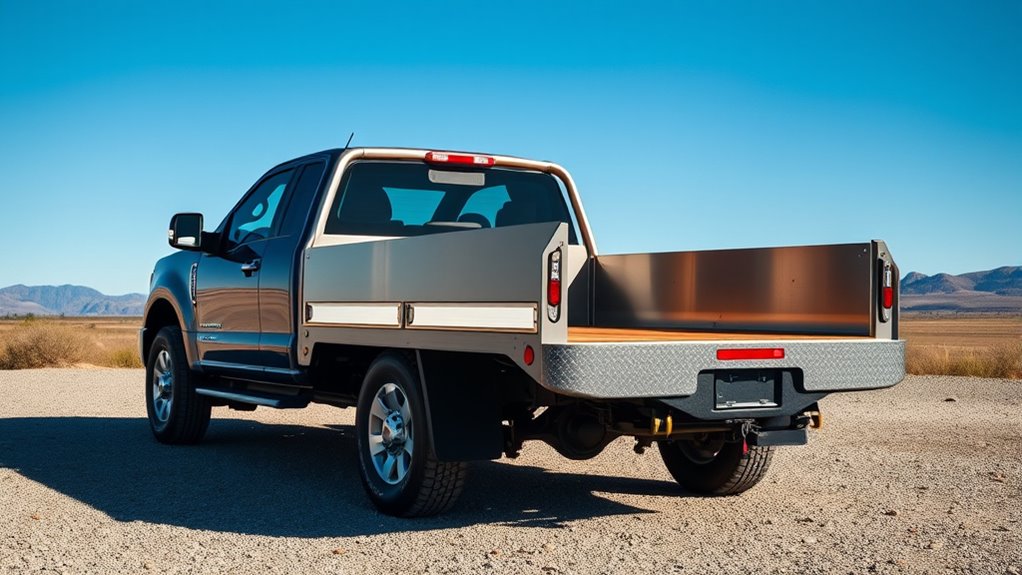

Converting your pickup to a flatbed boosts cargo capacity and versatility, making it easier to haul oversized or irregular items from all sides. This setup is perfect for heavy equipment, construction materials, or farm goods, helping you reduce trips and streamline jobs. While steel flatbeds offer durability, aluminum models save weight and resist rust. Keep in mind, weather exposure requires protective gear, and costs for maintenance and repairs can add up. If you’re curious, exploring more will reveal how to weigh these pros and cons effectively.

Get garage and car supplies delivered free — and shop member deals
- Fast, free delivery on millions of items
- Access to Prime Big Deal Days deals on October 6–7
- Prime Video, Amazon Music and more included
Key Takeaways
- Increases cargo capacity and versatility for transporting oversized or irregular items.
- Allows easy loading and unloading from all sides, improving operational efficiency.
- Offers options in materials like steel or aluminum, balancing durability and weight.
- Enhances weather resistance with proper protective gear, reducing cargo damage risks.
- Initial installation is affordable, but consider long-term maintenance and resale value.
As an affiliate, we earn on qualifying purchases.
Advantages of Increased Cargo Capacity and Versatility
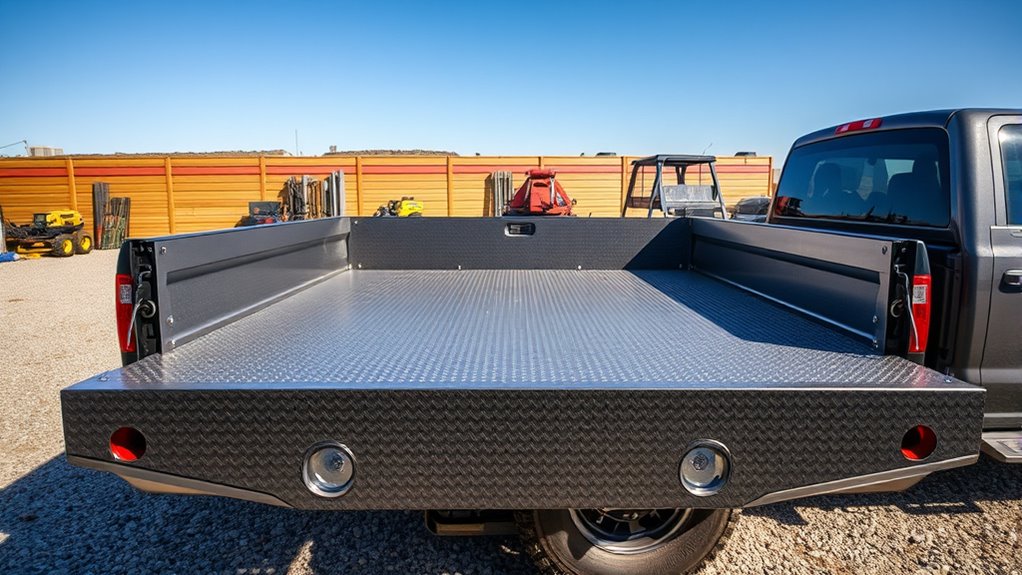
A flatbed conversion considerably boosts your pickup’s cargo capacity and versatility, making it easier to handle a wider range of loads. With an open design, you can easily load and unload oversized or irregularly shaped items from all sides, saving time and effort. It’s ideal for transporting heavy equipment, construction materials, or agricultural products that don’t fit within standard beds. Flatbeds also provide more usable surface area, allowing you to carry multiple items simultaneously without the constraints of sidewalls. This flexibility reduces the number of trips needed and streamlines your operations. Whether you’re hauling bulky tools or large pallets, a flatbed makes your vehicle more adaptable, giving you the ability to take on diverse jobs with ease and efficiency. Open design advantages
As an affiliate, we earn on qualifying purchases.
Considerations of Durability, Weather, and Cost

Choosing the right flatbed involves weighing durability, weather resistance, and cost to guarantee it meets your needs. Steel flatbeds offer strength and durability, but they add weight and require more maintenance. Aluminum models are lighter and withstand corrosion, which can improve fuel economy but may be less durable over time. Weather exposure is a major factor—you’ll need tarps, straps, and protective gear to shield cargo from rain, snow, and sun, increasing ongoing costs and effort. Budget considerations also matter; installation is quick and affordable, but long-term maintenance, securing equipment, and potential repairs can add up. Additionally, weigh the resale value, as flatbeds may depreciate faster depending on market demand. Balancing these factors helps ensure your flatbed serves you reliably without unexpected expenses. Incorporating somatic therapy techniques into your routine can help manage stress and improve your overall well-being, which is beneficial when handling the responsibilities of vehicle maintenance.
As an affiliate, we earn on qualifying purchases.
Frequently Asked Questions
How Long Does a Flatbed Conversion Typically Take?
A flatbed conversion typically takes about a day or two, depending on the complexity and materials used. You’ll need to remove your existing bed, prepare the frame, and install the new flatbed, which can be done quickly with the right tools and expertise. If you opt for custom features or specialized materials, plan for a longer timeframe. Overall, it’s a relatively fast process that minimizes downtime.
Are Flatbed Conversions Legal Everywhere?
Think of your truck as a blank canvas—whether flatbed conversions are legal depends on where you’re driving. Laws vary widely, like shifting sands beneath your tires. You need to check local regulations, weight limits, and load securement rules. Ignoring these can turn your vehicle into a legal minefield, so always research thoroughly or consult authorities. Staying compliant guarantees your cargo travels smoothly, and you stay on the right side of the law.
What Maintenance Is Required for a Flatbed?
You need to regularly inspect your flatbed for signs of wear, damage, or corrosion, especially if it’s made of steel or aluminum. Keep the surface clean and free of debris to prevent rust and deterioration. Check securing equipment like tie-downs and tarps for fraying or damage, replacing them as needed. Also, lubricate any moving parts, and regularly wash off dirt and grime to maintain its durability and safety during use.
Can Flatbeds Be Removed or Changed Back?
Yes, flatbeds can be removed or changed back to the original pickup bed. You typically need to detach the flatbed from the frame, which may involve unbolting or disconnecting mounting hardware. Keep in mind, some modifications might be necessary to restore the truck’s original appearance and function. If you’re unsure, it’s best to consult a professional to ensure the process is performed correctly and safely.
How Does a Flatbed Affect Insurance Costs?
You might notice your insurance costs climb after installing a flatbed, and here’s why: insurance companies see flatbeds as riskier due to increased exposure and load security challenges. The open design makes cargo more vulnerable to weather damage and theft, prompting higher premiums. Plus, the potential for load shifting or accidents raises concerns. So, if you’re considering a conversion, expect your insurance provider to adjust rates to reflect these added risks.
As an affiliate, we earn on qualifying purchases.
Conclusion
A flatbed conversion can boost your pickup’s cargo capacity and versatility, making it easier to handle larger or irregular loads. Just keep in mind that durability, weather protection, and cost are important factors to contemplate. Did you know that flatbeds can increase your truck’s usable space by up to 30%? If you often need more room or easier loading, a flatbed conversion might be just what you need—saving you time and expanding your hauling possibilities.
Fall Picks
fall essentials
As an affiliate, we earn on qualifying purchases.