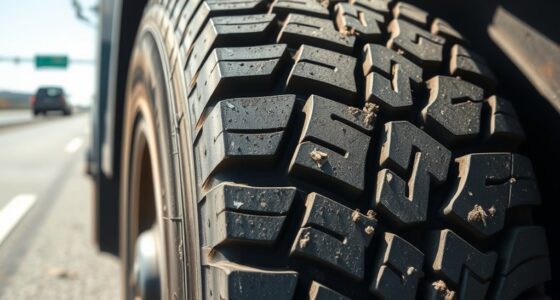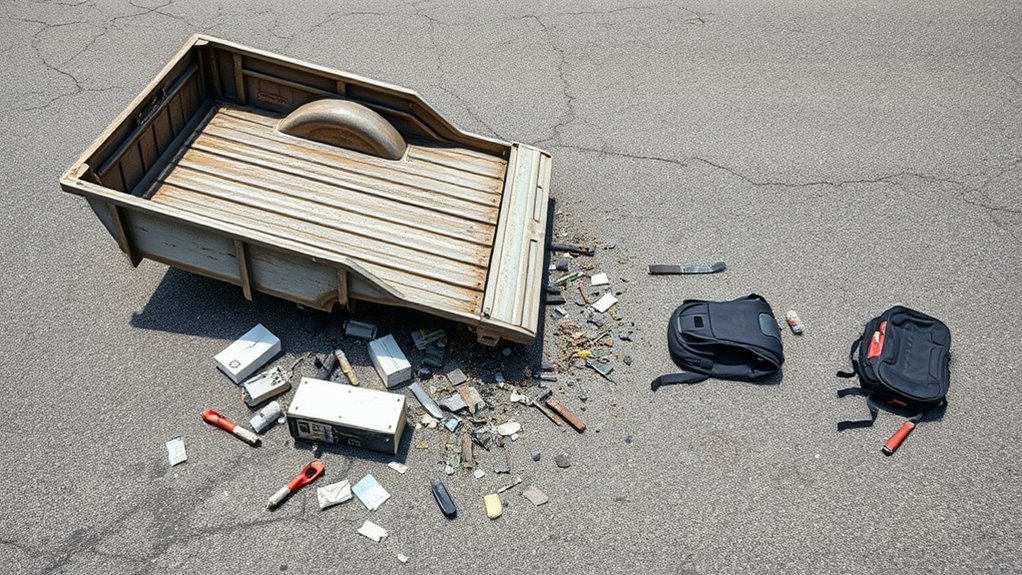
After a truck bed accident, you should take clear photos of the overall scene, including vehicle positions, road conditions, traffic signals, and nearby signs. Capture close-ups of vehicle damages, cargo condition, and any debris or hazards. Don’t forget to photograph driver details, load securement, skid marks, and skid or road surface conditions. Be sure to document witness evidence, traffic control devices, and environmental factors. Continuing will help you understand all the essential photo evidence needed for your case.
Key Takeaways
- Capture clear, wide-angle photos of the accident scene, vehicle positions, skid marks, debris, and environmental conditions.
- Photograph all vehicle damages from multiple angles, including close-ups of specific dents, scratches, and broken parts.
- Take images of road signs, lane markings, signals, and any hazards such as potholes or weather effects that may influence liability.
- Document driver records, cargo condition, and load security through photos of logs, inspections, and cargo arrangements immediately after the crash.
- Obtain and photograph police reports, dashcam footage, surveillance videos, and emergency response activities for comprehensive evidence.
Capture Overall Scene and Vehicle Positions
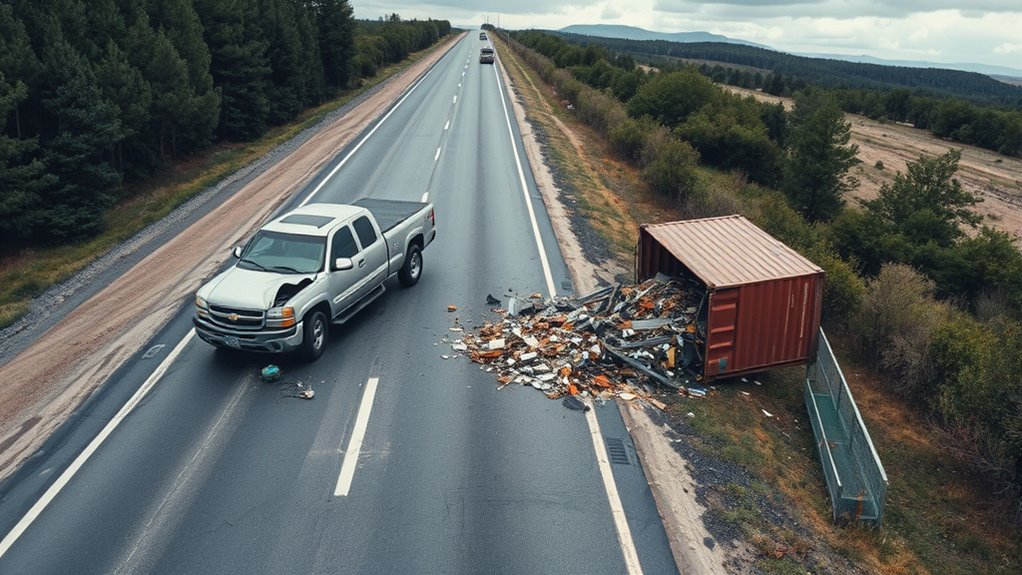
When documenting an accident scene, capturing the overall layout and vehicle positions is essential for establishing the sequence of events. You should take wide-angle photos from different angles to show how vehicles are arranged on the road. Include images that reveal the distance between vehicles and their orientation relative to traffic lanes, nearby signage, and road features. This helps create a clear picture of how the collision unfolded. Make sure to photograph the scene immediately after the accident, before vehicles are moved or debris is cleared. Consistent, well-lit shots will aid in reconstructing the incident later. Additionally, understanding the contrast ratio of the scene can help in capturing images that accurately reflect the lighting conditions, ensuring detailed and usable photos. These initial images serve as a foundation for understanding the accident’s context and are vital for insurance and legal purposes.
Document Damage to All Vehicles Involved
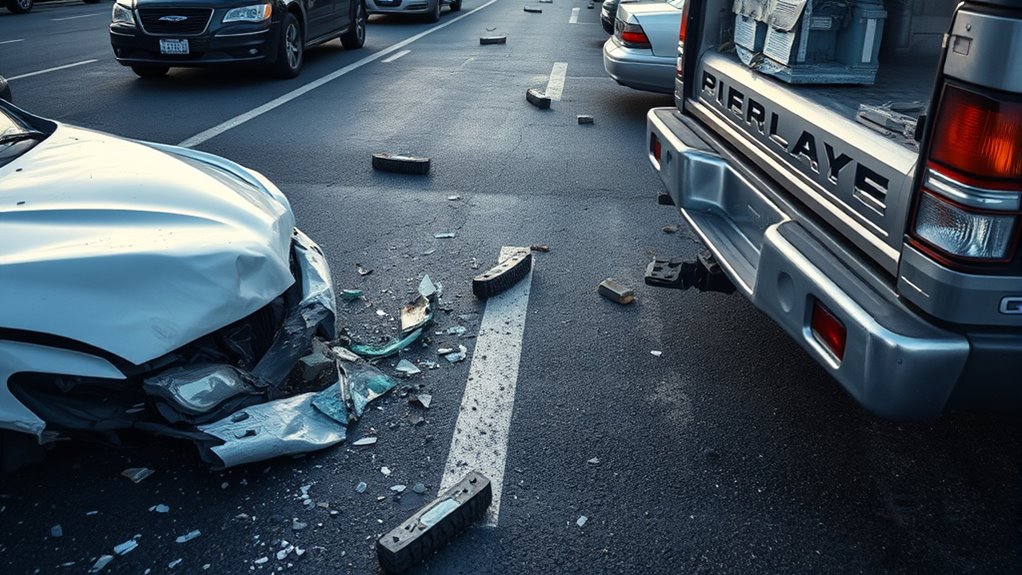
Make sure to photograph all damage on every vehicle involved, including dents, scratches, and broken parts. Capture the damage from multiple angles to show the full extent and details. Also, take clear photos of vehicle positions to establish how each was involved in the accident. Additionally, applying even lighting can help reveal finer details and prevent shadows that obscure damage.
Capture All Damage Details
To thoroughly document the damage caused by a truck bed accident, you need to capture clear, detailed photos of all involved vehicles from multiple angles. Take wide shots to show the overall extent of damage, then zoom in on specific areas like dents, scratches, and broken parts. Make sure to photograph both the front and rear of each vehicle, as well as any side impacts. Include close-ups of crushed panels, shattered glass, and bent frames to provide evidence of severity. Capture images from different distances to document the scale of damage and help reconstruct the accident. Properly documented damage details are vital for insurance claims and legal proceedings, so be thorough, accurate, and organized with your photos. Additionally, capturing body damage and the condition of the truck bed itself can provide a comprehensive overview of the incident’s impact.
Photograph Vehicle Positions
Photographing vehicle positions immediately after a truck bed accident is vital for establishing the spatial relationships between all involved vehicles. Capture wide-angle shots from various angles to show how vehicles are arranged on the road. Make certain you include images that clearly depict the distance between the truck, other cars, and nearby objects. Take photos from multiple perspectives—front, side, and rear—to document how the vehicles came to rest. These images help reconstruct the accident and determine fault. Be sure to timestamp each photo if possible. Accurate vehicle positioning evidence supports your claim by providing a clear visual timeline of the crash scene. This documentation is essential for insurance purposes, legal investigations, and establishing the sequence of events. Incorporating practical tools and techniques can further enhance the clarity and usefulness of your photographic evidence.
Record Road Conditions and Environmental Factors
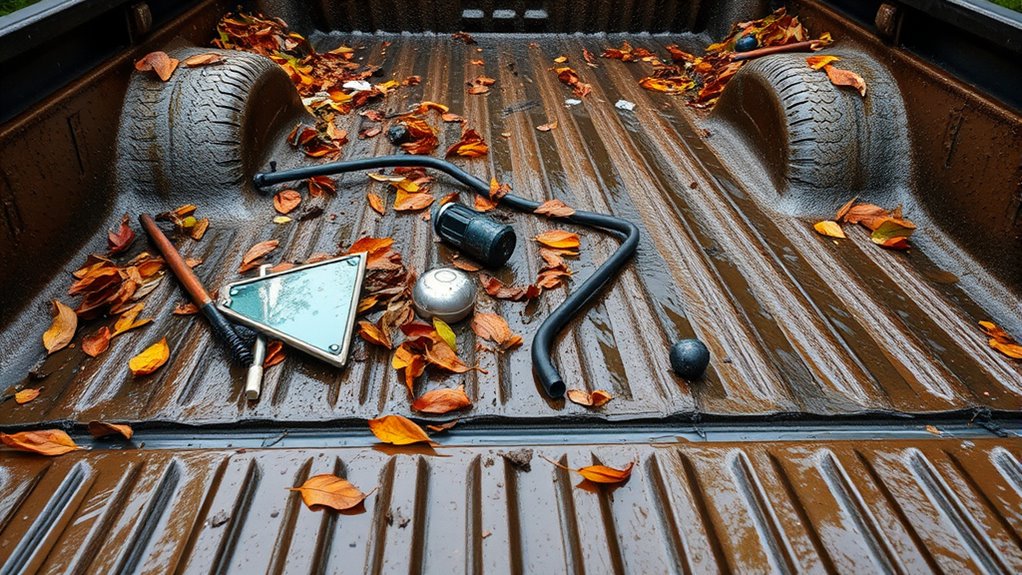
Recording road conditions and environmental factors is essential for establishing the circumstances surrounding a truck bed accident. Take clear photos of wet, icy, or snow-covered pavement, as these conditions can considerably impact visibility and vehicle control. Capture images of potholes, cracks, or debris on the roadway that may have contributed to the crash. Document poor lighting, fog, or other weather-related issues that could impair driver visibility. Include shots of road signs, lane markings, and traffic signals to show if signage was visible or obscured. These images help illustrate environmental hazards that may have played a role. Precise photos of the scene’s surroundings strengthen your case by providing visual evidence of conditions that could influence liability and accident reconstruction. Additionally, understanding free floating conditions can reveal how unanchored cargo or other factors may have contributed to the incident.
Take Close-Ups of Injury and Medical Conditions

Make sure to take clear close-up photos of any injuries you sustained, such as cuts, bruises, or swelling. These images help document the severity and details of your condition for medical and insurance purposes. Additionally, track your treatment progress with photos showing how your injuries improve or change over time. Proper documentation tools can ensure your photos are organized and easily accessible for future reference.
Capture Injury Details Clearly
Capturing injury details clearly requires close-up photos that distinctly show the extent and specifics of each injury. Make certain your images clearly depict bruises, cuts, swelling, or fractures without obstructions or poor lighting. Take multiple angles to highlight different aspects of the injury, including surrounding skin or tissue damage. If applicable, include measurements or reference objects for scale. Focus on injuries that may not be immediately obvious, like scars or signs of long-term impairment. Consistent, well-lit photos help convey the severity and nature of your injuries, which can be vital for insurance claims or legal proceedings. Avoid editing or cropping that might obscure important details—your goal is to create an accurate, detailed visual record of your injuries. Additionally, documenting your injuries effectively can benefit from understanding first aid kit essentials, helping you identify and record symptoms accurately.
Document Treatment Progression
To effectively document the progression of injuries and medical conditions, you should take a series of close-up photos at different stages of treatment. This visual record can help validate your claim and show how injuries evolve. Additionally, capturing images of outdoor scenes and natural landscapes related to your injury location can provide context for the environment where the incident occurred. Ensure your photos are clear, well-lit, and taken from consistent angles. These images provide vital evidence of injury development, supporting medical records and strengthening your case. Proper documentation helps tell the full story of your injury’s impact over time.
Photograph Traffic Control Devices and Road Markings
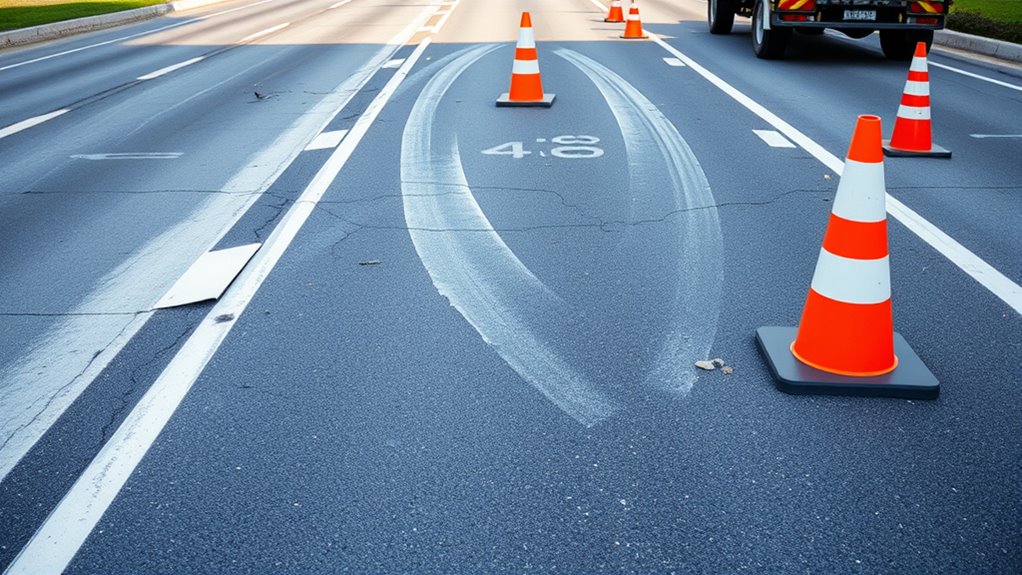
Photographing traffic control devices and road markings is essential for establishing the exact location and context of the accident. Clear images of traffic lights, stop signs, yield signs, and speed limit signs help verify what signals were active at the time. Capture lane markings, crosswalks, and arrows to show how the roads were organized and whether drivers followed or ignored designated paths. Take close-ups of any damaged or obscured markings, which could indicate poor maintenance or confusing signage. Document road surface conditions—such as wet, icy, or uneven pavement—that may have contributed to the crash. These photos provide pivotal evidence for understanding traffic flow, driver behavior, and potential hazards, strengthening your case with precise visual documentation. Additionally, photographing traffic control devices can help demonstrate whether they were functioning correctly or if malfunctioning contributed to the incident.
Collect Evidence of Witnesses and Scene Support
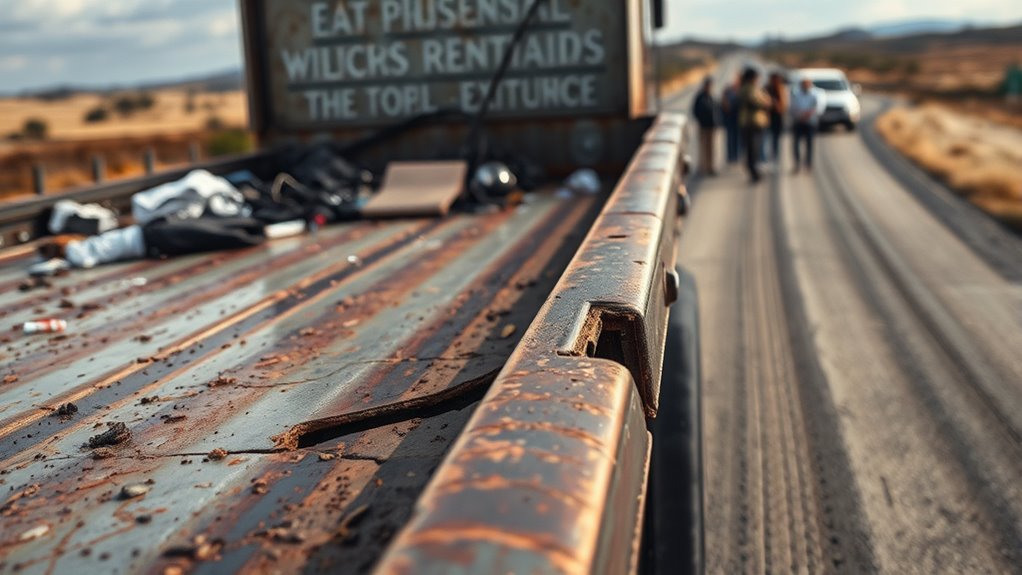
Gathering evidence of witnesses and scene support is essential for building a strong case after a truck bed accident. Photos can capture critical details that support your claim. Here are three key items to focus on:
Collect crucial witness and scene evidence to strengthen your truck bed accident claim effectively.
- Witness Photos and Contact Info: Take clear pictures of any witnesses present, including their faces and surroundings, and note their contact details for future reference.
- Scene Context Images: Capture the overall scene, such as traffic flow, nearby vehicles, and environmental factors like road conditions or obstacles that may have contributed. Including images of local reviews can also help establish the environment and public sentiment about the scene.
- Supporting Evidence: Photograph any relevant scene support, such as skid marks, debris, or road signs, that can help reconstruct the accident and establish fault.
These images strengthen your case by providing visual documentation of the scene and witnesses’ accounts.
Gather Data From Electronic Logging Devices and Records
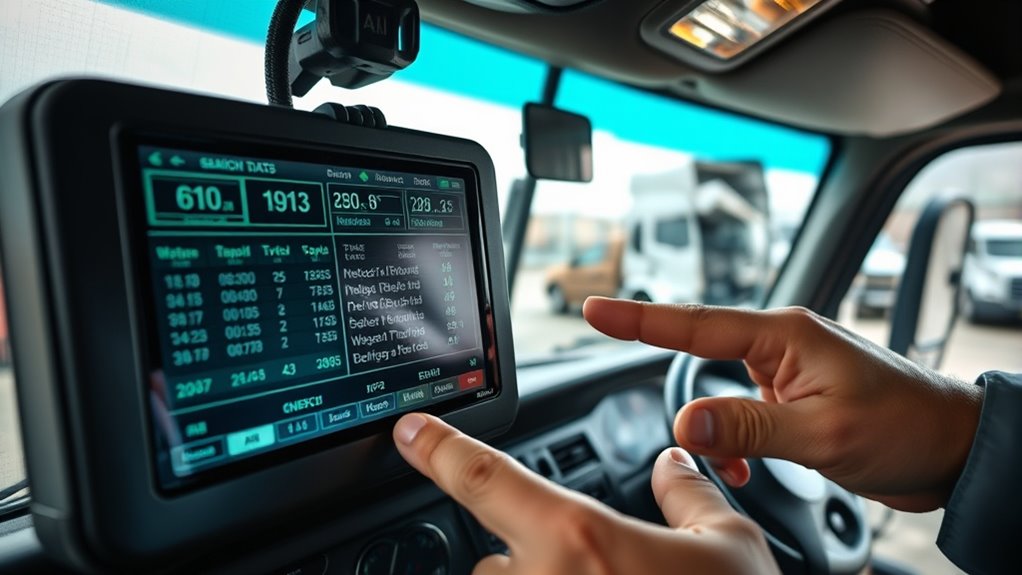
You should capture images of the electronic logging device (ELD) screen to verify driving hours and events before the crash. Taking photos of driver log documentation, whether digital or paper, can help confirm compliance with hours-of-service regulations. These records can provide vital evidence of driver activity and potential violations linked to the accident.
ELD Screen Images
Electronic Logging Device (ELD) screen images provide essential data that can verify a truck driver’s hours of service and operational patterns before an accident. These images serve as critical evidence, capturing real-time data directly from the truck’s system. To make the most of this evidence, focus on these key aspects:
- Driving hours and duty status – Show the start and end times of shifts, rest periods, and on-duty periods to establish compliance or violations.
- Event logs and alerts – Capture instances of sudden stops, harsh braking, or other driver alerts that could indicate risky behavior.
- Mileage and route details – Document the exact route taken, stops made, and distances traveled to reconstruct the accident scene accurately.
These images help build a clear picture of the driver’s activity leading up to the crash.
Driver Log Documentation
Driver log documentation, including records from electronic logging devices (ELDs), plays a essential role in establishing a driver’s compliance with hours-of-service regulations. To strengthen your case, capture clear photos of the ELD screen showing driving hours, rest periods, and any recorded events before the accident. Take pictures of paper or electronic driver logs that detail duty status changes, ensuring they include dates and times. Also, photograph maintenance or inspection records linked to the driver’s logs, which can reveal potential negligence. If accessible, document the truck’s dash cam footage or other electronic data that corroborates log entries. These images provide crucial evidence to verify driver activities, identify violations, and support your claim, making them indispensable after a truck bed accident.
Capture Details of Truck Load and Cargo Conditions

Capturing the details of the truck’s load and cargo conditions is essential for understanding how the accident happened and evaluating causes like load shifting or improper securement. Clear photos can reveal if the cargo was overloaded, unevenly distributed, or inadequately tied down.
Consider photographing:
- The cargo’s overall arrangement and distribution to show if it was balanced or shifted.
- Any visible signs of unsecured or loose items that could have fallen or caused instability.
- The condition of tie-downs, straps, or barriers to demonstrate whether proper securing methods were used.
These images help establish whether cargo issues contributed to the crash and support your injury or property damage claim. Be thorough and detailed in documenting the load and cargo conditions immediately after the accident.
Obtain Police Reports and Official Documentation
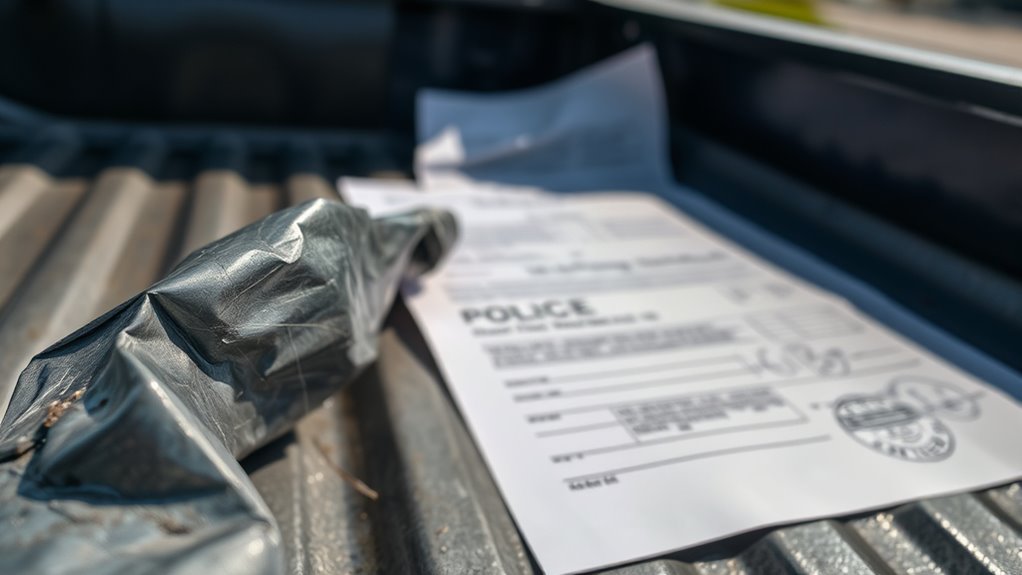
To effectively document the accident, you should obtain the police report and other official records as soon as possible. These documents provide a factual account of what happened, including details you might have missed. Request a copy of the police report from the responding agency, making sure it includes diagrams, citations, and officer observations. Take photos of the report itself for your records. Also, gather any related official documentation, such as incident or inspection reports, citations issued, and truck maintenance records if available. These records help establish the timeline, fault, and contributing factors. Keep copies of all official documents in your case file. Having this evidence early guarantees accuracy and strengthens your claim if you pursue legal or insurance actions.
Record Additional Visual Evidence and Surveillance Footage
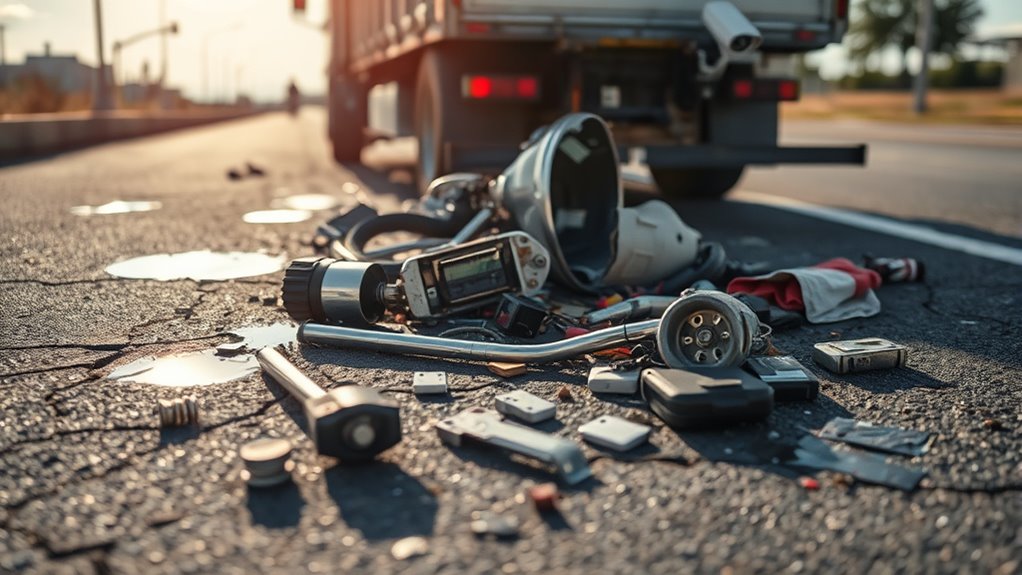
Gathering additional visual evidence and surveillance footage can substantially strengthen your case by providing dynamic, real-time documentation of the accident. To do this effectively:
Collecting video and photo evidence offers powerful, real-time proof to support your accident claim.
- Capture videos from dashcams, traffic cameras, or nearby security cameras that recorded the incident, giving a clear view of how the crash unfolded.
- Take photos of license plates, vehicle markings, and any relevant signage or road conditions that can help identify involved parties and circumstances.
- Collect footage showing emergency response activities, such as ambulance arrivals or tow truck operations, to establish timelines and scene management.
These visuals can verify witness statements, clarify accident details, and support your claim with compelling, objective evidence. Make sure to save and back up all recordings for future reference.
Frequently Asked Questions
How Can I Ensure Photos Are Legally Admissible in Court?
To guarantee your photos are legally admissible, always take clear, unaltered images that accurately represent the scene. Capture photos in good lighting and include timestamps or identifiable landmarks. Avoid editing or cropping that changes the context. Use a reliable camera or smartphone, and document the date, time, and location. Keep original files intact, and store them securely to preserve their integrity for court proceedings.
What Lighting Conditions Are Best for Taking Accident Photos?
The lighting conditions can make or break your accident photos, and poor lighting can turn essential evidence into a blurry mess. Aim for natural daylight, preferably during clear, sunny conditions, for the best results. If shooting at night or in low light, use a flashlight or camera flash to illuminate details clearly. Avoid shadows and glare that can obscure important evidence, ensuring your photos are sharp, detailed, and courtroom-ready.
Should I Take Photos Before Moving Any Vehicles or Debris?
You should take photos before moving any vehicles or debris to preserve the accident scene’s original condition. Capture images of vehicle positions, damages, skid marks, road conditions, and surrounding environment first. These photos are essential for establishing the scene’s details and reconstructing what happened. Moving vehicles or debris afterward can alter evidence, making it harder to prove your case. Always document thoroughly before making any changes.
How Do I Photograph Injuries Without Violating Privacy Laws?
You can photograph injuries discreetly by focusing on visible, physical evidence without capturing faces or identifiable features, respecting privacy laws. Use close-up shots of bruises, cuts, or swelling, ensuring the injuries are clearly documented. Avoid photographing sensitive areas or personal identifiers. If needed, get consent from the injured person before taking detailed images, and consider blurring or cropping images to protect privacy while still capturing necessary evidence.
What Specific Angles or Distances Are Most Effective for Scene Photos?
You should photograph the scene from multiple angles—wide shots to capture the overall layout and vehicle positions, and close-ups to detail damages, skid marks, and debris. Keep your distance enough to include relevant surroundings like traffic signals or road conditions, but get close enough for clarity. Try different perspectives: eye level, from above, and at a slight angle. This variety helps reconstruct the accident and strengthens your evidence.
Conclusion
Remember, thorough photo evidence can make or break your case, even if you think the accident seems minor. By capturing every detail—from vehicle positions to road conditions—you guarantee nothing is overlooked. Some might worry it’s too much hassle, but these photos provide clarity and support your claims. Taking a few extra minutes now can save you significant stress and legal trouble later. Don’t underestimate the power of good evidence—your future self will thank you.