If you’re towing heavy loads, a diesel engine is usually the better option because it delivers much higher torque, which helps with pulling power and vehicle stability. It also offers better fuel efficiency and lasts longer under demanding use. Although diesel trucks can cost more upfront and require specialized maintenance, their durability and performance make them ideal for serious hauling. Keep exploring to see how these factors can help you choose the right truck for your needs.
Key Takeaways
- Diesel engines deliver higher torque at low RPMs, making them better suited for heavy towing loads.
- Diesel trucks generally have superior fuel efficiency, reducing operating costs during long hauls.
- The durability of diesel engines allows for longer lifespan and reliable performance under heavy-duty towing conditions.
- Higher vehicle weight and better stability features in diesel trucks enhance safety and control when towing heavy loads.
- Despite higher initial costs, diesel’s lower maintenance frequency and fuel savings often outweigh expenses for heavy towing.

Nilight Tow Bar with Safety Chains, Coupler Fits 2-Inch Hitch Ball, 5500 lbs Towing Capacity, 41-in Opening Width, Bumper-Mounted Universal Towing Bar for RV, Car, Trailer, Truck, Alloy Steel
Tow Bar Equiped with Quick Connect Brackets,allow for Easy Installation and Removal
As an affiliate, we earn on qualifying purchases.
As an affiliate, we earn on qualifying purchases.
Torque Power and Performance
When it comes to towing, torque power is the most critical factor, and diesel engines excel in this area. They produce markedly higher torque—often over 900 lb-ft in full-size pickups—giving you the pulling power needed for heavy loads. This high torque is available at lower RPMs, so you get strong performance from a standstill and better control when hauling. Gasoline engines typically generate less torque, making them less suitable for demanding towing tasks. Diesel’s low-end torque helps you start heavy loads smoothly and maintain momentum on inclines. This torque advantage becomes especially noticeable when towing trailers, boats, or heavy equipment, ensuring you have the power and stability to handle challenging towing situations confidently.

B&W Trailer Hitches Turnoverball Gooseneck Hitch – GNRK1308 – Compatible with 2006-2012 Ram 1500, 2500, 3500 Mega-Cab Trucks and 2010-2012 Ram 2500 & 3500 Gas Trucks
Compatible With: 2006-2012 Ram 1500, 2500, 3500 Mega-Cab Trucks and 2010-2012 Ram 2500 & 3500 Gas Trucks
As an affiliate, we earn on qualifying purchases.
As an affiliate, we earn on qualifying purchases.
Fuel Efficiency and Operating Costs
Diesel engines are particularly more fuel-efficient than gasoline engines, especially under heavy loads. You’ll notice that diesel trucks typically deliver 20%–30% better mileage when towing or hauling. This efficiency comes from diesel’s higher energy density, meaning you get more miles per gallon. As a result, you’ll spend less on fuel over long trips, and fewer stops mean less downtime. Real-world tests confirm diesel pickups consistently outperform gas trucks in fuel economy, especially on long hauls with heavy loads. While diesel fuel may cost more per gallon, the savings in fuel consumption often offset this difference. Overall, if you regularly tow heavy loads, choosing diesel helps lower your operating costs and keeps your trips more economical. Additionally, engine design for diesel engines often results in increased durability, making them a reliable choice for heavy-duty towing.

AUTOBOTS Tow Hitch Receiver 2", 45,000 Lbs Break Strength Shackle Hitch Receiver with 5/8" Hitch Pin, 3/4 D Ring Shackle, Towing Accessories for Truck Trailer Recovery Off-Road Red&Black
🔧 2" Hitch Receivers with 3/4 D-ring Shackle: The Tow Hitch Receiver is made of carbon steel with…
As an affiliate, we earn on qualifying purchases.
As an affiliate, we earn on qualifying purchases.
Durability and Longevity
Because they’re built to withstand extreme compression and stress, diesel engines tend to last much longer than gasoline engines. Their heavy-duty components are designed for durability, enabling them to handle continuous heavy use without wearing out quickly. With proper maintenance, a diesel engine can last between 500,000 and 800,000 miles, making it ideal for long-term, heavy-duty towing. In contrast, gasoline engines typically wear out faster under similar conditions, requiring more frequent repairs or replacements. The robust construction of diesel engines results in fewer issues over time, saving you money and reducing downtime. Upfitting fundamentals and other specialized features further contribute to their durability. If you regularly tow heavy loads or depend on your vehicle for work, the durability and longevity of a diesel engine offer significant long-term advantages you’ll appreciate.

Rhino USA Adjustable Trailer Hitch (Fits 2-Inch Receiver) – Heavy Duty Aluminum Tow Hitches with 6-Inch Drop/Rise for Truck (12,500 LBS GTW) – Weatherproof Double Anti-Theft Locking Hitch Pin (Silver)
AMERICAN OWNED, FAMILY OPERATED – Join the Rhino Family & Support a USA based Father/Son Business!
As an affiliate, we earn on qualifying purchases.
As an affiliate, we earn on qualifying purchases.
Towing Capacity and Vehicle Stability
The higher torque and robust engine design of diesel trucks translate into superior towing capacity and vehicle stability. With more low-end torque, you can tow heavy loads with less strain, maintaining control even on steep inclines. Diesel engines run at lower RPMs, providing better engine control and reducing the risk of overheating or fatigue during long hauls. Heavier curb weights and stiffer suspensions contribute to increased stability, helping you stay steady at highway speeds and on uneven terrain. This added weight minimizes sway and wind resistance, making towing safer and more manageable. Additionally, diesel engines are often preferred in the Gold IRA Markets for their durability and efficiency, which can be beneficial for long-distance hauling. Overall, diesel trucks give you greater confidence, especially when hauling heavy trailers or equipment, thanks to their enhanced towing capacity and improved vehicle stability.
Maintenance Considerations and Total Cost of Ownership
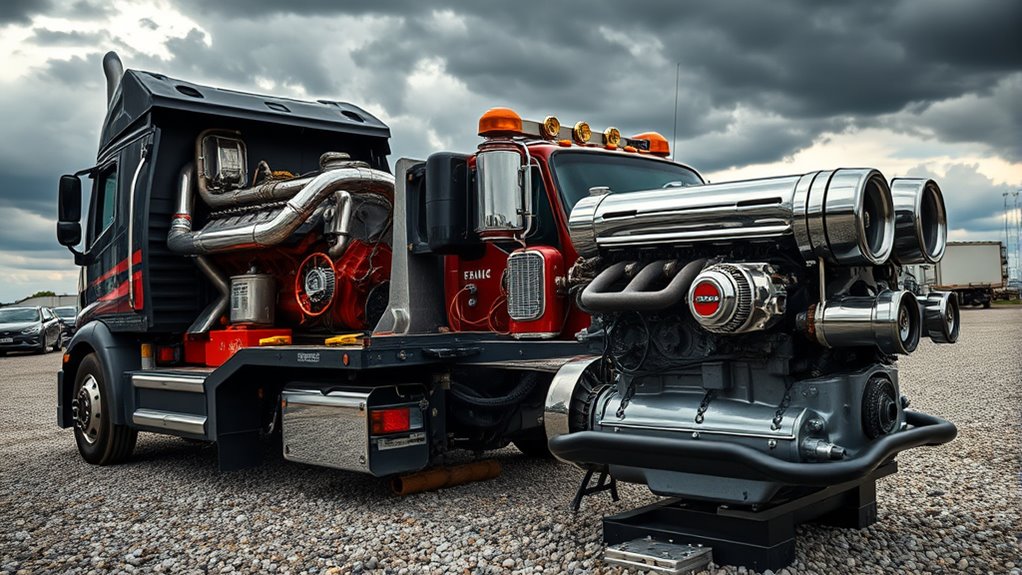
While diesel trucks often have higher upfront costs, their maintenance considerations and overall ownership expenses are more complex than gasoline counterparts. Diesel engines require specialized parts and services, like fuel filter replacements and DPF cleaning, which can add to maintenance costs. You’ll also notice longer intervals between oil changes, but the labor and parts for diesel repairs tend to be pricier. Over time, these factors influence your total cost of ownership. Additionally, Free Floating features in some diesel engines can affect how maintenance is approached and performed.
Frequently Asked Questions
How Does Diesel Fuel Availability Affect Long-Distance Towing Plans?
You need to contemplate diesel fuel availability because it impacts your long-distance towing plans. If diesel stations are scarce along your route, you might face delays or need to plan for extra stops, which could increase your trip time and costs. Ensuring you can find diesel easily helps maintain your schedule and prevents unexpected breakdowns, especially since diesel engines rely heavily on consistent fuel supply for ideal performance.
Are There Environmental Concerns Specific to Diesel Engine Emissions?
Imagine a smoky battlefield; diesel engines emit higher levels of nitrogen oxides (NOx) and particulate matter, contributing to air pollution. These emissions can worsen smog and respiratory issues. While modern diesel trucks use filters and catalysts to reduce pollutants, concerns remain about their environmental impact. You should consider local air quality standards and potential health effects when choosing a diesel vehicle, especially if you’re environmentally conscious.
Can Gasoline Engines Be Modified for Better Towing Performance?
Yes, you can modify gasoline engines for better towing performance. You might upgrade the intake, exhaust, or engine tuning to increase horsepower and torque. Installing a turbocharger can boost power, and upgrading the cooling system helps handle extra stress. However, these modifications can be costly and might diminish engine longevity. Always consult with a professional to ensure modifications suit your towing needs and won’t compromise engine reliability.
What Are the Insurance Implications for Diesel Versus Gas Trucks?
You’ll likely face higher insurance premiums for diesel trucks because they’re typically more expensive to repair and replace due to their durability and specialized parts. Insurers also see diesel engines as higher risk for theft and vandalism. Gas trucks tend to have lower premiums since they’re cheaper to insure and maintain. However, your driving record, location, and usage will markedly influence your actual insurance costs.
How Do Towing Regulations Differ for Diesel and Gasoline Vehicles?
Towing regulations differ mainly based on weight and emissions, not directly on engine type. You need to follow federal and state laws about maximum trailer weight, brake requirements, and licensing. Diesel trucks often have higher towing capacities, so they may require special permits or inspections. Gas trucks might face fewer restrictions but still need to adhere to local safety and weight regulations. Always check local laws to stay compliant when towing heavy loads.
Conclusion
Choosing between diesel and gas for towing is like selecting the steady oak or the swift eagle. Diesel offers endurance and power, ready to carry heavy loads through any storm, while gas provides quick agility for lighter tasks. Your decision shapes your journey—will you rely on the oak’s strength or the eagle’s speed? Consider your needs carefully, and you’ll find the perfect match to soar or stand firm on the road ahead.