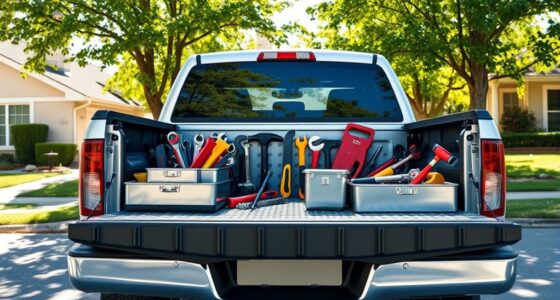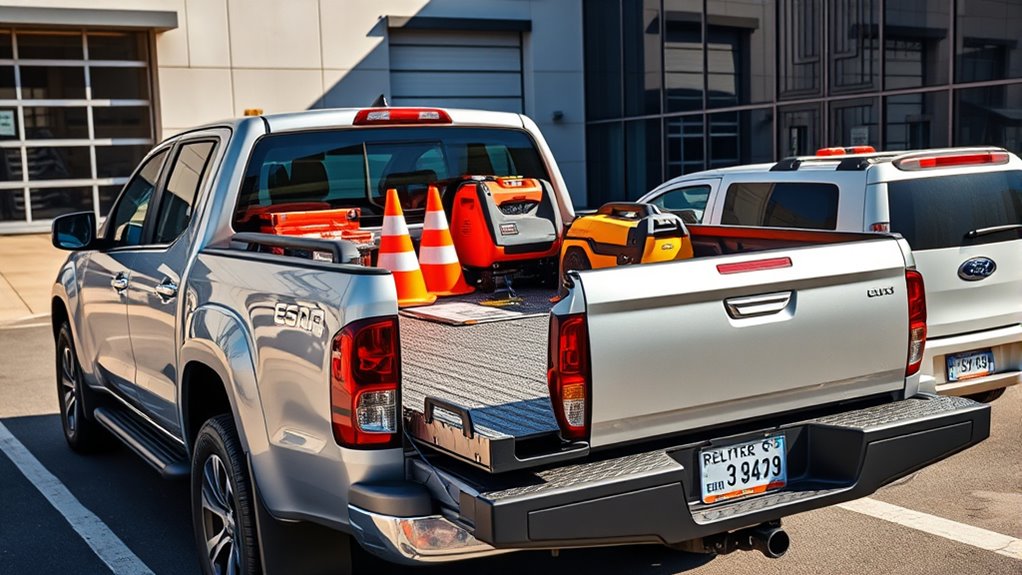

Choosing between commercial and personal registration impacts how you can use and modify your truck bed. With commercial registration, you’ll face strict weight, size, and safety rules, limiting certain modifications and requiring permits for heavy or oversized loads. Personal registration offers more flexibility, allowing you to customize your truck bed freely. Understanding these differences helps you stay compliant and safe—if you want to know more about how these rules affect your truck bed use, keep exploring.
Key Takeaways
- Commercial registration imposes stricter safety and weight restrictions, limiting modifications like permanent truck bed attachments.
- Personal registration offers more flexibility for truck bed modifications, such as covers, dividers, or racks.
- Commercial use requires compliance with safety standards, secure cargo, and permits, impacting how the truck bed is utilized.
- Modifications affecting capacity or safety in the truck bed often need certification and proper documentation under commercial registration.
- Personal registration generally allows more customization of the truck bed without heavy regulatory oversight.

SmartStraps 10-Foot Cambuckle (4pk) 900 lbs Break Strength, 300 lbs Safe Work Load– Tie Down Fragile and Lighter Loads for Transport – Offers More Security Than Rope
PROTECT ALL LOADS – SmartStraps 4 Pack 10-Foot Cambuckle straps have a break strength of 900lbs and a…
As an affiliate, we earn on qualifying purchases.
As an affiliate, we earn on qualifying purchases.
How Registration Type Influences Truck Bed Specifications and Safety Standards
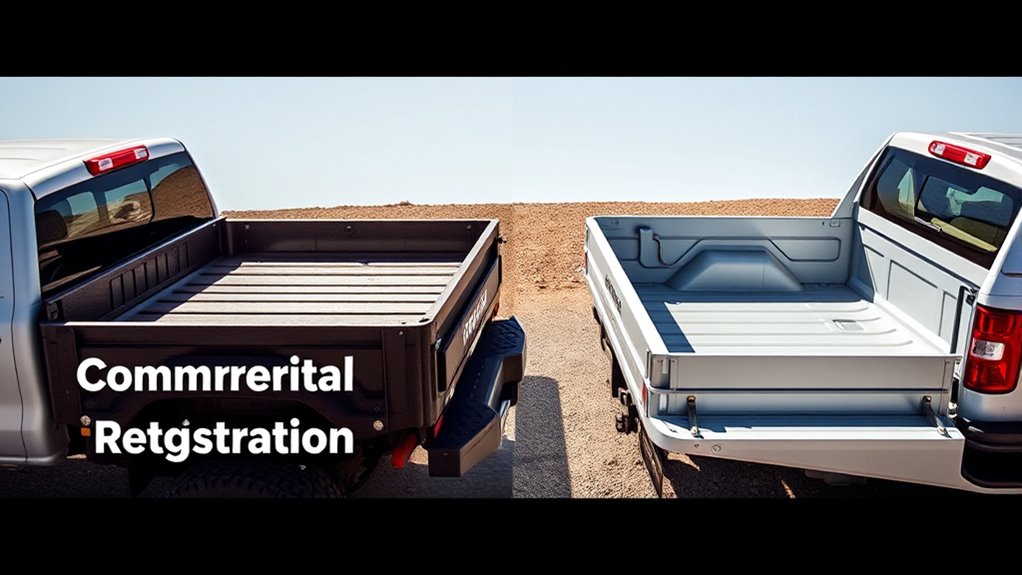
Your registration type directly affects the specifications and safety standards of your truck bed. When registered as a commercial vehicle, your truck bed must meet strict weight and size restrictions designed for hauling cargo safely. You may need to install additional safety features, such as tie-downs, securement devices, and reflective markings, to conform to regulations. Commercial registration often requires your truck bed to be capable of handling heavier loads and may restrict modifications that alter its capacity or structure. Conversely, personal registration provides more flexibility, allowing you to customize or modify your truck bed without the same level of regulatory oversight. However, even for personal use, safety standards like proper tie-downs and load distribution remain essential to prevent accidents and ensure compliance with safety laws. Additionally, vehicle regulations can vary significantly depending on your registration status, so understanding these differences is crucial for safe and legal usage.
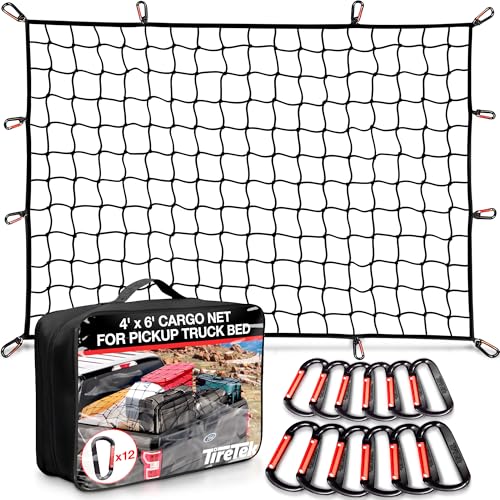
Cargo Net for Pickup Truck Bed (4'x6' Stretches to 8'x12') Double Thick Heavy Duty Pickup Truck Bed Organizer Accessories – 12 Metal Carabiners, Bungee Mesh Accessory with Strap Hooks
Heavy duty cargo net – Extra thick 5 mm LATEX CORE bungee webbing, 4'x6' bungee cargo net stretches…
As an affiliate, we earn on qualifying purchases.
As an affiliate, we earn on qualifying purchases.
Impact of Commercial Registration on Payload Capacity and Load Restrictions
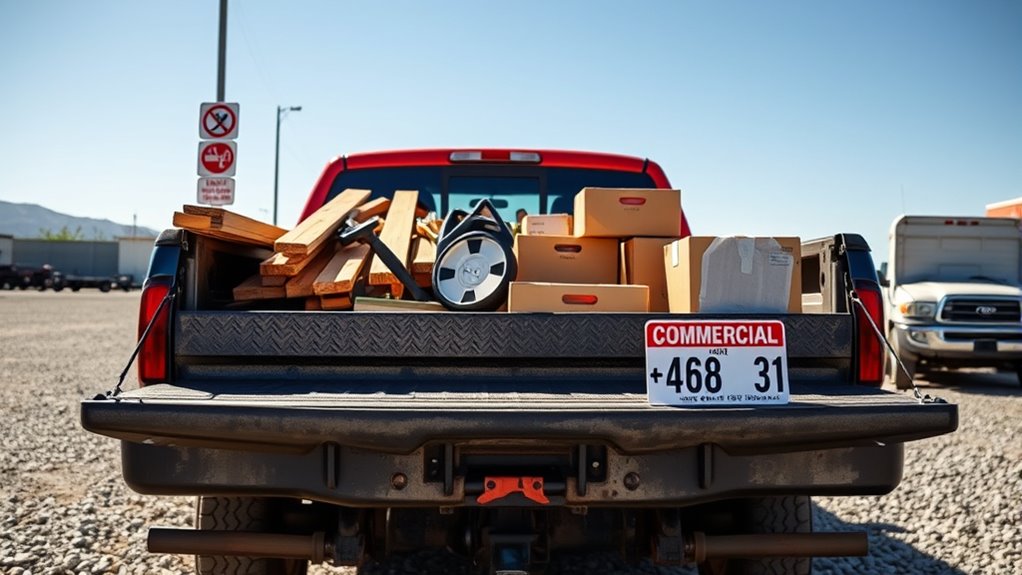
Commercial registration considerably impacts a truck’s payload capacity and load restrictions by imposing strict regulations on the maximum weight the vehicle can carry. These limits are based on the vehicle’s Gross Vehicle Weight Rating (GVWR) and are essential for safety and compliance. With commercial registration, you must adhere to federal and state weight limits, which often mean heavier loads are prohibited or require special permits. Your truck’s bed capacity may be effectively reduced if you’re carrying cargo that pushes weight boundaries, and modifications to increase payload might not be approved without proper certification. Additionally, commercial vehicles are subject to inspections and logging requirements that ensure loads stay within legal limits. Ignoring these restrictions can lead to fines, penalties, or even vehicle impoundment. Understanding safe load management is crucial to avoid violations and maintain vehicle integrity.

VEVOR Truck Rack, 19-34in Adjustable Height Ladder Rack for Truck, Aluminum 800 lbs Capacity with 8 Non-Drilling C-Clamps, Heavy Duty Truck Bed Rack Two-Bar Set for Kayak, Surfboard, Lumber, Ladder
Built Tough and Steady: The support you deserve is here! Our ladder rack for trucks is constructed from…
As an affiliate, we earn on qualifying purchases.
As an affiliate, we earn on qualifying purchases.
Modifications and Additions Allowed Under Personal Vs Commercial Registration
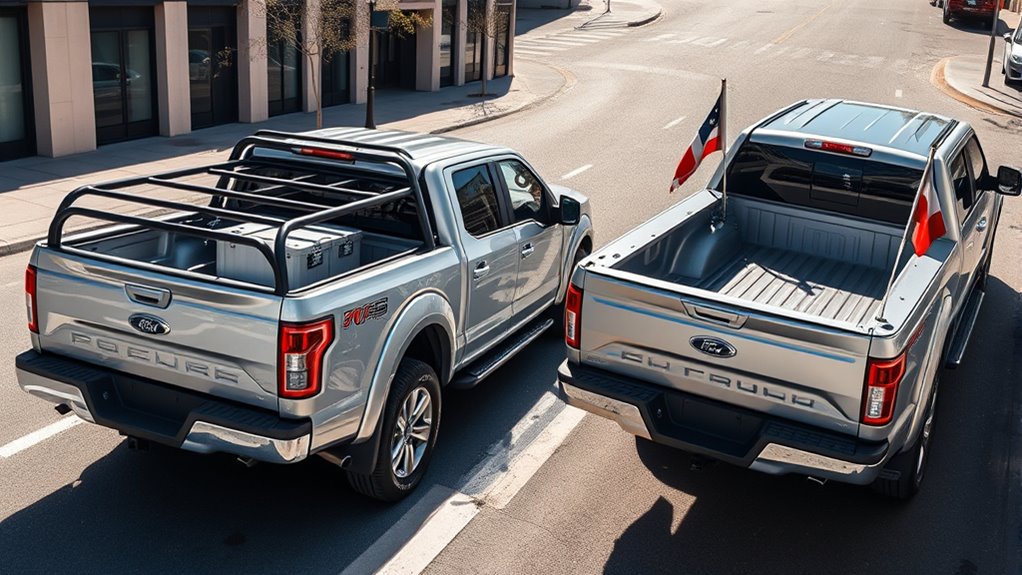
Modifications and additions to truck beds are influenced considerably by whether the vehicle is registered for personal or commercial use. With personal registration, you’re generally freer to customize your truck bed, making changes that suit your hobbies or daily needs. However, commercial registration often restricts modifications to ensure safety and compliance with regulations.
You might be allowed to:
- Install permanent tonneau covers or caps
- Add custom racks or tie-downs
- Attach permanent cargo dividers
- Modify the truck bed for specific freight or equipment
- Use certain permanent attachments like camper shells
Keep in mind, commercial registration usually limits changes that impact weight, size, or safety standards, affecting how you can modify your truck bed for work or transport purposes. Additionally, regulatory compliance often dictates permissible modifications, emphasizing safety and legal standards.

Strapinno – Ratcheting Cargo Bar 44"-74", Non-Slip Truck Bed Divider, Easy Setup, Strong 1.25" Tube, Adjustable Stabilizer for Pickup Trucks
SECURE THE CARGO. Enjoy stress-free hauling! Prevent cargo shift with our powerful ratcheting bar, perfect for pickups, wagons,…
As an affiliate, we earn on qualifying purchases.
As an affiliate, we earn on qualifying purchases.
Legal Requirements for Truck Bed Use When Operating Commercial Vehicles

When operating a vehicle registered for commercial use, there are specific legal requirements that govern how you can utilize the truck bed. You must guarantee that any cargo you carry complies with weight, size, and safety regulations set by authorities like the DOT and FMCSA. The truck bed must be properly secured to prevent load shifts, which could cause accidents or violations. If you’re hauling hazardous materials, you need special permits, certifications, and equipment, such as placards or spill containment. Additionally, the cargo must not obstruct visibility or interfere with vehicle safety features. Modifications or alterations to the truck bed, like adding permanent attachments, should meet commercial standards and be documented accordingly. Ensuring proper cargo securement is essential to adhere to legal standards and avoid penalties. Failing to follow these requirements can result in fines, penalties, or liability in case of accidents.
Effects of Commercial Use on Cargo Types and Transport Regulations
When you use your vehicle for commercial purposes, you must follow specific cargo restrictions and obtain necessary permits. These regulations guarantee safety and compliance for transporting different cargo types. Understanding how commercial use impacts transport rules helps you avoid violations and legal issues. Decoding slang can also help you better understand informal language used in regulations and communications related to trucking.
Cargo Restrictions and Permits
Using a commercial vehicle substantially impacts the types of cargo you can transport and the permits required. Commercial registration often limits you to specific cargo types and mandates permits for certain loads. You may need special authorization for hazardous materials, oversized items, or perishable goods. Permits are essential for legal transport, especially across state lines or interstate routes. Your truck bed’s use becomes regulated, with restrictions on weight, size, and cargo placement. Failure to obtain proper permits can lead to fines or cargo confiscation. Additionally, some cargo might be prohibited altogether without the right documentation. Regulations vary by jurisdiction, so always verify local rules before loading your truck bed with sensitive or restricted items. Understanding cargo restrictions and permits is crucial for compliance and smooth operation. Staying compliant ensures smooth, legal cargo transport for your commercial operations.
Regulatory Compliance for Cargo
Commercial use substantially influences the types of cargo you can legally transport and the regulations you must follow. When operating a commercial vehicle, you’re subject to strict rules about what cargo is permitted, especially hazardous materials or oversized loads. You may need special permits for certain freight, and your cargo must meet safety standards to prevent accidents or damage. Vehicle inspections and maintenance logs are often required to verify compliance. Additionally, commercial vehicles typically need to display placards or markings indicating the nature of the cargo. If you’re registered personally, you have more flexibility but fewer regulations, limiting the scope of transport. Commercial registration enforces specific cargo restrictions, ensuring safety and regulatory adherence, which directly impacts what you can carry and how you must handle it. Regulations also specify the types of hazardous materials that can be transported, requiring adherence to safety protocols.]
Costs and Compliance Considerations for Truck Bed Utilization in Different Registration Classes

Understanding the costs and compliance requirements for truck bed use varies considerably depending on your registration class. If you’re registered commercially, expect higher expenses for modifications, heavier-duty equipment, and stricter standards. Personal registration typically involves lower costs and more flexibility but limits your ability to use the truck for business.
Commercial registration entails higher costs and stricter standards, while personal registration offers more flexibility but limits business use.
Be aware of these key considerations:
- Commercial registration often incurs higher registration fees and specialized insurance costs.
- Compliance with safety standards may require certified modifications or equipment.
- Commercial trucks face stricter weight and size restrictions for truck beds.
- Modifications like permanent attachments can change your registration class and compliance needs.
- Using your truck for commercial purposes without proper registration or equipment can lead to fines and legal issues.
Being aware of these factors helps you avoid costly violations and ensures your truck bed use aligns with regulations.
Frequently Asked Questions
Can I Modify My Truck Bed Without Changing Registration Status?
Yes, you can modify your truck bed without changing your registration status if the modifications don’t affect its weight, size, or intended use. For personal use, minor upgrades like adding a toolbox or liner usually don’t require a registration change. However, if modifications increase weight or alter the truck’s purpose, you might need to update your registration to comply with safety and legal regulations.
Are There Specific Weight Limits for Truck Beds Under Commercial Registration?
Sure, your truck bed isn’t a free-for-all. Under commercial registration, you’re often limited by strict weight and size restrictions designed to keep everyone safe—think of it as the government’s way of saying, “No, you can’t turn your bed into a freight train.” Exceeding these limits can land you in hot water, with fines or even having to redo your registration. So, if you plan to haul heavy loads, stay within the legal weight limits.
How Does Registration Type Affect Hauling Hazardous Materials in the Truck Bed?
When hauling hazardous materials, your registration type determines the rules you must adhere to. If your truck is commercially registered, you need special permits, safety markings, and conform to strict regulations for hazardous materials. Personal registration usually doesn’t permit such hauling unless you obtain the proper permits. Always check local and federal laws to guarantee you’re compliant, as improper handling can lead to fines, penalties, or safety hazards.
Do Personal Registration Restrictions Limit Truck Bed Modifications for Commercial Use?
Yes, personal registration restrictions can limit your truck bed modifications for commercial use. If you’re registered personally, you might face restrictions on hauling larger loads or using the bed for business purposes. Modifications like adding permanent racks or heavy-duty features could require changing to commercial registration to comply with safety and weight regulations. Staying within personal registration rules helps avoid legal issues, but limits your truck bed’s commercial capabilities.
Can I Use My Truck Bed for Both Personal and Commercial Purposes Legally?
Think of your truck bed as a versatile stage, ready for both personal adventures and commercial pursuits. Legally, you can use it for both, but you must comply with registration and weight regulations. If your truck is registered personally, avoid heavy commercial loads or modifications that imply business use. Conversely, for commercial registration, ensure your cargo and modifications align with safety standards, preventing legal pitfalls and keeping your dual-purpose acting seamlessly on the road.
Conclusion
Understanding how your registration type affects your truck bed can safeguard you from legal issues and improve safety. For example, if you’re running a small business and need to haul heavy tools, a commercial registration ensures you’re compliant and maximizes payload capacity. Conversely, personal use offers flexibility for light-duty tasks. Knowing these differences helps you make informed decisions, avoid penalties, and get the most out of your truck based on your specific needs.