
When buying a used pickup, start with a thorough exterior check for dents, rust, and mismatched paint, then inspect tires for wear and damage. Look under the hood for leaks, worn belts, and fluid condition, and test all lights and electrical systems. Assess the suspension, brakes, and steering for issues, and verify the vehicle’s frame and structural integrity. Don’t forget to review the documentation and take a test drive—there’s more to uncover that can save you money.
Key Takeaways
- Conduct exterior inspections for dents, rust, mismatched paint, and frame damage to assess structural integrity.
- Examine tires, suspension, and steering for uneven wear, leaks, and loose components indicating potential issues.
- Check engine fluids, belts, hoses, and brake system responsiveness to evaluate mechanical health and safety.
- Test all interior features, lights, and safety systems to ensure proper operation and compliance.
- Review vehicle documentation, VIN consistency, and perform a test drive to verify legality and operational condition.

LOVEETA® 6.3 Ft Magnetically Mounted Cargo Grabber Reach Retriever Tool – 3.0 New Upgraded Extendable Pickup Truck Bed Accessories, Multi-Use Truck Bed Reach Tool (Jet Black) – 2 Hooks 1 Mounted Plate
【 𝟑.𝟎 𝐌𝐚𝐠𝐧𝐞𝐭𝐢𝐜 𝐏𝐨𝐰𝐞𝐫𝐏𝐮𝐥𝐥 𝐏𝐫𝐨 𝐓𝐞𝐥𝐞𝐬𝐜𝐨𝐩𝐢𝐧𝐠 𝐑𝐞𝐭𝐫𝐢𝐞𝐯𝐚𝐥 𝐇𝐨𝐨𝐤 】: After a full year of dedicated development, we are…
As an affiliate, we earn on qualifying purchases.
As an affiliate, we earn on qualifying purchases.
Exterior and Body Condition Assessment

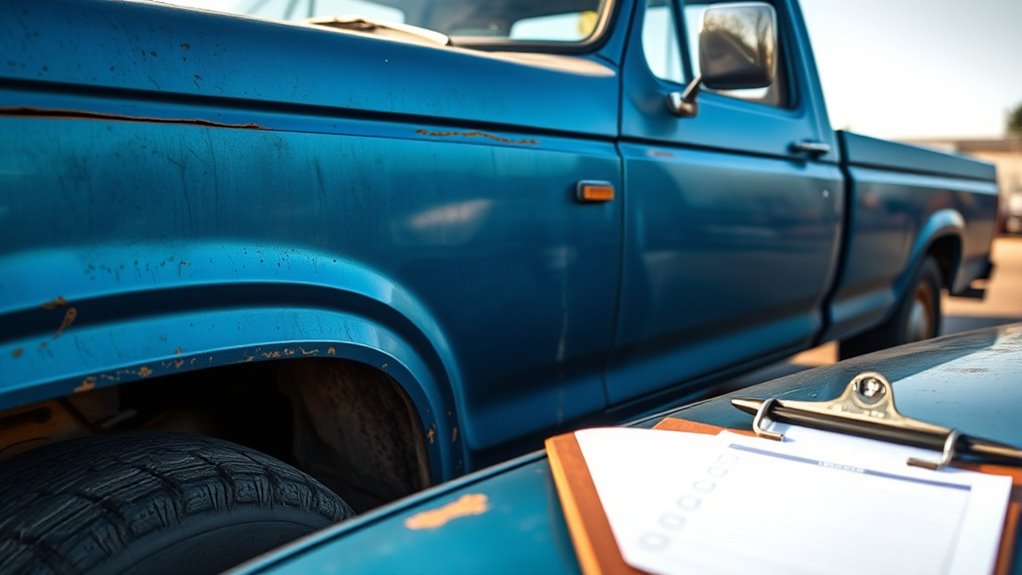
When inspecting a used pickup’s exterior and body, start by looking for dents, scratches, rust spots, or mismatched paint, which can indicate past accidents or repairs. Pay close attention to the alignment of body panels, checking for gaps, waves, or uneven lines that might reveal collision damage or shoddy fixes. Examine bumpers, fenders, and floor pans for signs of damage or corrosion that could compromise the vehicle’s structure. Test the tailgate and cargo area liner for smooth operation and any damage. Also, assess the overall height of the vehicle and look for aftermarket lighting or modifications that may affect safety or compliance. Additionally, inspecting for signs of Free Floating or improper repairs can provide insight into the vehicle’s history and maintenance. These signs help you gauge the vehicle’s history and condition before moving on to other checks.

Tire Tread Depth Gauge,Tire Tread Gauge Color Coded,Tread Depth Gauge in 1/32 inch(Pack of 2)
1.Accurate and Efficient: Different colors on the bar represents different scopes, the red range on bar: 0 -…
As an affiliate, we earn on qualifying purchases.
As an affiliate, we earn on qualifying purchases.
Tire and Wheel Inspection

When inspecting the tires, keep an eye out for uneven wear patterns, which can signal alignment or suspension issues. Check the sidewalls carefully for cracks, bulges, or dry rot that could indicate the tires are nearing the end of their lifespan. Make sure all tires and wheels match and are free of rim damage to ensure safety and proper performance. Additionally, assessing the tire condition for any embedded objects or irregularities can help prevent future blowouts or flats.
Uneven Wear Patterns
Uneven wear patterns on tires can reveal underlying issues with your pickup’s suspension or alignment. Check for bald spots or feathered edges across the tread, which may indicate misalignment or worn suspension parts. Inner or outer edge wear suggests improper camber, while center wear points to over-inflated tires. Diagonal or patchy wear could mean suspension components are loose or damaged. Also, look for cupping or scalloping, which signals shock absorber problems. If you notice these patterns, it’s a sign that the vehicle may need realignment or suspension repairs before you buy. Regularly inspecting tire wear patterns can help detect early signs of issues that affect safety and vehicle performance. Uneven tire wear not only affects safety but also impacts handling and fuel efficiency. Addressing these issues early can save you money and ensure your pickup drives smoothly and safely.
Tire Sidewall Condition
Inspecting the sidewalls of your pickup’s tires is essential for identifying hidden damage that could compromise safety. Look closely for cracks, bulges, or cuts, which may indicate weakened rubber or tire failure risks. Bulges suggest impact damage or internal tire failure, while cracks can lead to blowouts. Also, check for dry rot or weathering signs, especially if the tires are older. Properly inspecting sidewalls helps prevent accidents caused by tire failure. Regular visual inspections can help you catch issues early before they become dangerous.

ANCEL AD310 Classic Enhanced Universal OBD II Scanner Car Engine Fault Code Reader CAN Diagnostic Scan Tool, Read and Clear Error Codes for 1996 or Newer OBD2 Protocol Vehicle (Black)
CEL Doctor: The ANCEL AD310 is one of the best-selling OBD II scanners on the market and is…
As an affiliate, we earn on qualifying purchases.
As an affiliate, we earn on qualifying purchases.
Engine and Under-the-Hood Check
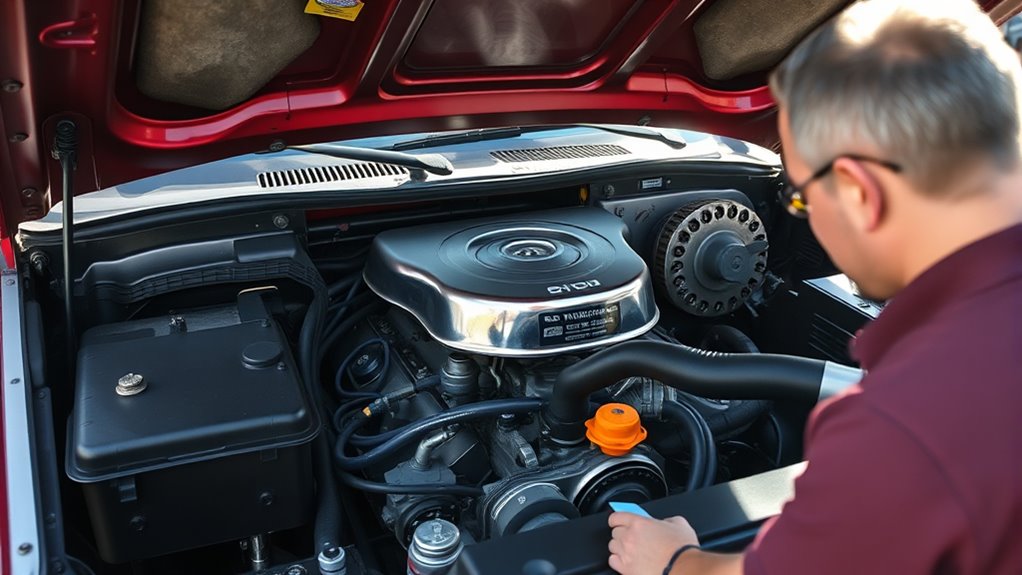
When inspecting the engine and under the hood, start by checking fluid levels and their condition to spot potential issues. Look for signs of leaks, dirt buildup, or corrosion that could indicate neglect or imminent repairs. Also, examine belts and hoses for cracks, wear, or looseness to guarantee the engine runs smoothly and reliably. Additionally, assessing vetted information can help identify common problems and ensure the vehicle’s overall health before purchasing.
Fluid Condition and Levels
Checking fluid condition and levels is essential when evaluating a used pickup’s engine and under-the-hood health. Start by inspecting the engine oil; it should be smooth, amber, and free of grit or milky discoloration, which signals internal problems. Check coolant levels in the reservoir—look for a clean, bright fluid without rust or debris—and ensure the radiator cap seals properly. Examine power steering, brake, and windshield washer fluids, ensuring they’re at recommended levels and free of contamination. Look for signs of leaks, such as puddles or stains, around hoses and the engine bay. Also, assess the condition of belts and hoses for cracks or fraying. Proper fluid levels and clean fluids indicate good maintenance and reliable performance. Regularly monitoring fluid levels and quality can help catch potential issues early and prolong your vehicle’s lifespan.
Belts and Hoses Integrity
Ensuring the integrity of belts and hoses is essential because they play a critical role in keeping your engine running smoothly. Begin by inspecting belts for cracks, fraying, or missing chunks—these signs indicate they’re nearing the end of their lifespan. Look for signs of glazing or excessive looseness, which can cause slipping. Check hoses for bulges, cracks, or leaks, especially around clamps and connections. Soft or brittle hoses suggest deterioration and potential failure. Squeeze hoses gently; they should feel firm but pliable, not spongy. Confirm that all hoses and belts are properly secured and free of signs of leaks or damage. Proper inspection procedures can help identify issues early before they lead to costly repairs. Replacing worn belts and hoses can prevent overheating, breakdowns, and costly engine damage later on.

Pickup Truck/Van Vehicle Inspection Report 10-pk. – Book Format with 31 Sets, 2-Ply Carbonless, 5.5" x 9.25", J. J. Keller & Associates, Inc.
DVIR inspection book helps drivers comply with DOT Commercial Motor Vehicle regulations when towing a trailer.
As an affiliate, we earn on qualifying purchases.
As an affiliate, we earn on qualifying purchases.
Interior Condition and Functionality

The interior condition of a used pickup reveals much about its overall maintenance and previous use. Look for ripped or stained seats, and test all adjustment mechanisms to verify they move smoothly. Check the dashboard for warning lights during startup, and inspect for cracks or missing parts. Confirm that power windows, locks, and options like navigation or sunroof work correctly. Examine the carpeting and floor mats for stains, dampness, or rust underneath. Test the horn and all safety features, including airbags and seat belts, to ensure they’re operational. A well-maintained interior indicates careful ownership and proper upkeep. Conversely, signs of neglect or damage may hint at underlying issues or poor maintenance habits. Additionally, inspecting interior condition can help identify signs of water damage or mold, which often point to leaks or flooding. Don’t overlook this step; it’s key to evaluating the vehicle’s true condition before buying.
Safety Systems and Mechanical Components Evaluation
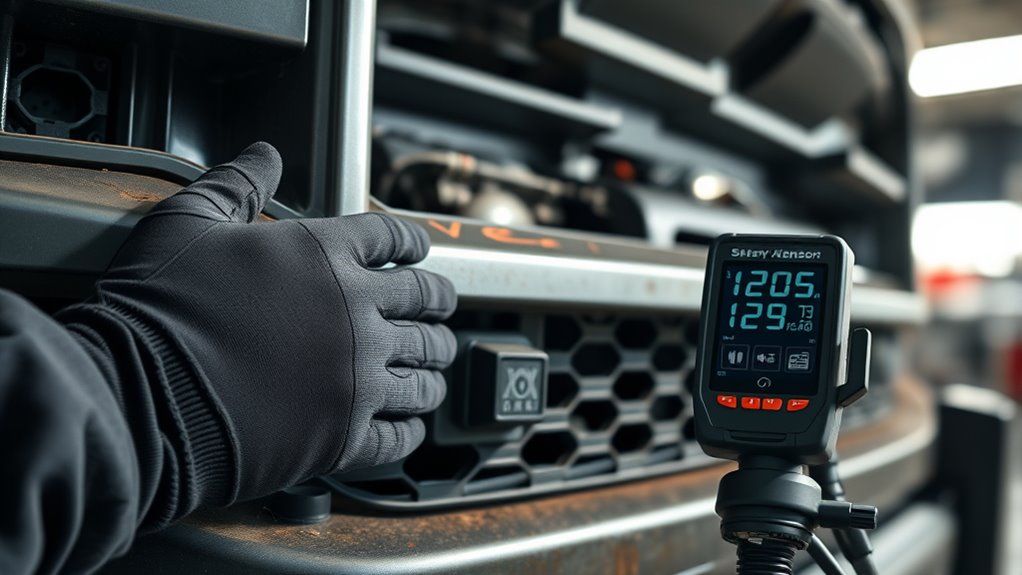
Start by testing all brake systems to make certain they respond quickly and effectively. Next, inspect suspension components like shocks, springs, and ball joints for wear or damage that could affect handling. Finally, verify that all lights, including headlights and turn signals, are functioning properly for safety on the road.
Brake Performance Check
A thorough brake performance check is essential to confirm that the vehicle can stop safely and reliably. You want to guarantee the brakes respond promptly and smoothly without pulling to one side or making unusual noises. To do that, focus on these key areas:
- Test brake pedal feel—push firmly to check for softness, sponginess, or excessive travel, which can signal air in the lines or worn pads.
- Listen for squealing or grinding sounds during braking, indicating worn brake pads or damaged rotors.
- Observe your stopping distance; if the pickup takes longer than expected or pulls to one side, it may have uneven brake pad wear or caliper issues.
- Regular inspection of brake system components and ensuring proper maintenance can help prevent failures and keep your vehicle stopping effectively.
Perform these checks on a flat surface for accurate assessment.
Suspension Condition Inspection
Inspecting the suspension system is crucial for ensuring your pickup’s safety and ride quality. Start by checking for uneven tire wear, which can signal suspension issues like worn shocks or misaligned components. Push down firmly on each corner of the vehicle; it should rebound smoothly without excessive bouncing. Examine the shocks and struts for leaks, dents, or cracks, as these indicate wear. Look for sagging or uneven ride height, which may point to broken springs or damaged mounts. Inspect control arms, tie rods, and ball joints for looseness, rust, or damage. Listen for clunking noises during a test drive, especially over bumps. Proper suspension maintenance is essential for the longevity and safety of your vehicle. A well-maintained suspension not only guarantees a comfortable ride but also ensures safe handling and braking performance.
Lighting Functionality Test
Ensuring all vehicle lights function properly is essential for safety and legal compliance. Faulty lights can lead to accidents or tickets. To thoroughly test, start the engine and turn on all lights. Check the headlights—both high and low beams—for brightness and proper focus. Confirm that turn signals activate correctly and that the hazard lights flash simultaneously. Don’t forget to inspect the brake lights and reverse lights—press the brake pedal and shift into reverse while someone observes. Finally, verify that all side marker and tail lights are working.
- Test headlights, turn signals, and hazard lights for proper operation and brightness.
- Confirm brake lights and reverse lights activate when used.
- Inspect all side marker and tail lights for damage or malfunction.
Suspension, Steering, and Brake System Inspection
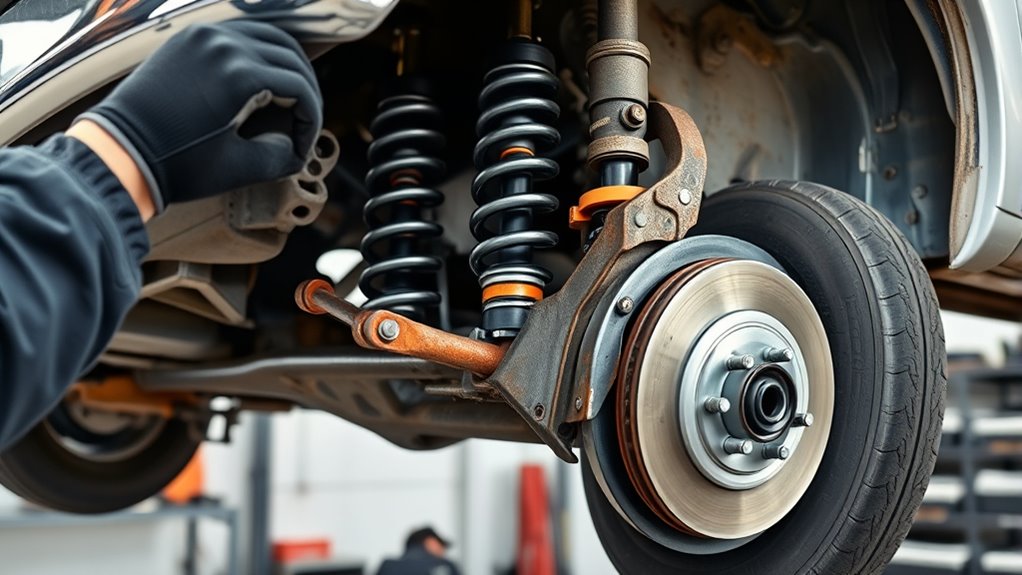
Since your safety depends on how well the suspension, steering, and brake systems are functioning, it’s essential to perform a thorough inspection. Start by checking for uneven tire wear, which can signal alignment or suspension issues. Push down firmly on each corner of the truck; if it bounces excessively, shocks or springs may need replacement. Turn the steering wheel to test for smooth, responsive control and listen for knocking sounds that indicate worn tie rods or ball joints. During the test drive, apply steady pressure on the brakes; if the vehicle pulls to one side or brakes feel spongy, there could be problems with brake calipers, pads, or fluid. Also, listen for squeaks or grinding noises that suggest brake system wear or damage.
Lighting and Electrical System Test
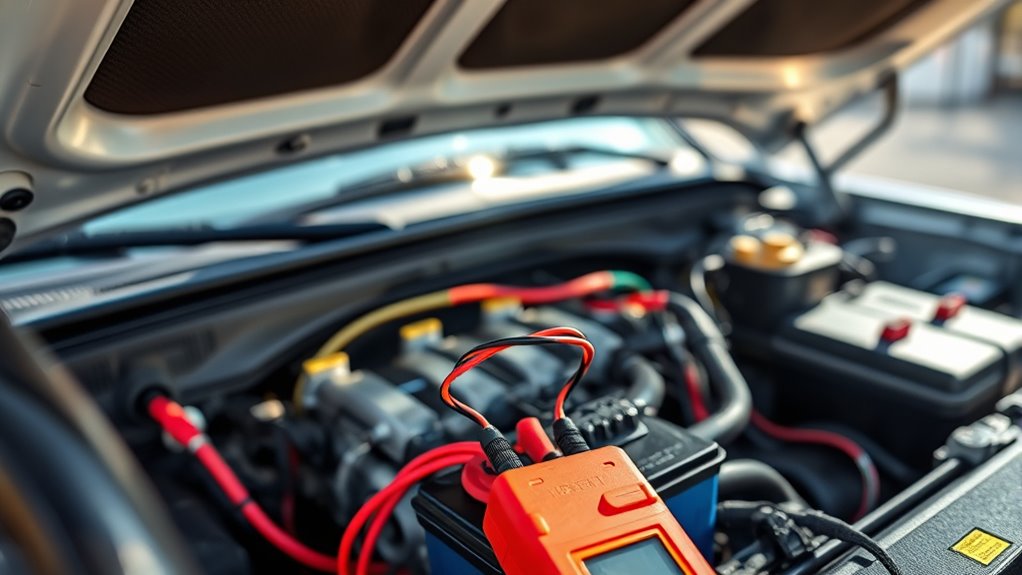
To verify that the lighting and electrical systems are functioning properly, turn on the ignition and test all exterior and interior lights. Ensure headlights, tail lights, brake lights, turn signals, and hazard lights come on and function correctly. Then, check interior lights, including dashboard, dome, and cargo area, for proper illumination.
Focus on these key points:
- Verify all lights activate and are free of flickering or dimming, indicating wiring issues.
- Test the horn, windshield wipers, and other electrical accessories for responsiveness.
- Use a multimeter to check battery voltage and ensure a stable electrical system.
Examination of Frame and Structural Integrity

After checking the vehicle’s lighting and electrical systems, it’s important to examine the frame and structural components for any signs of damage or weakness. Look closely for visible cracks, bends, or dents in the frame, especially around joints and welds. Check for rust or corrosion, which can weaken the structure over time. Tap the frame lightly to detect any hollow or soft spots that may indicate rust damage or previous repairs. Use a flashlight to inspect hidden areas, like under the truck bed or inside wheel wells. Pay attention to uneven gaps between body panels, as they can suggest frame misalignment from past collisions. A solid, straight frame is essential for safety, handling, and overall durability.
Verification of Documentation and Legal Compliance
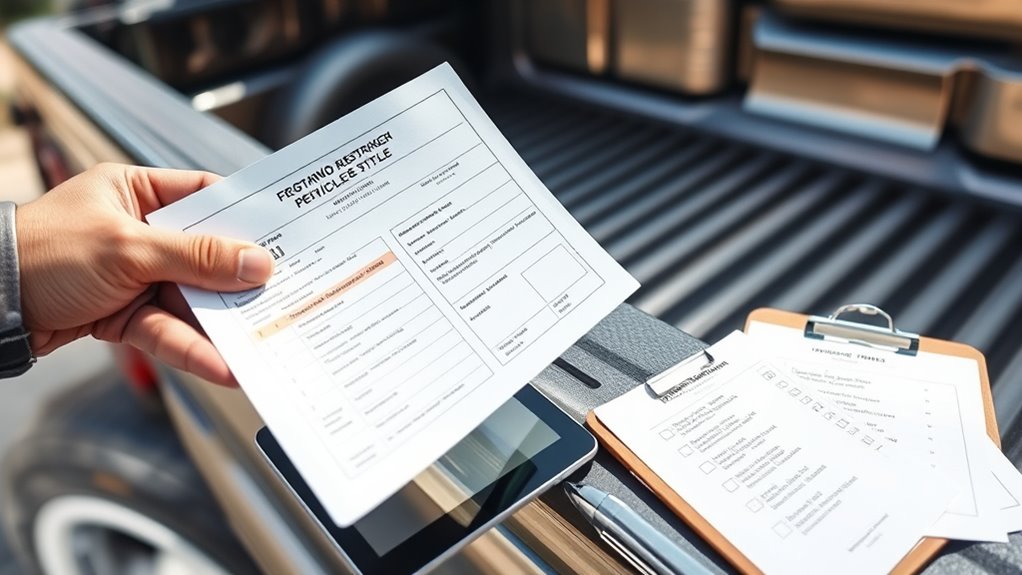
Verifying the vehicle’s documentation and legal compliance is a crucial step in ensuring you’re purchasing a legitimate and properly registered pickup. You need to confirm all paperwork is accurate and up-to-date to avoid future legal issues.
Here are key checks:
- Verify the VIN on the vehicle matches the one on the title and registration documents to prevent fraud.
- Review the title for salvage, rebuilt, or other designations that indicate previous severe damage.
- Ensure registration and inspection certificates are current and valid for your area, and that all required legal equipment like license plates and horns are present.
Doing this due diligence helps protect your investment and guarantees the pickup complies with local laws.
Test Drive and Operational Evaluation
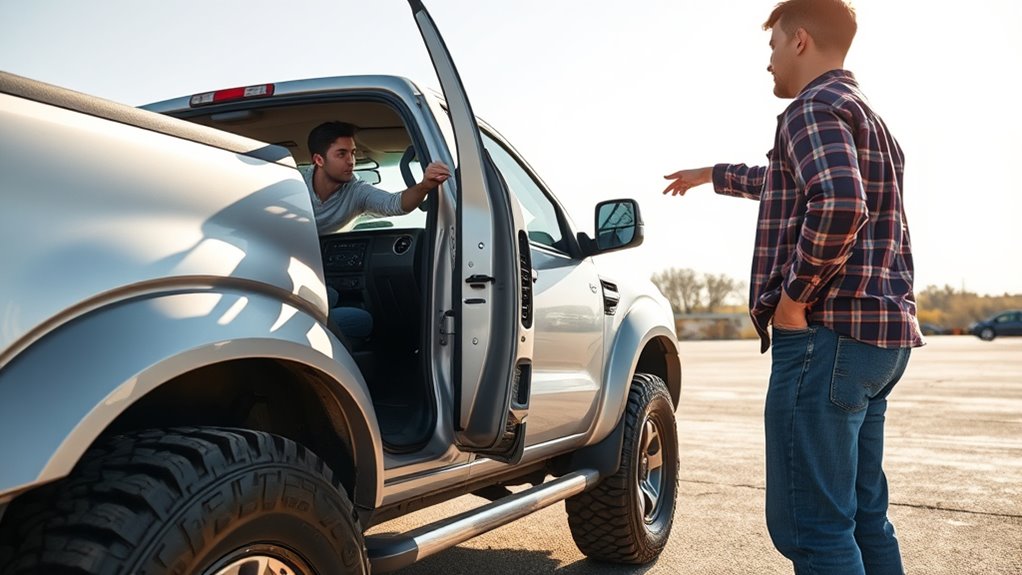
A thorough test drive is essential to assess how the pickup performs in real-world conditions. Pay attention to engine response, shifting, and braking. Listen for unusual noises and feel for vibrations or pulling. Check steering responsiveness and suspension comfort over different surfaces. Test acceleration and deceleration smoothly. Verify all controls, like mirrors, windows, and lights, work properly. Look for warning lights or dashboard alerts. During the drive, observe how the vehicle handles cargo and towing, if applicable. Use the table below to guide your evaluation:
| Aspect | What to Check | Signs of Concern |
|---|---|---|
| Engine | Smooth acceleration | Hesitation, stalling |
| Brakes | Effective stopping | Squeaking, soft pedal |
| Suspension | Comfort and stability | Excess bounce, noise |
| Controls | Proper operation | Sticky or unresponsive parts |
Frequently Asked Questions
How Do I Identify Hidden Flood or Accident Damage in a Used Pickup?
You spot hidden flood or accident damage by looking for subtle signs like musty odors, mold, or water stains inside the vehicle. Check for inconsistent paint, uneven body panels, or recent repairs. Examine the wiring and electrical systems for corrosion or corrosion marks, and inspect under the carpets for rust or moisture. Review the vehicle’s maintenance records for signs of water damage or previous accidents, and be cautious of unusual smells or stains.
What Signs Indicate a Vehicle Has Undergone Previous Major Repairs?
You can spot previous major repairs by looking for mismatched paint, uneven body panels, or inconsistent gaps between panels. Check for new welds, overspray, or signs of filler around dents or scratches. Inspect the frame for straightness and rust, and look for replaced parts that don’t match the rest of the vehicle. Also, review the vehicle history report for records of significant repairs or accidents.
How Can I Verify the True Mileage of a Used Pickup?
You can verify the true mileage of a used pickup by checking the odometer first. Look for signs of tampering, such as misaligned numbers or inconsistent wear on the dashboard. Review the vehicle’s maintenance records and service history, which often include mileage logs. Consider getting a professional inspection or a vehicle history report, like Carfax, to confirm accuracy and uncover any discrepancies or rolled-back miles.
What Should I Look for to Assess the Overall Safety of the Vehicle?
To assess overall safety, start by testing all brakes for responsiveness and consistency. Check steering and suspension for wear or damage, ensuring the vehicle handles smoothly and stops effectively. Verify all lights—headlights, brake lights, turn signals—work correctly. Inspect the frame and unibody for rust, cracks, or damage from previous accidents. Confirm safety features like airbags and seat belts are intact and functioning. finally, examine tires for proper tread and even wear, essential for safe driving.
How Do I Determine if the Truck’s Suspension and Steering Are in Good Condition?
Think of the suspension and steering as the truck’s backbone and muscles. You test them by gently bouncing the front corners; if it rebounds smoothly, it’s a good sign. During a test drive, steer gently to feel for looseness or play. Listen for clunks or squeaks, and check if the vehicle tracks straight without pulling. Worn components cause wobbling, so replace any parts that feel loose or make noise.
Conclusion
By thoroughly checking these ten aspects, you’re not just avoiding a bad deal—you’re safeguarding your future. A well-inspected used pickup can last you years, even decades, like a trusty steed that never lets you down. Don’t rush the process; think of it as your armor against costly surprises. When you’re diligent, you’ll find a vehicle that’s not only reliable but a true partner for every adventure ahead.