Understanding axle ratios helps you see how your vehicle converts engine power into torque and speed at the wheels. Higher ratios boost torque for towing heavy loads and tackling tough off-road terrain, while lower ratios improve fuel economy and highway performance. Choosing the right ratio depends on what you need—whether for work or recreation. Keep exploring to learn how selecting the proper axle ratio can enhance your vehicle’s capabilities everywhere you go.
Key Takeaways
- Axle ratios determine how many times the driveshaft spins per wheel rotation, affecting torque and performance.
- Higher ratios (e.g., 4.10) provide more torque, improving towing and off-road capability.
- Lower ratios (e.g., 3.21) enhance fuel economy and highway efficiency for daily driving.
- Choosing the right ratio balances towing power, off-road performance, and fuel efficiency based on use.
- Mechanical gear size inside the differential directly influences vehicle behavior and suitability for demanding tasks.

2 Pack 15 Inch G70 J Hook | Heavy Duty Towing Hooks with 5400 Lbs Load Limit | Coupling Link Axle Strap Wrecker Roll Back Clevis | for Tow Chain Truck and Trailer Equipment
✔️【 SPECIFICATIONS】– 15inch J hook, Working load limit: 5400 pounds, Identify and never exceed the Working Load Limit.
As an affiliate, we earn on qualifying purchases.
As an affiliate, we earn on qualifying purchases.
What Is an Axle Ratio and How Is It Calculated
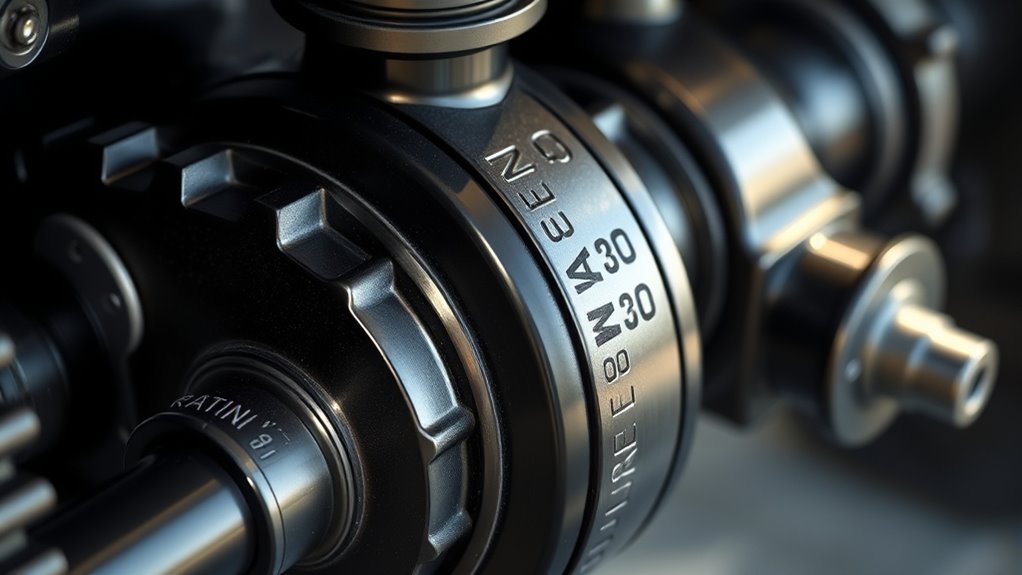
An axle ratio is a simple way to describe the gearing inside your vehicle’s differential that connects the driveshaft to the wheels. It’s calculated by dividing the number of times the driveshaft rotates to turn the axle one full turn. For example, a 3.21:1 ratio means the driveshaft spins 3.21 times for each wheel revolution. To find this ratio, mechanics count how many driveshaft rotations occur for a single wheel turn or examine the gear specifications inside the differential. A higher ratio, like 4.10:1, indicates more rotations per wheel turn, providing more torque. Conversely, a lower ratio, such as 3.21:1, means fewer rotations, which helps improve fuel economy. This ratio directly influences how your vehicle delivers power and handles different driving tasks, especially in demanding conditions like off-roading or towing.
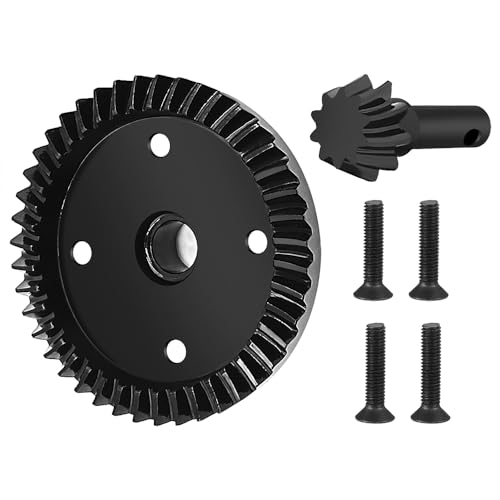
MOHERO RC Gearbox Front Rear Differential Gears 43T 10T Steel Diff Gear Set for 1/8 Scale 4WD Sledge Off-Road Truck Upgrade Part
Suit for 1/8 Scale 4WD Sledge Off-Road Truck
As an affiliate, we earn on qualifying purchases.
As an affiliate, we earn on qualifying purchases.
How Axle Ratios Impact Towing Capabilities
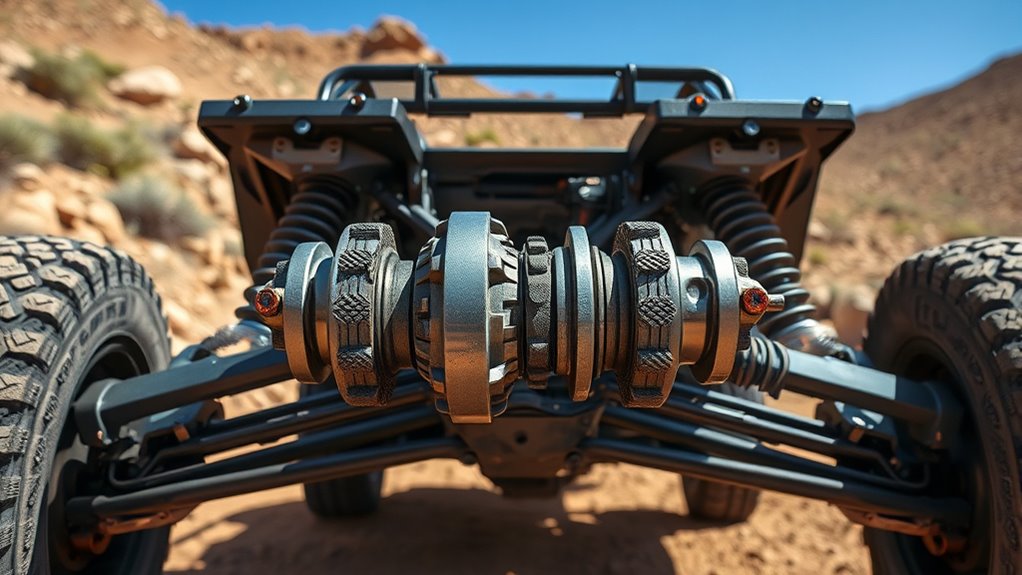
When towing heavy loads, a higher axle ratio can boost torque delivery, making it easier to start moving and maintain speed. This increased power also improves your vehicle’s ability to climb hills and handle steep inclines with less strain. As a result, choosing the right axle ratio directly enhances your towing performance and overall capability.
Increased Torque Delivery
Ever wonder why some trucks handle heavy towing better than others? It all comes down to axle ratios. A higher ratio, like 3.73 or 4.10, delivers more torque to the wheels, making it easier to start moving heavy loads and maintain power uphill or during quick acceleration. This increased torque means your truck can pull trailers with less strain on the engine and transmission. When you choose a higher axle ratio, you get better towing performance because the drivetrain is optimized for low-speed, high-torque tasks. Christian Yelich’s ethnicity is an example of how diverse backgrounds can influence personal identity, similar to how different axle ratios influence vehicle performance. However, this often comes with higher engine RPMs and reduced fuel economy. So, if towing is your priority, a higher axle ratio helps your truck handle heavy loads more confidently and efficiently.
Better Climbing Power
Looking to tackle steep inclines or tough off-road terrain? A higher axle ratio boosts your climbing power by increasing torque at the wheels. This gearing setup allows your vehicle to generate more force to overcome gravity and obstacles. With a higher ratio, your engine spins more driveshaft rotations per wheel turn, translating to better grip and control on steep slopes. It also helps prevent stalling or bogging down when climbing rugged terrain. Keep in mind, though, that this extra torque comes at the cost of higher engine RPM and potentially increased fuel consumption. Additionally, choosing the right axle ratio can be an important part of optimizing your vehicle’s performance with European cloud innovation, ensuring your vehicle is equipped for challenging conditions. But if your main focus is conquering challenging inclines or off-road obstacles, selecting a higher axle ratio gives you the power and confidence needed to push through tough conditions.
Accelerated Tow Performance
A higher axle ratio directly enhances your vehicle’s towing performance by increasing torque at the wheels. This means you’ll experience quicker acceleration when pulling heavy loads and better ability to climb steep grades. The increased torque helps your vehicle handle demanding towing tasks more efficiently.
- Improves initial launch when towing heavy trailers
- Boosts pulling power for steep inclines
- Reduces strain on the drivetrain under load
- Enhances responsiveness during acceleration
- Allows for better control with heavy loads
Keep in mind, though, that higher ratios can increase engine RPM and fuel consumption. Choosing the right axle ratio depends on your towing frequency and load size, ensuring beneficial performance without sacrificing too much efficiency.
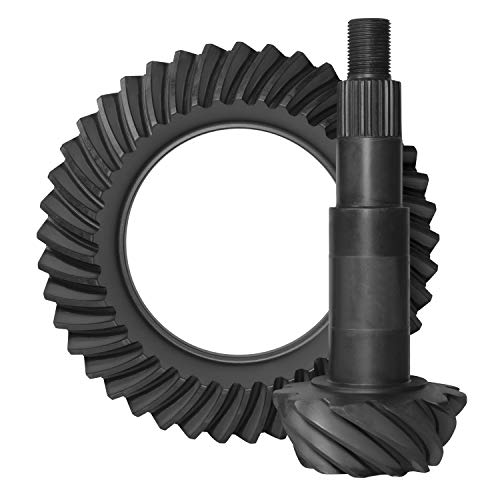
Yukon Gear & Axle 3.73 ratio 30 spline pinion Ring and Pinion Set for GM 8.5" and 8.6" differentials
Fits GM 8.5" and 8.6" differentials
As an affiliate, we earn on qualifying purchases.
As an affiliate, we earn on qualifying purchases.
The Role of Axle Ratios in Fuel Efficiency and Daily Use
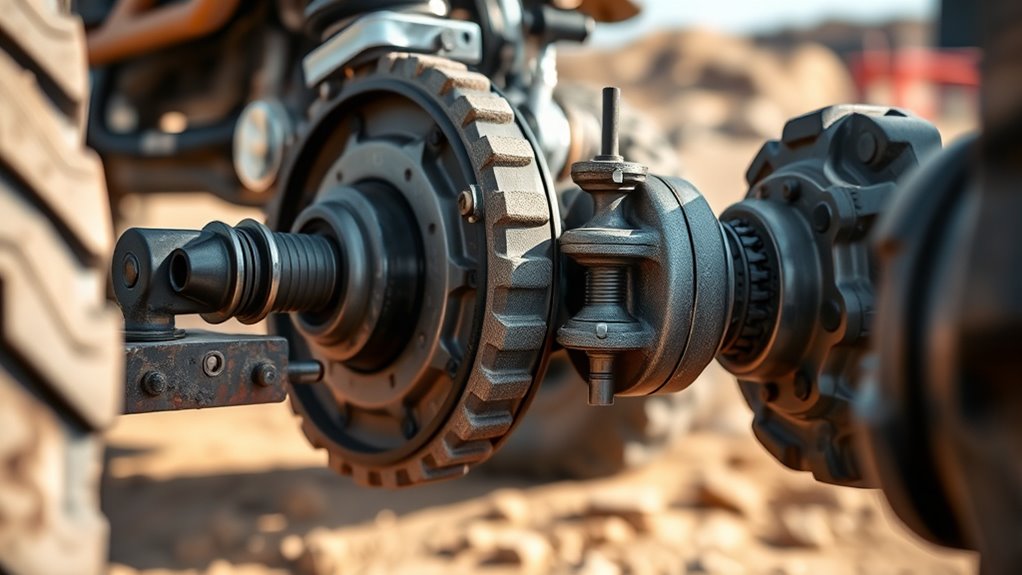
Your axle ratio directly affects your vehicle’s fuel efficiency and daily performance. Lower ratios keep engine RPMs down at highway speeds, saving fuel and reducing wear. Conversely, higher ratios boost torque but can increase fuel consumption, especially on regular drives. Incorporating precision and automation in your vehicle’s drivetrain can optimize performance based on your driving needs.
Fuel Economy Benefits
Have you ever wondered how axle ratios influence your vehicle’s fuel efficiency? They play a key role by determining how hard your engine works at highway speeds. A lower axle ratio means fewer engine revolutions per mile, which helps you save fuel and reduces engine wear. Conversely, higher ratios demand more engine effort, decreasing fuel economy. Using the right airless paint sprayers can also improve your project efficiency, similar to choosing the correct axle ratio for your vehicle.
Consider these points:
- Lower ratios improve highway miles per gallon
- They reduce engine RPM at cruising speeds
- Standard ratios balance daily driving and efficiency
- Higher ratios increase fuel consumption during highway travel
- Manufacturer ratings often reflect the stock ratio, not optional ones
Choosing the right axle ratio depends on your driving habits—whether you prioritize fuel savings or need more power for towing and off-road adventures.
Impact on Daily Driving
Choosing the right axle ratio directly impacts your vehicle’s daily driving experience, especially when it comes to fuel efficiency. A lower ratio, like 3.21:1, reduces engine RPM at highway speeds, saving fuel and decreasing engine wear. This makes your daily commute smoother and more economical. Conversely, a higher ratio, such as 3.73:1, boosts torque, which is useful for towing or carrying heavy loads, but it increases engine RPM and fuel consumption during regular driving. If you mostly drive on highways or city streets, a lower ratio helps you maximize fuel economy. On the other hand, if you frequently haul or tow, a higher ratio provides better performance but at the cost of reduced efficiency. Choosing the right ratio aligns performance with your daily driving needs.
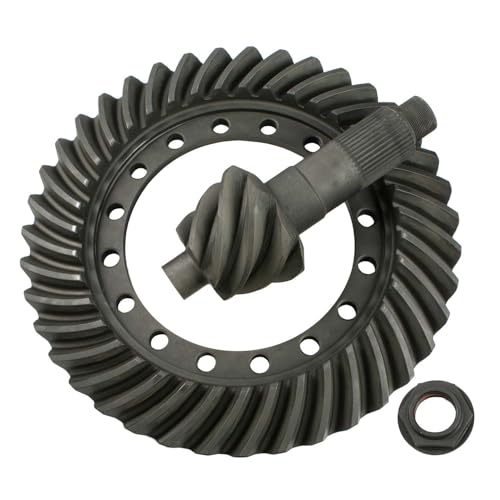
World American 513370, Differential Ring & Pinion, For RS404/RA/RD344, 22060S/D Axles, Gear Ratio 3.55, Rear-Rear, 39-Bolt, 11 Spline, 11 Pinion & 39 Ring Tooth -Replaces 513370ETN, 211483, M12513370
Designed for RS404, RA/RD344, RSP/RDP40, 22060S/D, 17/19/21, 405, 454, and 41 axle models—ideal for heavy-duty rear-rear axle applications…
As an affiliate, we earn on qualifying purchases.
As an affiliate, we earn on qualifying purchases.
Choosing the Right Axle Ratio for Off-Road Adventures
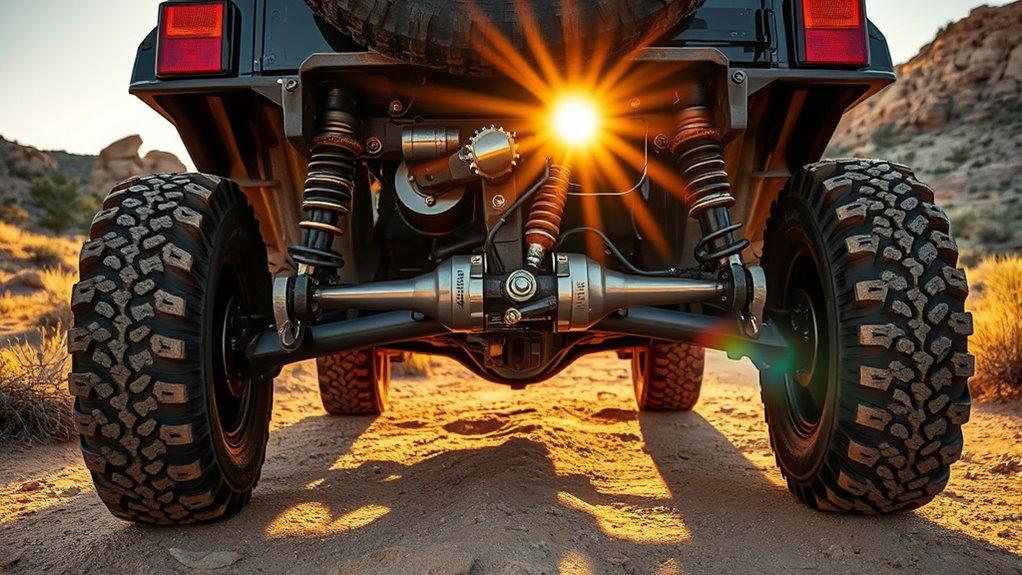
Ever wonder which axle ratio is best for tackling tough off-road terrain? The right choice depends on where you’ll be driving and what you need. Generally, higher ratios like 4.10 or 4.56 give you more torque, helping you climb steep hills and navigate rocky trails. Lower ratios, such as 3.21 or 3.55, are better if you want better fuel economy and smoother highway driving. To choose wisely:
- Consider your typical off-road conditions—steep inclines or rocky terrain need more torque.
- Think about your vehicle’s engine horsepower and towing capacity.
- Balance your off-road needs with daily driving comfort.
- Know that higher ratios can increase driveline stress.
- Remember, matching front and rear axle ratios ensures ideal four-wheel-drive performance.
Choosing the right ratio maximizes your off-road capability without sacrificing everyday drivability.
Factors to Consider When Selecting an Axle Ratio
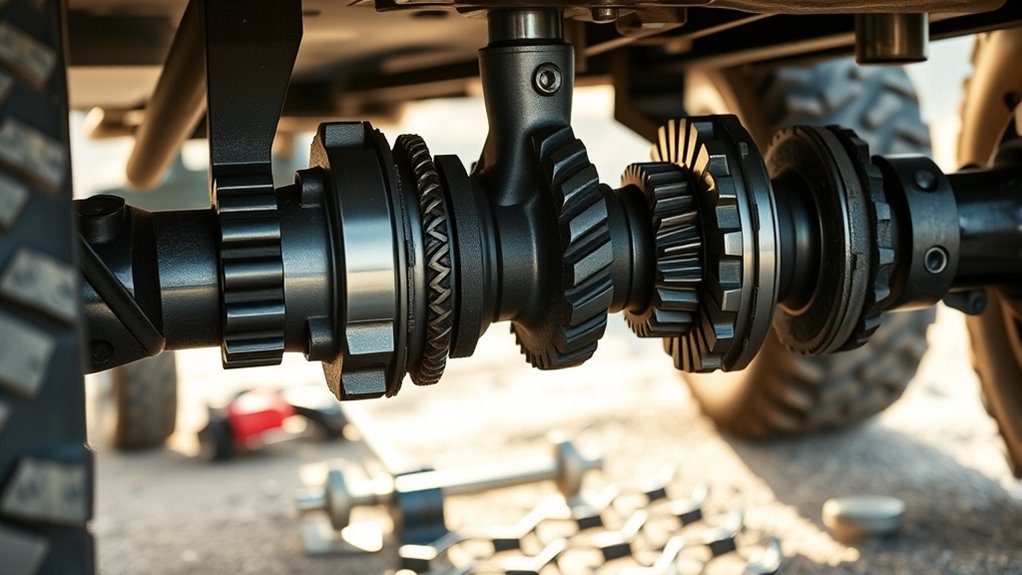
When selecting an axle ratio, you need to take into account how you plan to use your vehicle most often. Your primary activities—towing, off-roading, or daily driving—dictate the best choice. Consider the table below to match your needs:
| Use Case | Recommended Ratio | Key Benefit |
|---|---|---|
| Towing/Hauling | 3.73 – 4.10 | Max torque, better acceleration |
| Off-Roading | 4.10 or higher | Increased power, control |
| Daily Driving | 3.21 – 3.55 | Fuel efficiency, smoother ride |
| Light Use | 3.55 or lower | Balance of performance and economy |
Think about what’s most important—power or fuel economy—and select accordingly.
Mechanical Insights: How Axle Ratios Affect Vehicle Performance
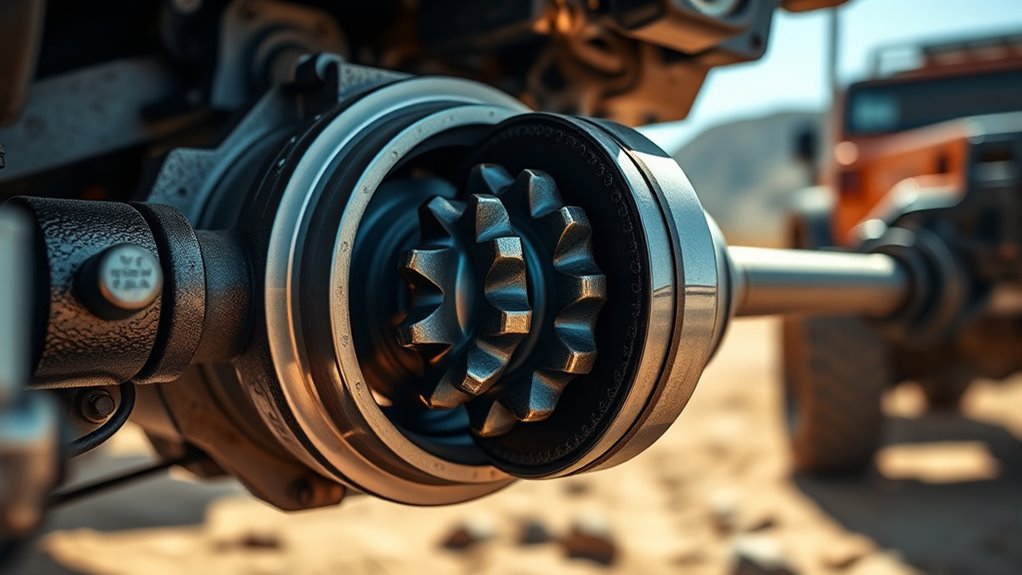
Axle ratios directly influence how your vehicle performs by determining the relationship between the driveshaft’s rotations and the wheels’ turns. A higher ratio means the driveshaft spins more times for each wheel turn, delivering more torque but increasing engine RPM. Conversely, a lower ratio reduces engine strain, improves fuel economy, and lowers RPM at highway speeds. This gearing impacts acceleration, towing power, and efficiency.
- Higher ratios boost towing capacity and off-road torque
- Lower ratios improve fuel efficiency and highway cruising
- Gear ratios affect engine RPM and noise levels
- Ideal ratios match vehicle purpose, like towing or daily driving
- Mechanical gear size inside the differential controls the ratio and performance
Frequently Asked Questions
Can Changing My Axle Ratio Improve My Vehicle’s Towing Capacity?
Changing your axle ratio can definitely improve your vehicle’s towing capacity. Opting for a higher ratio increases torque at the wheels, helping you pull heavier loads more easily. It also enhances acceleration when towing. However, keep in mind that a higher ratio may reduce fuel efficiency and increase engine wear. Make sure to select the right ratio based on your towing needs and consult with a professional to ensure compatibility.
How Does Axle Ratio Affect My Vehicle’s Acceleration and Top Speed?
Your axle ratio directly influences your vehicle’s acceleration and top speed. A higher ratio boosts torque, helping you accelerate faster but limiting your top speed. Conversely, a lower ratio reduces torque, slowing acceleration but allowing higher speeds. You’ll experience quicker starts with a high ratio, while a lower ratio favors higher speed and better fuel economy. Choose the right ratio based on whether you prioritize rapid acceleration or maximum top speed.
What Are the Signs of Using the Wrong Axle Ratio?
You might notice your vehicle struggles with towing or off-road tasks if you’re using the wrong axle ratio. It could feel sluggish when pulling heavy loads, or your engine may run loudly and consume more fuel. You might also experience poor acceleration, increased wear on drivetrain components, or difficulty climbing steep inclines. These signs indicate your current ratio isn’t matching your vehicle’s workload, causing performance issues and potential damage.
Is It Possible to Upgrade or Change My Axle Ratio After Purchase?
Yes, you can definitely change your axle ratio after purchase. You’ll need to swap out the differential’s ring and pinion gears, which can be a bit complex but doable with the right tools and technical know-how. Alternatively, some trucks offer gear ratio upgrades through a professional, providing a more powerful push for towing or off-road adventures. Just remember, changing your axle ratio can affect your vehicle’s performance and warranty.
How Do Axle Ratios Influence Vehicle Resale Value?
Axle ratios can impact your vehicle’s resale value because buyers consider performance and fuel efficiency. If your truck has a high axle ratio for towing or off-road use, it appeals to buyers needing those capabilities. Conversely, lower ratios boost fuel economy and may attract daily drivers. Maintaining the proper ratio for your vehicle’s primary function helps keep its value high, as it aligns with what buyers seek in performance and efficiency.
Conclusion
Understanding axle ratios helps you make smarter choices for towing, off-roading, and everyday driving. Did you know that selecting the right ratio can improve fuel efficiency by up to 10%? By considering your vehicle’s needs, you’ll enjoy better performance and longer-lasting parts. So, take the time to choose wisely — your adventures and wallet will thank you for it. It’s all about balancing power and efficiency to get the most out of your vehicle.