
TL;DR

Get business pricing on garage and car supplies
- Business-only prices and quantity discounts
- Tax-exempt purchasing
- Multiple users, one account, clear invoices
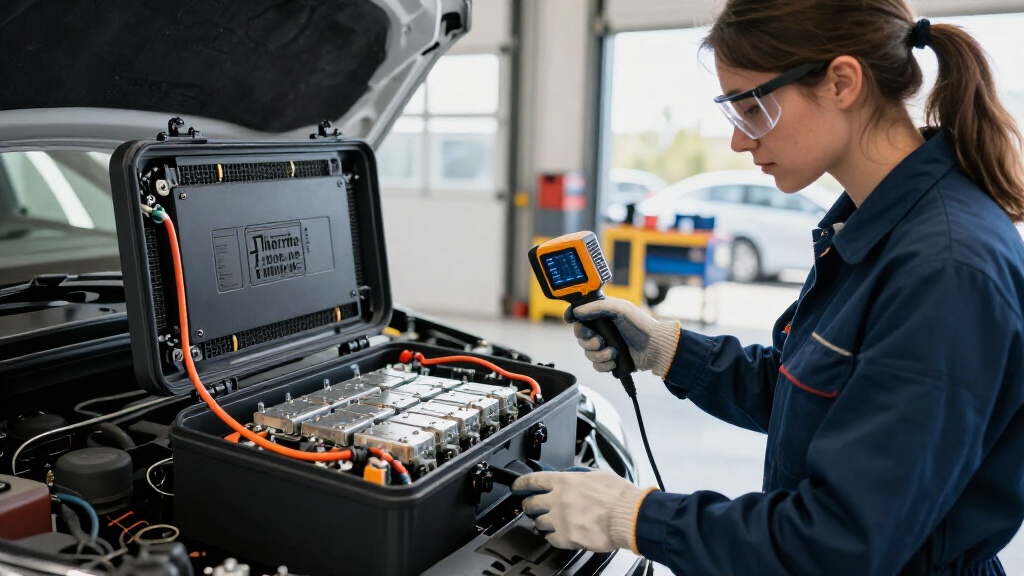
Charged EVs has published a white paper on the causes, risks and mitigation of thermal runaway in large lithium-ion batteries, including those used in electric vehicles. It reviews prevention and containment measures and focuses on silicone syntactic foams; the supplied material does not give comparative vehicle fire rates or quantify the foam’s effectiveness.
Charged EVs has published a white paper examining thermal runaway in large lithium-ion batteries and ways to prevent or contain it, with a focus on silicone syntactic foams. The report addresses a safety issue relevant to electric vehicles. The available source summary does not provide fire-rate comparisons or test results showing how well any proposed measure works.
The report describes thermal runaway as a self-heating reaction that can begin when a battery cell overheats and reaches a critical temperature. It says the reaction can lead to cell failure, fire and, in some cases, explosion. The source summary does not specify a single trigger temperature; that threshold can depend on cell design and conditions.
Charged EVs says the white paper reviews factors that cause the process, considers associated risks and evaluates a range of prevention and containment solutions. It gives particular attention to silicone syntactic foams, which it presents as materials that may reduce the risk of runaway or limit its consequences. The supplied description contains no performance figures, test conditions or independent assessment of those materials.
The report also raises whether electric vehicles are more dangerous than gasoline-powered vehicles when it comes to fires. The supplied material frames this as a question for examination, but provides no comparative fire statistics or conclusion. It therefore does not establish that either vehicle type has a higher fire risk.
Battery Safety as EV Use Grows
Thermal runaway is a battery safety concern because a cell’s self-heating reaction can spread beyond the initial failure. Prevention and containment are therefore considerations in battery design and safety planning. The issue applies to large lithium-ion packs used in transport, where cells operate together in a confined system.
The white paper’s summary does not state how often EV fires occur or compare them with fires in combustion vehicles. Such comparisons require defined data, including incident counts, vehicle population sizes and the period measured. The report discusses materials as a possible engineering measure, but the supplied summary does not include evidence of their performance under realistic battery conditions.
Top picks for "thermal runaway prevention"
As an affiliate, we earn on qualifying purchases.
What the White Paper Examines
The source identifies electrification of transport as the setting for increased attention to battery safety. It describes the paper as covering the causes of thermal runaway, the risks it presents and possible ways to prevent or contain the process. The focus is on mitigation measures, rather than a reported incident or a newly announced safety regulation.
Its final focus is on silicone syntactic foams as one potential material solution. The available description does not explain the foam’s composition, how it would be installed in a battery pack, or which other solutions the paper evaluates. No timeline for development or commercial use is included.
““If a battery cell overheats and reaches a critical temperature, it can trigger a self-heating reaction.””
— Charged EVs white paper description
Evidence Behind Foam Performance
The supplied source summary does not state the white paper’s publication date, cite underlying studies or provide data on the frequency of EV battery fires. It also does not answer whether EVs are more likely to catch fire than fossil-fuelled vehicles. That comparison remains unresolved in the material provided.
For silicone syntactic foams, the description does not include test results, the conditions under which the material was evaluated, or evidence of its performance in full battery packs. It is also unclear which other prevention and containment approaches the report assesses. These details are needed to judge the strength and practical reach of its conclusions.
Details Needed to Assess Solutions
Readers looking to assess the report’s findings will need the full white paper, including its cited research, test methods and results. Any comparison of EV and combustion-vehicle fire risk should identify its data source, measurement period and baseline. For the foam discussion, the next useful evidence would show how the material performs under specified battery failure conditions and how it compares with other measures.
The supplied material announces no regulatory decision, product launch or future research milestone. It gives no date for additional findings, so the next development is unclear.
Key Questions
What is thermal runaway in a lithium-ion battery?
It is a self-heating reaction that can start after a cell overheats and reaches a critical temperature. The source says it can lead to cell failure, fire or explosion.
Does the source show that EVs catch fire more often than gasoline cars?
No. The white paper description raises the comparison but supplies no fire-rate data or conclusion.
What role might silicone syntactic foam play?
Charged EVs identifies it as a material being examined to reduce the risk of thermal runaway or contain its consequences. The supplied summary gives no test results establishing its effectiveness.
What remains unknown about the report?
The available description does not give the publication date, detailed methods, quantitative findings or the full list of solutions assessed. The timing and basis for any comparison of vehicle fire risks are also absent.
Source: rss
Halloween Picks
halloween
As an affiliate, we earn on qualifying purchases.