TL;DR

Get business pricing on garage and car supplies
- Business-only prices and quantity discounts
- Tax-exempt purchasing
- Multiple users, one account, clear invoices
Hyundai Australia executive Scott Nargar says hydrogen fuel-cell passenger cars are not dead, even as the company faces difficulty finding customers. Sparse refueling infrastructure and higher vehicle costs continue to challenge the technology, while Hyundai’s second-generation Nexo is presented as a global model.
Hyundai has not abandoned hydrogen passenger cars, but the company is struggling to find buyers, according to Scott Nargar, Hyundai Australia’s senior manager of future mobility and government relations. His remarks, reported by InsideEVs and attributed to CarExpert, underline the gap between automakers’ continued interest in fuel-cell vehicles and the limited infrastructure and customer demand that have kept them from becoming common on roads.
“The biggest thing is you’ve got to find customers,” Nargar told CarExpert, as quoted by InsideEVs. He also said hydrogen was not “dead for passenger vehicles.” The comments describe a technology Hyundai still wants to keep in its vehicle plans, while acknowledging that finding a market for consumer models remains difficult.
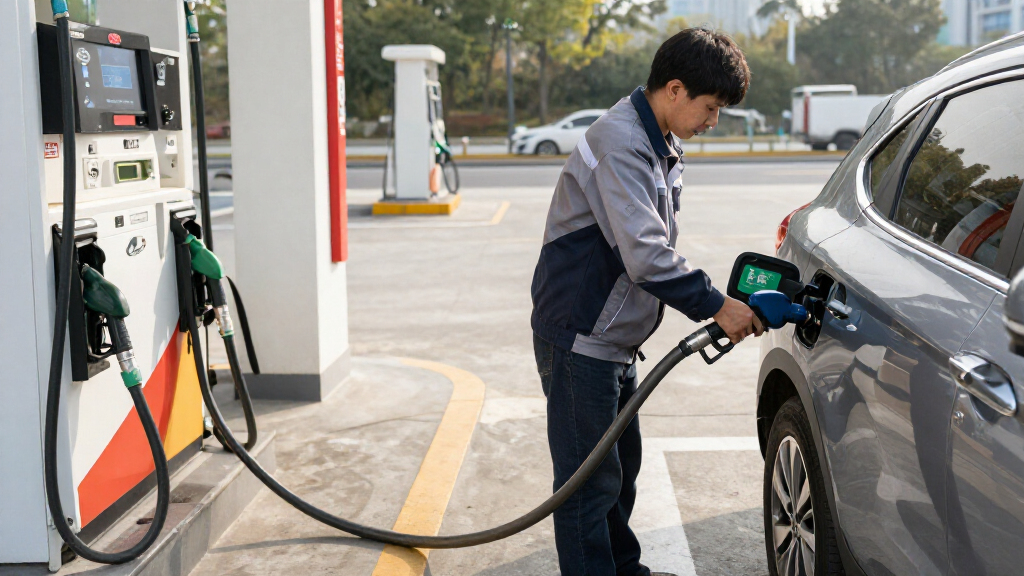
The barriers include limited hydrogen refueling stations and vehicle prices that are higher than comparable gasoline and electric models, according to the report. A car that cannot be conveniently refueled has less appeal to buyers, even if it offers long driving range and refuels more like a conventional car than a battery-electric vehicle.
Hyundai’s second-generation Nexo fuel-cell crossover was unveiled in 2025 and described as a global model. The report says it has a claimed range of roughly 435 miles on a full hydrogen tank, a 110-kilowatt electric motor and a 2.64-kilowatt-hour high-voltage battery. Those specifications describe the vehicle; they do not establish how many customers will buy it or where it will be available.
Hydrogen’s Customer Problem
For drivers, the immediate question is not simply whether a fuel-cell car can travel a long distance between refueling stops. Buyers also need a station within practical reach, confidence that it will be available, and a price that makes sense against other vehicles. Station access and purchase cost therefore shape whether the Nexo can work as an everyday car in any given market.
Hyundai’s comments also show why continued manufacturer interest should not be mistaken for evidence of broad consumer demand. The company may see hydrogen as one part of a future with fewer gasoline and diesel vehicles, but passenger-car customers have many alternatives. Battery-electric cars have become more accessible than they were a decade ago, while charging networks have expanded, according to the report. That gives hydrogen cars a harder task in attracting buyers.
The issue reaches beyond one model: automakers must decide whether to keep spending on fuel-cell development and refueling networks when sales remain uncertain. Hyundai’s stance signals ongoing interest, not a guarantee that hydrogen passenger cars will become widely available or commercially successful.
Products Worth Considering

Autel MaxiCharger AC Home Level 2 EV Charger, 50A, Hardwired J1772, Wi-Fi, 25-Foot Cable

Chemical Guys 14-Piece Arsenal Builder Car Wash Kit with Foam Blaster

Chemical Guys 17-Piece Car Detailing Kit
As an affiliate, we earn on qualifying purchases.
The Nexo and Hyundai’s Strategy
Fuel-cell electric vehicles generate electricity using hydrogen and power an electric motor. They are refueled with hydrogen rather than plugged in for a charging session. The appeal, as described in the source report, is a combination of electric-car driving and quick refueling, without tailpipe emissions. That proposition depends on customers having reliable access to hydrogen.
Hyundai is not alone in exploring the technology. The report names Toyota’s Mirai and says BMW, General Motors and Honda have also invested in hydrogen vehicles or related work. Hyundai’s passenger-car effort has included real-world trials, while the Nexo is its latest model described in the report. Toyota has offered the Mirai for sale to consumers in California, according to InsideEVs.
For Hyundai, retaining hydrogen as an option is part of diversifying its technology portfolio, the report says. Developing fuel-cell systems and building refueling infrastructure can carry substantial costs. The source material does not give spending totals, sales figures or a timetable for expanding Nexo availability.
Demand and Availability Remain Unclear
The report does not provide Nexo sales figures, a target for customer uptake, or a detailed schedule for when and where the second-generation model will be sold. Calling the Nexo a global model does not, by itself, confirm that it will be offered in every market.
It is also unclear how quickly hydrogen refueling access could improve, or whether lower vehicle and fuel costs would bring more consumers to the technology. Nargar’s remarks are not a forecast of future sales, and the cited material does not specify how many customers Hyundai needs for the car to remain viable.
Nexo Rollout and Buyer Response
The next indicators will be the Nexo’s market availability, any announced sales or delivery figures, and changes in hydrogen refueling access. These would help show whether Hyundai can move beyond trials and reach a larger pool of passenger-car customers.
For now, Hyundai’s stated position is that hydrogen passenger vehicles still have a place in its plans. Whether that position translates into a lasting consumer market remains dependent on buyers, vehicle economics and the availability of places to refuel.
Key Questions
Has Hyundai ended its hydrogen passenger-car plans?
No. Hyundai Australia executive Scott Nargar said hydrogen was not “dead for passenger vehicles,” according to the report. That statement signals continued interest, but does not guarantee future sales or broad availability.
What is the Hyundai Nexo?
The Nexo is Hyundai’s hydrogen fuel-cell crossover. The report says its second generation was unveiled in 2025 and lists an estimated range of roughly 435 miles on a full hydrogen tank.
Why are hydrogen cars difficult to sell?
The report points to limited refueling infrastructure, higher vehicle costs and the challenge of finding customers. A long range is less useful to drivers if hydrogen stations are difficult to reach.
How does a hydrogen fuel-cell car refuel?
It takes hydrogen at a refueling station and uses a fuel cell to generate electricity for its motor. Unlike a battery-electric car, it does not need to plug in for a charging session, but it does depend on access to hydrogen stations.
Is the new Nexo available everywhere?
The report describes the second-generation Nexo as a global model, but does not give a complete list of markets or a rollout schedule. Availability by country remains unclear from the cited information.
Source: insideevs.com