
Electric trucks are about 4.4 times more efficient in city driving, thanks to regenerative braking and fewer moving parts, but their range drops with heavy loads or cold weather. They produce no tailpipe emissions, yet manufacturing impacts and electricity sources matter. Newer models tend to depreciate faster due to battery aging, but lower operating costs can offset this. And with some planning, you can overcome the range limits—discover more surprising differences ahead.
Key Takeaways
- Electric trucks are significantly more efficient in urban stop-and-go routes due to regenerative braking and lower energy use.
- Manufacturing, especially batteries, creates higher initial emissions, but operational benefits offset this within about 1.5 years.
- Depreciation for electric trucks can be faster than gas trucks, mainly because of battery aging and technological obsolescence.
- Range is generally below 300 miles, heavily impacted by load, weather, and driving conditions, limiting long-distance use.
- Electric trucks require less maintenance, but battery health and replacement costs are critical factors affecting long-term value.

Kid Trax 6V USPS Mail Truck Ride-On Toy, Ages 3-5, Max Weight 60 lb, Includes Mailbox, Play Envelopes, Working Headlights/Horn, FM Radio/MP3 Input
REAL USPS MAIL TRUCK FUN: USPS mail delivery truck with a mail slot, opening rear door, and cool…
As an affiliate, we earn on qualifying purchases.
As an affiliate, we earn on qualifying purchases.
Efficiency Gains and Limitations
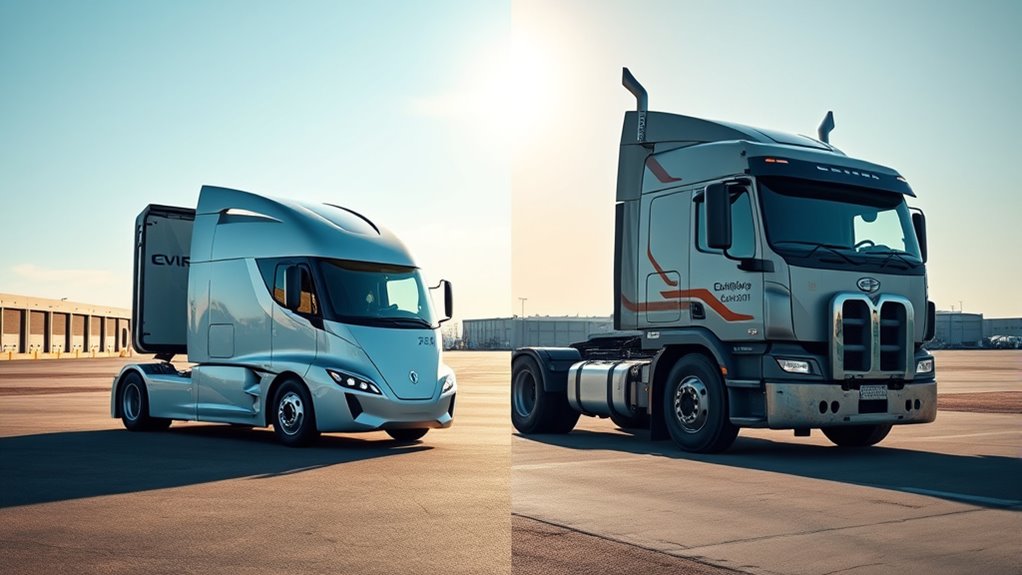
Electric trucks offer significant efficiency gains over traditional gasoline vehicles, especially in urban stop-and-go conditions. You’ll find that electric motors are about 4.4 times more efficient on a combined drive cycle, making them ideal for city routes with frequent stops. They excel at low speeds, thanks to regenerative braking that recovers energy and reduces waste. This gives you about 50% better efficiency in urban deliveries compared to diesel trucks. However, this advantage diminishes on highways or suburban routes where speeds are higher and stops less frequent. Electric trucks use more energy at higher speeds, and their efficiency drops. To maximize battery life, it’s recommended to keep speeds below 60 mph, which can limit long-distance performance. Additionally, thermal management systems are crucial for maintaining optimal battery performance during demanding conditions. Proper battery cooling can extend the lifespan and reliability of electric trucks in various climates. Overall, electric trucks shine in stop-and-go environments but face limitations at higher speeds.

Mid/Heavy Duty Truck Electrical & Electronic Systems
As an affiliate, we earn on qualifying purchases.
As an affiliate, we earn on qualifying purchases.
Environmental Impact Beyond Emissions
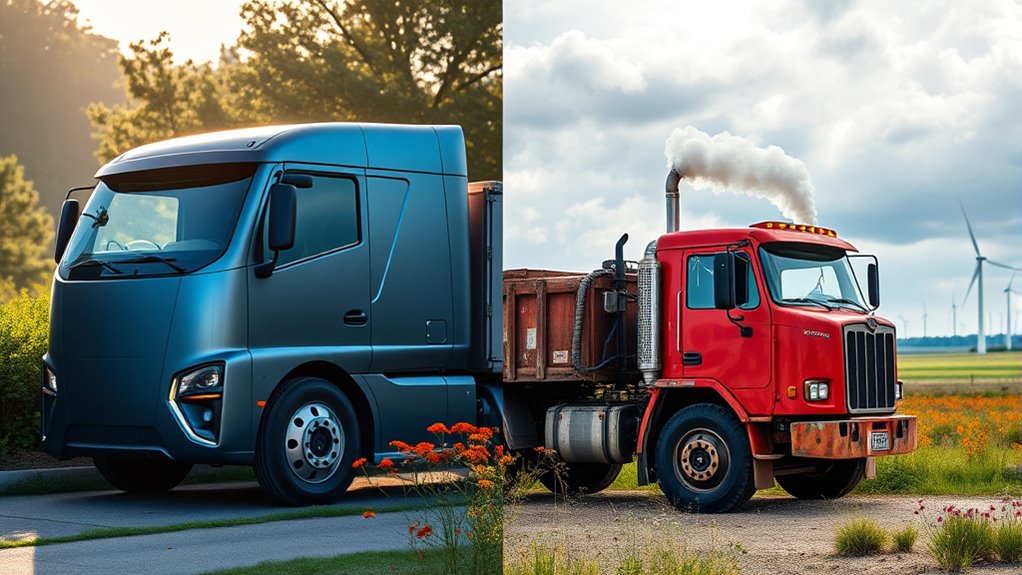
While reducing greenhouse gases is a key benefit of electric trucks, their environmental impact extends beyond emissions. Manufacturing electric vehicles, especially batteries, results in higher initial emissions due to resource extraction and processing. However, these impacts are offset over time through lower operational emissions, typically within 1.2 to 1.6 years. Battery production also involves significant energy use, but advances in recycling and cleaner manufacturing methods are reducing these effects. Additionally, electric trucks produce no tailpipe pollutants like nitrogen oxides or particulate matter, which benefits local air quality. Still, the sourcing of electricity matters—if your grid relies on fossil fuels, the overall environmental advantage diminishes. Moreover, considering energy management and the integration of renewable sources can further enhance the sustainability of electric trucks. Incorporating renewable energy into charging infrastructure can significantly reduce lifecycle emissions. Developing advanced battery technology is also crucial for further decreasing environmental impacts and improving efficiency. Ultimately, electric trucks offer a cleaner lifecycle footprint, especially when considering urban air quality and the potential for renewable energy integration, and ongoing innovations in battery technology continue to improve their environmental profile.

Renogy 12V 70Ah AGM Car Battery H6, Group 48 Start and Stop Automotive Battery with 720 CCA, 120RC, Reliable Power for Cars, SUVs, Trucks, and Marine Starting
Reliable Safety Design: Renogy car battery sealed 12V 70Ah lead-acid battery minimizes the risk of acid leaks and…
As an affiliate, we earn on qualifying purchases.
As an affiliate, we earn on qualifying purchases.
Cost Dynamics and Depreciation Trends
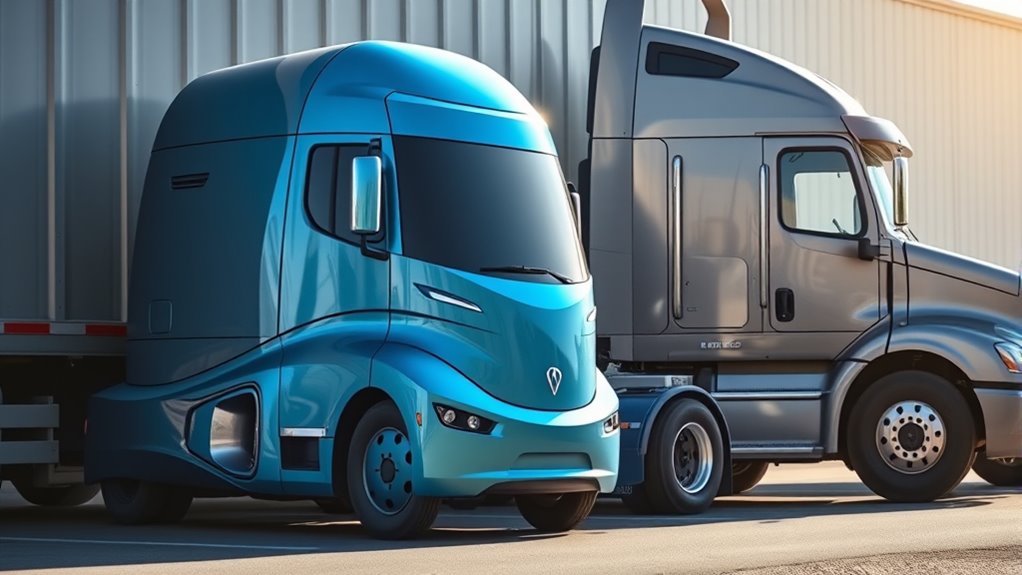
Cost dynamics and depreciation trends considerably influence the financial viability of electric trucks. You’ll find that while electric trucks often have higher upfront costs, operational savings can offset this over time. Here are key points to contemplate:
- Electric trucks tend to cost more initially—median prices range from $57,000 to $97,000—yet they’re at least 20% cheaper to operate in urban routes due to lower energy and maintenance costs.
- Depreciation can be faster; some studies show electric vehicles depreciate up to 10 times more quickly than gasoline trucks, mainly because of battery aging and market perceptions.
- However, operational savings and tax incentives can improve long-term value, making electric trucks more financially attractive despite higher initial investments and depreciation concerns.

TIROL 15FT Semi Truck Air Line Kit – 3 In 1 Truck Air Hose & Power Air Line Wrap 7 Way Trailer Cord With Gladhands,Handles,Holder,Tender Spring Kit,Seals For Semi Truck Trailer Tractor
Package: Include: 15 FT 3-in-1 Air Hoses & Power Line Kit, Tender Spring Kit*1, Stainless Steel Clamp*2, Gladhands*2,…
As an affiliate, we earn on qualifying purchases.
As an affiliate, we earn on qualifying purchases.
Range Challenges and Real-World Performance
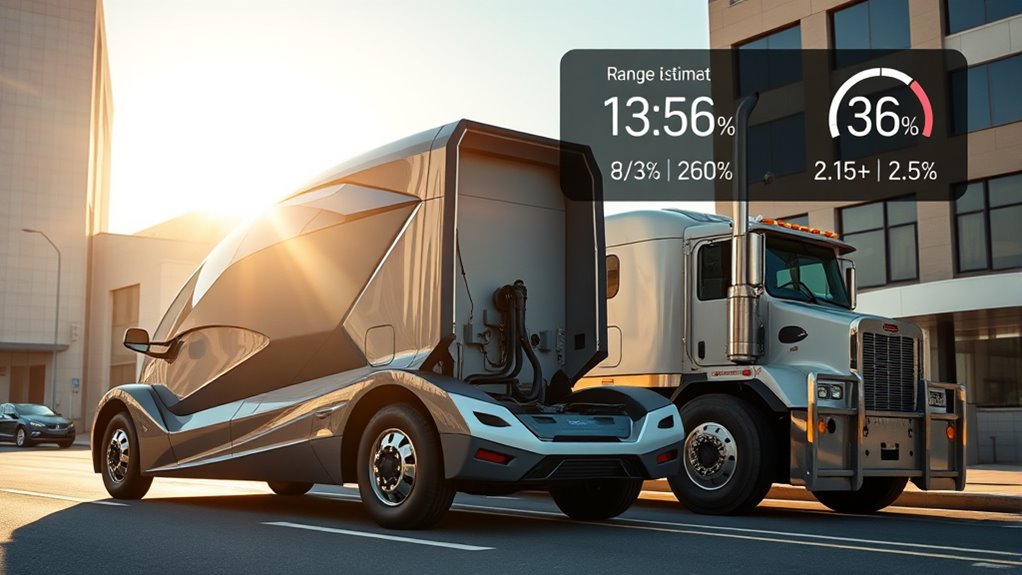
Range limitations considerably impact the practical use of electric trucks in real-world conditions. While most models average just below 300 miles, heavy towing or cargo can reduce this markedly, sometimes below 100 miles. Cold weather worsens performance, cutting battery range by over 40% when heaters are in use. Urban delivery routes, with frequent stops, allow electric trucks to perform well, leveraging regenerative braking and higher efficiency at low speeds. Additionally, battery capacity plays a crucial role in overall range potential, influencing how far a vehicle can travel on a single charge. The charging infrastructure also significantly affects operational flexibility, especially for longer trips. Proper lease negotiation and understanding vehicle capabilities can help mitigate some of these challenges. Moreover, vehicle efficiency is vital in determining how effectively an electric truck uses its stored energy during operation. Ensuring optimal body design can also improve aerodynamics and energy consumption, further extending range.
Maintenance and Lifecycle Considerations
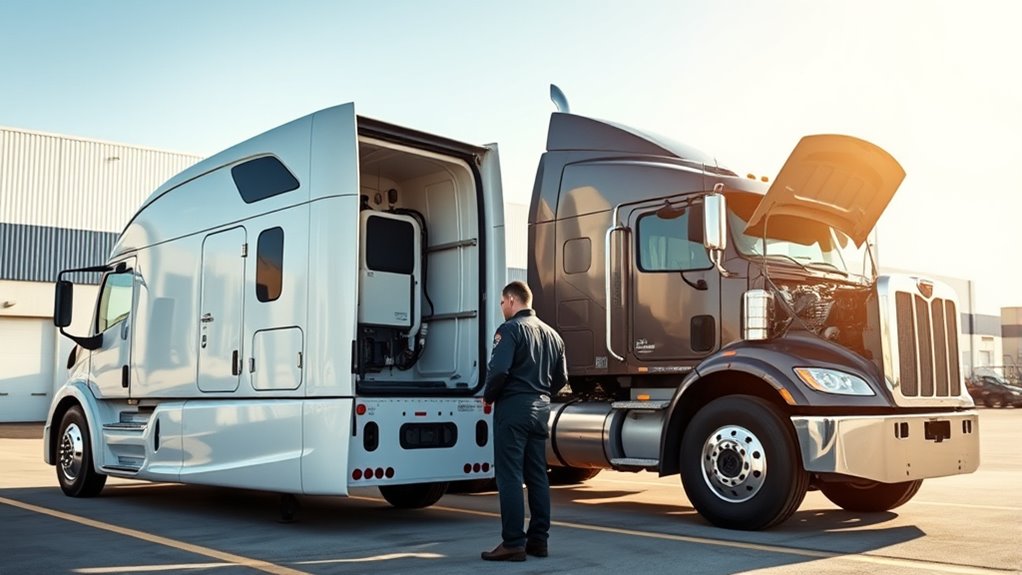
Maintenance and lifecycle considerations substantially influence the long-term viability of electric trucks. You’ll find that electric trucks generally require less upkeep because they have fewer moving parts, such as no oil changes or spark plug replacements. This reduction in mechanical components also lowers the risk of certain types of failures, contributing to overall reliability. This naturally leads to decreased routine maintenance and associated costs. However, battery health remains a key concern:
- Battery replacement costs can be high, and batteries might not last the truck’s entire lifespan.
- Electric motors tend to wear less, leading to fewer brake repairs thanks to regenerative braking.
- Resale value is often lower, partly due to uncertainties about long-term battery performance and technological obsolescence.
- Proper battery management practices are essential for extending the lifespan of electric vehicle batteries and optimizing performance.
- Understanding battery degradation processes can help in planning maintenance and replacement schedules to avoid unexpected failures.
- The availability of specialized maintenance services for electric trucks can impact long-term operational costs and reliability.
- Advances in battery technology continue to improve durability, but staying informed on these developments is crucial for long-term planning.
While electric trucks promise reduced maintenance, you need to think about potential costs for battery replacement and shorter vehicle longevity when planning for the future.
Frequently Asked Questions
How Do Electric Trucks Perform in Extreme Cold Weather Conditions?
In extreme cold weather, electric trucks’ performance drops considerably because batteries lose over 40% of their range when heating is needed. You might find that your truck can’t manage as many miles, especially if towing or heavy loads are involved. To keep running efficiently, you’ll need to plan for shorter trips, warm-up times, and possibly additional heating systems, which can further drain battery power.
What Are the Long-Term Costs of Battery Replacement for Electric Trucks?
You’ll likely face higher long-term costs for battery replacement as electric trucks age, since batteries can degrade and need replacing after around 150,000 miles. Replacement costs vary from several thousand to over $20,000, depending on the truck and battery size. Keep in mind, these costs can impact your total ownership expenses, especially if you plan to keep your truck for many years or cover extensive miles.
How Does Vehicle Size Affect the Efficiency and Emissions of Electric Trucks?
Think of vehicle size as the weight of a boat; the bigger it is, the harder it works. Larger electric trucks tend to have higher emissions during manufacturing, but they often deliver greater reductions over their lifespan, thanks to their size and efficiency. Smaller electric trucks are more nimble and efficient for urban routes, emitting less during use. Ultimately, bigger trucks excel in heavy-duty tasks despite their initial environmental footprint.
Are There Specific Charging Infrastructure Requirements for Electric Trucks?
You’ll need specialized charging infrastructure for electric trucks, including high-capacity chargers like DC fast chargers to minimize downtime. You should plan for enough charging stations at strategic locations, such as depots or delivery routes, to support your fleet’s range needs. It’s also essential to guarantee your electrical system can handle the increased power demand and consider future expansion as your fleet grows or technology advances.
How Does Resale Value Compare Between Electric and Gasoline Trucks Over Time?
You’ll find that electric trucks generally have lower resale values compared to gasoline trucks over time. This happens because electric vehicles tend to depreciate faster, partly due to concerns over battery life and replacement costs. Additionally, the market for used electric trucks is still developing, which can make resale prices less predictable. If you’re planning to sell, expect to recover less of your initial investment with electric trucks than with traditional gasoline models.
Conclusion
As you weigh electric and gas trucks, remember each is a chapter in your fleet’s story—electric trucks shine with clean pages but face range hurdles, while gas trucks boast longstanding reliability but leave a darker stain on the environment. Your choice shapes the narrative of efficiency, cost, and sustainability. Which will you choose to write into your fleet’s future? The pen is in your hands—craft a story that drives impact and innovation.