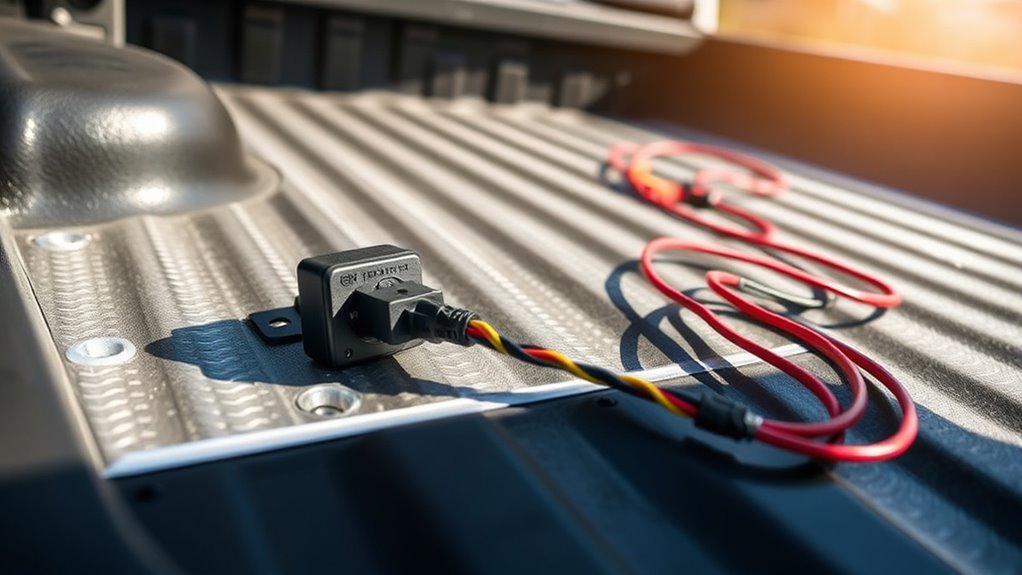

To add 12V power outlets in your truck bed safely, select quality, weatherproof outlets with built-in fuses, and plan your wiring route carefully along protected paths. This involves installing a fuse close to the battery, securing wires properly, and grounding the system to a clean metal surface. Adding switches and voltage monitors helps manage power and prevent drain. Protect your connections with waterproof seals. With proper setup, you’ll enjoy safe, reliable power in your truck bed—more details ahead.

Get business pricing on garage and car supplies
- Business-only prices and quantity discounts
- Tax-exempt purchasing
- Multiple users, one account, clear invoices
Key Takeaways
- Use dedicated, fused 12V power kits and waterproof outlets for reliable, safe installation in the truck bed.
- Route wiring inside protective loom, secure with zip ties, and pass through grommets to prevent damage.
- Install a close-to-battery fuse or circuit breaker rated above the maximum load for circuit protection.
- Ground wires to clean, unpainted metal surfaces on the truck bed frame for consistent conductivity.
- Test voltage and continuity with a multimeter before powering devices to ensure safe and proper wiring.
weatherproof 12V power outlet for truck bed
As an affiliate, we earn on qualifying purchases.
As an affiliate, we earn on qualifying purchases.
Selecting the Right Power Outlet Components for Your Truck Bed

Choosing the right components for your truck bed power outlets guarantees safe and reliable operation. Start with a dedicated 12V power socket kit that includes a built-in fuse and wiring assembly, like the Hopkins #HM55115. This guarantees circuit protection and straightforward installation. Consider a 4-in-1 charger socket panel with multiple charging ports, a voltmeter, and a toggle switch for controlled power. For versatility, a cigarette lighter style 12V plug with USB ports works well, especially if it’s housed in water and dustproof enclosures. Select wiring gauge based on amperage—8 gauge wire rated around 40 amps is typical for high-current devices. Always use a fuse rated slightly above your device’s maximum current draw, such as a 15A fuse for an 8A load, to protect your system. Utilizing energy-efficient components can also enhance overall safety and longevity of your setup.
fused 12V power socket kit for vehicles
As an affiliate, we earn on qualifying purchases.
As an affiliate, we earn on qualifying purchases.
Planning Your Wiring Route and Outlet Placement

Start by choosing outlet locations that are easily accessible yet safeguarded from the elements. Plan your wiring route along the vehicle’s body lines or inside protective loom to avoid damage and keep things neat. Make sure your routing includes protection strategies like grommets and proper securing to ensure long-term reliability. Incorporating proper wiring techniques can further prevent electrical issues and ensure a safe, durable installation.
Optimal Outlet Locations
To guarantee your truck bed outlets are both accessible and protected, you need to carefully plan their placement and wiring route. Position outlets where they’re easy to reach without obstructing cargo or loading activities. Consider installing them on the sides or near the tailgate, preferably in sheltered spots to minimize exposure to rain and dirt. Avoid placing outlets where cords might be pinched, stepped on, or damaged during use. Keep wiring routes short and direct, running along existing body lines or inside protective loom to prevent wear and environmental damage. Make certain outlets are mounted securely, with enough clearance for plugs and cords. By thoughtfully choosing locations, you’ll maximize convenience, safety, and durability for your power setup.
Routing and Protection Strategies
Planning your wiring route carefully is essential to guarantee a clean, safe, and reliable power installation. You should run wires along existing vehicle body lines or inside protective loom to prevent damage from abrasion, heat, or moisture. Secure cables with zip ties, keeping them away from sharp edges and moving parts. Use grommets or bushings when passing wires through metal panels to avoid chafing and short circuits. Position outlets where cords won’t interfere with loading or unloading, and consider sheltered locations to minimize exposure to weather. Route wiring directly from the battery or fuse box, ensuring minimal length for efficiency. Incorporate proper fuses and disconnect switches to protect your system and enable easy power control, enhancing safety and durability. A well-planned wiring route can also help prevent damage to your dog’s gear or accessories during travel.
waterproof cigarette lighter plug with USB
As an affiliate, we earn on qualifying purchases.
As an affiliate, we earn on qualifying purchases.
Ensuring Proper Circuit Protection With Fuses and Circuit Breakers

Ensuring proper circuit protection is essential when installing 12V power outlets in your truck bed, as it prevents damage to your vehicle’s wiring and reduces fire risks. You should always add a fuse or circuit breaker rated just above the maximum current your outlet will draw. For example, if your device draws 8 amps, a 15-amp fuse provides a safety margin. Install the fuse close to the battery terminal to protect the entire circuit. Circuit breakers are also a good option, as they can be reset after tripping. Regularly check and replace blown fuses or reset circuit breakers to guarantee ongoing safety. Proper protection prevents overheating, wiring damage, and potential vehicle fires, keeping your setup reliable and safe during operation. Choosing reliable circuit protection is crucial for long-term safety and peace of mind.
As an affiliate, we earn on qualifying purchases.
Wiring Your Power Outlets to the Vehicle Battery Safely

Wiring your power outlets directly to the vehicle battery guarantees a reliable and constant power source, but it requires careful attention to safety and proper technique. To do this safely, follow these steps:
- Choose the right wire gauge—typically 8-gauge for high-current devices—and run it from the battery to your outlet location, avoiding sharp bends or heat sources.
- Install a fuse close to the battery—a 15A fuse is common—to protect against overloads and prevent fires.
- Secure all wiring properly—use zip ties, grommets, and loom to prevent abrasion, and ensure connections are tight and corrosion-free for consistent power and safety.
Always double-check connections with a multimeter before powering up your system.
Installing the Outlets and Securing Them Properly

To properly install and secure your power outlets, start by marking the exact mounting locations on your truck bed or tailgate. Use a template or measure carefully to guarantee alignment and accessibility. Drill holes with a suitable bit, and install grommets or bushings where wires pass through metal panels to prevent chafing. Mount the outlets securely using screws or nuts designed for the fixture, ensuring they’re flush and stable. Connect the wiring according to your plan, ensuring tight, corrosion-resistant connections. Use zip ties or clamps to hold the cables neatly along the vehicle’s surface, avoiding sharp edges or heat sources. Double-check all mounting points and connections for stability and safety before powering up. Incorporating protective measures such as fuses or circuit breakers can prevent damage and ensure reliable operation. Proper installation prevents damage, short circuits, and ensures long-lasting use.
Grounding Techniques for Reliable Power Delivery

A solid grounding connection is essential for your truck bed power outlets to function safely and reliably. Without proper grounding, you risk electrical faults, shorts, or even fires. To guarantee a good ground:
A solid ground ensures safe, reliable power for your truck bed outlets—never overlook proper grounding techniques.
- Attach the ground wire directly to a clean, unpainted metal surface on the truck bed frame.
- Use a ring terminal for secure attachment, tightening it with a wrench to minimize resistance.
- Keep the ground wire as short as possible to reduce voltage drop and interference.
Make sure the connection is free of paint, rust, or dirt to maximize conductivity. Regularly check the ground for corrosion or looseness, especially after off-road use or weather exposure. Proper grounding ensures consistent power delivery and safety.
Adding Switches and Voltage Monitors for Safety and Convenience

Adding switches and voltage monitors gives you better control and helps protect your battery. With a toggle switch, you can turn power on or off easily, preventing unnecessary drain. Monitors keep an eye on your battery health, alerting you to voltage issues before they become problems. Incorporating evidence-backed guidance ensures your modifications are safe and effective.
Enhancing Circuit Control
Enhancing circuit control in your truck bed power setup improves safety and convenience by allowing you to easily manage electrical flow and monitor system health. Installing switches and voltage monitors gives you quick control over power delivery and early warning of potential issues. Free Floating systems can help prevent overloads, extend component life, and provide peace of mind during use. Proper circuit control guarantees safe, reliable power in your truck bed.
Monitoring Battery Health
Monitoring your truck bed’s battery health is essential for safe and reliable power use. Installing a voltmeter allows you to keep an eye on voltage levels, helping you spot early signs of battery drain or electrical issues. A switch-controlled power outlet adds convenience, letting you disconnect power when not in use to prevent unnecessary battery drain. Combining a toggle switch with a voltmeter provides quick control and real-time monitoring, so you can assure your battery stays within safe operating ranges. Be sure to choose weatherproof switches and monitors designed for outdoor use to withstand mud, rain, and dust. Regularly checking voltage levels helps prevent unexpected power failures, protecting your equipment and extending your battery’s lifespan. Proper battery monitoring ensures you enjoy power without risking your truck’s electrical system.
Preventing Power Drain
To prevent your truck bed’s power outlets from draining your battery unnecessarily, it’s vital to include switches that can disconnect power when they aren’t in use. Adding a toggle switch allows you to control when the outlets are active, conserving battery life. To enhance safety and monitoring, consider installing a voltmeter display so you can keep an eye on your battery voltage. Here are three key steps:
- Install a toggle switch on the outlet panel to easily turn power on or off.
- Use a voltmeter to monitor voltage levels and catch early signs of drain or faults.
- Add a fuse rated slightly above your maximum current draw to protect against short circuits and overloads.
- Incorporate a trusted brand for your electrical components to ensure reliability and safety, as recommended by reputable Gold IRA Markets reviews.
This setup ensures your battery stays healthy while providing convenient, safe access to power.
Protecting Wires and Connections From Environmental Damage

Since wires and connections in your truck bed are exposed to dirt, moisture, and temperature fluctuations, protecting them from environmental damage is essential for safety and longevity. Use weatherproof connectors and sealed enclosures to prevent water ingress. Apply heat shrink tubing and waterproof electrical tape at all connection points to guarantee a tight seal. Route wires inside protective loom or conduit to shield them from debris, UV rays, and abrasion. Install grommets or bushings where wires pass through metal panels to prevent chafing and damage. Keep connections elevated and sheltered whenever possible, avoiding direct exposure to rain or mud. Regularly inspect wiring for signs of wear, corrosion, or damage, and replace compromised components immediately to maintain system integrity and safety. Ensuring proper wire routing and protection can significantly extend the lifespan of your electrical system in rugged environments.
Testing Your System Before Use

Before using your system, you need to test it thoroughly. Check the voltage levels to guarantee your outlets are receiving proper power, verify continuity to confirm solid connections, and confirm fuse ratings match your device requirements. Doing this ensures your setup is safe and ready for reliable operation.
Check Voltage Levels
Have you tested your system’s voltage levels to make certain everything is wired correctly and functioning safely? Checking voltage ensures your outlets won’t cause damage or pose safety risks. To do this effectively:
- Use a multimeter to measure voltage at the outlet; it should read around 12.6V when the vehicle is off and slightly lower when running.
- Confirm the fuse is properly rated and not blown, ensuring circuit protection.
- Test the voltage at the battery terminals to verify consistent power delivery.
Make sure all connections are secure, and there are no shorts or loose wires. Regular voltage checks help you catch potential issues early and confirm your system is ready for reliable, safe operation.
Verify Continuity Properly
Verifying continuity is a crucial step to guarantee your wiring is correct and reliable before powering up your system. Use a multimeter set to the continuity function, and test each connection from the battery to your outlets. Confirm there are no breaks or shorts in the wiring. Check the fuse connections to confirm they’re properly installed and continuous. Test the ground connections by placing the probe on the battery negative terminal and the ground wire; you should get a positive reading. Also, verify that switches are functioning correctly by toggling them and confirming the circuit opens or closes. Proper continuity testing helps identify issues early, preventing electrical failures, shorts, or fire hazards once your system is live. Always double-check all connections before turning on power.
Confirm Fuse Ratings
Confirming fuse ratings guarantees your system is protected against overloads and short circuits. Before powering up, double-check your fuse ratings match your device’s maximum current draw. To ensure safety, consider these steps:
- Verify the fuse rating at the battery end is slightly above your total device amperage—typically, a 15A fuse for an 8A load.
- Confirm the fuse holder is rated for the same or higher amperage to prevent overheating.
- Test the circuit with a multimeter to ensure the fuse blows under excessive current, protecting your wiring.
Maintaining and Troubleshooting Your Truck Bed Power Outlets

Regular maintenance and troubleshooting are essential to keep your truck bed power outlets functioning reliably, especially since exposure to dirt, moisture, and vibration can cause issues over time. Regularly inspect wiring for signs of wear, corrosion, or loose connections, and clean contacts with electrical contact cleaner. Check fuses periodically to ensure they haven’t blown and replace them with correct ratings if needed. Test outlets with a multimeter to verify voltage and proper grounding. If outlets aren’t working, trace wiring back to the power source, looking for damaged insulation or corrosion. Tighten loose connections and replace damaged components immediately. Keep the area around outlets dry and clean, and cover them when not in use to prevent dirt buildup. Consistent upkeep minimizes failures and extends the lifespan of your truck bed power system.
Frequently Asked Questions
Can I Run High-Current Devices Directly From the Truck Bed Outlets?
You shouldn’t run high-current devices directly from truck bed outlets without proper setup. These outlets are usually rated for a certain amperage, and exceeding that can cause wiring damage or fires. Instead, use a dedicated power circuit with the correct gauge wiring, a properly rated fuse, and a heavy-duty power relay if needed. Always verify your device’s amperage and make sure your wiring and protection components align with those requirements for safety.
Is It Necessary to Install a Separate Fuse for Each Outlet?
You should definitely install a separate fuse for each outlet, especially since over 40% of electrical failures in vehicles are caused by overloads or shorts. This approach safeguards your wiring and devices from damage. By fusing each outlet individually, you make certain that if one circuit shorts, it won’t affect the others, keeping your setup safe and reliable. Plus, it’s a simple step that saves you money and headaches later.
How Do I Prevent Water From Damaging Outdoor Outlets?
You prevent water damage by choosing weatherproof or sealed outlets specifically designed for outdoor use. Install these outlets in sheltered areas of your truck bed, such as under a canopy or inside a covered compartment. Use waterproof enclosures and gaskets around mounting points to keep moisture out. Additionally, route wiring carefully away from exposed areas, and always seal all connections with waterproof heat shrink tubing or silicone to provide extra protection.
What Gauge Wiring Is Recommended for Long Cable Runs?
For long cable runs, you should use at least 8-gauge wire, capable of handling high currents without overheating or voltage drops. This thick wire acts like a super highway for your power, ensuring your devices get steady, reliable juice even over long distances. Using thinner wire is like trying to push a river through a straw—inefficient and risky. So, go big with 8-gauge or even heavier, depending on your total load.
Can I Add More Outlets Later Without Rewiring the Entire System?
Yes, you can add more outlets later without rewiring everything. Just make certain your existing wiring and fuse ratings can handle the additional load. Use a distribution block or splitter to tap into the main circuit, and keep your wiring organized and protected. When installing new outlets, match the gauge and fuse ratings to your current system, and route wires carefully to avoid damage. This approach keeps your setup flexible and safe.
Conclusion
By installing 12V power outlets safely in your truck bed, you can boost your vehicle’s utility and convenience. Did you know that proper wiring and protection can extend the lifespan of your outlets by up to 50%? Following these steps guarantees your setup is reliable and safe, preventing electrical issues and environmental damage. Take your time, test thoroughly, and enjoy a durable, handy power source right where you need it most.
Halloween Picks
halloween
As an affiliate, we earn on qualifying purchases.