When camping in bear country, you need to choose a safe, open campsite away from dense brush and natural food sources. Store all food, trash, and scented items in smell-proof, sealed containers, keeping them away from your sleeping area—preferably locked inside your vehicle or in bear-proof containers. Use vehicle locks, elevated sleeping setups, and portable electric fences to prevent bear access. For more tips on keeping bears at bay and staying safe, keep exploring these essential safety strategies.

Get garage and car supplies delivered free — and shop member deals
- Fast, free delivery on millions of items
- Access to Prime Big Deal Days deals on October 6–7
- Prime Video, Amazon Music and more included
Key Takeaways
- Store all food, trash, and scented items in sealed, smell-proof containers and keep them locked away from your sleeping area.
- Use bear-proof containers or elevated, secure storage like vehicle cab or approved canisters placed at least 100 feet from camp.
- Keep food out of the truck bed and avoid leaving food or scents accessible in the vehicle to prevent attracting bears.
- Clean all cooking utensils, stoves, and leftover food thoroughly to eliminate odors that may lure bears.
- Carry and practice deploying bear spray, and stay vigilant with camp cleanliness and bear sign monitoring for safety.
bear-proof food storage containers
As an affiliate, we earn on qualifying purchases.
As an affiliate, we earn on qualifying purchases.
Choosing a Safe and Bear-Resistant Campsite

Choosing a safe and bear-resistant campsite begins with selecting an open area that offers good visibility and minimizes natural attractants. Look for sites away from berry patches, streams, or fish-bearing waters, as these attract bears. Walk around to spot signs of bear activity, such as tracks, droppings, or scratched trees. Avoid heavy brush and major game trails where bears are more likely to pass through. Confirm that the area is approved for camping and adheres to local regulations. Prioritize flat, well-drained ground that’s easy to keep clean. Ensuring your campsite is visible from a distance reduces surprise encounters, and selecting a location away from natural bear attractants helps prevent attracting bears to your site. Proper site selection is the first step in safe camping. Understanding bear behavior can further improve your safety strategies in bear country.
As an affiliate, we earn on qualifying purchases.
Proper Food Storage Methods in Truck Bed Campsites

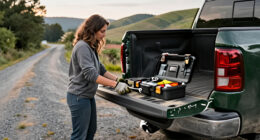
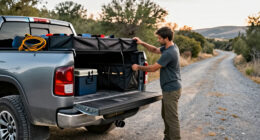
Proper food storage is essential to prevent bears from being attracted to your campsite, especially when camping in a truck bed. Always use sealed, smell-proof containers for all food and trash, and keep them locked at all times, even when you’re present. Store all scented items—like toothpaste, deodorant, and wrappers—away from your sleeping area. Heavy-duty aluminum utility chests are ideal for truck bed storage because they resist claws and teeth. If you use bear canisters, place them on flat, level ground at least 100 feet from your campsite. Remember, never leave food out or accessible in your truck bed, and always clean up food scraps thoroughly. Proper storage minimizes the risk of bear encounters and helps keep wildlife wild. Total‑cost clarity in your food storage plan can also help you prepare for any unexpected expenses related to camping gear or bear safety equipment.
As an affiliate, we earn on qualifying purchases.
Using Vehicle and Equipment Solutions to Prevent Bear Access

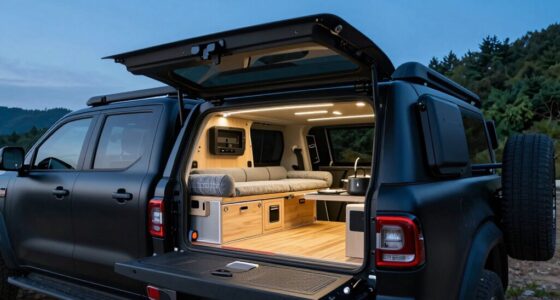
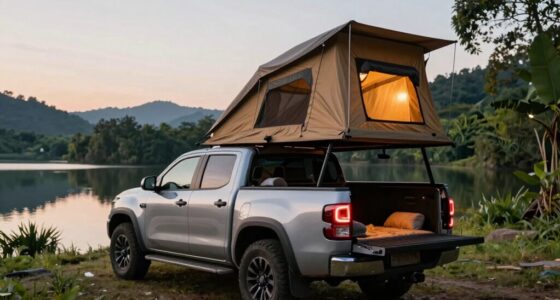
Vehicle and equipment solutions play a vital role in keeping bears out of your campsite when food storage alone isn’t enough. Modern gear can make the difference between a safe trip and a bear encounter. Using bed slides like DECKED systems prevents access to cargo without opening the tailgate, keeping bears at bay. Lock your tailgate and store food inside your vehicle’s cab or approved containers to eliminate scent trails. Rooftop tents elevate your sleeping area, reducing ground-level bear access. Electric fences are portable, effective barriers that can be quickly deployed.
| Solution Type | Benefit |
|---|---|
| Bed Slides | Prevent cargo access, no bear entry |
| Locked Tailgates | Secure food and gear from bears |
| Elevated Tents | Keep safety off the ground |
| Electric Fences | Create a quick, dependable barrier |
These tools work together to protect you from bears and keep your camping experience safe.
portable electric fence for camping
As an affiliate, we earn on qualifying purchases.
As an affiliate, we earn on qualifying purchases.
Managing Scents and Maintaining Camp Cleanliness

Keeping your campsite scent-free and spotless is essential for deterring bears. You must pack out all food scraps, leftover food, and garbage completely, leaving no traces that could attract bears or other wildlife. After cooking, thoroughly clean your stove and utensils to eliminate lingering food odors. Even small scented items like toothpaste or deodorant should be stored away from your sleeping area in sealed containers. Avoid bringing late-night snacks into your tent, and never sleep with any food nearby. Regularly inspect your campsite for signs of bear activity, such as tracks or droppings, and clean up any messes immediately. Maintaining a high level of cleanliness and managing scents reduces the risk of habituating bears to human presence, keeping both you and wildlife safe. Implementing proper food storage techniques is crucial for reducing bear encounters and ensuring safety in bear country.
Defensive Measures and Emergency Preparedness

Being prepared for a bear encounter can make all the difference between a safe experience and a dangerous situation. You should always carry bear spray in easily accessible holsters or belt attachments, ensuring you can deploy it quickly if needed. Practice using the spray beforehand so you’re confident in your technique. Inform someone outside your camping group of your trip details, including your destination and return time, for emergency contact purposes. Carry reliable communication devices and know how to operate them in case of an emergency. Making noise while camping helps alert bears to your presence, reducing surprise encounters. Stay alert and watch for bear signs. In an encounter, remain calm, avoid sudden movements, and back away slowly. These measures can substantially improve your safety in bear country. Preparedness strategies are essential for minimizing risks and ensuring a safe outdoor experience.
Complying With Regulations and Best Practices for Bear Safety

To stay safe in bear country, you must follow all local regulations and best practices for food storage and campsite management. Research specific campground rules before you arrive, as regulations vary by area and bear species. Some parks require bear-proof containers or lockers, while others permit tree-hanging methods. Non-compliance can lead to fines, confiscation of food, or even vehicle towing. Avoid placing bear canisters near cliffs or water sources, where bears might roll or knock them over. Practice “Leave No Trace” principles to prevent habituating bears to human food. Always carry and know how to use bear spray, and inform someone about your trip plans. Making noise and maintaining campsite cleanliness further reduce bear encounters, keeping both you and wildlife safe. Additionally, understanding the importance of proper food storage can significantly minimize the risk of attracting bears to your campsite.
Tips for a Successful and Safe Truck Bed Camping Experience

To have a successful and safe truck bed camping trip in bear country, you need to focus on proper food storage, choosing your campsite carefully, and carrying essential defensive gear. Making smart decisions in these areas helps prevent bear encounters and keeps you safe. By planning ahead, you can enjoy your adventure without unnecessary risks. Additionally, understanding food storage techniques can significantly reduce the likelihood of attracting bears to your campsite.
Proper Food Storage Techniques
Proper food storage is essential for a safe and successful truck bed camping experience in bear country. You must use sealed, smell-proof containers for all food and trash to prevent attracting bears. Bear-resistant containers should stay closed and locked at all times, even when you’re present. Store all scented items, including toothpaste, deodorant, and wrappers, away from sleeping areas to avoid scent leaks. Heavy-duty aluminum utility chests offer protection against claws and teeth, making them ideal for truck bed storage. When using bear canisters, place them on flat, level ground at least 100 feet from your campsite. Always clean cooking equipment thoroughly to eliminate food smells, and pack out all trash to minimize bear attraction. Following these techniques helps keep both you and bears safe. Incorporating European cloud solutions can also enhance your safety by providing reliable, remote monitoring options for your campsite.
Selecting Safe Campsite Locations
Choosing the right campsite is essential for safety and a successful truck bed camping experience in bear country. You want a location that minimizes bear encounters and keeps you secure. When selecting a site, consider these tips:
- Pick open areas with clear visibility, avoiding dense brush where bears can hide.
- Stay away from natural attractants like berry patches, fish streams, or animal carcasses.
- Check for signs of bear activity, such as tracks, droppings, or scratched trees, before setting up.
- Confirm regulations and ensure the site permits camping, especially in bear-prone regions, to avoid fines or hazards.
- Be aware of food storage regulations and use bear-proof containers to prevent attracting bears to your campsite.
Carrying Essential Defensive Gear
Carrying essential defensive gear is crucial for ensuring your safety and peace of mind while truck bed camping in bear country. You should always have bear spray within arm’s reach, stored in an accessible holster or belt. Practice deploying it so you’re confident during an encounter. Keep a whistle handy to alert bears of your presence, reducing surprise attacks. A sturdy flashlight helps you identify signs of bears nearby and deters unwanted visits. Consider carrying a portable alarm or noise-making device to discourage bears from approaching. Additionally, inform someone outside your camping group of your plan, including your location and return date, in case of emergencies. Proper safety planning and understanding how to use your gear greatly reduce risks and enhance your safety in bear country.
Frequently Asked Questions
How Often Should I Check My Bear-Resistant Containers During Camping?
You should check your bear-resistant containers at least every few hours during your camping trip. This helps confirm they remain sealed, locked, and undisturbed, preventing bears from detecting or gaining access to your food. Always verify that the containers are secure before leaving your campsite, after meals, and before bedtime. Regular checks reduce the risk of bear encounters and keep your food safe while maintaining proper campsite safety standards.
What Are the Signs of Bear Habituation I Should Watch For?
You should watch for signs like bears repeatedly visiting your site, rummaging through your food containers, or showing little fear of humans. Tracks, fresh scat, and claw marks on trees or containers indicate habituation. If bears seem indifferent or approach closely, it’s a red flag. Always stay alert, keep a safe distance, and respond by securing all food and trash properly to prevent further habituation.
Can I Use Biodegradable Soap to Clean My Cooking Gear Safely?
Yes, you can use biodegradable soap to clean your cooking gear safely. It’s eco-friendly and less likely to leave harmful residues that could attract bears. Just make sure you rinse your equipment thoroughly with clean water afterward to remove any soap traces. Avoid using scented or heavily fragranced soaps, as they can attract wildlife. Proper cleaning helps maintain campsite safety and minimizes bear habituation to human scents.
How Do I Handle a Bear Encounter if It Happens Near My Campsite?
If a bear appears near your campsite, stand tall like a tree, raise your arms, and speak loudly to show you’re human. Don’t run—bears chase movement—and avoid eye contact, which they see as a challenge. Use your bear spray if it charges or comes too close. Keep calm, back away slowly, and give the bear space to retreat. Remember, your calm presence can turn the tide in a tense encounter.
Are There Specific Regulations for Food Storage in National Parks With Grizzly Bears?
You must follow specific regulations for food storage in national parks with grizzly bears. Use bear-resistant containers or lockers where required, and never leave food or scented items unattended. Store all food, trash, and scented toiletries away from your sleeping area, preferably in locked vehicles or approved containers. Avoid hanging food in trees unless permitted, and always practice proper cleanup to prevent attracting bears and guarantee compliance with park rules.
Conclusion
By respecting nature’s quiet boundaries and thoughtfully managing your campsite, you create a safe haven for both yourself and the wildlife. When you’re mindful of scents and diligent with food storage, you foster a harmonious balance that allows you to enjoy the wilderness’s subtle beauty without disturbance. Embracing these gentle practices guarantees your adventure remains a treasured memory, quietly preserving the peace and serenity that make truck bed camping in bear country truly special.
Halloween Picks
halloween
As an affiliate, we earn on qualifying purchases.