
When starting long-term in a truck bed camper, you’ll wish you knew about the real costs involved, like maintenance, fuel, and insurance, which add up quickly. Space will be tighter than expected, so smart storage and multi-functional furniture become essentials. Ensuring your truck can handle the camper’s weight and understanding local regulations can prevent headaches. To make your adventure smoother and more enjoyable, keep exploring the key tips and strategies that can save you time and money.
Key Takeaways
- Properly assess your truck’s payload capacity and compatibility with the camper before purchasing.
- Budget thoroughly for ongoing expenses like maintenance, repairs, fuel, and campground fees to avoid financial surprises.
- Prioritize efficient space management with multifunctional furniture and smart storage solutions for livability.
- Regularly inspect and maintain safety-critical systems—electrical, plumbing, brakes—to prevent costly breakdowns.
- Research local regulations and plan ahead for legal, safe overnight parking and storage options.
The True Cost of Going Off-Grid

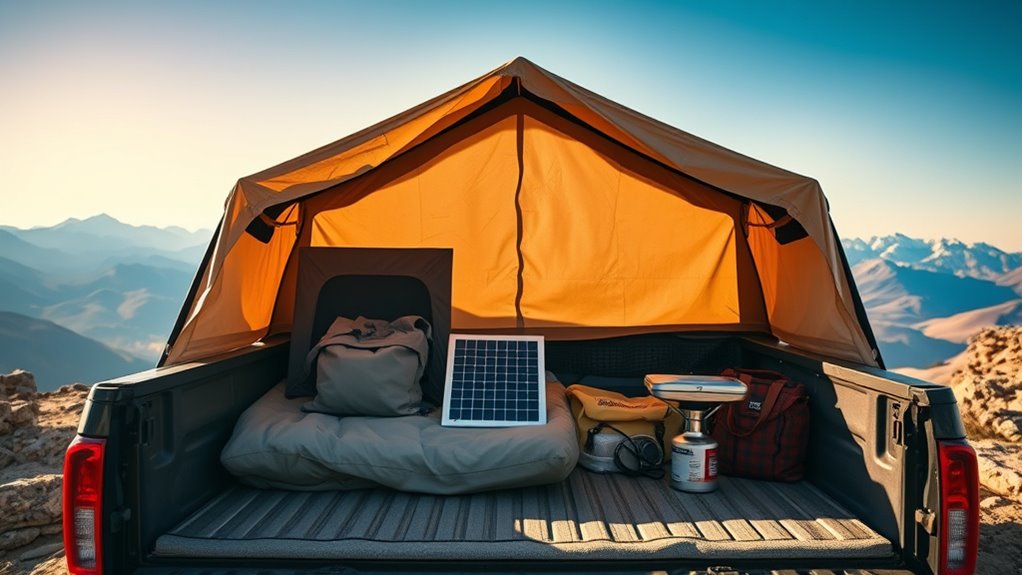
Going off-grid in a truck bed camper might seem like a cost-saving adventure, but the reality is that it can be far more expensive than expected. You’ll need to invest in both a reliable pickup truck and a well-equipped camper, often costing tens of thousands of dollars. Maintenance, repairs, and regular upkeep quickly add up each year, especially if you rely on the vehicle for full-time living. Fuel, campground fees, tolls, and storage costs for belongings outside the camper can drain your budget fast. Plus, unexpected repairs or parts replacement can hit hard, especially in remote areas. All these expenses make it clear that the hidden costs of going off-grid can outweigh initial savings, so plan accordingly before you hit the road. Considering energy-efficient cloud solutions might seem unrelated but can offer innovative ways to manage your digital needs sustainably while traveling.
Space Limitations and How to Maximize Comfort
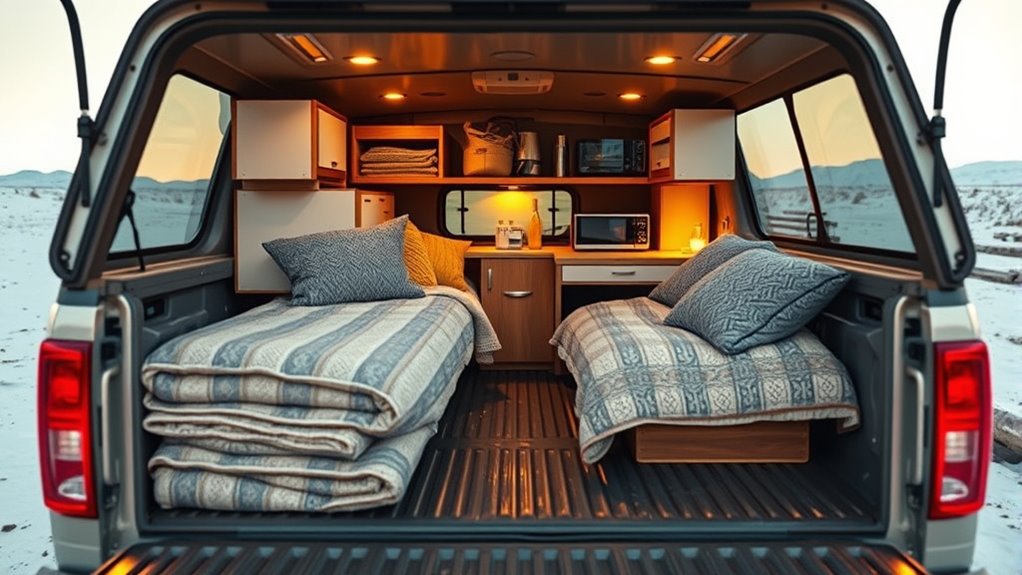
While the initial costs of a truck bed camper are significant, long-term comfort depends heavily on managing its limited space. You must optimize every inch to avoid feeling cramped. Use multi-functional furniture, like fold-out beds or convertible tables, to save space. Keep clutter minimized with smart storage solutions. Consider this layout:
| Sleeping Area | Kitchen Essentials | Storage Compartments |
|---|---|---|
| Foldable bed | Compact stove | Under-seat drawers |
| Murphy bed | Collapsible table | Overhead cabinets |
| Vertical bunk | Slim refrigerator | Hidden compartments |
This setup helps you stay organized, making your small space feel more open and livable. Prioritize mobility and efficiency to maximize comfort during your long-term adventures. Additionally, incorporating space-saving techniques can further enhance your overall experience.
Maintaining Your Camper and Truck Safely

Maintaining your camper and truck safely requires regular inspections and proactive care to guarantee your safety on the road. You should routinely check for leaks, rust, and structural damage, especially after long trips or harsh weather. Keep the electrical, plumbing, and propane systems in top condition by inspecting connections and testing functionality frequently. Tire pressure, brake systems, and suspension components also need regular attention to prevent breakdowns. Don’t forget to clean and lubricate moving parts like hinges and locks. Always carry essential repair tools and spare parts for minor fixes. Additionally, stay on top of registration, insurance, and safety inspections to comply with regulations. Proper maintenance not only ensures your safety but also prolongs your camper’s lifespan and keeps your adventures trouble-free. Regularly reviewing pool terminology and safety practices can help you better understand your vehicle’s needs and ensure comprehensive care.
Ensuring Compatibility Between Your Vehicle and Camper
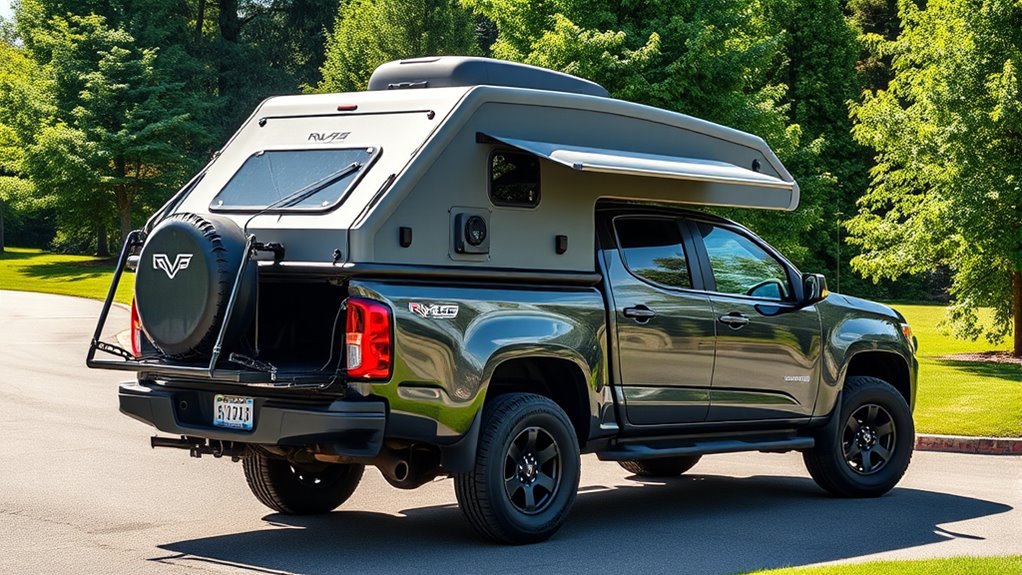
Ensuring compatibility between your vehicle and camper is essential for safe and efficient long-term use. You need to verify that your truck can handle the camper’s weight, including payload capacity and gross vehicle weight rating (GVWR). Measure bed length, width, and height to confirm the camper will fit properly without overloading or affecting handling. Check the truck’s suspension and braking system to ensure they can support extra weight. Consider the camper’s center of gravity to maintain stability and avoid drivability issues. Ensure the truck’s hitch and mounting points are compatible with the camper’s attachment system. Proper alignment and secure fastening prevent accidents and damage. Additionally, understanding the field-of-view and imaging-scale considerations can help you assess the overall compatibility and safety of your setup. Doing this upfront saves money, time, and potential safety hazards down the road.
Navigating Regulations and Finding Suitable Parking

Navigating regulations and finding suitable parking spots are vital steps for long-term truck bed campers, as legal and accessible overnight options vary widely across regions. You need to research local laws to avoid fines or towing. Urban areas often restrict overnight parking, so look for designated campgrounds, RV parks, or private land with permission. Apps and online resources can help locate legal spots, but rules differ by city and state. Always verify restrictions on parking duration, waste disposal, and vehicle modifications. Respect private property and community guidelines to avoid conflicts. Planning ahead ensures you find safe, legal places to rest without hassle. Staying informed minimizes risks, saves money, and keeps your travels smooth and enjoyable. Additionally, understanding local regulations can help you adapt quickly to different areas and avoid unintended violations.
Managing Storage and Personal Belongings

Managing storage and personal belongings becomes a key challenge once you’ve secured legal parking spots and settled into long-term truck bed camping. Since space is limited, you need to prioritize what’s essential and find smart ways to organize it. Use stackable bins, hanging organizers, and under-bed storage to maximize every inch. Keep frequently used items within easy reach, and store seasonal or rarely used gear elsewhere. Be selective about what you carry to avoid clutter and weight issues. Regularly declutter to prevent accumulation of unnecessary items. Remember, your truck bed isn’t just for sleeping — it’s also your storage unit. Efficient organization keeps your space livable, reduces stress, and lets you focus on enjoying your adventure rather than hunting for things. Incorporating simple organizational systems can significantly improve accessibility and reduce chaos in your confined space.
Preparing for Emergency Repairs and Troubleshooting
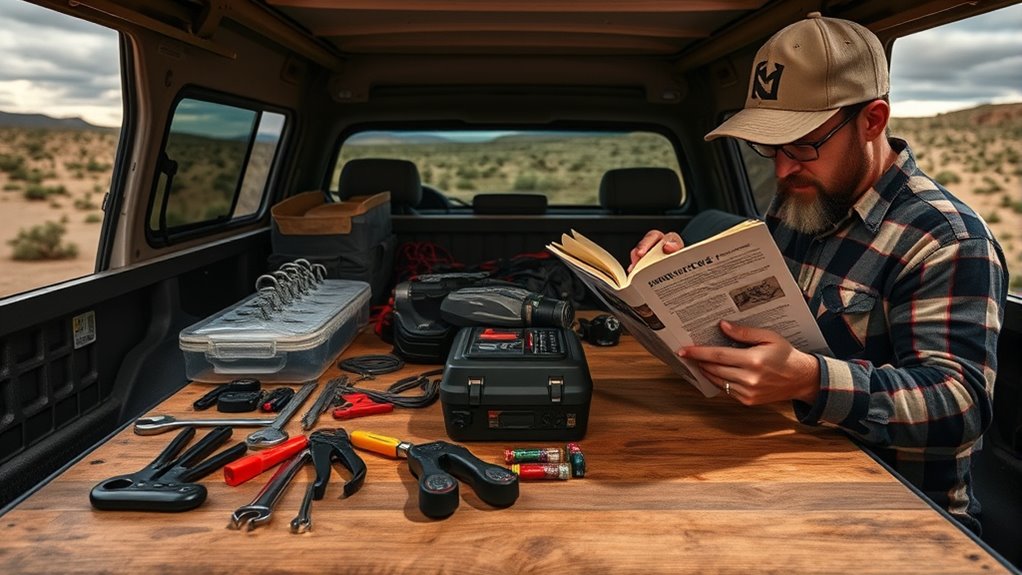
You need to be ready for unexpected repairs on the road, so having the right tools is vital. Troubleshooting common issues quickly can save you time and prevent bigger problems later. Being prepared guarantees you can handle minor emergencies without needing immediate professional help. Understanding the importance of long-term reliability in your setup can make all the difference during unforeseen circumstances.
Essential Repair Tools
Preparing for emergency repairs and troubleshooting on a truck bed camper requires assembling a reliable set of essential tools. You never know when a minor issue or breakdown might happen, especially in remote areas. Having the right tools on hand can save time and prevent small problems from escalating. Focus on versatile, portable items that cover common repairs. A multi-tool with pliers, screwdrivers, and knives; a portable cordless drill and drill bits; a set of wrenches and socket drivers; duct tape and zip ties for quick fixes; a basic flashlight or headlamp. These tools help you handle quick repairs, tighten loose parts, or address minor leaks, giving you peace of mind wherever your adventures take you. Additionally, understanding vehicle maintenance basics can help you diagnose issues more effectively before they become serious.
Troubleshooting Common Issues
When unexpected issues arise in your truck bed camper, quick and effective troubleshooting can prevent minor problems from turning into costly repairs. Start by evaluating the problem calmly—identify whether it’s electrical, plumbing, or structural. Check basic connections, fuses, and circuit breakers first. For plumbing issues, inspect for leaks or blockages. If appliances aren’t functioning, verify power supply and circuit integrity. Keep a troubleshooting checklist handy for common problems. Regularly familiarize yourself with your camper’s systems to spot early signs of trouble. When in doubt, consult manuals or online resources specific to your model. Having a basic set of repair tools and spare parts can save time on roadside fixes. Prompt action and knowing how to diagnose issues quickly keep your travels smooth and stress-free. Additionally, understanding system diagnostics can help you pinpoint issues more efficiently before seeking professional repair assistance.
Balancing Travel Freedom With Social Connections
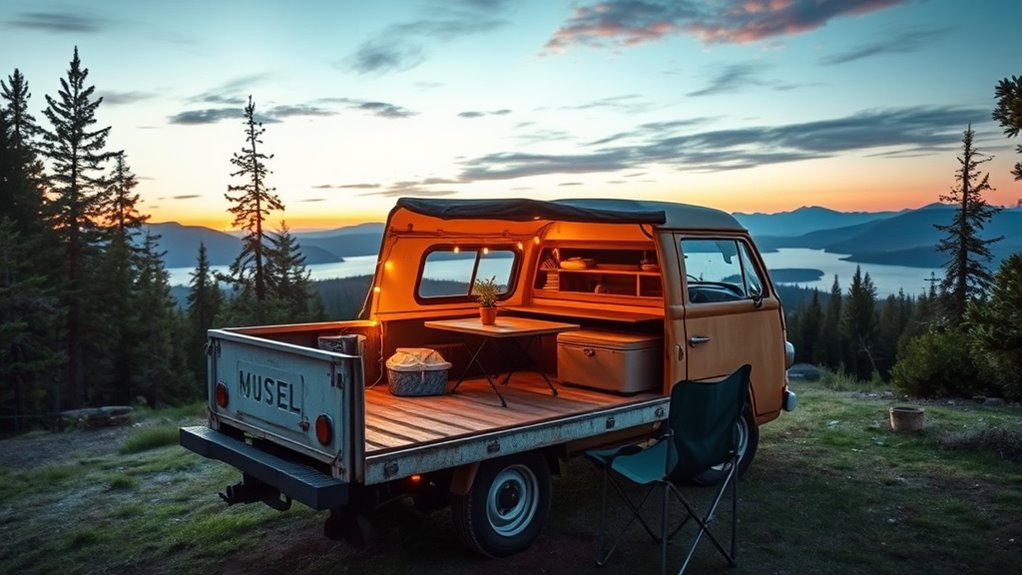
Balancing the freedom of travel with maintaining social connections can be challenging for long-term truck bed camper users. You may crave independence but also miss meaningful interactions. To stay connected without sacrificing your nomadic lifestyle, consider these tips:
Staying connected on the road balances independence with meaningful social interactions.
- Schedule regular calls or video chats with friends and family.
- Join local communities or meetup groups at your destinations.
- Use social media to share your adventures and stay in touch.
- Attend events or workshops in your area to meet like-minded travelers.
- Create routines that include social activities, like coffee mornings or park visits.
- Incorporate electric bikes into your travels to explore new areas and connect with local spots more easily.
Planning for Long-Term Living Expenses

Planning for long-term living expenses in a truck bed camper requires careful budgeting, as costs can add up quickly over time. You’ll need to account for the initial purchase of a truck and camper, which can total tens of thousands of dollars. Ongoing expenses include maintenance, repairs, campground fees, fuel, tolls, and storage for belongings you don’t carry. Don’t forget about insurance, registration, and possible modifications to meet legal requirements. Fuel costs can spike with frequent travel, and repairs—especially for older or custom models—may be costly and unpredictable. Budget for unexpected expenses like emergency repairs or replacement parts. Tracking your spending helps you stay within your limits, ensuring your lifestyle remains sustainable without financial stress. Proper planning is key to enjoying long-term freedom on the road.
Frequently Asked Questions
How Do I Choose the Right Truck and Camper Combination for Safety?
To select the right truck and camper combo for safety, start by matching the camper’s weight and size to your truck’s payload capacity and GVWR. Check the truck’s specifications and make sure it can handle the load comfortably. Prioritize stability by balancing weight properly, and avoid overloading. Also, verify compatibility with your truck’s bed length and height. Regularly inspect and maintain both truck and camper to keep safety your top priority.
What Are the Best Ways to Handle Long-Term Storage for Belongings?
To handle long-term storage effectively, you should prioritize securing weatherproof, lockable containers for your belongings. Use compact, stackable bins to maximize space and keep items organized. Look for off-site storage options like rented lockers or storage units for rarely used or bulk items. Regularly declutter to avoid overcrowding and ensure easy access. Additionally, consider installing built-in storage solutions in your camper to optimize limited space.
How Can I Reduce Ongoing Costs of Truck Camper Living?
You can cut costs by planning your route carefully, securing free or low-cost camping options, and minimizing fuel consumption through efficient driving. Maintain your camper regularly to avoid costly repairs, and choose a versatile, lightweight truck to reduce fuel and insurance expenses. Limit unnecessary upgrades and stay organized to prevent overpacking. By staying flexible, resourceful, and disciplined, you’ll keep your long-term living affordable and enjoyable.
What Legal Issues Should I Consider Before Full-Time Off-Grid Travel?
Before full-time off-grid travel, you should check local laws on vehicle modifications, parking, and camping regulations. Confirm your truck and camper meet registration, insurance, and emissions requirements in each area. Be aware of restrictions in urban zones and national parks. Research zoning laws and access to waste disposal, and understand legal limits on overnight parking. Staying compliant prevents fines, impounds, or legal issues that could disrupt your journey.
How Do I Maintain Mental Health While Living on the Road Long-Term?
Keep your head above water by staying connected and establishing routines. Make time for hobbies, exercise, and social interactions, even if it’s just a quick call or online chat. Embrace the adventure, but don’t forget to prioritize self-care. Find balance between exploration and downtime, and remember that taking care of your mental health is just as important as keeping your rig in top shape.
Conclusion
Starting on this journey is like steering a ship through uncharted waters—you learn to read the stars and adjust your sails. With each lesson, your voyage becomes smoother, transforming challenges into opportunities for growth. Remember, the horizon’s endless, and your resilience is your compass. Embrace the adventure ahead, knowing that the knowledge you’ve gained is the sturdy hull carrying you toward new horizons and unforgettable experiences.