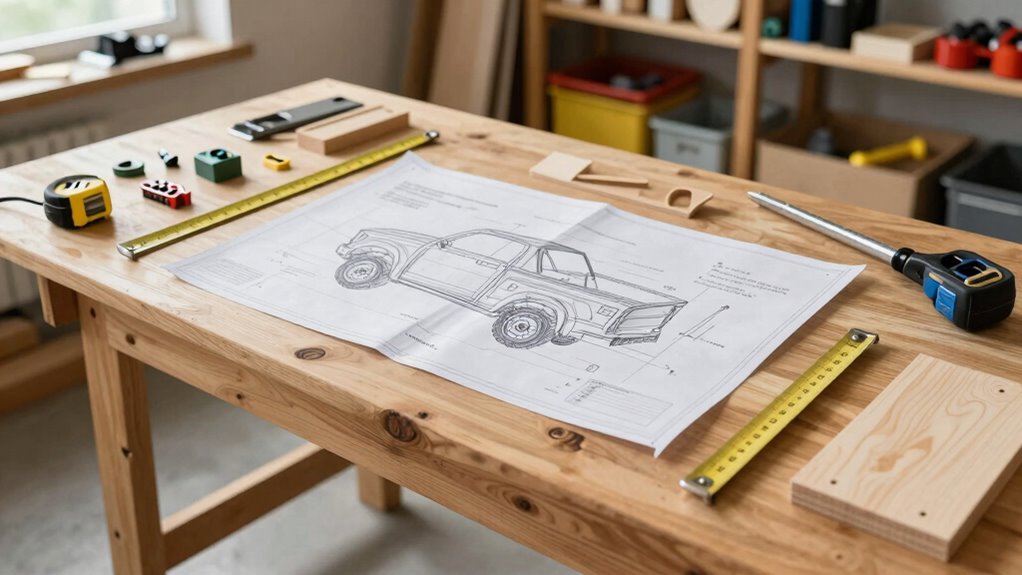

To plan a truck bed build before buying materials, start by identifying what gear you’ll carry and how you want it organized. Measure your truck bed accurately and check your vehicle’s weight limits. Consider materials that balance strength and weight, like aluminum or composites, to keep your load manageable. Focus on creating a design that fits well, allows future upgrades, and optimizes space. If you keep exploring, you’ll find practical tips to refine your plan even further.

Get business pricing on garage and car supplies
- Business-only prices and quantity discounts
- Tax-exempt purchasing
- Multiple users, one account, clear invoices
Key Takeaways
- Measure the truck bed dimensions accurately and consider space for future modifications.
- Assess your storage needs to determine required compartments and organization methods.
- Calculate weight limits and select lightweight, durable materials to avoid overloading.
- Plan the layout to optimize space, security, and accessibility for your gear.
- Incorporate vehicle specifications to ensure compatibility and structural integrity of the build.
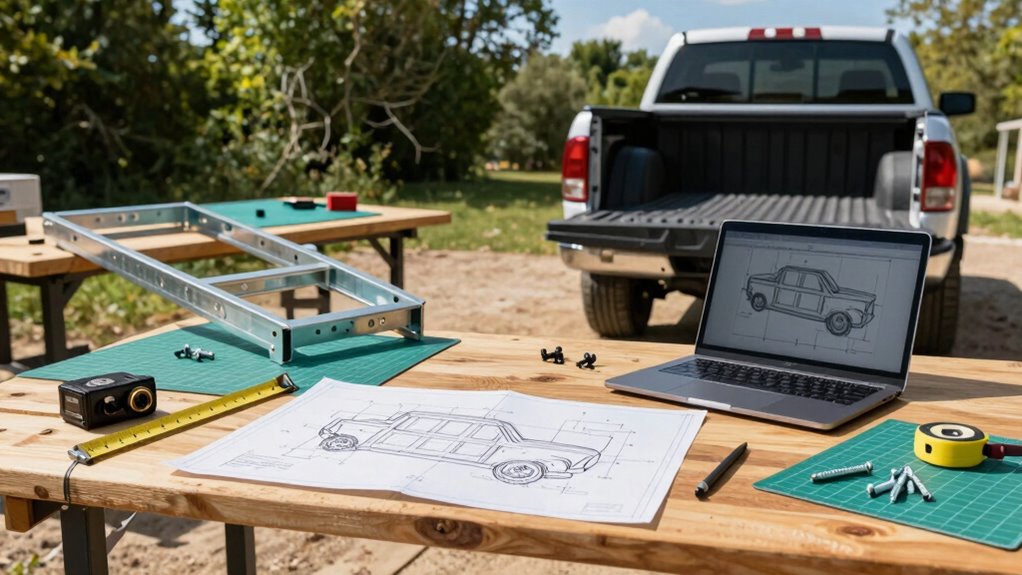
Are you ready to customize your truck and maximize its utility? Planning a truck bed build requires careful thought and preparation, especially when it comes to designing custom storage solutions. Before rushing to buy materials, take a moment to assess what you need your truck bed to do. Think about the types of gear you carry regularly—tools, camping gear, sports equipment—and how you want to organize them. Custom storage options allow you to optimize space, keep items secure, and make access easier. Consider whether you prefer open compartments, lockable boxes, or integrated shelving. Mapping out your storage needs helps you determine the right dimensions and features, preventing you from wasting money on unnecessary parts later.
Planning your truck bed build ensures custom storage meets your needs and avoids unnecessary costs.
Weight considerations are another critical factor in planning your build. Every addition you make to your truck bed adds weight, which can impact fuel efficiency, handling, and payload capacity. Keep a close eye on the weight of materials you intend to use, like plywood, metal, or composite panels. Lightweight options such as aluminum or composite materials can reduce overall weight without sacrificing strength. When designing custom storage, think about how much weight each component will add and how it will distribute across the bed. Reinforcing the floor or framing might be necessary if you plan to store heavy equipment regularly. Balancing durability with weight is key—overbuilding can lead to unnecessary weight, while underbuilding might compromise the structure. Considering material strength and weight is essential to ensure your build remains safe and effective. Additionally, understanding weight distribution can help prevent uneven loads that might strain your vehicle. Being mindful of weight capacity from your truck’s specifications also helps in designing a safe and sustainable build.
As you plan, also consider how your build aligns with your truck’s existing capabilities. Check your vehicle’s specifications for maximum payload and payload distribution. This ensures you don’t overload your truck, which can lead to safety issues or damage. When sketching out your design, be precise about dimensions and materials, and leave room for future modifications. Take measurements of your truck bed so you can create accurate models or sketches, making sure custom storage units will fit snugly without wasting space or adding excessive weight. Additionally, understanding projector technology can help if you want to incorporate multimedia features into your build, such as a mobile entertainment system. Remember that incorporating efficient design can also help reduce unnecessary weight and improve functionality. Planning with these factors in mind will make sure your build is both practical and durable.
As an affiliate, we earn on qualifying purchases.
Frequently Asked Questions
What Tools Are Essential for Building a Truck Bed?
You’ll need essential tools like a saw for cutting truck bed materials, a drill for assembly, and a measuring tape to guarantee precision. A level helps keep everything aligned, while clamps secure pieces during work. Don’t forget safety gear like goggles and gloves. These essential tools make building your truck bed smoother, helping you work efficiently and accurately with your chosen truck bed materials.
How Do I Estimate the Total Project Cost?
Think of estimating your project cost as steering a ship through uncharted waters; you need a clear map. Start with your budget planning, setting a maximum limit. Then, source materials meticulously, comparing prices and quality. Add in tool expenses, hardware, and any custom parts. Keep a detailed list, including taxes and shipping, to stay on course. This approach helps you avoid surprises and keeps your truck bed build financially grounded.
What Safety Precautions Should I Take During Construction?
You should wear safety gear like gloves, goggles, and ear protection to prevent injuries. Keep fire hazards in check by avoiding open flames near flammable materials and having a fire extinguisher nearby. Make sure your workspace is well-ventilated, and handle tools carefully to avoid accidents. Always follow manufacturer instructions for tools and materials, and stay alert to maintain a safe environment throughout your truck bed build.
How Long Does a Typical Truck Bed Build Take?
Building a truck bed is like painting a masterpiece—timing varies. Typically, it takes 1 to 3 days, depending on your experience and project complexity. You’ll need to measure your truck bed dimensions accurately and choose materials wisely to guarantee durability. Rushing can lead to mistakes, so allocate enough time for precise cuts, fittings, and finishing touches. Patience guarantees a sturdy, professional-looking result.
Can I Customize the Truck Bed Design Later?
Yes, you can customize your truck bed design later. Planning for truck bed modifications allows you to add future customization options, such as installing new storage compartments or upgrading the tailgate. When building your truck bed, consider leaving space or using modular components so you can easily adapt or improve it over time. This flexibility guarantees your truck bed stays functional and tailored to your evolving needs.
As an affiliate, we earn on qualifying purchases.
Conclusion
Now that you’ve mapped out your truck bed build, you’re ready to turn your vision into reality. Think of your plan as a sturdy foundation, holding everything together. With your materials chosen and measurements precise, you’ll be cruising down the road with a bed built to last. Remember, a well-planned project is like a smooth ride—easy, enjoyable, and worth every mile. So, grab your tools and get ready to build something truly your own!
As an affiliate, we earn on qualifying purchases.
truck bed weight distribution tools
As an affiliate, we earn on qualifying purchases.
As an affiliate, we earn on qualifying purchases.
Fall Picks
fall essentials
As an affiliate, we earn on qualifying purchases.