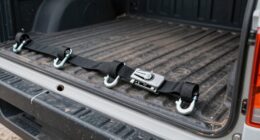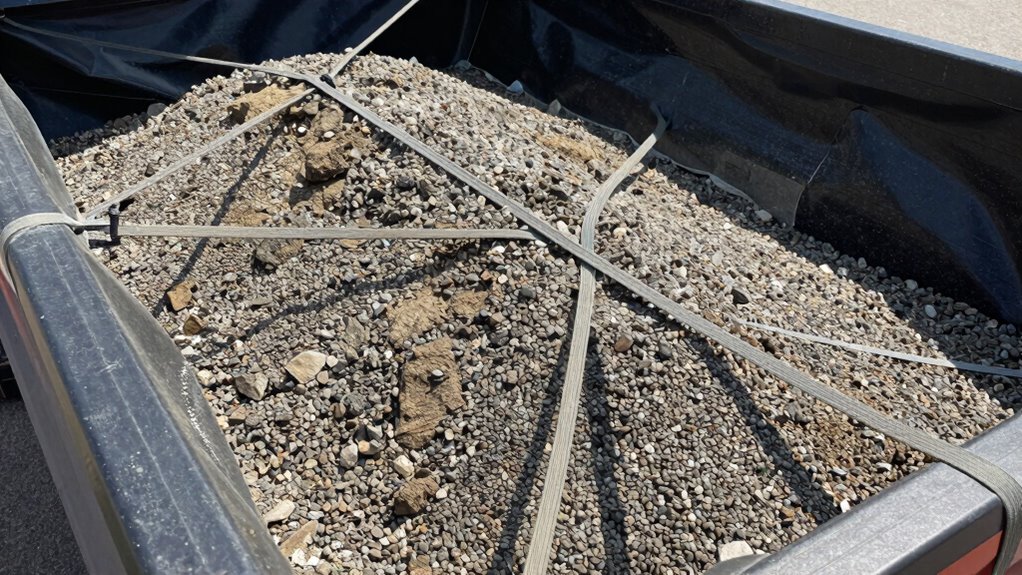
To avoid damage when hauling gravel or dirt, start by inspecting your vehicle’s tires, brakes, suspension, and fluids to guarantee they’re in top shape. Plan your route carefully, avoiding rough, unpaved, or soft ground that could cause sway or get you stuck. Secure your load with tarps and ties to prevent spills, and check load stability regularly. Proper maintenance and smart planning keep your vehicle safe and efficient — keep going for more tips on protecting your equipment.
Key Takeaways
- Secure loads thoroughly with tarps, ties, and barriers to prevent spillage and damage during transit.
- Use appropriate suspension and distribute weight evenly to minimize vehicle stress and prevent damage.
- Select routes avoiding rough, unpaved, or soft ground to reduce load shifting and vehicle wear.
- Drive at moderate speeds and avoid sudden maneuvers to prevent load displacement and component stress.
- Regularly inspect the vehicle and load during transit to identify and address potential damage early.
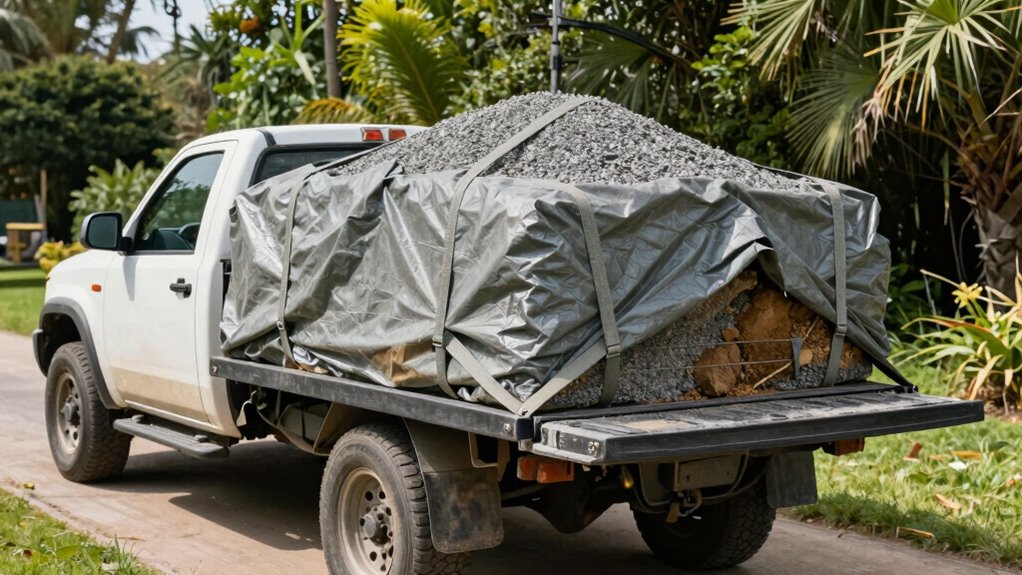
Hauling gravel or dirt can be tough on your vehicle and trailer if you’re not careful, leading to costly damage and delays. To prevent this, you need to pay close attention to truck maintenance. Regularly inspect your vehicle before each trip, focusing on tires, brakes, suspension, and fluid levels. Worn tires can blow out under the strain of hauling heavy loads, while neglected brakes might not stop effectively, risking accidents. Keep your suspension in good shape to handle uneven terrains and heavy cargo, and guarantee all fluids—oil, transmission, and coolant—are topped off and in good condition. Proper truck maintenance extends the life of your vehicle and reduces the chance of breakdowns mid-transport, saving you time and money.
Regular vehicle inspections and maintenance prevent damage and delays when hauling gravel or dirt.
Route planning is equally critical when hauling gravel or dirt. Before hitting the road, map out your route carefully, choosing paths that are suitable for heavy loads and avoid rough, unpaved, or unstable surfaces. Well-planned routes help you steer clear of potholes, loose gravel, and soft ground that can cause your trailer to sway or become stuck. If possible, select routes with smoother roads and minimal sharp turns, which can strain your vehicle and trailer. Also, consider the weight distribution of your load; evenly spread gravel or dirt helps maintain stability and prevents undue stress on certain parts of your truck and trailer. Additionally, understanding the importance of vehicle maintenance can help you avoid costly repairs and ensure your equipment remains in optimal condition during heavy hauling. Incorporating proper planning can further streamline your operation and reduce unexpected surprises on the road.
Adjust your driving style to match the conditions. Drive at moderate speeds—aggressive acceleration or sudden braking can cause your load to shift, risking damage to your trailer and vehicle components. Maintain a safe following distance to give yourself more time to react, especially on uneven or loose surfaces. Always keep an eye on your gauges and indicators during transit—overheating brakes or low tire pressure can lead to dangerous situations. Incorporating appliance testing practices for your vehicle’s electrical systems can prevent electrical failures that might occur during operation, especially in cold or humid conditions. Furthermore, being aware of load securing techniques and equipment ensures your materials stay in place and reduce the risk of accidents or damage during transport. Regularly inspecting your trailer, including the condition of the hitch and ties, can further prevent unexpected issues during heavy hauling. Combining good truck maintenance with strategic route planning minimizes the risks associated with hauling heavy, loose materials.
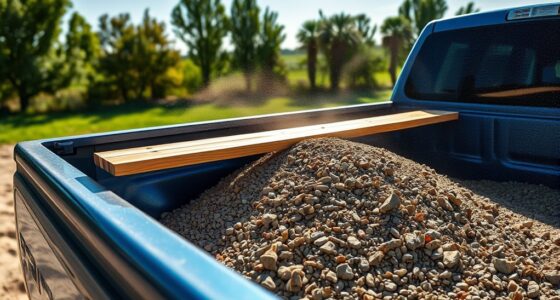
Finally, secure your load properly using the right tarps, ties, and barriers. This prevents gravel or dirt from spilling onto the road or damaging your vehicle. Regularly check the load during transit to ensure it remains stable. When you arrive at your destination, inspect your vehicle thoroughly for any signs of wear or damage that might have occurred during the trip. Prioritizing maintenance and planning guarantees that hauling gravel or dirt stays efficient, safe, and cost-effective, helping you avoid unnecessary repairs and delays.

Carolina Tarps 7’ x 22’ Waterproof 18oz Vinyl Dump Truck Tarp – Heavy Duty PVC, Universal Fit
Heavy Duty 18oz Vinyl Dump Truck Tarp – Industrial grade 18oz PVC vinyl tarp designed for dump trucks…
As an affiliate, we earn on qualifying purchases.
As an affiliate, we earn on qualifying purchases.
Frequently Asked Questions
What Types of Vehicles Are Best for Hauling Gravel or Dirt?
You should choose a pickup truck or a dump trailer for hauling gravel or dirt. These vehicles offer the necessary vehicle capacity and are designed to handle heavy loads. Make certain it meets your towing requirements, including proper hitch and weight limits. Using a vehicle suited for the task minimizes damage and ensures safety. Always check your vehicle’s specifications and load capacity before hauling to avoid overloading.
How Can I Prevent Spillage During Transportation?
Imagine you’re a modern-day miner, safeguarding your precious cargo. To prevent spillage during transportation, focus on spillage prevention by ensuring your container is sealed tightly. Use secure tarps or covers and double-check fastenings before departure. Properly distributing weight also helps avoid shifting. Consistent inspection during transit keeps everything in place, reducing the risk of messes and damage, so your gravel or dirt arrives intact and ready for use.
What Safety Precautions Should I Take While Hauling?
When hauling, you should always prioritize safety by wearing proper personal protective equipment like gloves, safety glasses, and sturdy boots. Guarantee proper load securing by tightly fastening your tarp or cover to prevent spillage and shifting during transit. Regularly check your vehicle’s brakes, lights, and tires, and drive at safe speeds, especially on rough or uneven roads. These precautions help protect you and others on the road.
How Do Weather Conditions Affect Hauling Safety?
Weather conditions considerably impact hauling safety. Weather hazards like rain, snow, or fog make road conditions slippery and reduce visibility, increasing your risk of accidents. Always check the forecast before hauling, and be prepared to delay or adjust your trip if conditions worsen. Drive slowly, maintain a safe distance, and use headlights in poor visibility. Staying alert and cautious helps you navigate challenging weather hazards safely.
What Maintenance Checks Are Essential Before Hauling?
Think of your vehicle as a well-oiled machine ready to take on a journey. You need to perform essential maintenance checks before hauling, including thorough vehicle inspections to spot any issues. Guarantee load securement is tight and reliable to prevent shifting. Check tire pressures, fluid levels, brakes, and lights. These steps keep your vehicle in top shape and ensure your load stays secure, preventing damage and ensuring safety on the road.
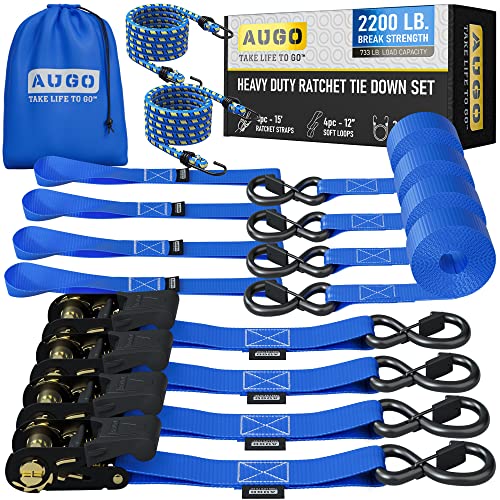
AUGO Ratchet Straps Heavy Duty 4 Pack -15 FT – 2200 LB Break Strength – with Safety Lock S Hooks – Cargo Straps for Moving, Appliances, Motorcycle – Soft Loop Tie Down Straps
TIE DOWN ANYTHING WITH CONFIDENCE | Pack of [4] 15 Ft Ratchet Strap Tie Downs Provides Durable, Dependable…
As an affiliate, we earn on qualifying purchases.
As an affiliate, we earn on qualifying purchases.
Conclusion
By following these simple tips, you can protect your vehicle and guarantee a smooth hauling experience. Regularly check your load, distribute weight evenly, and avoid overloading. Remember, taking care of your truck isn’t just about avoiding repairs—it’s about making every trip safer and more efficient. So, next time you’re hauling gravel or dirt, ask yourself: isn’t it worth the extra effort to prevent costly damage and keep your vehicle in top shape?

Powerbuilt Front End Vehicle Service Kit, Tie Rod End Puller, Car and Truck Ball Joint Remover, Pitman Arm puller 6 Piece 648626, Black
Versatile Suspension Tool Set – Includes pitman arm puller, ball joint separator, and tie rod removal tools to…
As an affiliate, we earn on qualifying purchases.
As an affiliate, we earn on qualifying purchases.

GPS Navigator for Car Truck RV, Latest 2026 Map(Free Lifetime Updates) 9 inch Touch Screen Car GPS, Support Voice Turn Direction Guidance/Speed and Red Light Warning/Custom Truck Routing
【Free Lifetime Map Updates】: Plug and Play! The GPS navigator for car is preloaded with the 2026 latest…
As an affiliate, we earn on qualifying purchases.
As an affiliate, we earn on qualifying purchases.