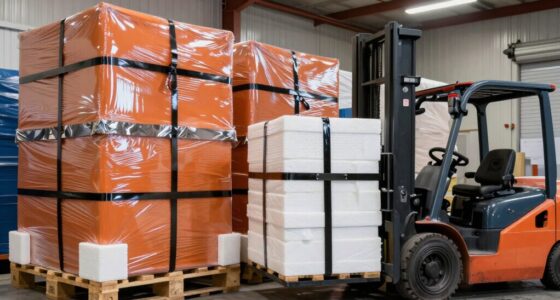

Even if you’ve secured your load with straps and proper methods, it can still shift due to external factors like road conditions, sharp turns, or sudden braking. Uneven load distribution and ineffective securing can create weak points, causing movement. Regular inspections and adjustments throughout transit are vital to maintain stability. If you want to understand how to better prevent this and guarantee safety, there’s more you should know about load securing principles and techniques.
Key Takeaways
- Loads can shift due to external factors like road conditions, sudden braking, or sharp turns despite proper securing.
- Insufficient or improper cargo stabilization methods may fail to prevent movement during transit.
- Faulty or worn-out securing equipment can lose tension, allowing cargo to shift unexpectedly.
- Uneven load distribution creates weak points, increasing the risk of load movement.
- Regular inspections and ongoing adjustments are essential to maintain load security throughout transit.
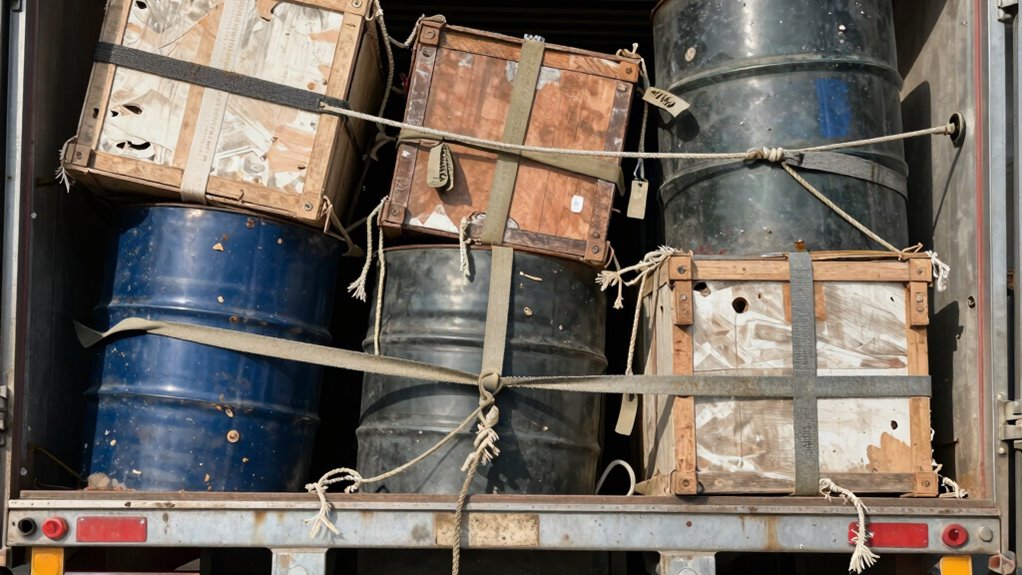
Unexpected loads shifting can disrupt your operations and compromise safety, catching you off guard when you least expect it. You might have taken every precaution, but even then, loads can move unexpectedly. One key reason is insufficient cargo stabilization. No matter how tight you think your straps are, if the cargo isn’t properly secured, it can shift during transit. This often happens when the load isn’t evenly distributed or when the securing methods don’t match the weight and shape of the cargo. Overloading or poorly balanced loads create weak points that allow movement. To prevent this, you need to pay close attention to cargo stabilization techniques, ensuring that every load is evenly distributed and properly secured with the right restraints. Using quality tie-downs and load bars isn’t enough; you must verify that they’re installed correctly and hold firm under stress.
Proper cargo stabilization and even load distribution are essential to prevent unexpected shifts during transit.
Another essential aspect that plays a role in preventing load shifts is regular equipment inspection. Faulty or worn-out straps, anchors, and other securing devices lose their tension and strength over time. If you don’t routinely inspect your equipment before each trip, you risk using compromised gear that can fail mid-journey. Equipment inspection helps identify any wear, tear, or damage that could jeopardize load security. It’s not just about spotting obvious issues but also about ensuring that all securing components are functioning at their best. When you routinely check your equipment, you minimize the chances of load movement caused by equipment failure. Incorporating preventative maintenance into your safety protocols can further enhance load stability. Additionally, understanding load distribution principles can significantly improve securing effectiveness. Properly maintaining your securing devices is a crucial part of maintaining overall load security.
It’s also important to recognize that loads shift due to external factors like road conditions, sudden braking, or sharp turns. Even a thoroughly secured load can become unstable if your vehicle encounters rough terrain or abrupt maneuvers. That’s why continuous awareness and proper securing are essential. Don’t assume that a load remains stable just because it was secure at the start of your trip. Regularly re-evaluate the load’s stability during transit, especially after hitting rough patches or making sharp turns. This ongoing vigilance helps catch potential shifts early, allowing you to adjust or reinforce securing methods as needed. Monitoring load stability is a critical practice to ensure safety. Being mindful of external influences helps you anticipate and mitigate potential risks to load security.
Ultimately, understanding why loads shift—even when they seem secure—comes down to diligent cargo stabilization and consistent equipment inspection. You need to treat securing your cargo as an ongoing process, not a one-time task. When you combine careful planning, proper securing techniques, and routine checks, you greatly reduce the risk of unexpected shifts. This proactive approach safeguards your cargo, your vehicle, and everyone’s safety, ensuring your operations run smoothly and efficiently. Proper cargo stabilization techniques are essential for maintaining load security throughout transit.
cargo tie-down straps heavy duty
As an affiliate, we earn on qualifying purchases.
As an affiliate, we earn on qualifying purchases.
Frequently Asked Questions
How Can I Prevent Loads From Shifting During Transport?
To prevent loads from shifting during transport, focus on proper load distribution and effective securing techniques. Distribute weight evenly across the vehicle to maintain balance, avoiding concentrated pressure on one side. Use high-quality straps, chains, and binders to tightly secure the load, checking regularly during transit. Remember, proper load distribution and securing techniques are key to ensuring your cargo stays in place and arrives safely.
What Are the Signs of an Unstable Load?
You’ll notice signs of an unstable load if it shifts, tilts, or looks uneven during transport. Pay attention to any movement or unusual sounds, which indicate poor load distribution or insufficient cargo securing. If straps loosen or cargo appears to be slipping, it’s a clear sign. Regularly check your load, ensuring everything is tightly secured and evenly distributed, to prevent shifting and maintain safe transport conditions.
Does Load Shifting Vary With Different Vehicle Types?
You notice how a boat sways even on calm waters—that’s vehicle dynamics at play, and the same principle affects load shifting across different vehicle types. Heavier vehicles like trucks handle load distribution better, reducing shift risks, while lighter vehicles are more prone to instability. The way loads shift varies because each vehicle’s design influences how weight is distributed and how it responds to turns or sudden stops.
Are There Specific Materials That Reduce Load Movement?
Choosing materials that enhance load stability is key to preventing movement during transport. Opt for high-friction materials like rubber mats or textured surfaces, which grip cargo better. Using appropriate restraint systems combined with proper material selection reduces load shift risks. Consider load-specific factors and select materials designed for stability. These choices help keep your cargo secure, minimizing accidents and damage while ensuring safer transportation overall.
How Often Should I Check My Load During Transit?
You should check your load at least every two hours during transit to maintain cargo integrity. Regular inspections help you spot any shifting or loosening, especially if road conditions change. Follow safety protocols by ensuring straps and securing devices are tight and intact. Frequent checks prevent accidents, protect your cargo, and keep everyone safe on the road. Staying vigilant is key to avoiding load shifts and ensuring a smooth, secure journey.

VEVOR Cargo Bar, Cargo Bar Adjustable from 89" to 104", Heavy-Duty Steel Cargo Stabilizer Bar with 309 lbs Capacity, Truck Bed Load Bar for Truck Bed, Trailer, Semi Trailer (4 pcs)
- Wide Adjustable Range: Our ratchet cargo bar provides…
- Quick Ratchet Adjustment: Adjusting the length of the…
- Strong Non-skid Design: Equipped with 4×2.4-inch rubber pads…
As an affiliate, we earn on qualifying purchases.
As an affiliate, we earn on qualifying purchases.
Conclusion
Just like Icarus flying too close to the sun, overconfidence in securing loads can lead to unexpected shifts and setbacks. No matter how tight you think your straps are, nature’s unseen forces remind us that stability is fragile. Stay vigilant and double-check your restraints, knowing that even the strongest plans can falter without proper care. In the end, humility and attention to detail keep your cargo grounded, avoiding a fall from grace.

labwork 4 PCS Powder Coated Black E Track Tie Down Rail Kit 5 Foot for Garages Van Trailers Motorcycle Tie Downs Heavy Loads Up to 2000 lbs
- Versatile Use: Secures ATVs, UTVs, tractors, and more
- Durable Material: Made of high-quality, sturdy material
- High Load Capacity: Each rail supports up to 2000 lbs
As an affiliate, we earn on qualifying purchases.
As an affiliate, we earn on qualifying purchases.

Weight Watchers Beyond the Scale 2016 Smart Points Calculator
- Sold in Weight Watchers Stores (2016-2017): Available during 2016-2017
- White and Blue Smart Points Box: Colorful Smart Points packaging
- Flip Style Calculator with Lid: Compact flip design with cover
As an affiliate, we earn on qualifying purchases.
As an affiliate, we earn on qualifying purchases.