
To set up your Toyota Tundra bed for towing and heavy hauling, start by choosing the right bed size and configuration that matches your load requirements. Install a heavy-duty hitch rated for at least 12,000 lbs, and upgrade your suspension with reinforced springs and load-leveling devices to handle extra weight. Use proper load distribution techniques, secure cargo tightly, and utilize trailer safety features like brake controllers. For more tips, explore how to optimize your setup for maximum safety and performance.
Key Takeaways
- Select the appropriate bed size and configuration to match your towing capacity and hauling needs.
- Upgrade suspension components like reinforced springs and heavy-duty shocks to handle increased loads safely.
- Install a high-capacity, heavy-duty hitch receiver rated for at least 12,000 lbs for secure towing.
- Properly distribute and secure loads in the bed to prevent shifting, sagging, and damage during transport.
- Incorporate bed accessories such as liners, tie-downs, and load protectors to safeguard the truck bed and ensure load stability.
Choosing the Right Bed Size and Configuration for Heavy Loads

Selecting the right bed size and configuration is crucial when hauling heavy loads with your Toyota Tundra. You need to take into account your towing capacity and the type of cargo you’ll carry. A 6.5-foot bed paired with a Double Cab and RWD offers the highest towing capacity, reaching up to 12,000 pounds. This setup is ideal if you’re frequently hauling large trailers, campers, or boats. If you prefer a crew cab for extra passenger space, a shorter 5.5-foot bed may limit your towing but still provides substantial payload capacity. Your choice between bed size and configuration impacts payload limits, weight distribution, and overall truck performance. Always match your truck’s specs with your hauling needs to ensure safe, efficient, and effective heavy load handling. Understanding the truck’s specifications and how they relate to your towing requirements is essential for safe operation.
Installing a Heavy-Duty Hitch Receiver for Maximum Towing Capacity
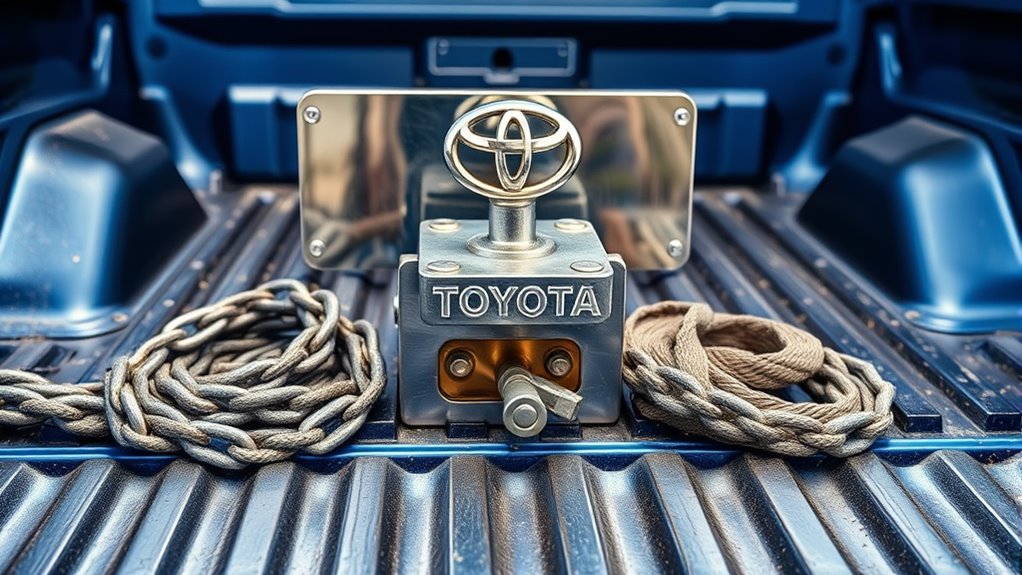
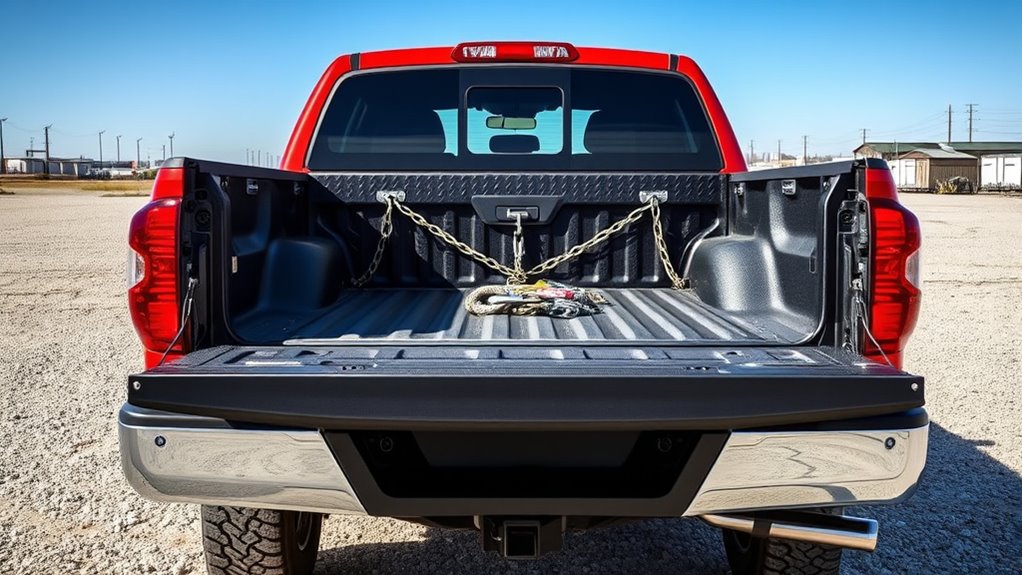
To maximize your Toyota Tundra’s towing capacity, installing a heavy-duty hitch receiver is a must. It guarantees your truck can handle the highest weight loads safely and securely. Choose a hitch rated for at least 12,000 pounds to match your Tundra’s maximum towing specs. Proper installation involves verifying compatibility with your truck’s bed and frame, then securing it with high-grade bolts. Use a professional if you’re unsure. The right hitch not only boosts towing capacity but also improves trailer stability and safety. Here’s a quick guide:
| Hitch Type | Max Towing Capacity |
|---|---|
| Class IV (2-inch) | Up to 12,000 lbs |
| Class V (2.5-inch) | Up to 14,000 lbs |
| Adjustable/Heavy-duty | Varies |
Investing in quality hardware guarantees safe, reliable towing. Understanding towing capacity is essential for selecting the appropriate hitch and ensuring safe hauling.
Selecting Appropriate Trailer and Load Balancing Techniques
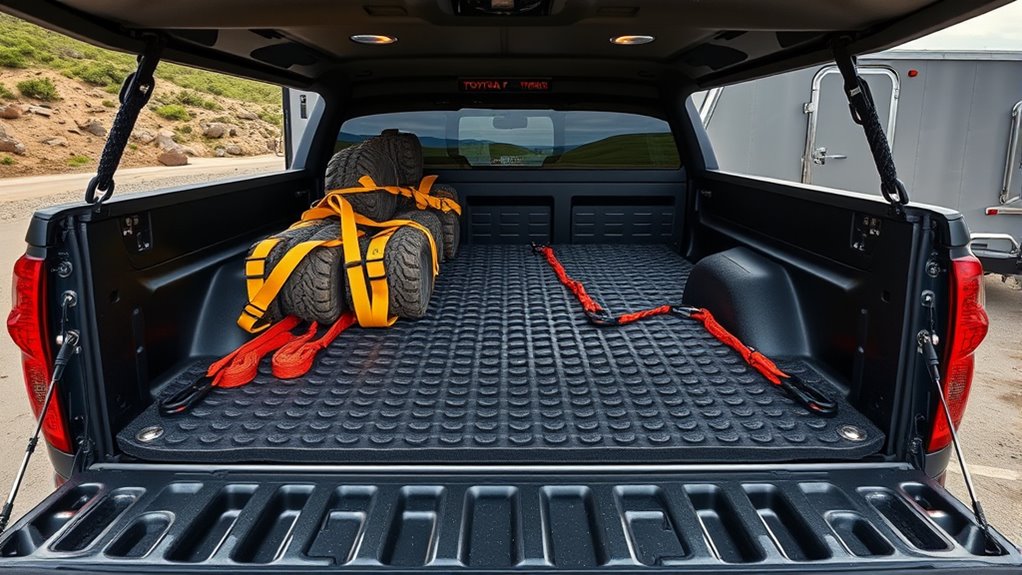
Choosing the right trailer and balancing your load properly are vital for safe towing. You need to take into account how weight is distributed and where you place your cargo to prevent sway or imbalance. Proper load management guarantees your Tundra performs efficiently and safely on the road. Additionally, utilizing modern smart technology can assist in monitoring and adjusting your load for optimal safety.
Choosing the Right Trailer
When you’re preparing to tow with your Toyota Tundra, picking the right trailer is essential for safety and efficiency. You need a trailer that matches your truck’s towing capacity and suits your load. Consider these factors:
- Trailer weight rating that aligns with your Tundra’s maximum towing capacity
- Trailer type, such as enclosed, flatbed, or utility, based on your cargo
- Proper trailer length and width to match your load size
- Compatibility with trailer hitch and braking systems
- Load distribution features to ensure balanced weight across the trailer
Choosing the appropriate trailer minimizes sway, reduces strain on your vehicle, and improves handling. Always verify the trailer’s specifications against your Tundra’s capabilities. Proper selection helps you tow safely and efficiently, avoiding damage or accidents. Additionally, understanding your trailer’s weight distribution can significantly enhance stability during towing.
Proper Load Distribution
Proper load distribution is crucial for safe and efficient towing, as it guarantees that your trailer’s weight is balanced correctly across the axles and your Tundra. To achieve this, verify the load is evenly spread from side to side, avoiding side-to-side imbalance. Place heavier items toward the front of the trailer, just behind the hitch, to prevent sway and improve stability. Distribute the weight so that about 10-15% of the total trailer weight rests on the hitch ball, enhancing control and reducing strain on your truck. Use load bars or distribution hitches if necessary to help balance the load further. Proper load distribution minimizes trailer sway, improves braking, and maintains better steering, making your towing experience safer and more efficient. Additionally, understanding the importance of load balancing techniques can help ensure optimal weight distribution for safer towing.
Weight Placement Strategies
Are you ensuring your trailer’s load is balanced correctly? Proper weight placement is key to safe towing and optimal truck performance. First, keep the heaviest items over the trailer axles to prevent sway and maintain stability. Distribute lighter gear towards the front and rear to avoid uneven weight shifts. Center the load side-to-side to prevent steering issues. Use the following strategies:
- Place 60% of the load in the front half of the trailer
- Keep heavy items low to lower the center of gravity
- Secure all cargo tightly to prevent shifting during transit
- Balance weight evenly across the trailer bed
- Avoid overloading one side or corner
Following these guidelines helps prevent trailer sway, improves handling, and ensures your Tundra handles heavy loads safely and efficiently.
Enhancing Payload Capacity With Proper Weight Distribution
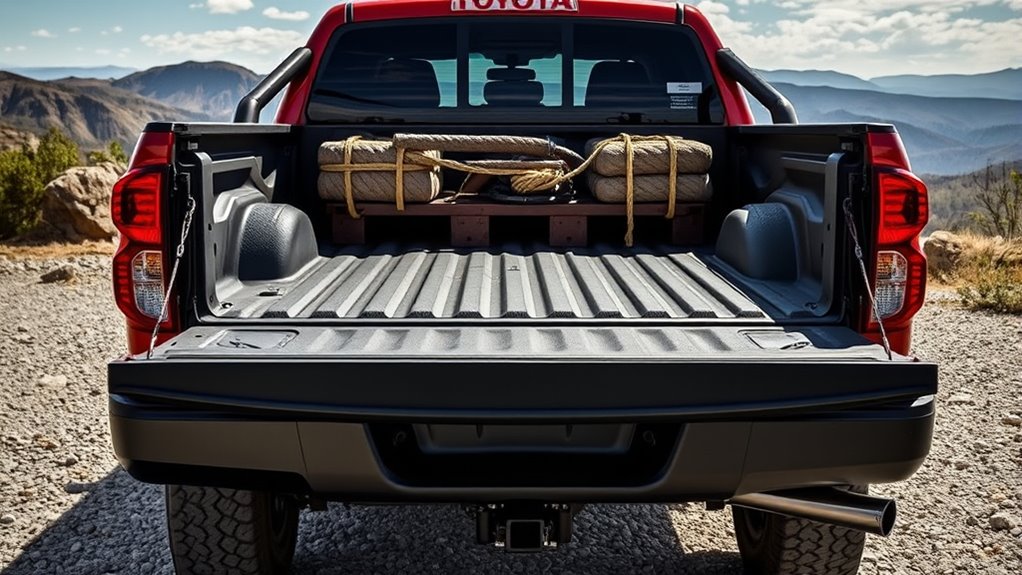
Ensuring your payload is properly distributed is essential for maximizing your Tundra’s towing and hauling performance. When you load your bed, place heavier items toward the front, near the cab, to maintain balance and prevent excessive rear sag. Distribute weight evenly across the bed to avoid uneven stress on the suspension and axles. Secure cargo tightly to prevent shifting during transit, which can impact stability. Keep in mind that overloading one side can cause handling issues and reduce safety. Use load-leveling devices if necessary to maintain a level stance. Proper weight distribution improves traction, braking, and overall control, ensuring safe and efficient hauling. Taking these steps helps you fully utilize your Tundra’s impressive payload capacity without compromising safety or performance. Safe weight distribution is crucial for preventing damage and ensuring long-term reliability of your vehicle.
Upgrading Suspension Components for Heavy Hauling Demands
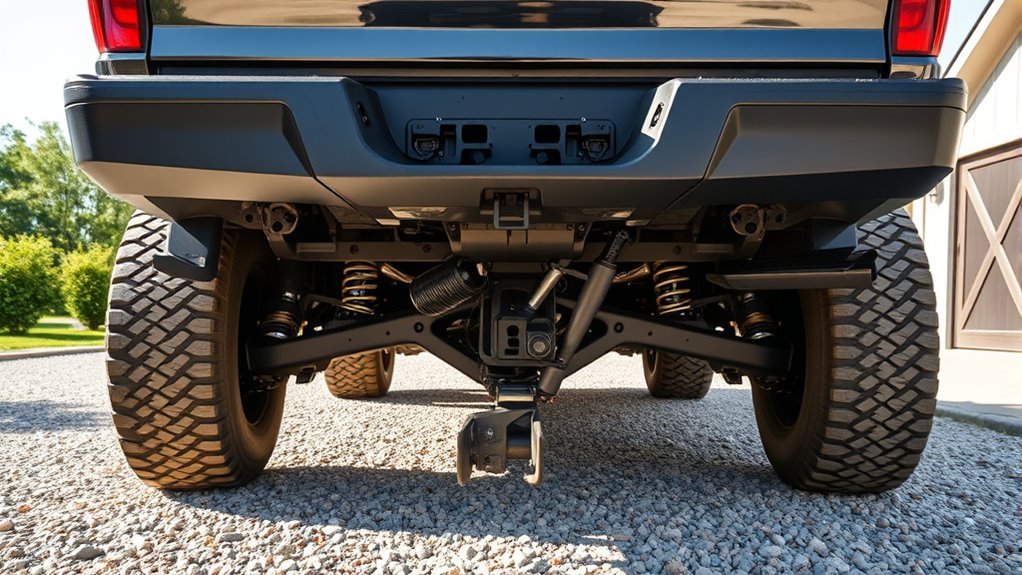
To handle heavy loads safely, you need to upgrade your suspension components. Reinforcing the springs and installing stronger shocks and struts can markedly improve your truck’s stability and performance. These upgrades guarantee your Tundra can manage demanding hauling tasks without sacrificing comfort or control. Additionally, incorporating sustainability practices into your modifications can help reduce environmental impact during heavy-duty use.
Reinforcing Suspension Springs
When tackling heavy hauling demands with your Toyota Tundra, upgrading the suspension springs is essential for maintaining stability and ride quality. Reinforcing your springs helps support heavier loads and reduces sagging, ensuring safer towing. You can choose from heavy-duty coil springs or leaf springs designed specifically for increased load capacity. These upgrades improve handling, prevent bottoming out, and preserve ride comfort. Consider these options to reinforce your suspension:
- Heavy-duty coil springs for front and rear
- Add-on leaf spring packs
- Progressive-rate springs for better support
- Heavy-duty shackles or hangers
- Load-rated suspension components for increased capacity
Additionally, selecting appropriate suspension components is crucial for ensuring your vehicle can handle the increased load safely and efficiently.
Upgrading Shocks and Struts
Upgrading your shocks and struts is a crucial step for handling heavy loads more effectively on your Toyota Tundra. These components absorb impact, maintain stability, and improve ride quality under stress. Heavy hauling puts extra strain on stock suspension, so upgrading ensures your truck stays controlled and safe. Choose shocks and struts designed for towing, with increased damping capacity and durability. Consider models with adjustable features for varying loads. Properly upgraded suspension components help prevent sagging, reduce body roll, and improve steering response during heavy loads. Here’s a quick comparison:
| Shock Type | Benefits | Compatibility |
|---|---|---|
| Heavy-duty shocks | Greater load capacity, durability | Tundra with towing needs |
| Adjustable shocks | Customizable ride for loads | Versatile applications |
| Gas-pressurized shocks | Smoother ride, better control | Heavy payloads |
| Twin-tube shocks | Cost-effective, reliable | General towing use |
Integrating Trailer Backup and Visibility Assistance Systems
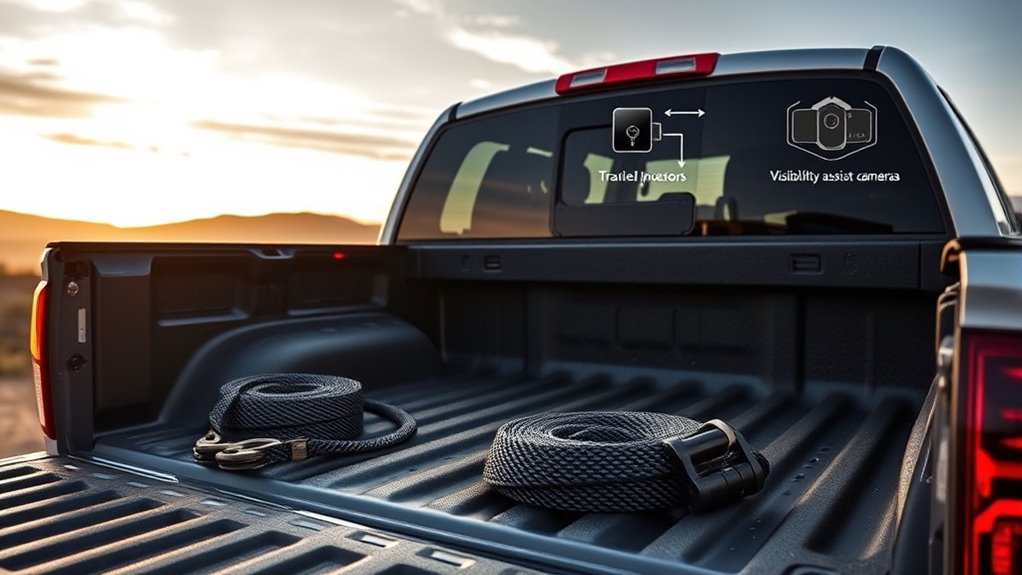
Integrating trailer backup and visibility assistance systems into your Toyota Tundra enhances safety and simplifies maneuvering when towing. These features help you control your trailer more precisely and reduce blind spots. With systems like the Trailer Backup Guide with Straight Path Assist, you’ll get audio and visual signals to keep your trailer aligned. The Panoramic View Monitor offers a 360-degree view around your truck, making reversing easier. Trailer Blind Spot Monitors alert you to unseen vehicles, while Trailer-Sway Control maintains stability during towing. The 14-inch multimedia touchscreen and 12.3-inch digital gauge cluster display dedicated towing functions. These technologies work together, providing clearer visibility, better control, and increased safety, especially in tight spots or complex maneuvers. Understanding vehicle safety features can help you optimize your towing setup for peace of mind on the road.
Utilizing the Trailer Brake Controller and Safety Features
The trailer brake controller is a vital safety feature that helps you manage trailer stopping power effectively. By adjusting the brake intensity, you guarantee smooth, controlled stops, reducing wear on your truck and trailer. To use it properly, activate the controller before starting your trip, and test it at low speeds to find the right balance. When towing heavy loads, always monitor the brake gauge, if available, to avoid over- or under-braking. Safety features like trailer sway control and blind spot monitors work in tandem with the brake controller, enhancing stability and awareness. Use the system diligently, especially in hilly or windy conditions, to prevent trailer sway or jackknifing. Proper utilization of these features keeps your towing safe and under control. Advanced safety systems are continually evolving, incorporating nanotechnology innovations to improve vehicle stability and crash prevention.
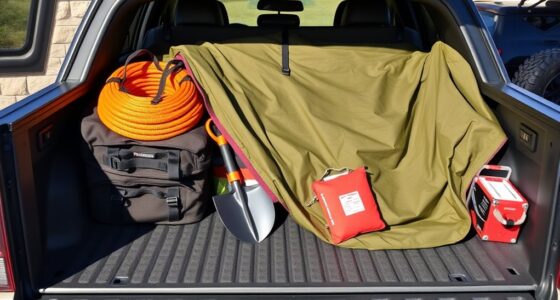
Securing Heavy Items in the Bed for Safe Transportation
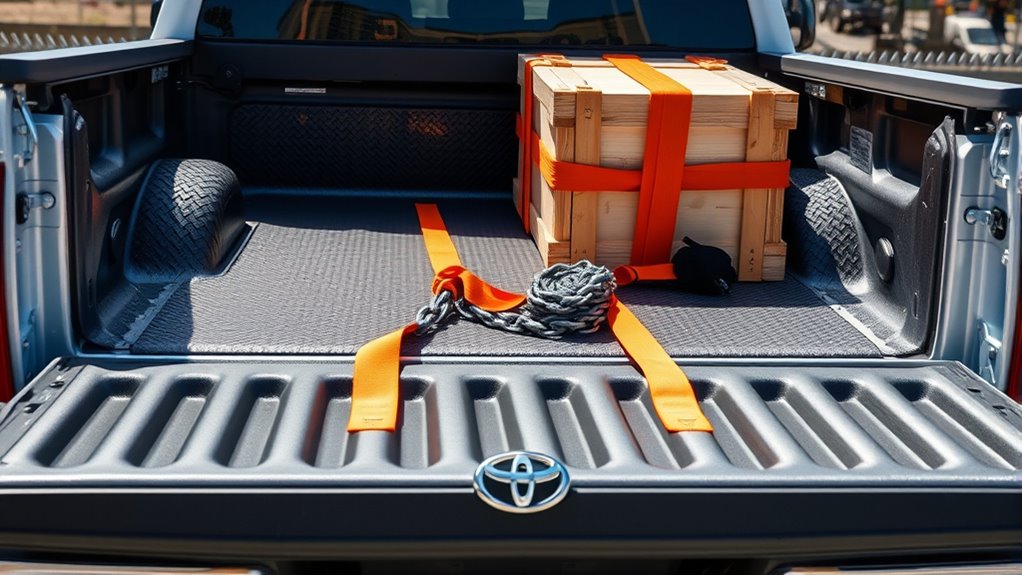
Properly securing heavy items in your truck bed is essential for safe transportation, especially when towing large loads or hauling equipment. You want to prevent shifting that can cause damage or accidents. Use these techniques:
Secure heavy loads in your truck bed to prevent shifting and ensure safe transport.
- Tie down loads tightly with high-quality straps or ratchets.
- Place heavy items on the truck bed floor, centered and low for stability.
- Use bed anchors or cleats to secure straps firmly.
- Cover sharp edges with padding or protective sleeves.
- Distribute weight evenly across the bed to maintain balance.
- Incorporate landscaping elements or natural features to help stabilize cargo and prevent movement during transit.
Always double-check your restraints before hitting the road. Avoid overloading or positioning items too high, as they can shift during transit. Proper securing keeps your load stable and your drive safe.
Maintaining Your Tundra Bed for Optimal Performance
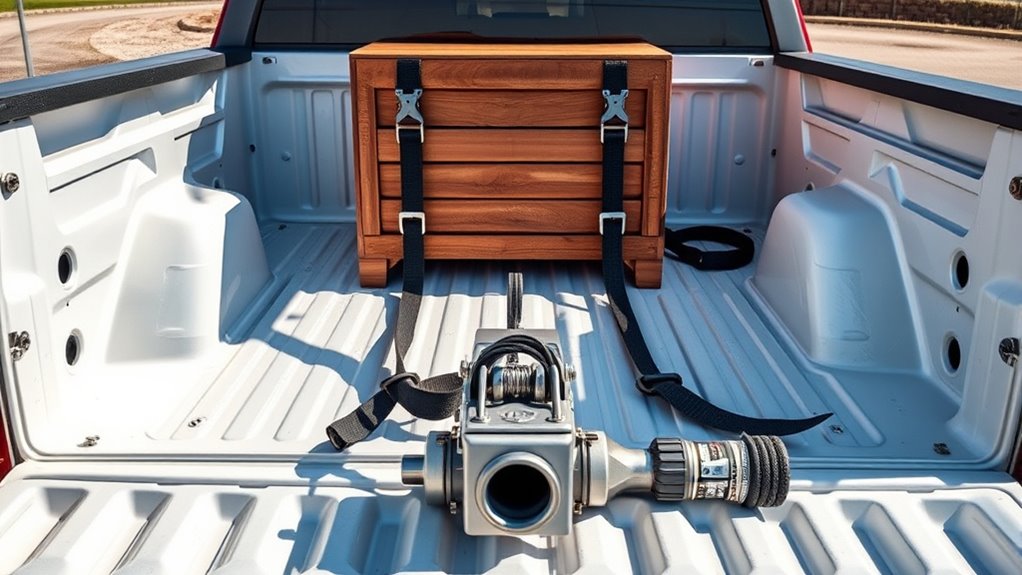
To keep your Tundra bed in top shape, you need to regularly inspect for damage, rust, and wear. Proper load distribution is essential to prevent strain on the bed and make certain safe hauling. Using the right bed accessories can also protect your truck and make maintenance easier over time. Incorporating seasonal checklists into your maintenance routine can help you stay on top of cleaning and upkeep throughout the year.
Regular Bed Inspections
Regular bed inspections are essential to keep your Tundra performing at its best and prevent costly damage. Regular checks help identify issues early, ensuring your truck can handle heavy loads safely. During inspections, look for:
- Rust or corrosion on bed surfaces and structural components
- Cracks, dents, or corrosion in the bed floor and side panels
- Loose or missing bolts, fasteners, or mounting hardware
- Worn or damaged bed liners and protective coatings
- Signs of water pooling or leaks that can cause rust
- Consider incorporating smart monitoring devices to detect early signs of deterioration or leaks in your truck bed.
Address any problems promptly to maintain bed integrity and load capacity. Keeping the bed in top condition also helps preserve the overall safety and performance of your Tundra, especially when towing or hauling heavy loads. Regular inspections are a small investment with big benefits.
Proper Load Distribution
Ensuring your Tundra’s load is evenly distributed is key to maintaining ideal performance and safety. Start by placing heavier items low and toward the front of the bed to keep the center of gravity stable. Avoid concentrating weight on one side or in the tailgate area, which can cause imbalance and affect handling. Use tie-down points to secure loads firmly, preventing shifting during transit. Balance the load across the bed to prevent uneven tire wear and strain on suspension components. Proper load distribution helps maximize payload capacity, improves fuel efficiency, and reduces the risk of trailer sway. Always follow your vehicle’s weight guidelines, and double-check your arrangements before hitting the road to ensure safe and excellent performance. Additionally, understanding the Gold IRA Markets can provide insight into securing your assets, much like properly balancing your load ensures vehicle safety.
Use of Bed Accessories
Using bed accessories effectively can substantially extend the life and functionality of your Toyota Tundra bed. Proper accessories protect your truck, improve organization, and ensure safety during heavy hauling. Consider adding:
- Bed liners to shield against scratches and dents
- Tie-down anchors for secure cargo management
- Bed mats to prevent slipping and damage
- Cargo dividers to organize tools and equipment
- Bed extenders for increased hauling capacity
These accessories help distribute weight evenly, prevent cargo movement, and reduce wear on your bed. Regular maintenance, like cleaning and inspecting accessories, keeps everything in top condition. Investing in quality accessories also enhances safety, making your hauling tasks more efficient. Proper use and upkeep of bed accessories guarantee your Tundra remains reliable and ready for any heavy-duty job.
Best Practices for Towing Heavy Loads With Your Toyota Tundra
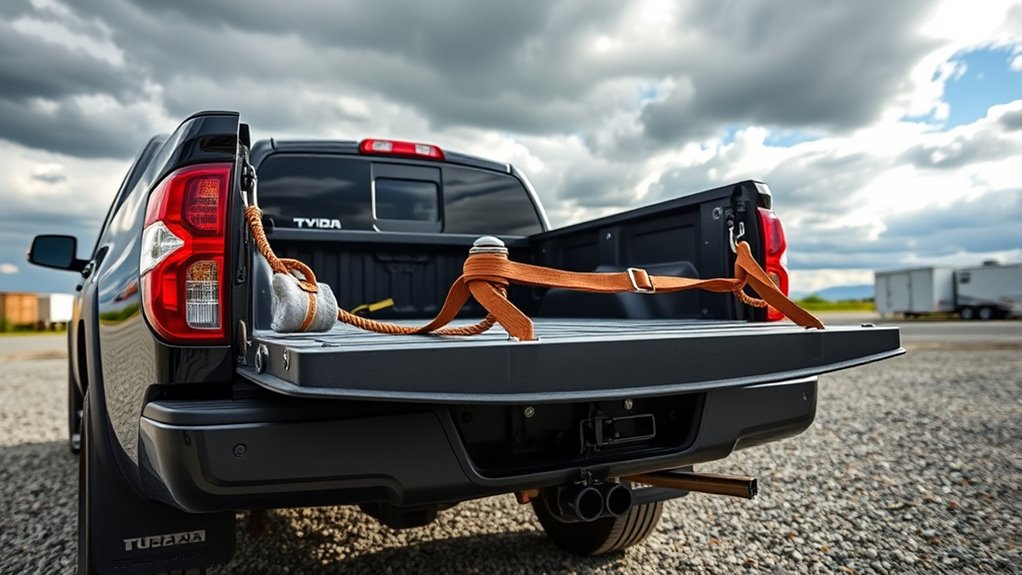
Towing heavy loads with your Toyota Tundra requires careful preparation and adherence to best practices to guarantee safety and vehicle longevity. First, always verify your truck’s towing capacity and ensure your trailer’s weight doesn’t exceed it. Use the appropriate hitch and trailer connections, and double-check all safety chains, wiring, and brakes before hitting the road. Engage the Tow/Haul mode to optimize performance, and adjust your driving for extra caution—reduce speed, leave more stopping distance, and avoid sudden maneuvers. Regularly monitor your mirrors and trailer sway control systems to maintain stability. Distribute weight evenly between the truck and trailer, and avoid overloading the bed. Properly maintaining your Tundra and adhering to these practices will help you tow safely and protect your vehicle over the long term. Additionally, understanding how to properly set up and care for your truck’s components can extend your vehicle’s lifespan and improve towing safety.
Frequently Asked Questions
How Does Bed Material Affect Load Capacity and Durability?
You’ll find that bed material directly impacts load capacity and durability. A steel bed is stronger and more resistant to dents, making it ideal for heavy loads and tough conditions. Aluminum beds are lighter and resistant to rust, which can boost fuel efficiency but may be less durable under extreme stress. Choose the material based on your hauling needs, balancing strength, weight, and longevity to optimize your Tundra’s performance.
Are There Weight Limits for Different Bed Accessories and Racks?
Yes, there are weight limits for bed accessories and racks. You should check the manufacturer’s specifications for each accessory to guarantee it won’t exceed the bed’s weight capacity, which varies based on your truck’s configuration. Overloading racks or accessories can compromise safety and damage your Tundra. Always distribute weight evenly, secure everything properly, and stay within the recommended limits to maintain ideal performance and safety during towing and hauling.
Can Bed Liner Installation Impact Towing or Payload Performance?
You might not realize it, but installing a bed liner can slightly impact your towing and payload performance. Thick liners add weight, which reduces your truck’s maximum payload capacity and can affect towing limits if you’re near those thresholds. To avoid any surprises, choose a lightweight liner and consider how it might affect your overall load. Properly balancing your gear and equipment ensures you maintain ideal towing and hauling capabilities.
What Are the Best Practices for Cleaning and Maintaining the Bed?
You should clean your Tundra bed regularly using a hose and mild soap to remove dirt and debris. Avoid harsh chemicals that can damage the surface or liner. Check for rust or damage, especially around the edges and drain holes, and repair promptly. Protect the bed with a liner or cover when not in use. Proper maintenance keeps your truck in top shape for towing and hauling heavy loads.
How Does Bed Design Influence Trailer Hookup and Alignment?
Imagine you’re back in the days of horse-drawn wagons, where bed design was vital for smooth trailer hookup. Your Tundra’s bed shape and height directly influence trailer alignment, making hooking up easier and safer. A well-designed, level bed ensures proper weight distribution, reduces sway, and simplifies trailer connection. Pay attention to bed width, height, and clearance to make your towing experience more secure and efficient.
Conclusion
So, while you might think your Toyota Tundra can handle anything with just a few upgrades, remember that even the toughest truck needs proper setup and care. Overloading or neglecting safety can turn your heavy hauling adventure into a costly mistake. Ironically, the more you invest in preparation, the less you’ll need to worry about surprises—because sometimes, the best way to go heavy is to go smart.