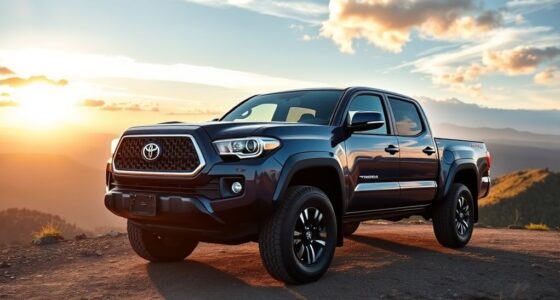

You’ll see some trucks with dual rear wheels, or “duallys,” because they offer better stability, weight distribution, and higher payload capacity. With four tires supporting the back, these trucks handle heavy loads more safely and efficiently. The wider stance improves traction and reduces sway, making towing safer. Although they come with some operational challenges, their advantages are clear for heavy-duty tasks. Keep exploring to discover all the benefits and details behind these powerful trucks.

Get garage and car supplies delivered free — and shop member deals
- Fast, free delivery on millions of items
- Access to Prime Big Deal Days deals on October 6–7
- Prime Video, Amazon Music and more included
Key Takeaways
- Dual rear wheels increase load capacity and help distribute weight evenly across four tires for heavier cargo.
- They enhance vehicle stability and traction, especially during towing or driving on challenging terrains.
- Dually trucks improve safety by providing a wider footprint, reducing the risk of tipping or fishtailing.
- The design supports larger payloads and improves braking performance by sharing force across more tires.
- While offering operational benefits, they also involve higher costs and maintenance challenges.
As an affiliate, we earn on qualifying purchases.
What Are Dually Trucks and How Are They Configured?
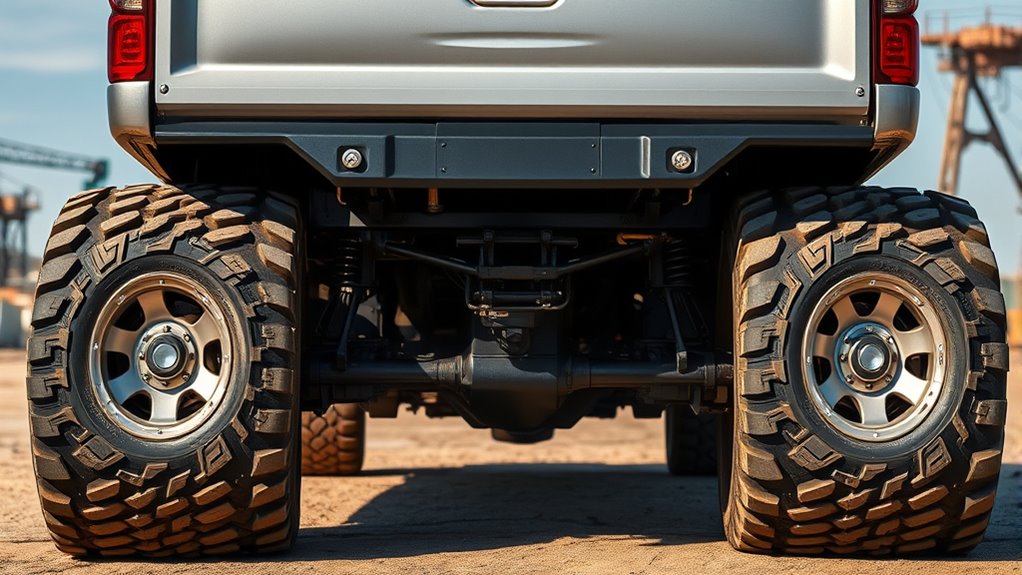
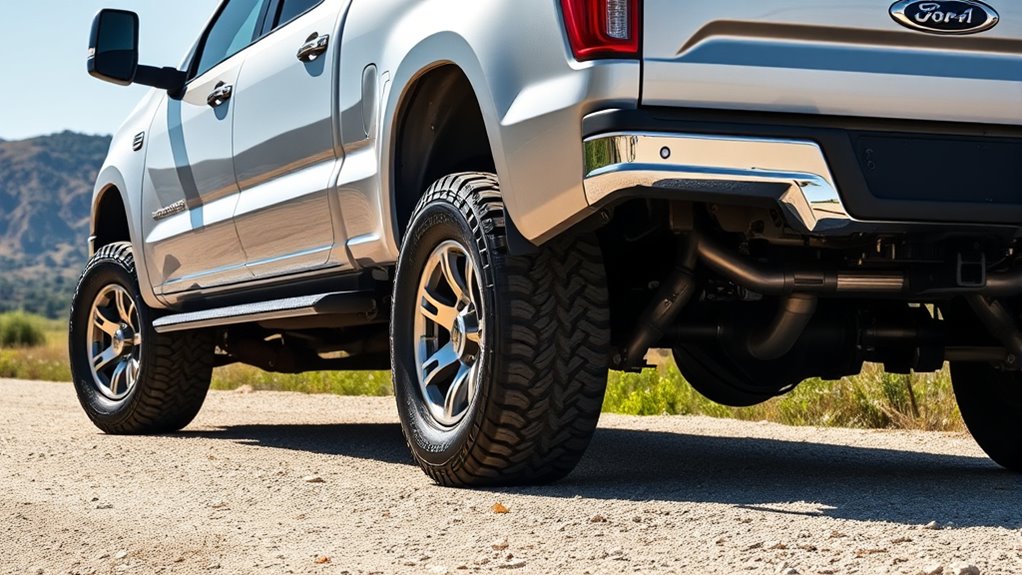
Have you ever wondered what makes dually trucks different from standard pickups? Dually trucks, or dual rear wheel (DRW) trucks, have four rear wheels instead of two, totaling six wheels on the vehicle. This setup places two wheels on each side of the rear axle, not just one. The design makes these trucks larger and heavier, requiring pronounced fenders to cover the extra wheels. They use a “full floating” rear axle, where bearing hubs support the vehicle’s weight instead of axle shafts. This configuration improves load capacity and stability. The extra wheels help distribute weight more evenly across four tires, reducing strain on each and supporting heavier payloads. Load distribution is a critical factor in the design of dually trucks, making them especially suited for towing, hauling, and heavy-duty work. Additionally, their stability during towing heavy loads is significantly enhanced due to the wider footprint provided by dual wheels. Moreover, wheel configuration plays a key role in managing the stresses experienced during heavy-duty operations, ensuring durability and safety. Understanding the design features of dually trucks highlights why they are preferred in commercial and industrial applications. Recognizing how these load management capabilities contribute to their performance helps explain their popularity in demanding tasks.
As an affiliate, we earn on qualifying purchases.
How Does Weight Distribution Improve Payload Capacity?
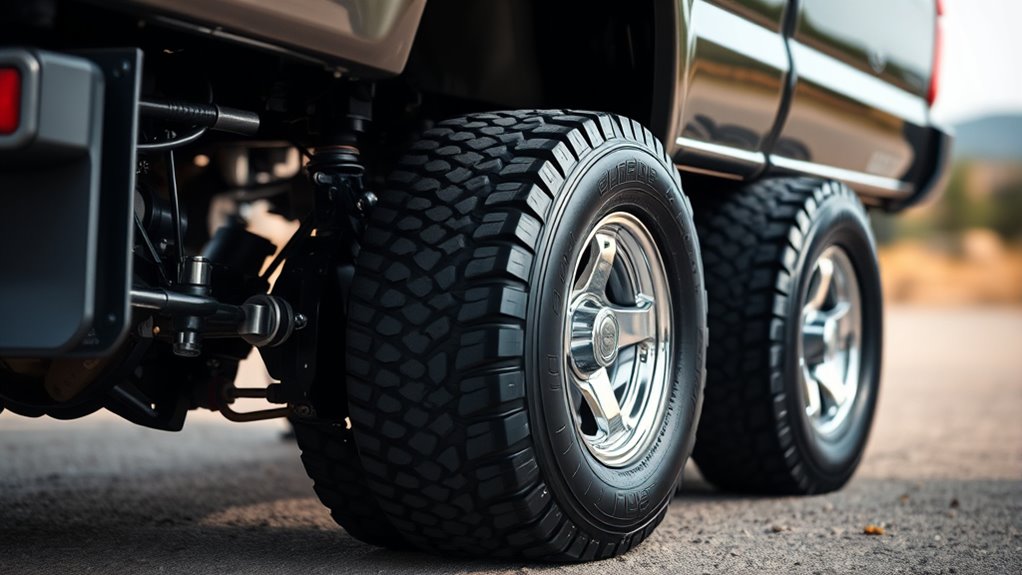
With dual rear wheels, weight gets spread more evenly across four tires instead of two, reducing strain on each. This even load distribution allows the truck to support heavier cargo without risking tire or axle failure. As a result, your vehicle’s structural support and cargo capacity both improve considerably. Additionally, smart load management systems can optimize weight distribution further, enhancing safety and efficiency during transport. Proper weight distribution is essential for maintaining vehicle stability and prolonging the lifespan of truck components. Incorporating essential oils into maintenance routines can also promote overall vehicle health by reducing stress and supporting component longevity. Regular seasonal checklists can help identify potential issues early and maintain optimal load balance. Recognizing the importance of curiosity in understanding vehicle mechanics encourages proactive maintenance and safety awareness.
Even Tire Load Spread
Even Tire Load Spread plays a crucial role in enhancing a dually truck’s payload capacity by distributing weight more evenly across all four rear tires. When you carry heavy loads, the weight no longer presses on just two tires but spreads across four, reducing stress on each tire. This even distribution minimizes tire wear, prevents premature damage, and extends tire lifespan. It also helps maintain better contact with the road, improving traction and stability. By sharing the load, the tires work more efficiently, supporting higher payloads without risking tire blowouts or uneven wear. Proper weight distribution is essential for maximizing load capacity and ensuring safety on the road. Additionally, tire load capacity can be optimized through correct inflation and maintenance practices, further enhancing performance. This load spreading enables your truck to carry more weight safely and reliably, making it a practical choice for commercial use and heavy-duty tasks.
Enhanced Structural Support
Proper weight distribution in dually trucks enhances structural support by evenly spreading loads across multiple components, reducing stress on individual parts. This setup improves overall durability and allows the truck to handle heavier payloads with less risk of damage. When weight is distributed across four tires, it minimizes the strain on each wheel, axle, and suspension component. This increased support results in improved load management, which helps prevent uneven wear and potential failure of parts. Additionally, by promoting balanced weight, it contributes to safer driving conditions under heavy loads, reducing the likelihood of accidents caused by instability. Maintaining proper weight distribution also contributes to vehicle safety by ensuring stability during transport and reduces tire wear, promoting longer-lasting tires and safer handling.
Increased Cargo Capacity
Have you ever wondered how dual rear wheels boost a truck’s payload capacity? The key lies in weight distribution. With four tires supporting the load instead of two, the weight spreads out more evenly across all tires, reducing stress on each one. This setup allows you to carry heavier loads safely. The full floating axle design also helps by increasing structural strength, letting you haul larger payloads without risking damage. Proper backup power and load management are essential to maintain safety and efficiency when handling heavy cargo.
As an affiliate, we earn on qualifying purchases.
In What Ways Do Dual Rear Wheels Enhance Stability and Traction?
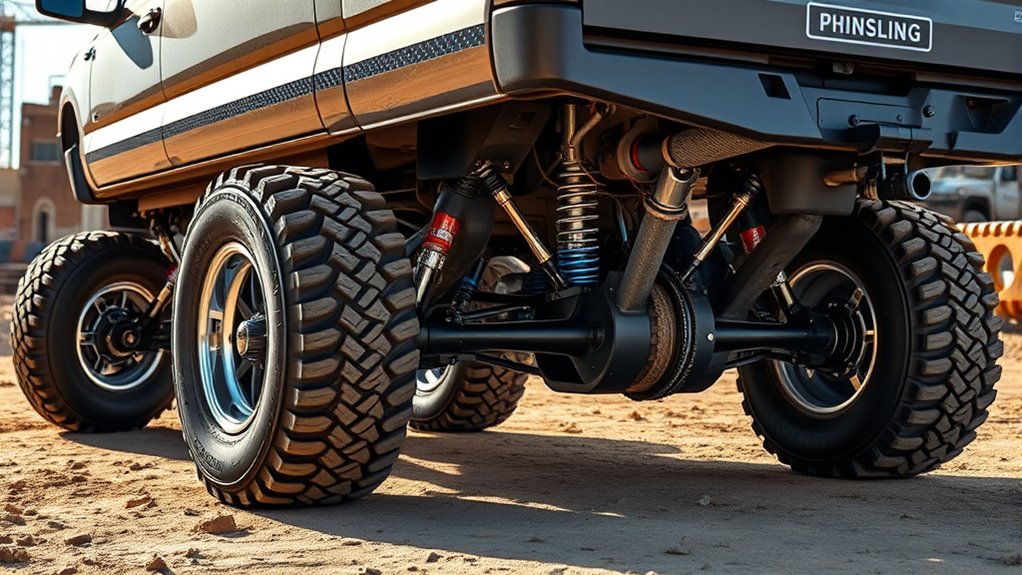
Dual rear wheels markedly boost stability and traction by widening your vehicle’s base and lowering its center of gravity. This setup helps prevent tipping during sharp turns and on uneven terrain. Here’s how they enhance performance:
- Wider contact patch: More tires touch the ground, improving grip and reducing slipping on wet, snowy, or muddy surfaces.
- Increased weight distribution: Heavy loads spread across four tires, reducing individual tire strain and maintaining consistent traction.
- Enhanced lateral stability: The broader stance minimizes sway and fishtailing, especially when maneuvering tight corners or rough terrain.
Together, these factors provide a safer, more controlled driving experience, particularly when carrying heavy loads or driving in challenging conditions.
dual rear wheel truck accessories
As an affiliate, we earn on qualifying purchases.
As an affiliate, we earn on qualifying purchases.
Why Are Dually Trucks Superior for Heavy Towing Tasks?
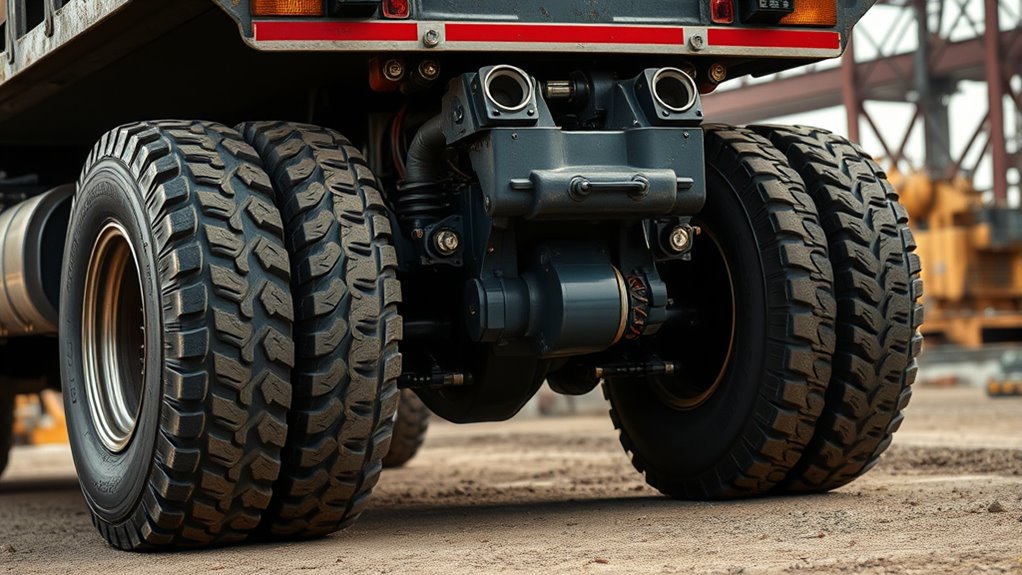
You’ll notice dually trucks excel at heavy towing because they provide enhanced load stability, making your trailer less likely to sway or tip. Their superior traction performance guarantees better grip on the road, especially when hauling large or uneven loads. This combination means you can tow heavier loads more safely and confidently.
Enhanced Load Stability
Because of their wider stance and more stable foundation, dually trucks excel at maintaining load balance during heavy towing. The additional rear wheels distribute weight evenly across four tires, reducing the risk of sway or tipping. This setup offers:
- Improved weight distribution, preventing uneven load shifts
- Lower center of gravity, enhancing overall stability
- Greater resistance to vehicle roll or sway during sharp turns
These features keep your load steady, even on uneven terrain or in windy conditions. The increased contact area of the dual wheels also helps absorb shocks and vibrations, making towing smoother. Additionally, the load-carrying capacity of dually trucks is notably higher, allowing for heavier loads without compromising safety. As a result, you experience safer, more controlled handling, minimizing the risk of accidents or load loss. This reliable stability is essential for heavy-duty tasks where safety and precision matter most.
Superior Traction Performance
Dually trucks deliver superior traction performance by increasing tire contact with the road, which is essential for heavy towing tasks. With four rear wheels instead of two, you gain a wider footprint that enhances grip, especially under heavy loads. This expanded contact patch helps distribute power more evenly, reducing slippage and wheel spin. The extra tires provide better stability when accelerating or climbing inclines, ensuring consistent traction. Additionally, the increased surface area improves braking performance, allowing for safer stops when towing large trailers. This setup also helps maintain control on slippery or uneven terrain, minimizing skidding or fishtailing. Overall, the dual rear wheel configuration delivers the traction needed to handle demanding towing situations confidently and safely.
How Do Dual Rear Wheels Affect Braking and Safety?
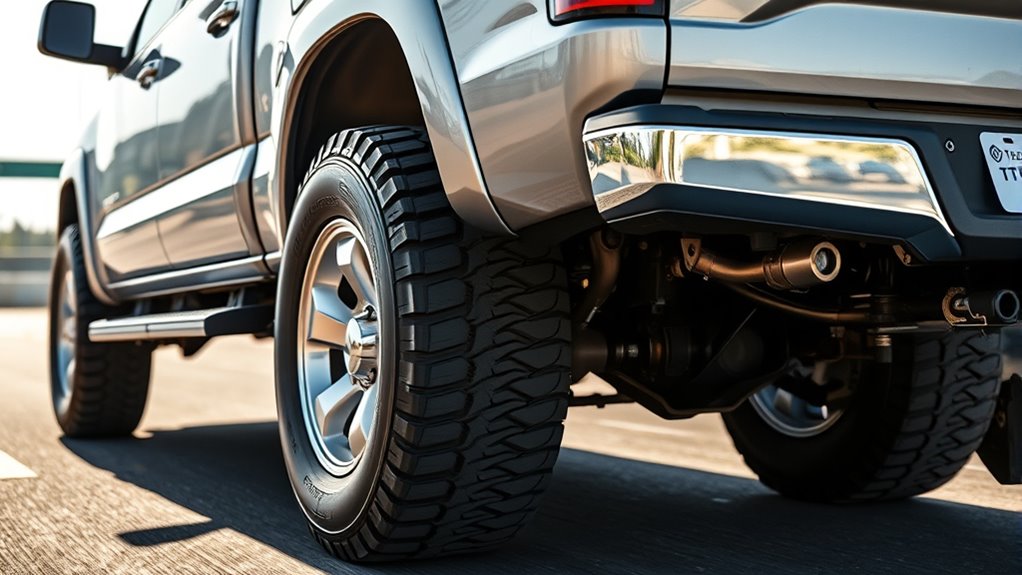
Dual rear wheels considerably enhance braking and safety performance by providing increased contact with the road and better weight distribution. This setup allows the vehicle to stop more effectively under heavy loads, reducing stopping distances. Here’s how it makes a difference:
- Greater braking power: More tires share the braking force, reducing strain on individual components. Increased contact area improves overall traction and control during braking. Additionally, the extra tires can help prevent tire wear unevenness, maintaining optimal performance over time. Proper brake system maintenance ensures these advantages are fully realized and maximized.
- Improved stability: The wider rear base minimizes the risk of swerving or fishtailing during sudden stops. Additionally, the wider stance helps in maintaining vehicle balance.
- Enhanced safety margins: Better weight distribution helps prevent rear-end lockups and maintains control during emergency braking.
- Reliable connections between tires and the vehicle’s braking system improve overall safety and performance. Proper maintenance of these connections is essential to maximize safety benefits.
These benefits make dually trucks safer, especially when hauling heavy payloads or towing large trailers. The added contact points and balanced weight contribute to more predictable handling and reduced accident risk.
What Are the Downsides and Operational Challenges of Dually Trucks?
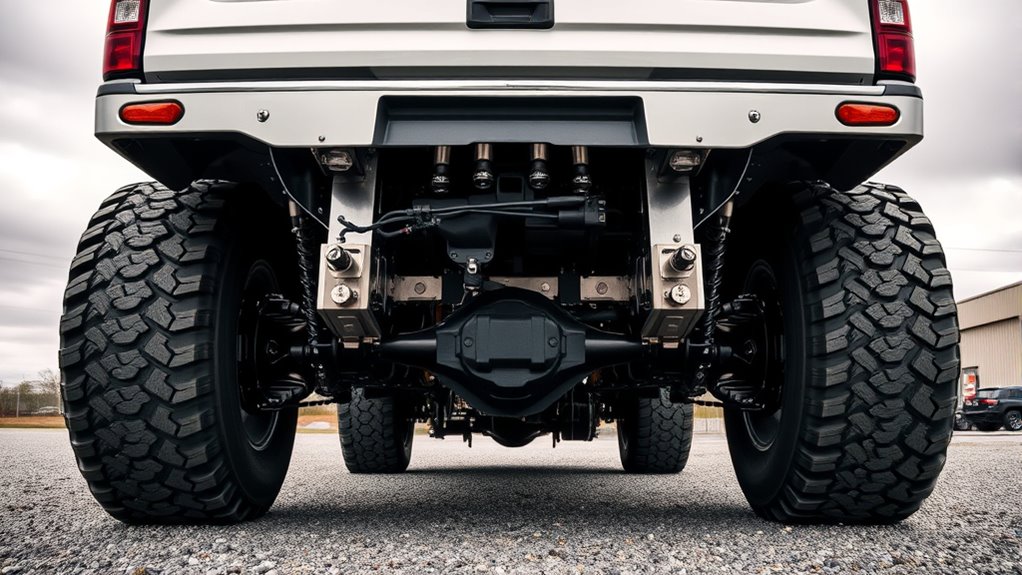
While the safety benefits of dually trucks are clear, they also come with notable operational drawbacks. First, they cost more upfront—both the vehicle itself and maintenance expenses increase due to extra tires and complex components. Fuel economy takes a hit because the added weight and rolling resistance drain fuel faster. Tire replacements become pricier, as you’ll need to replace four tires on the rear instead of two. Changing inner tires can be tricky, especially if a blowout occurs while you’re on the road. Additionally, regular inspections and maintenance are necessary to keep everything in check, which adds time and expense. Maneuvering dually trucks in tight spaces or urban settings also proves more challenging due to their wider stance and size. Youngster Choice The added complexity of managing extra tires and components can also lead to increased downtime and repair costs during breakdowns or routine service.
Who Benefits Most From Using Dually Vehicles?
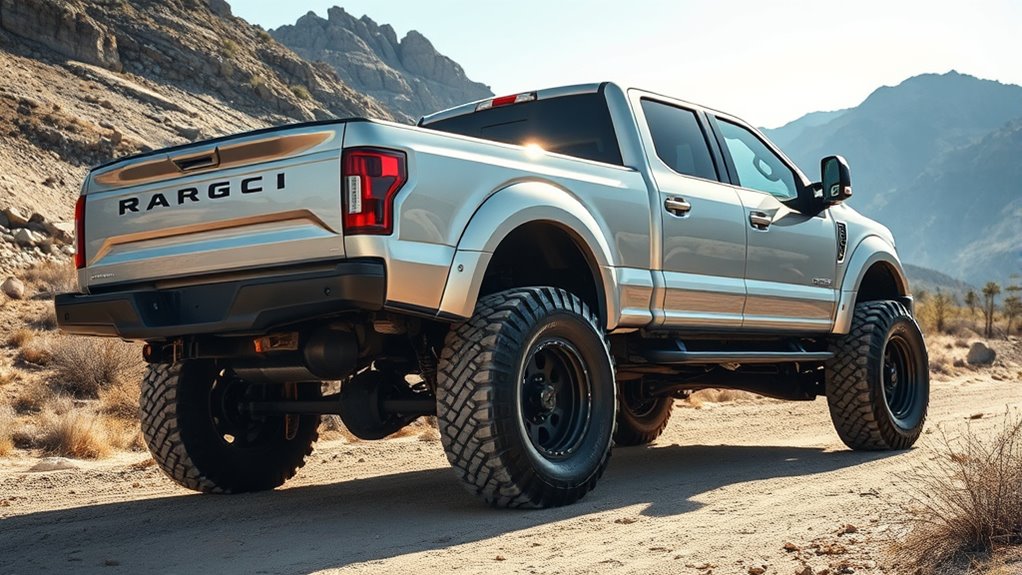
Businesses and individuals who regularly haul heavy loads or tow large trailers benefit most from using dually vehicles. The extra rear wheels provide essential advantages:
Dually trucks offer greater payload capacity, stability, and towing power for heavy-duty hauling and towing needs.
- Increased payload capacity, allowing you to carry more cargo safely.
- Improved stability, reducing the risk of tipping during sharp turns or uneven terrain.
- Enhanced towing strength, supporting heavier trailers and ensuring safer, smoother pulls.
If you operate a construction company, own a farming operation, or frequently transport large recreational vehicles, a dually truck can boost your efficiency and safety. These vehicles handle demanding tasks better than standard trucks, providing the durability needed for constant heavy-duty use. While they come with higher costs, the benefits in stability, capacity, and safety make them ideal for serious towing and hauling needs.
Frequently Asked Questions
Can Dually Trucks Be Driven Legally on All Roads?
Yes, you can drive dually trucks legally on most roads, but you should verify local regulations first. Some areas restrict large or heavy vehicles on certain highways, residential streets, or bridges with weight limits. You’ll also need to confirm your truck meets size and weight standards for your route. Always follow posted signs and laws to avoid fines or penalties, and plan your routes accordingly for safe driving.
How Do Dually Trucks Impact Parking and Garage Space?
You’ll find that dually trucks need more parking and garage space because they’re wider due to the extra rear wheels. This means they won’t fit in standard parking spots or typical garages designed for regular trucks. You might have to look for larger spaces or specialized parking options. Keep in mind, maneuvering can also be trickier, especially in tight spots, so plan accordingly to avoid issues.
Are Dually Trucks Suitable for Everyday Commuting?
Dually trucks are generally not suitable for everyday commuting. They’re larger, wider, and less maneuverable, making parking and steering through city streets challenging. Plus, they consume more fuel and require more maintenance. If you mostly drive in urban areas or have tight parking spaces, a standard single rear wheel truck is a better, more practical choice. Dually trucks excel in heavy-duty work but aren’t ideal for daily city driving.
What Maintenance Differences Exist Between Dual and Single Rear Wheel Trucks?
You’ll find that maintaining a dually truck involves more than caring for a single rear wheel vehicle. You’ll need to regularly inspect and replace four tires instead of two, check dual wheels for uneven wear, and guarantee proper inflation for all tires. Additionally, you’ll perform more frequent brake inspections due to increased load, and keep an eye on the full floating axle components. Proper maintenance keeps your dually running smoothly and safely.
How Does Tire Replacement Differ for Dually Trucks?
When replacing tires on a dually truck, you’ll need to change four rear tires instead of two, which takes more time and effort. You also need to lift the vehicle higher or use special equipment to access inner tires. Be prepared for higher costs because the extra tires are more expensive, and regular inspections are vital to guarantee all tires are in good shape for safe driving.
Conclusion
Dually trucks deliver durability, dependability, and a decisive edge for demanding duties. Their dual rear wheels boost stability, spread weight wisely, and strengthen safety on tough terrains. While they may seem cumbersome or costly, their capability to carry colossal loads and conquer challenging conditions makes them an essential choice. If you’re seeking a sturdy, steadfast workhorse that handles heavy hauling hassle-free, dually trucks deliver dependable power and performance you can trust.
Halloween Picks
halloween
As an affiliate, we earn on qualifying purchases.