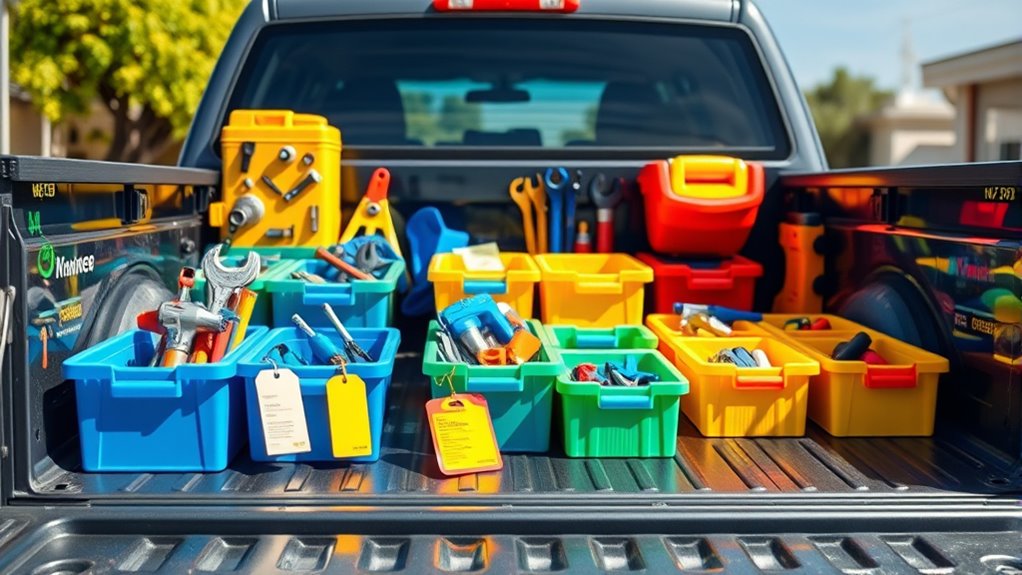

To speed up work from your truck bed with color coding and labels, assign specific colors to tool categories like power tools, measuring instruments, and safety gear. Use weather-resistant markers and tape for durability, and organize compartments by color zones for quick access. Place visual guides and digital tools nearby to reinforce organization. Keep labels and visuals updated, ensuring everything stays clear and accessible. Ready to discover the full system? Keep exploring for more expert tips.
Key Takeaways
- Assign specific colors to tool categories and compartments for immediate visual identification and quick access.
- Use durable, weather-resistant labels and high-visibility tape to maintain clarity and organization outdoors.
- Place visual guides or reference sheets in accessible locations to help team members quickly locate tools.
- Implement digital tracking (QR codes or RFID) alongside physical labels for real-time inventory management.
- Regularly review, update labels, and train staff to ensure consistent use and maximize workflow speed.

12Pcs Metal Magnetic Tool Box Labels – Heavy Duty Metal Toolbox Labels for Tool Chest Drawer Organization – Premium Magnetic Labels for Tool Box Accessories and Garage Storage (Black)
- Premium Metal Construction: Durable, high-quality metal for longevity
- High-Visibility Icons: Clear, etched icons for quick identification
- Easy Snap-On Attachment: Magnetic labels for simple, secure placement
As an affiliate, we earn on qualifying purchases.
As an affiliate, we earn on qualifying purchases.
Understanding the Color Code System for Your Truck Bed
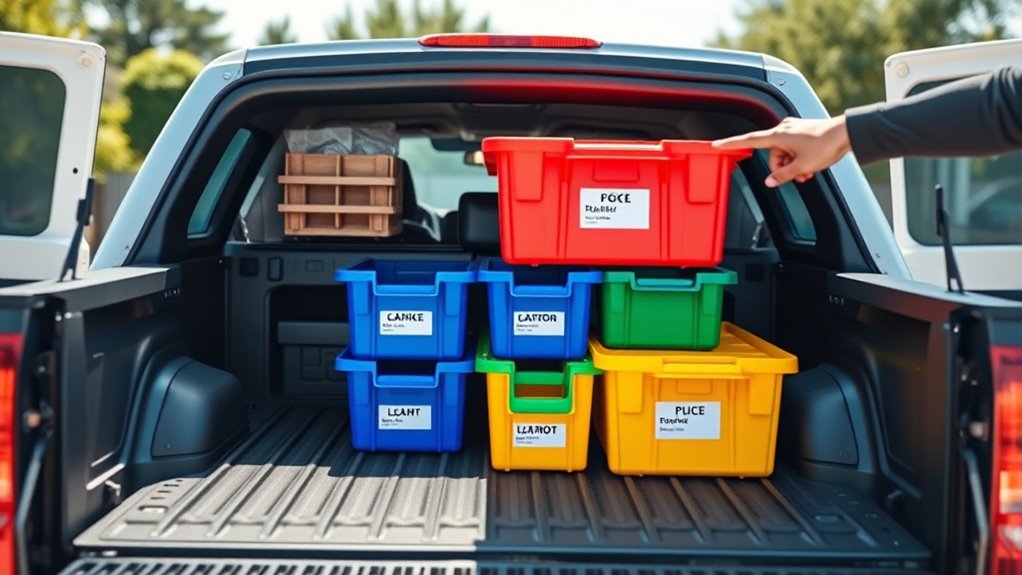
Have you ever struggled to find the right tool quickly on a busy job site? That’s where understanding your color code system makes a difference. Colors are assigned based on tool categories for instant recognition. Red tape marks power tools and high-voltage equipment, so you know exactly where those are. Blue markers indicate measuring instruments, helping you handle them carefully. Yellow labels show consumables, making replacements straightforward. Green codes identify safety gear, keeping safety top of mind. Orange tape marks fragile or specialized equipment, so you handle those with extra care. Familiarize yourself with these codes and keep a printed or digital reference nearby. When you understand the color system, locating tools becomes faster, mistakes decrease, and your workflow improves considerably, saving you time and effort. Implementing simple visual cues like color coding can further enhance your organization and efficiency.

Romeda 9 Pack Coloured Electrical Tape, Electrical Tape Colours Water, Sun, and Oil Resistant, Suitable for Most Domestic, Commercial, and Industrial environments.
- Color Variety: 9 different colored tapes included
- Value Pack: 9 rolls of 10 meters each
- Versatile Use: Suitable for indoor, outdoor, and industrial
As an affiliate, we earn on qualifying purchases.
As an affiliate, we earn on qualifying purchases.
Choosing the Right Color Markers and Tape for Each Category
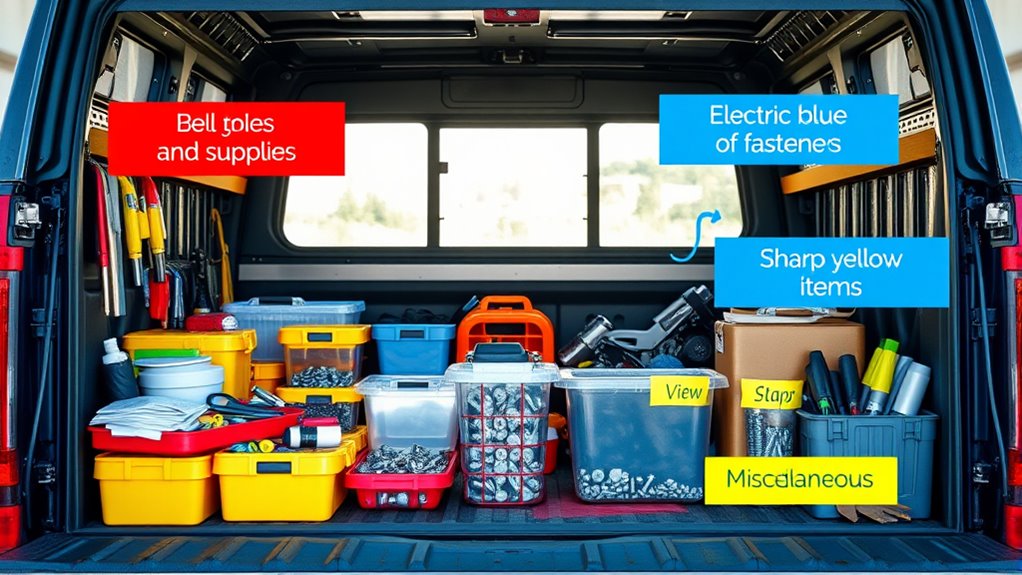
Selecting the right color markers and tape is key to maintaining an effective organization system in your truck bed. Use waterproof, weather-resistant markers for clear, lasting labels on tools and containers. Choose high-visibility tape in bold colors like red, blue, yellow, green, and orange to match your categories. Bright, neon tape stands out against your truck bed surface, making items easier to spot quickly. Opt for durable tape that adheres firmly and resists fading or peeling over time. For precise markings, select fine-tipped permanent markers to write detailed labels. When labeling fragile or sensitive equipment, consider using specialized tape with extra cushioning or warnings. Properly selected colors and materials guarantee your system stays clear, durable, and effective in all working conditions. Incorporating European cloud innovation into your organizational tools can also enhance data management and security in your mobile workspace.
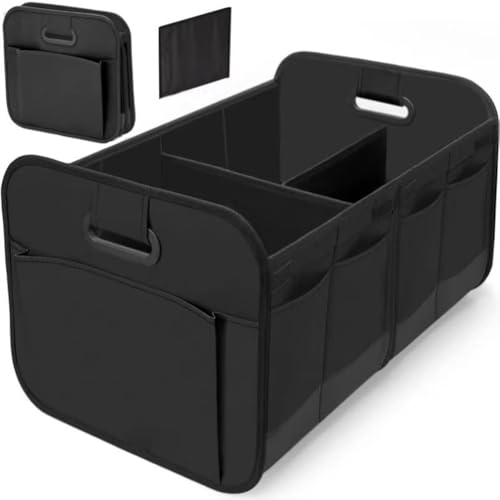
ANUEDXC Car Trunk Organizer for Lincoln MKZ/MKZ Reserve/Black Label, Foldable Large Organizers and Storage, Multi-Compartment Car Cargo Storage, Storage Box with Pocket, Car Accessories
- Compatible Models: Lincoln MKZ, MKZ Reserve, Black Label
- Durable Material: Designed for everyday use and shape retention
- Foldable Design: Quickly collapses for easy storage and portability
As an affiliate, we earn on qualifying purchases.
As an affiliate, we earn on qualifying purchases.
Organizing Compartments by Color Zones for Efficient Access
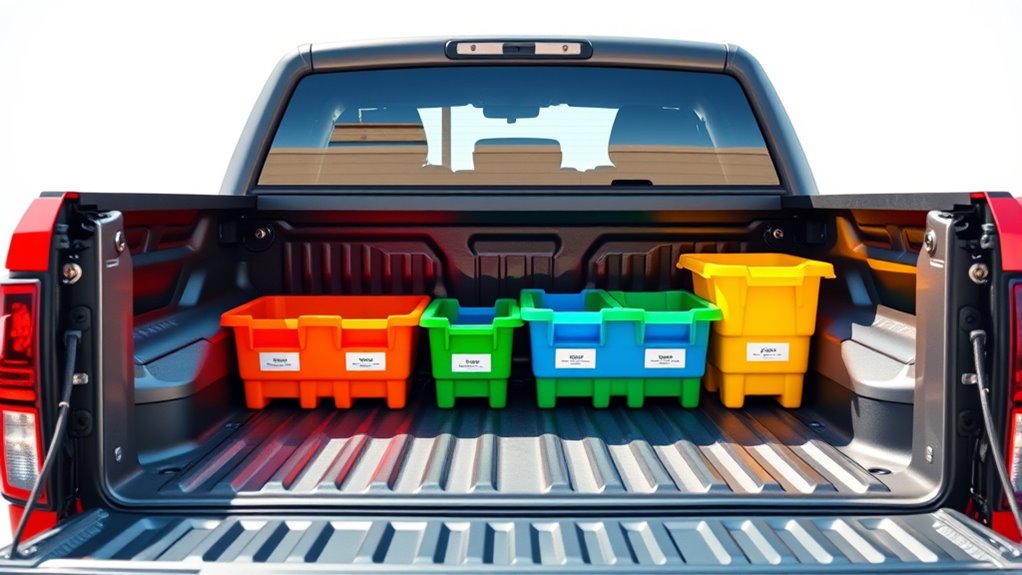
Organizing truck bed compartments by color zones considerably enhances efficiency by enabling you to load and unload specific tool categories with ease. By assigning each zone a distinct color, you can quickly identify where tools belong, reducing search time. For example, designate a red zone for power tools, a blue zone for measuring instruments, and a green zone for safety gear. This system prevents mixing items that need different handling or storage conditions. When you arrive on-site, you can directly access the relevant zone without rummaging through unrelated tools. Using color-coded compartments streamlines your workflow, minimizes errors, and keeps your truck organized. Color coding systems can be customized to fit your specific tool collection and work style. Consistent labeling and clear boundaries ensure everyone on your team understands the system, making your work faster and more efficient.

Smart Labels QR Code Stickers with AI Photo Analysis App – Auto-Creates Item Descriptions – No Typing – Made in USA – QR Code Labels for Storage & Inventory Tracking, Organization & Moving, Pack of 48
- Color-Coded QR Code Organization: Seamless storage management with color codes
- AI Photo-Based Item Descriptions: Auto-creates descriptions from photos, no typing
- Mobile App Compatibility: Manage labels via iOS and Android devices
As an affiliate, we earn on qualifying purchases.
As an affiliate, we earn on qualifying purchases.
Posting Visual Guides and Reference Sheets on Your Vehicle
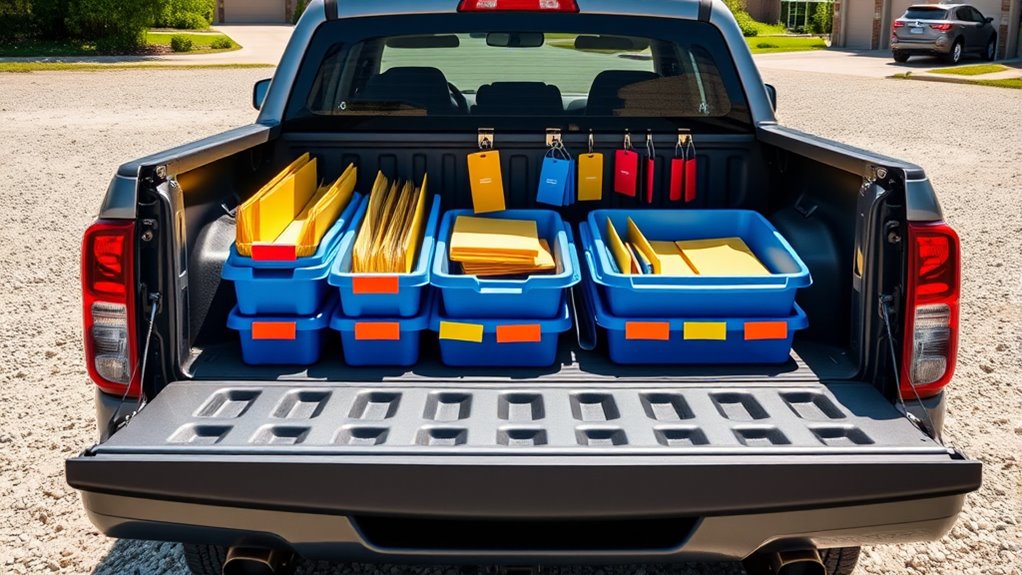
To keep your team on the same page, strategically place visual guides and reference sheets on your truck for quick access. Make sure these sheets are printed on durable, weatherproof materials so they withstand outdoor conditions. Clear visibility is key, so position the guides where everyone can easily see and reference them during work. Incorporating organized signage can further enhance workflow efficiency and reduce confusion among team members.
Strategically Place Reference Sheets
Placing reference sheets in strategic locations on your vehicle guarantees that everyone on the team can quickly access the color coding system when needed. Position these sheets near the truck bed’s entry points, inside compartments, and on side panels for maximum visibility. Use laminated sheets to withstand weather and frequent handling. Make certain the sheets clearly display the color categories, tool locations, and corresponding labels, so team members can confirm organization at a glance. Keep copies in accessible spots to reduce questions and minimize delays. Regularly update the sheets to match any changes in your layout or color assignments. Incorporate Free Floating concepts to ensure the system remains adaptable and flexible to various work environments. This strategic placement streamlines workflow, helps new crew members learn the system faster, and keeps everyone aligned to avoid misplacement or confusion during busy workdays.
Use Durable Weatherproof Materials
Using durable, weatherproof materials for your visual guides and reference sheets guarantees they stay intact and legible in outdoor conditions. Choose laminated sheets or waterproof labels that resist rain, mud, and UV exposure. These materials prevent fading, tearing, or peeling over time, ensuring your system remains clear and accessible. Attach the guides securely with weatherproof adhesive or zip ties, so they don’t shift or fall off during transit or work. Bright, high-contrast colors on waterproof surfaces improve visibility from a distance, even in low light. Regularly inspect your reference sheets, replacing any that show signs of damage. Investing in weatherproof materials keeps your organization reliable and reduces the need for frequent replacements, saving you time and effort on the job. Incorporating weather-resistant labels can further enhance the durability and longevity of your visual aids.
Ensure Clear Visibility
Clear visibility of your visual guides and reference sheets is essential for quick and accurate tool identification. You want your team to access information instantly, without wasted time searching or guessing. To achieve this, verify your guides are:
- Posted at eye level on the truck bed’s side or interior for easy viewing.
- Color-coded to match the tape system, creating instant recognition.
- Laminated to withstand weather and repeated handling.
- Positioned near frequently used compartments to assist during loading and unloading.
Using these steps, your crew can quickly verify tool categories and locate items efficiently. Clear, accessible visual references minimize mistakes, streamline workflow, and keep everyone on the same page during busy workdays.
Implementing Digital Tools to Complement Physical Labels
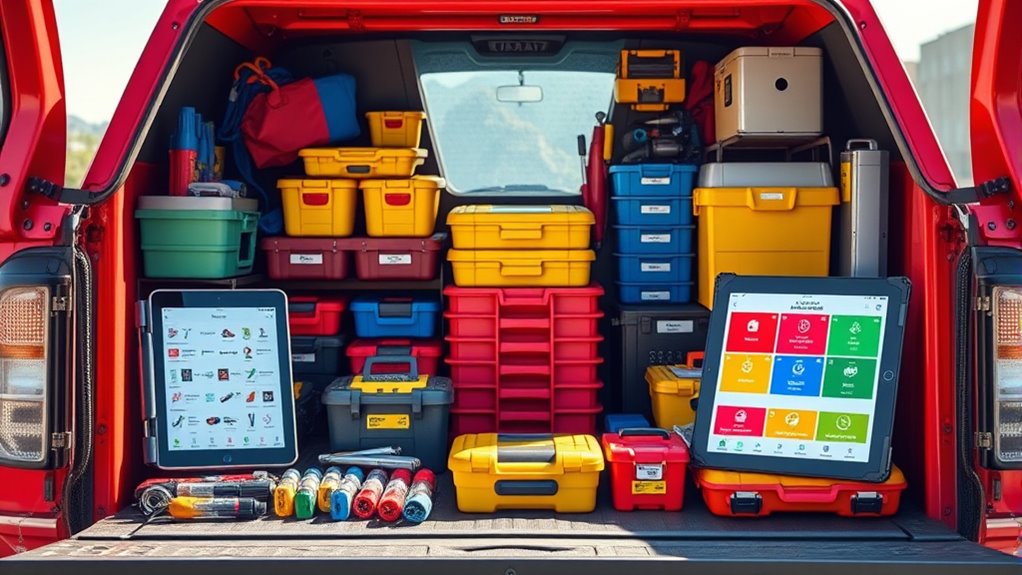
Using digital tools like QR code inventory management and real-time tool tracking can considerably boost your organization system. These technologies allow you to quickly identify and locate equipment without searching through labels or compartments. Incorporating them alongside physical labels helps streamline your workflow and reduce downtime on the job site. Cut through tech clutter with these expert-recommended digital solutions to maximize efficiency.
QR Code Inventory Management
Integrating QR code inventory management into your truck bed organization streamlines the process of identifying and locating tools. You simply scan a QR code to access detailed information instantly. Here’s how it works:
- Attach QR codes to all containers, shelves, or tool zones for quick digital access.
- Use a mobile app to scan codes, revealing inventory details, location, and usage instructions.
- Update quantities and statuses in real-time as tools are added or removed, keeping your system current.
- Cross-reference scanned data with physical labels and color codes for faster, more accurate identification.
- Incorporate smart organization systems that utilize automation and connectivity to further enhance your workflow.
This combination of physical labels and digital tracking reduces search time, prevents misplacement, and boosts overall efficiency. It’s a seamless way to keep your truck bed organized and ensure tools are always accounted for.
Real-Time Tool Tracking
Implementing digital tools for real-time tool tracking enhances your physical labeling system by providing instant updates and accurate location data. Using QR codes or RFID tags linked to a centralized app, you can monitor tools as they move within your truck bed. This integration allows you to quickly identify missing or misplaced items, saving time during setup and cleanup. Incorporating smart technology into your system helps maintain an organized workspace and improves overall efficiency.
| Digital Tool | Physical Label |
|---|---|
| QR codes | Color-coded labels |
| RFID tags | Matching tape colors |
| App updates | Visual station markers |
| Alerts | Zone-specific labels |
| Inventory | Digital dashboards |
This system streamlines retrieval, reduces errors, and boosts efficiency, ensuring your tools are always accounted for and accessible exactly where you need them.
Training Your Team to Recognize and Follow the Color Coding Protocols
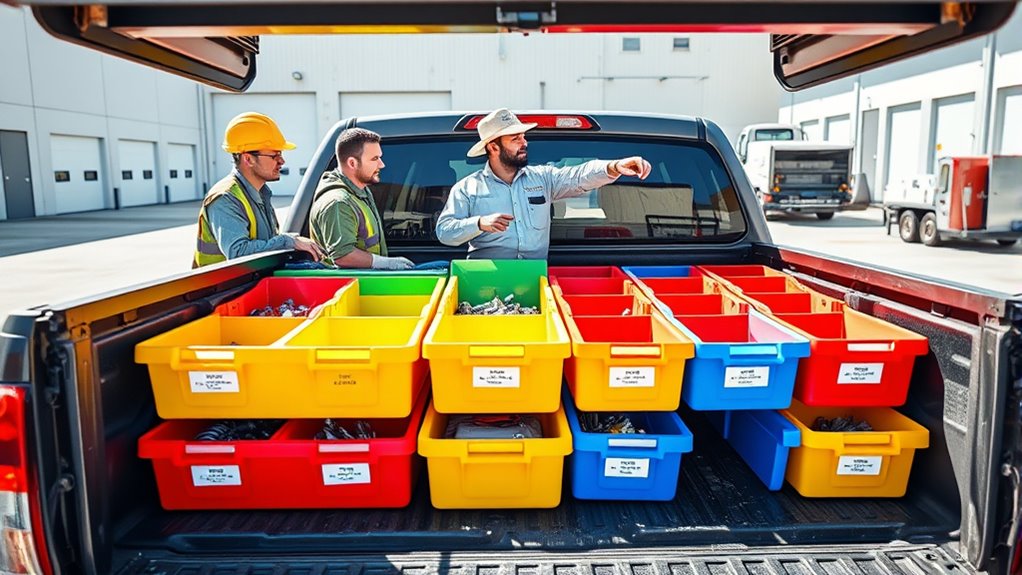
Training your team to recognize and follow the color coding protocols is essential for ensuring consistency and efficiency. To do this effectively, you should:
- Hold brief orientation sessions before each shift to review color codes and their meanings.
- Post clear, visible color key charts at truck bed entry points for quick reference.
- Pair verbal instructions with visual demonstrations during tool handoffs to reinforce understanding.
- Distribute laminated reference sheets so team members can easily access the color system throughout the day.
- Incorporate load‑planning tools to help team members understand how color coding relates to task prioritization and safety.
Maintaining and Updating Your Color System to Stay Organized
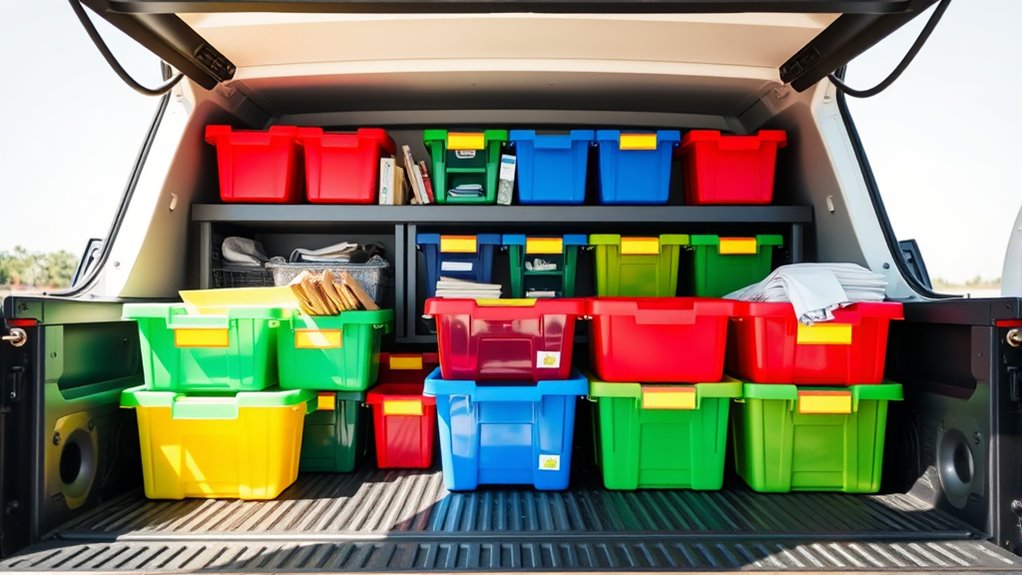
To keep your color coding system effective over time, regular maintenance and updates are necessary. Periodically review your color labels and tape to verify they remain visible and intact, replacing any that are faded, peeling, or damaged. Keep a record of updates to track changes and prevent confusion. As your tool inventory evolves, update your color assignments to reflect new categories or equipment. Communicate these changes clearly to your team through brief meetings or updated reference sheets. Consistently checking and revitalizing your system prevents misidentification and keeps your organization reliable. Additionally, incorporate feedback from crew members to identify areas needing improvement. By staying proactive, you ensure your color system remains a trusted tool that speeds up work and maintains order in your truck bed.
Tips for Selecting High-Visibility and Weather-Resistant Materials
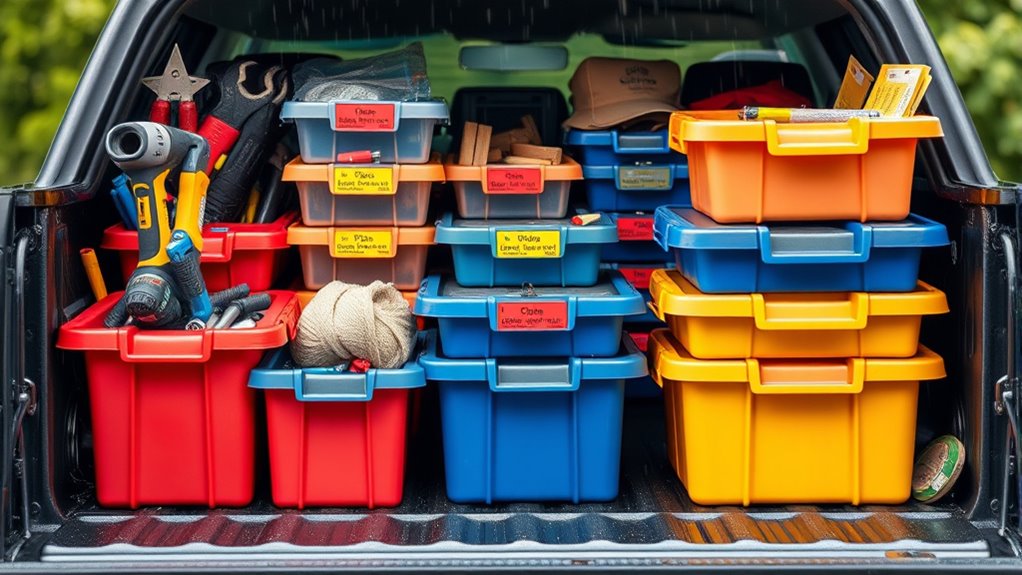
To guarantee your labels stay visible and durable, choose neon or bright colors that stand out in any lighting. Use waterproof markers to prevent smudging or fading when exposed to weather. Additionally, select weatherproof tape to withstand rain, mud, and other outdoor elements without losing adhesion or color.
Use Neon or Bright Colors
Using neon or bright colors considerably enhances visibility, especially in outdoor or low-light conditions. These colors catch the eye quickly, reducing the time spent searching for tools or supplies. To maximize effectiveness, consider these options:
- Use fluorescent yellow or orange tape for high-priority tools and safety equipment, making them stand out instantly.
- Apply vivid pink or lime green labels to fragile or specialized gear, highlighting their delicate nature.
- Choose bright red for power tools and high-voltage items, ensuring quick identification in emergencies.
- Opt for intense blue or neon purple for measuring instruments, providing contrast against other colors and backgrounds.
These bold hues improve recognition and safety, helping you work faster and more efficiently.
Opt for Waterproof Markers
Choosing waterproof markers guarantees that your labels remain clear and legible despite exposure to the elements. Weather-resistant markers resist smudging, fading, and water damage, ensuring your color codes stay visible during rain or outdoor work. Select markers with quick-drying ink designed for outdoor use to prevent smudges when handling or re-labeling. Look for permanent markers that are UV-resistant, so sunlight won’t cause colors to fade over time. Bright, high-contrast ink improves visibility from a distance, especially in low-light conditions. Using waterproof markers means your labels stay intact through rough handling and varying weather, minimizing the need for re-labeling and maintaining an organized, professional appearance. Investing in high-quality, weatherproof markers keeps your color-coding system reliable and effective in any outdoor setting.
Select Weatherproof Tape
Selecting weatherproof tape is essential for maintaining clear and durable labels in outdoor conditions. To choose the right tape, consider these factors:
- Durability—look for tapes made from UV-resistant, waterproof materials that withstand sun, rain, and snow.
- Visibility—select high-contrast colors, such as neon or bold shades, to ensure labels stand out in various lighting.
- Adhesion—pick tapes with strong adhesive backing that sticks securely to different surfaces like metal, plastic, or wood.
- Flexibility—use tapes that conform to curved or uneven surfaces without peeling or cracking.
Measuring the Impact of Color Coding on Your Workflow Speed
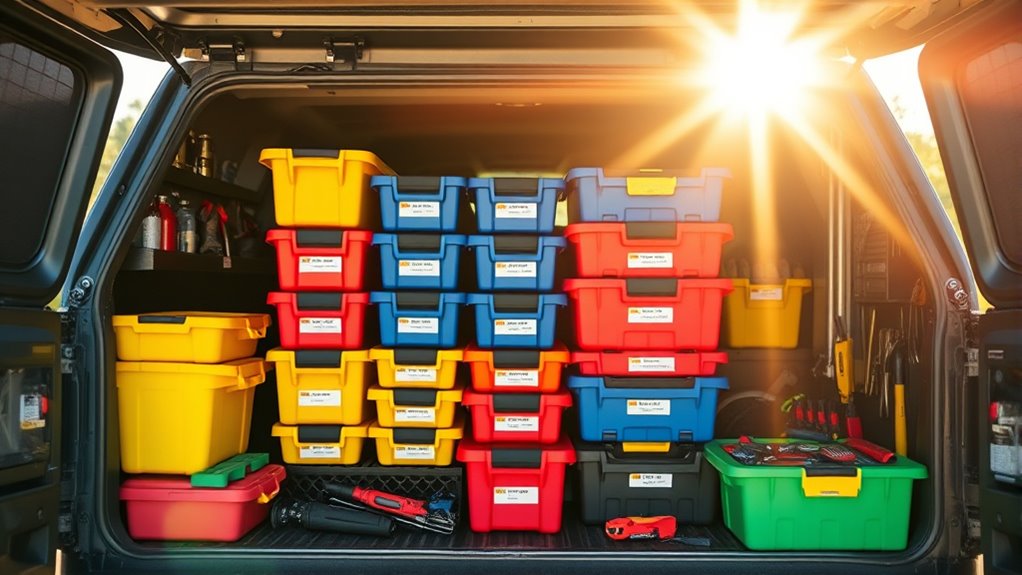
Implementing a color-coded system can considerably boost your workflow speed by making tool identification instant and effortless. When you know exactly where each item is, your trips to the truck bed shorten, and your task progressions become smoother. To measure this impact, compare your average setup and pack-up times before and after the system’s implementation. Track the number of tools retrieved per minute and note how often you need to search or ask for help. Here’s a visual to illustrate the concept:
| Tool Category | Color Code | Typical Task Time |
|---|---|---|
| Power Tools | Red | 1 minute |
| Measuring | Blue | 30 seconds |
| Consumables | Yellow | 45 seconds |
This data shows how color coding streamlines your workflow, reducing delays and increasing productivity.
Best Practices for Loading and Unloading Using Color Cues
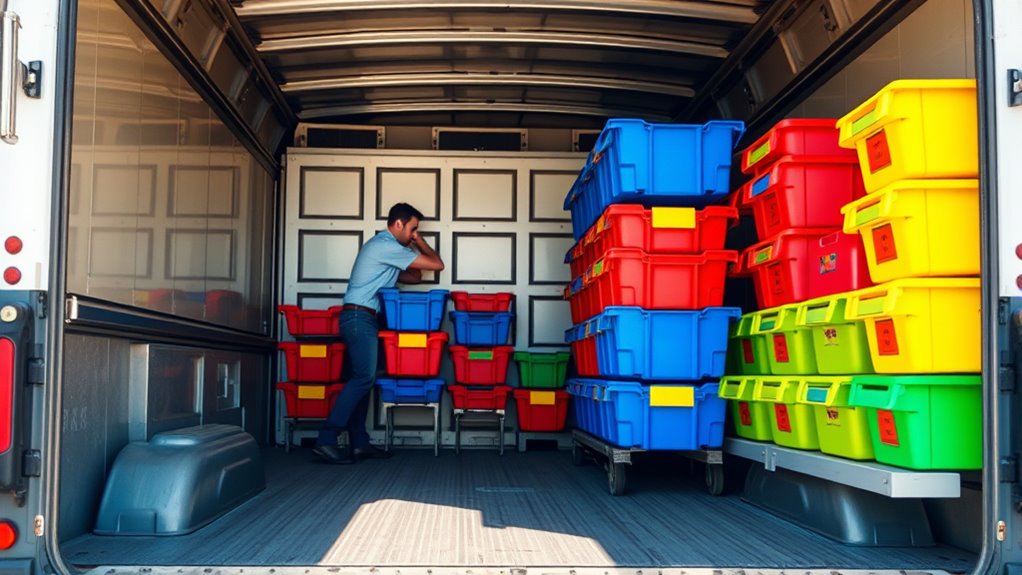
To maximize efficiency during loading and unloading, follow established color cue protocols that streamline the process. First, assign specific zones in your truck bed based on color codes—this keeps items organized and easy to find. Second, load items in the order of their color zones, starting with the most frequently used tools. Third, double-check that each item matches its designated color label before securing it. Fourth, unload items in reverse order, starting with the last loaded zone, to prevent unnecessary movement. Using consistent placement ensures quick access and reduces errors. Clear visual cues guide your team smoothly through each step, saving time and minimizing confusion. Regularly reinforce these practices to maintain a steady, efficient workflow every day.
Frequently Asked Questions
How Often Should I Re-Evaluate or Update My Color Coding System?
You should re-evaluate your color coding system whenever you notice inefficiencies or confusion among your team. Regularly check for faded or damaged labels, and update colors if new tools or categories are added. After major projects or changes in your workflow, reassess to guarantee everything stays organized. Periodic reviews—perhaps monthly or quarterly—help keep the system fresh, relevant, and effective, preventing misplacement and speeding up your work.
Can Color Coding Help Prevent Theft or Unauthorized Access?
Color coding acts like a secret handshake, helping you spot authorized tools instantly. It deters theft by making tools easily identifiable, reducing chances of misplacement or unauthorized access. When you assign specific colors to categories, only trusted team members know the system, adding an extra layer of security. Combined with locks and secure storage, color coding becomes a powerful tool to protect your equipment and keep unauthorized users at bay.
What Should I Do if a Color Label Gets Damaged or Faded?
If a color label gets damaged or faded, you should replace it immediately to maintain clear organization. Use waterproof, weather-resistant markers or tape to redraw or reapply labels, ensuring they’re highly visible and durable. Keep spare labels or markers on hand so you can quickly update the system. Regularly inspect your labels to catch and fix damage early, preventing confusion and keeping your workflow smooth.
Are There Specific Storage Guidelines for Fragile or Sensitive Tools?
You should store fragile or sensitive tools in designated green zones that are clearly marked and isolated from other items. Use padded compartments or cases for extra protection, and guarantee these areas are cushioned to prevent damage during transport. Handle these tools with care, and always double-check their placement before driving. Regularly inspect storage zones to confirm that fragile items remain secure and free from potential harm.
How Can I Integrate Color Coding With Existing Inventory Management Software?
Think of your inventory system as a well-orchestrated symphony; integrating color coding makes it harmonize seamlessly. You can link your existing software to physical labels and color codes through QR codes or barcodes, enabling instant digital-to-physical identification. Regularly update the digital records and guarantee team members scan items during loading and unloading. This connection streamlines inventory management, reduces errors, and accelerates your workflow without missing a beat.
Conclusion
By implementing a clear color coding system, you’ll find your work in the truck bed becomes faster and more efficient. Remember, a well-organized toolbox is like a well-tended garden—things grow smoothly when everything’s in its right place. Keep your system updated and visible, and you’ll save time, reduce stress, and get the job done right. After all, a little preparation goes a long way toward turning chaos into clarity.