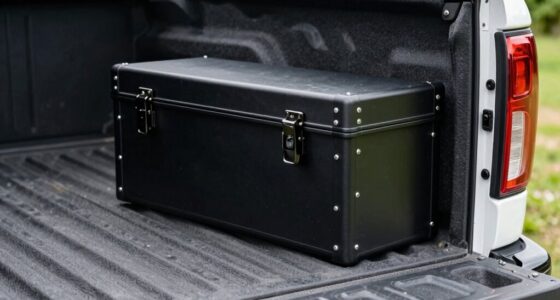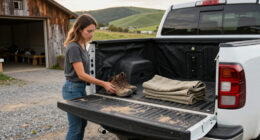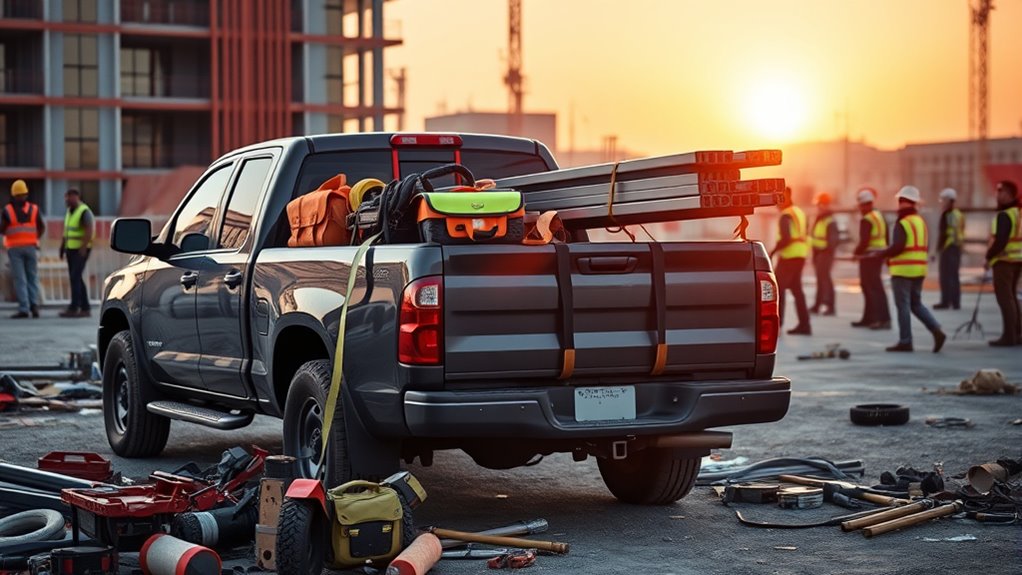

To prevent theft when your truck bed is full of gear, always double-check that all compartments are locked before leaving the site. Use high-quality locks and install GPS trackers on your tools and equipment. Choose well-lit, monitored parking areas with fences or barriers, and keep an organized inventory to identify missing items quickly. Implement security cameras and motion sensors for extra protection. Continuing with these tips can help you stay one step ahead of theft.

Get business pricing on garage and car supplies
- Business-only prices and quantity discounts
- Tax-exempt purchasing
- Multiple users, one account, clear invoices
Key Takeaways
- Secure all compartments with high-quality locks and double-check they are locked before leaving.
- Use GPS trackers and immobilizers on tools and equipment for real-time monitoring.
- Install security cameras and motion sensors around storage zones and truck beds.
- Organize and lock designated storage areas with fences or barriers to restrict access.
- Maintain detailed, real-time records of all assets and conduct regular inventory inspections.
As an affiliate, we earn on qualifying purchases.
Securing Your Truck Bed Before Leaving the Site
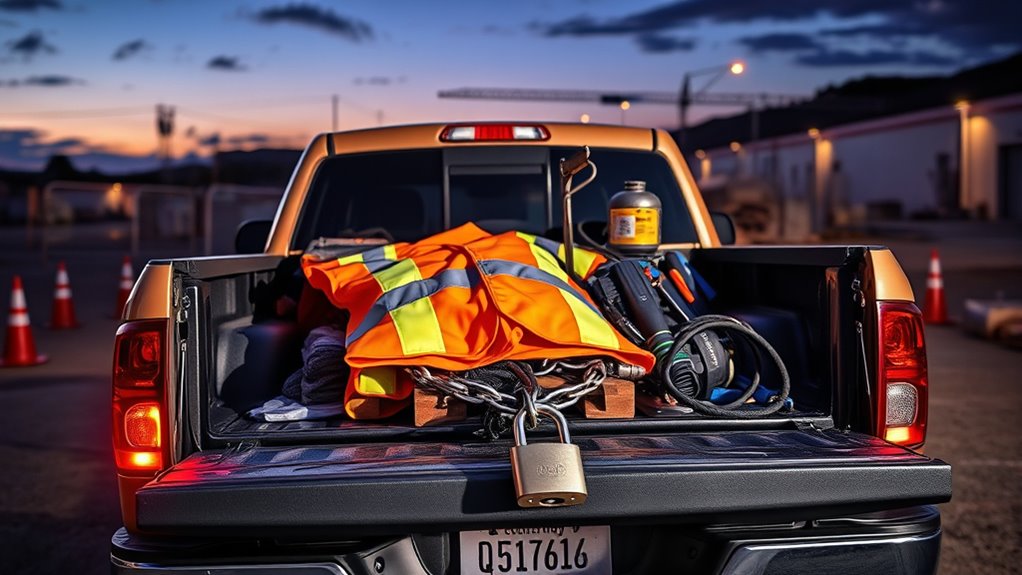
When leaving a construction site, securing your truck bed is essential to prevent theft of tools and equipment. Always double-check that all compartments are locked before you walk away. Use high-quality padlocks or built-in locks on tailgates and side panels to make unauthorized access difficult. Consider removing valuable items from the truck or placing them in a secure storage area if possible. Covering your load with a tarp or secure netting helps conceal equipment from prying eyes. If your truck has a locking toolbox or compartments, ensure they’re properly locked and in good condition. Avoid leaving keys in the ignition or in accessible spots. Proper security measures can greatly reduce the risk of theft and protect your gear when you’re away from the vehicle.
As an affiliate, we earn on qualifying purchases.
Utilizing Anti-Theft Devices and Tracking Technology
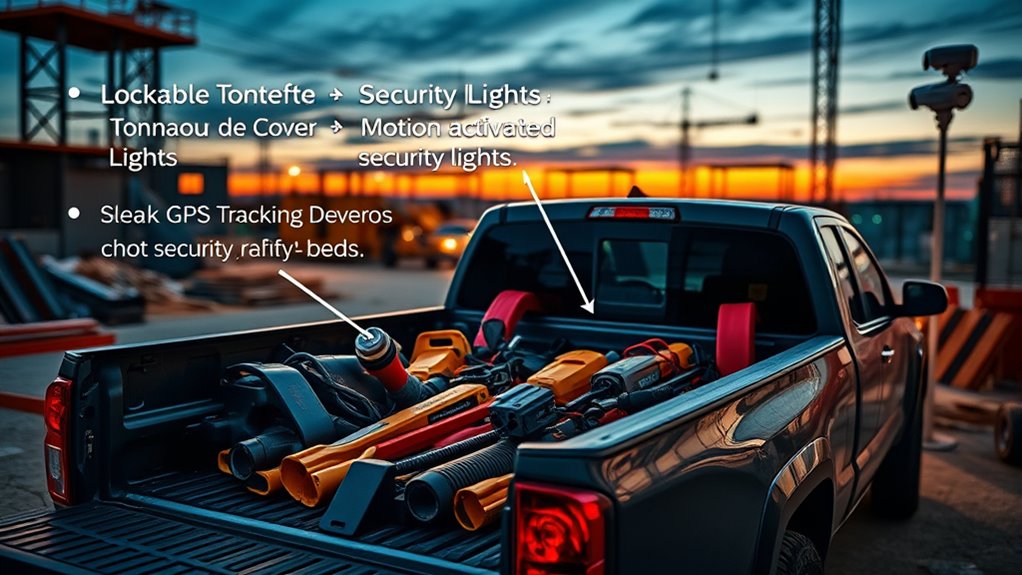
Implementing anti-theft devices and tracking technology is one of the most effective ways to protect your equipment on construction sites. You can install GPS trackers on valuable tools and machinery, making recovery easier if stolen. Use hidden locks or immobilizers that prevent unauthorized use of heavy equipment. Consider installing a security system with motion sensors and alarms to deter thieves. Visualize your site with this table:
| Device Type | Function | Benefit |
|---|---|---|
| GPS Trackers | Locate stolen assets in real-time | Faster recovery, deterrence |
| Immobilizers | Prevent operation without authorization | Stops theft before it starts |
| Security Cameras | Record activity 24/7 | Evidence collection, alerting |
These tools create multiple layers of security, making theft more difficult and increasing chances of recovery. Additionally, comprehensive security measures can further enhance site protection by integrating these devices into a coordinated security plan.
construction site security camera
As an affiliate, we earn on qualifying purchases.
As an affiliate, we earn on qualifying purchases.
Implementing Proper Chain of Custody and Documentation
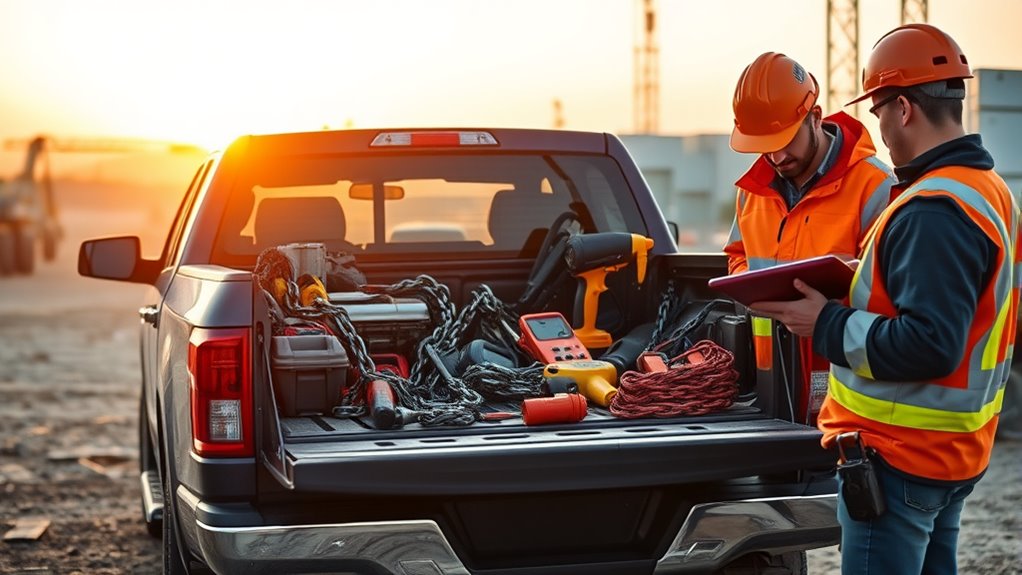
You need to keep accurate records of every item that comes onto and leaves your site to prevent theft. Clear ownership documentation helps verify who is responsible for each asset at all times. By maintaining consistent documentation practices, you can quickly identify discrepancies and strengthen your overall security. Incorporating live music into your site’s environment can also act as a deterrent for theft by increasing foot traffic and monitoring.
Accurate Item Tracking
Accurate item tracking is essential for preventing theft on construction sites, as it provides a clear record of who handled each asset and when. By maintaining detailed logs for tools, materials, and equipment, you can identify discrepancies quickly. Always document every movement, from delivery to deployment and return. Use barcode or RFID systems to automate tracking and reduce errors. Assign responsibility for checking items in and out, ensuring accountability at every step. Keep records updated in real-time, and store them securely for future reference. Proper documentation deters theft by making it clear that each asset is monitored and accounted for. When theft occurs, these records help pinpoint vulnerabilities and support investigations, increasing the likelihood of recovery and discouraging potential thieves. Record-keeping practices are also vital for creating an effective chain of custody, which enhances security and accountability on your job site.
Clear Ownership Records
Establishing clear ownership records is essential for preventing theft on construction sites, as it guarantees every asset has a documented chain of custody. When you maintain detailed records, you can quickly identify stolen items and hold individuals accountable. Proper documentation also deters theft by making it clear that assets are tracked and monitored. Implement a system that records serial numbers, asset descriptions, purchase dates, and responsible personnel. Regularly update these records and keep them accessible for inspections. Clear ownership records help authorities trace stolen items and improve recovery chances. They also streamline inventory management and reduce disputes over asset responsibility. This proactive approach makes it harder for thieves to sell stolen gear and increases the likelihood of recovery if theft occurs. Maintaining vetted records ensures your documentation remains trustworthy and effective.
Consistent Documentation Practices
Maintaining consistent documentation practices builds on proper ownership records by ensuring every asset’s movement is tracked from procurement to installation. You need clear, real-time records for tools, materials, and equipment. This includes detailed logs of who handles items and when, creating an unbroken chain of custody. Proper documentation helps identify discrepancies quickly, reducing theft opportunities. Use a tracking system to record each transfer, whether it’s from delivery to storage or to the worksite. Implementing standardized procedures ensures everyone follows the same process. Here’s an example:
| Asset Type | Movement Record |
|---|---|
| Power Tools | Checked out to Worker A on 5/1 |
| Heavy Equipment | Moved to Site B on 5/2 |
| Materials | Received and logged on 5/3 |
| Delivery | Signed in by Site Manager |
This keeps your site accountable and theft less likely. Incorporating asset tracking technology can further enhance the accuracy and security of your documentation process.
As an affiliate, we earn on qualifying purchases.
Choosing the Right Parking and Storage Areas
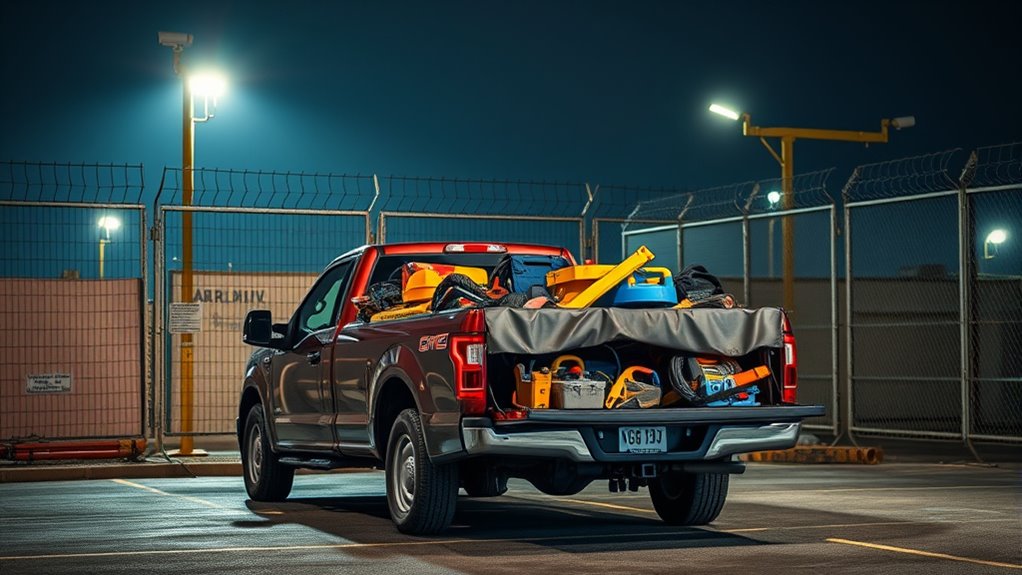
Choosing secure parking locations and designated storage zones is essential to preventing theft on your job site. Keep these areas outside the main site perimeter and well-lit to deter unauthorized access. Properly marking and organizing storage zones also help track materials and reduce the risk of theft. Incorporating organized storage systems can further enhance security and facilitate easier inventory management.
Secure Parking Locations
Selecting secure parking and storage areas is essential to preventing theft on construction sites. You want to choose locations that are visible, well-lit, and easy to monitor. Avoid isolated or poorly lit areas where criminals can operate unnoticed. Look for parking spots close to site entrances or within fenced zones to limit unauthorized access. If possible, use designated parking with security patrols or surveillance cameras. Always prioritize areas with controlled access, such as gated lots or monitored lots, to reduce the chance of theft. Properly chosen parking not only keeps your gear safer but also deters potential thieves from targeting your truck bed. Remember, visible and monitored parking zones are your best defense against theft.
- Choose well-lit, high-traffic areas
- Use fenced or gated lots
- Park near site entrances or security patrols
- Avoid isolated or hidden spots
Designated Storage Zones
Ever wonder how the right storage zone can drastically reduce theft risks on your construction site? Choosing secure, well-lit, and monitored areas for parking and storing your gear is essential. Always opt for zones close to the main site but outside the perimeter, reducing unauthorized access. Use designated, clearly marked storage areas that are locked and restricted to authorized personnel only. Avoid leaving valuable tools and equipment in unsecured zones or open areas. Implement barriers like fences or barriers around storage zones to limit access. Incorporate security features such as CCTV cameras and motion sensors to monitor these areas constantly. By establishing specific, controlled storage zones, you make it harder for thieves to target your equipment, significantly reducing the risk of theft and vandalism. Proper ventilation considerations in storage areas can also prevent damage from humidity and condensation, preserving equipment integrity.
Enhancing Site Security With Proper Lighting and Surveillance

Proper lighting and surveillance are critical tools for deterring theft and vandalism on construction sites. Bright, well-placed lights eliminate dark corners where thieves can hide, making it harder for them to approach unnoticed. Surveillance cameras provide constant monitoring, capturing evidence and acting as a visual deterrent to intruders. Mobile CCTV systems can be repositioned as needed, covering vulnerable areas during different times. Integrating these systems with motion sensors alerts you to suspicious activity immediately, allowing quick response. Understanding thermal behavior can help optimize camera placement and lighting to maximize security effectiveness.
Proper lighting and surveillance deter theft by illuminating dark areas and providing constant monitored security.
- Install bright, motion-activated lights around site perimeters
- Use strategically placed security cameras with clear views of entry points
- Incorporate mobile CCTV units for flexible coverage
- Connect surveillance to alerts for real-time notifications
Developing a Routine for Inventory Checks and Reporting
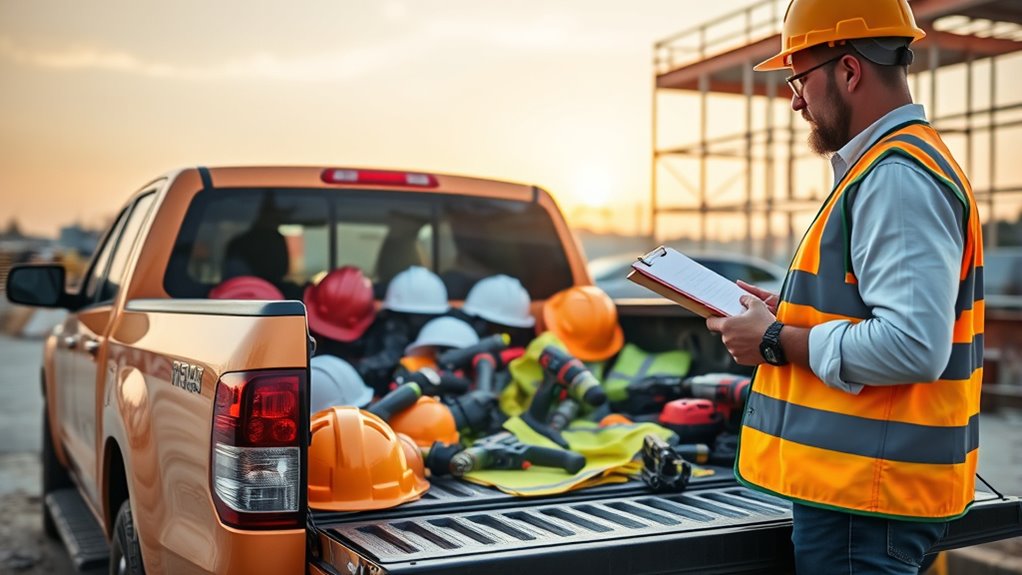
Implementing a consistent routine for inventory checks and reporting is essential for catching theft early and maintaining control over site assets. You should conduct daily inspections of your truck bed and equipment to verify everything’s accounted for. Use a checklist to track tools, supplies, and machinery before and after each shift. Document discrepancies immediately, noting missing items or damage. Assign a responsible team member to oversee the process and ensure compliance. Regularly update your inventory logs and report any suspicious activity or losses to management. This routine creates accountability and deters theft, as thieves are less likely to target well-monitored assets. Regularly inspecting your body jewelry measurements and materials can help ensure that all items remain secure and properly fitted. Over time, consistent checks help identify patterns, improve security measures, and streamline recovery efforts.
Frequently Asked Questions
How Can I Discreetly Secure My Truck Bed Without Attracting Attention?
To discreetly secure your truck bed, use hidden lockboxes or portable safes that blend with the vehicle’s design. Install concealed locks or cables that lock your gear to the truck frame without drawing attention. Consider using camouflage covers or tarps that blend with your surroundings, and park in well-lit, busy areas. These steps help keep your gear secure without making it obvious to potential thieves.
Which Anti-Theft Devices Are Most Effective for Construction Trucks?
You should consider installing heavy-duty wheel locks and cable restraints that secure your truck to a fixed object, making theft physically difficult. GPS tracking devices are highly effective, allowing you to monitor your truck’s location in real-time and quickly respond if stolen. Additionally, alarm systems with remote notifications and visible security decals can deter thieves by signaling that your vehicle is protected. Combining these devices maximizes your truck’s security.
How Do I Train Staff to Follow Proper Chain-Of-Custody Procedures?
To train your staff on proper chain-of-custody procedures, start by clearly explaining the importance of accountability and security. Show them how to document every transfer or movement of tools and materials accurately. Conduct hands-on training sessions, emphasizing real-life scenarios. Reinforce protocols regularly through meetings or checklists, and encourage staff to report any discrepancies immediately. Consistent, clear communication guarantees everyone understands their role in preventing theft effectively.
What Are the Best Locations for Parking Trucks Overnight Securely?
If you want to park your truck overnight securely, choose a well-lit, monitored area away from busy roads. In a case study, a contractor parked in a designated, CCTV-covered lot reported zero thefts compared to previous incidents elsewhere. You should also guarantee the lot has fencing, restrict access to authorized personnel, and consider additional security measures like locks or alarms. This combination minimizes risks and keeps your gear safe.
How Can I Ensure My Site’s Security Measures Are Compliant With Regulations?
You make certain your site’s security measures are compliant by reviewing local regulations and industry standards regularly. You implement necessary controls like proper fencing, lighting, and surveillance, and keep detailed logs of access and activities. You train staff on security protocols, verify credentials, and conduct routine audits. Staying updated on legal requirements and working with security professionals helps you maintain compliance and avoid penalties while protecting your site effectively.
Conclusion
By taking these proactive steps, you can considerably reduce the risk of theft when your truck bed is full of gear. Think about how secure you’d feel knowing your equipment is protected—doesn’t that peace of mind make it worth the effort? Implementing proper security measures keeps your tools safe and your job running smoothly. After all, isn’t peace of mind the best reward for staying vigilant and prepared?
Fall Picks
fall essentials
As an affiliate, we earn on qualifying purchases.