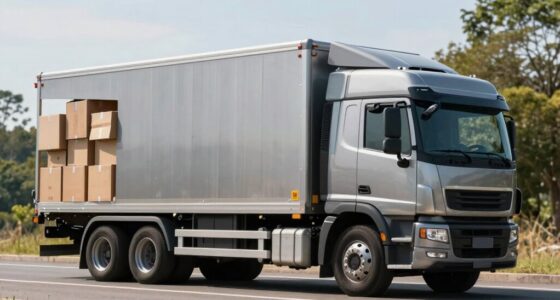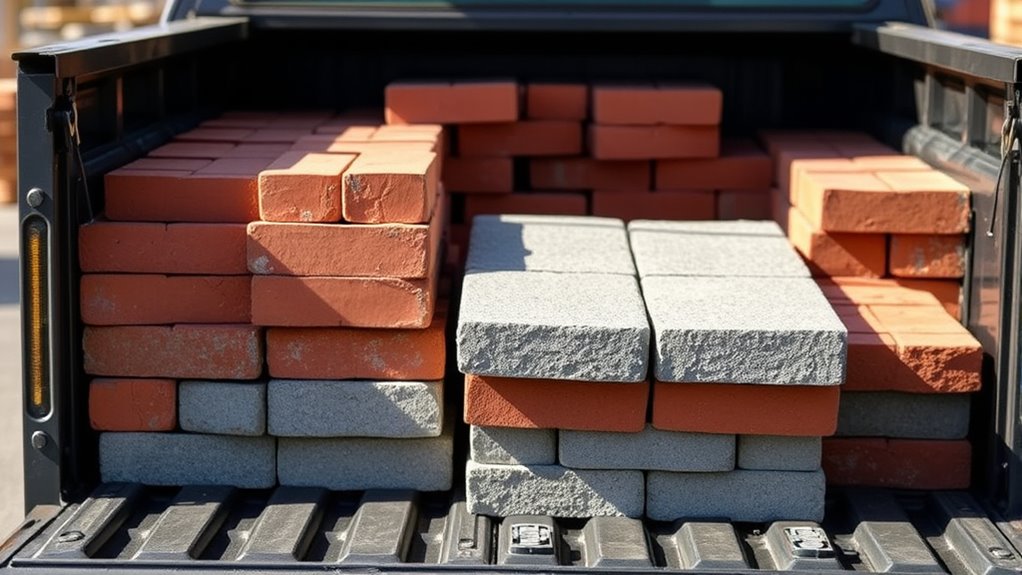
To haul bricks, pavers, and heavy materials safely without overloading your truck bed, make certain you understand your vehicle’s weight limit and evenly distribute the load. Secure everything tightly with heavy-duty straps or chains, placing them at multiple points. Use pallets and proper stacking to keep materials stable, and choose a vehicle with enough capacity and traction. Planning for weather and external conditions is key. Keep these tips in mind as you explore more ways to transport heavy loads securely.
Open a free Amazon Business account
Business pricing, bulk buying and tax-exempt orders.
As an affiliate, we earn on qualifying purchases.
Key Takeaways
- Distribute the load evenly across the truck bed to prevent overloading and maintain balance.
- Use pallets to stack bricks or pavers securely, reducing weight concentration and facilitating handling.
- Select a vehicle with sufficient capacity and stability features to safely carry heavy materials without exceeding limits.
- Secure loads tightly with heavy-duty straps and regularly inspect them during transit to prevent shifting.
- Consider multiple shipments or specialized heavy-haul trucks for loads exceeding legal weight limits.
As an affiliate, we earn on qualifying purchases.
Understanding Weight Limits and Proper Load Distribution
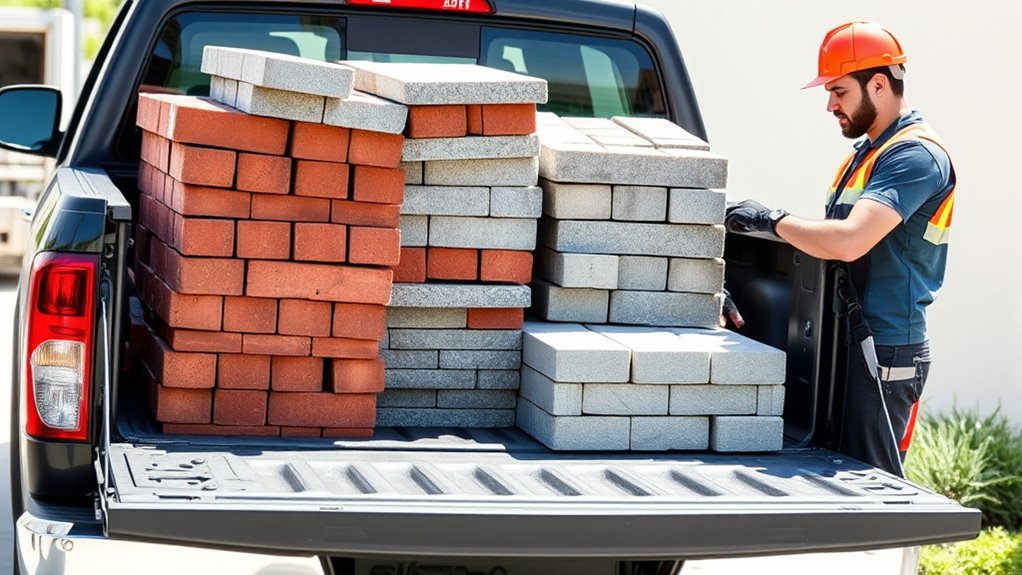
Understanding weight limits and proper load distribution is essential for safe and efficient hauling of heavy materials. You need to be aware that standard freight trucks usually have a legal gross weight limit of 80,000 lbs. Exceeding this limit requires multi-load shipments or specialized heavy haul transport. To prevent issues like tilting or uneven wear, spread the load evenly across the truck bed. Avoid stacking pavers too high, which increases the risk of toppling during transit. Before loading, calculate the total weight of your pavers and compare it with your truck’s capacity. Proper weight distribution reduces strain on pallets, minimizes damage, and ensures the vehicle handles smoothly. Planning ahead helps prevent overloading and keeps your haul safe and compliant. Weight limits and load distribution are critical concepts to understand for safe transportation.
As an affiliate, we earn on qualifying purchases.
Effective Securing and Strapping Techniques for Heavy Loads
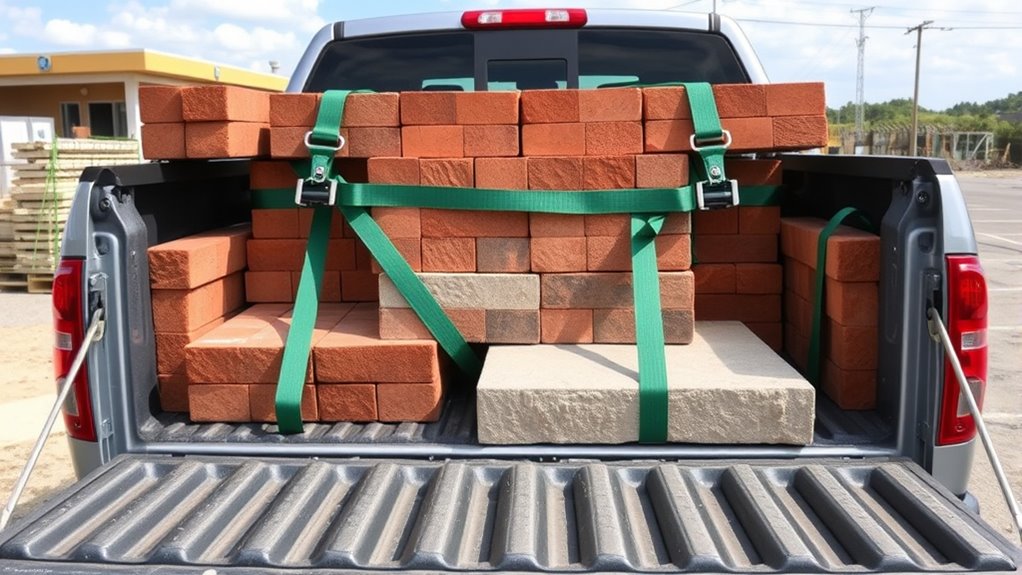
To guarantee your heavy loads stay secure during transport, using the right strapping methods is essential. You need to apply proper tension and secure multiple points to prevent shifting or loosening. Regularly inspecting and tightening straps throughout the trip helps maintain load integrity and safety. Incorporating automation technologies can further enhance the efficiency and reliability of securing heavy materials.
Proper Strapping Methods
Effective strapping methods are essential for securely anchoring heavy loads during transport, preventing shifting and potential damage. Use heavy-duty straps, chains, and ratchet binders to tightly secure the load. Apply straps at multiple points across the load to distribute tension evenly. Make certain straps are positioned over sturdy parts of pallets or directly over the load for maximum hold. Regularly inspect and tighten straps during transit to compensate for settling or shifting. Proper tension and placement are crucial to prevent movement. Here’s a quick guide:
| Strap Placement | Tension Level | Securing Points |
|---|---|---|
| Over pallets | Firm but not tight | Anchor points on truck bed |
| Crosswise straps | Tight | Load corners |
| Vertical straps | Secure tension | Main load sections |
Follow these methods to keep your load safe and stable. Additionally, understanding the importance of load distribution can help optimize your securing strategy for increased safety during transport.
Securement Inspection Procedures
Have you thoroughly inspected your load’s securement before starting your journey? You must check every strap, chain, and tie-down to make certain they’re tight and undamaged. Look for signs of wear, corrosion, or fraying that could compromise security. Confirm all securing devices are properly engaged in their anchor points and that ratchets or binders are fully tightened. Verify that load blocks are stable and evenly distributed, with no shifting or wobbling. Inspect the weatherproof coverings, like shrink wrap, for tears or gaps. During transit, periodically stop to recheck securements, tightening straps if needed. Regular inspection procedures are essential for maintaining optimal security and reducing risks. Consistent inspections prevent load movement, reduce accident risks, and keep your cargo safe and compliant throughout the trip.
As an affiliate, we earn on qualifying purchases.
Essential Loading Equipment and Tools for Safe Transport
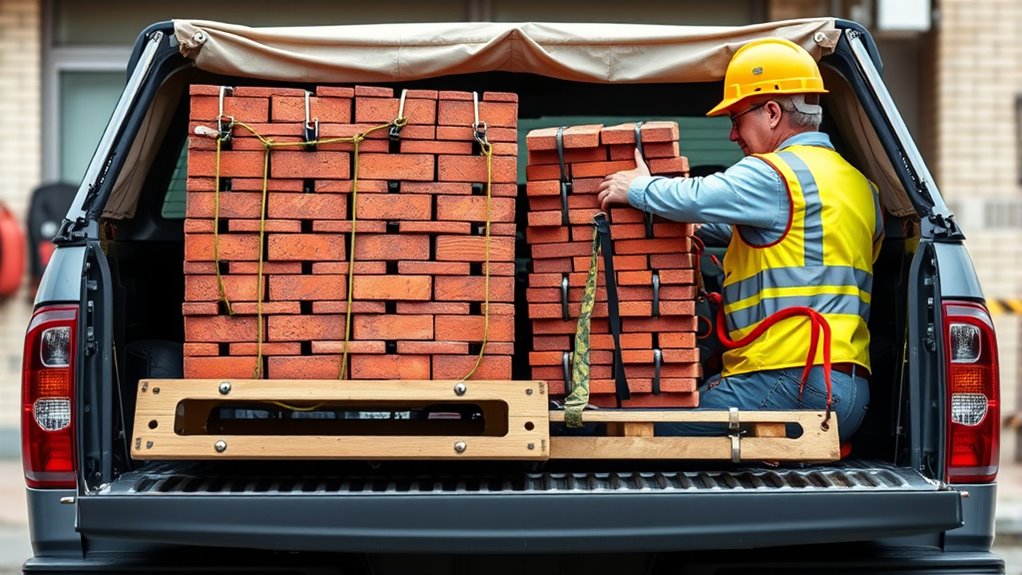
Using the right loading equipment and tools is essential for guaranteeing safe and efficient transport of heavy materials like pavers. Forklifts and pallet jacks help you load and unload without risking injuries or damage. Loading ramps provide smooth transitions for pallets, reducing jolts and impacts. Ensure all equipment is well-maintained and operated by trained personnel to prevent accidents. Wedges inside the truck help keep pallets stable during transit. For offloading in tight spaces, Moffett trucks with integrated forklifts offer added flexibility. Properly securing loads with heavy-duty straps, chains, and ratchet binders keeps everything in place. Regularly inspect and tighten straps during transport to prevent shifting. Using these tools correctly guarantees a safer, more controlled hauling process. Additionally, understanding the importance of load stability can significantly improve safety and efficiency during transport.
As an affiliate, we earn on qualifying purchases.
Best Practices for Stacking and Arranging Heavy Materials
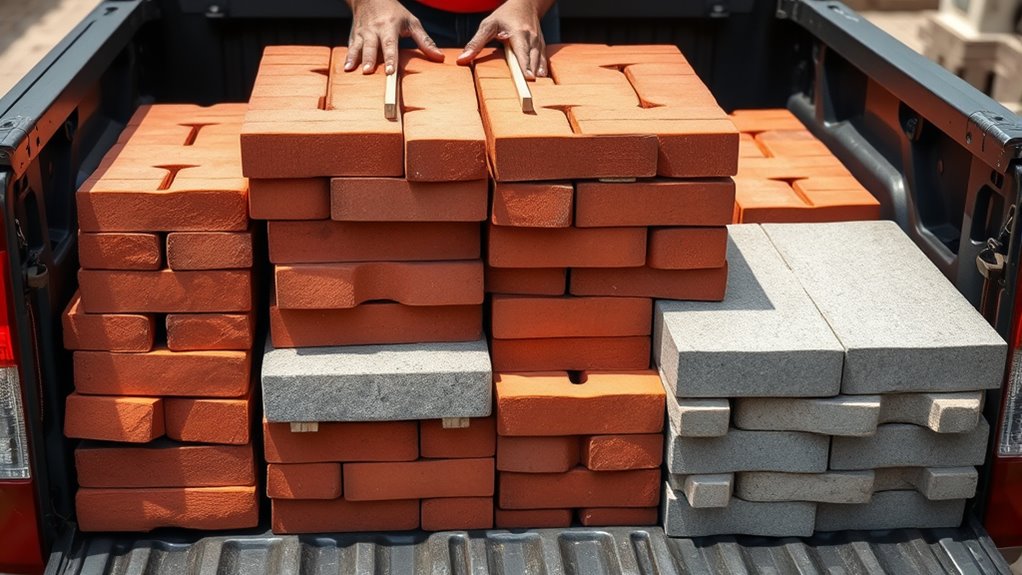
Proper stacking and arrangement of heavy materials like pavers are crucial to guarantee stability during transport and prevent damage. You should ensure the load is evenly distributed across the truck bed to avoid tilting or shifting. Stack pavers tightly and securely to minimize movement, reducing the risk of cracking or chipping. Use pallets to keep the load stable and make handling easier. When stacking, consider the maximum height limit to maintain balance and prevent toppling. Additionally, account for moisture-sensitive materials, especially natural stone or clay pavers, to prevent damage from moisture or weather exposure. Maximize Your Truck Bed’s Potential for Every Adventure by understanding the importance of proper load management during hauling.
Selecting the Right Vehicle for Your Heavy Haul Needs
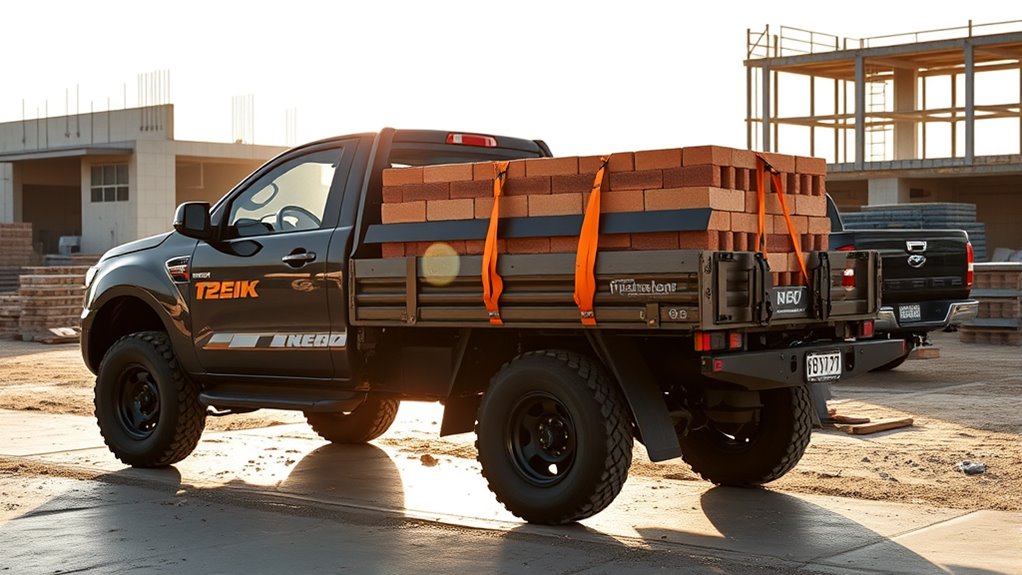
When choosing a vehicle for your heavy haul, you need to consider its capacity to handle the total weight safely. Transport method options vary based on project size, access restrictions, and equipment availability, so picking the right one is essential. Don’t forget to account for weather conditions and site access, which can influence your vehicle choice and delivery plan. Additionally, understanding your vehicle’s specifications and weight limits is crucial for safe and efficient hauling.
Vehicle Capacity Considerations
Choosing the right vehicle for your heavy haul needs requires careful assessment of your load’s size, weight, and destination. You need to match your cargo with a vehicle that can handle the load without exceeding capacity. Overloading can lead to fines, damage, or accidents. To guarantee proper fit, consider:
- The gross weight limit of the vehicle and its compliance with local laws
- The maximum payload capacity of the truck or trailer
- The dimensions and height restrictions at your delivery site
- Color accuracy in your choice of equipment to ensure precise measurements and safe handling
Always calculate your total load weight, including pallets and securing gear, to prevent overloading. Proper vehicle selection not only keeps your operation legal but also ensures safe, efficient transport of bricks, pavers, and heavy materials.
Transport Method Options
Choosing the appropriate transportation method is essential to guarantee your heavy materials arrive at their destination securely and effectively. When selecting your vehicle, consider the load size, weight, and delivery distance. Flatbed trucks are ideal for large, bulky loads like pavers, offering easy loading and unloading. Heavy-duty articulated lorries with integrated forklifts suit large-scale projects needing quick pallet offloading. For smaller jobs or residential deliveries, small lorries with rear tail lifts provide a cost-effective solution. If moisture protection is necessary, opt for covered transport or waterproof packaging to shield your pavers from weather exposure. Always match your vehicle choice to your project’s scope, site access, and equipment availability, ensuring safe, efficient, and compliant transport of your heavy materials.
Weather and Access Factors
Weather conditions and site access considerably influence the type of vehicle you should select for your heavy haul. Rain, snow, or ice can make roads slick, requiring vehicles with better traction and stability. Limited site access, such as narrow roads or low bridges, demands smaller or specialized trucks to prevent getting stuck or causing damage. You also need to contemplate potential weather delays that could impact timing. Additionally, proper ventilation of the hauling equipment can help prevent moisture buildup and protect your materials during transport. Keep in mind: – Choose weather-resistant vehicles or add protective coverings for moisture-sensitive pavers – Opt for trucks with enhanced traction or four-wheel drive in snowy or muddy conditions – Select vehicles that can navigate tight or restricted access points without risking damage or delays
Ensuring Safe Handling and Driver Practices During Transit
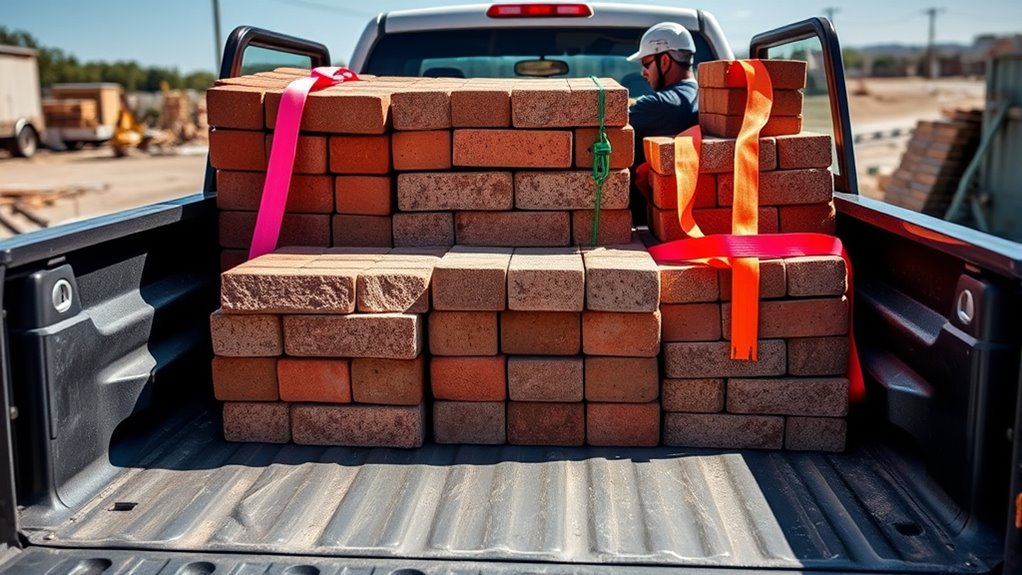
To guarantee safe handling and driver practices during transit, it’s essential that drivers operate vehicles smoothly and avoid abrupt maneuvers that can destabilize the load. You should accelerate gradually, brake gently, and steer smoothly to prevent shifting or toppling. Maintaining consistent speeds helps reduce vibrations that could loosen straps or cause pallets to shift. Always check your load’s security periodically during the trip, tightening straps if necessary. Keep a safe following distance and avoid sudden lane changes or sharp turns. Use appropriate safety gear and follow all traffic regulations. Properly positioned forks and securement points ensure load stability. Regularly inspecting your vehicle’s navigation and mapping systems can also help prevent unexpected maneuvers that might compromise the load. Remember, cautious driving preserves your load integrity and minimizes risks for everyone on the road.
Planning for Weather and External Conditions to Protect Your Load
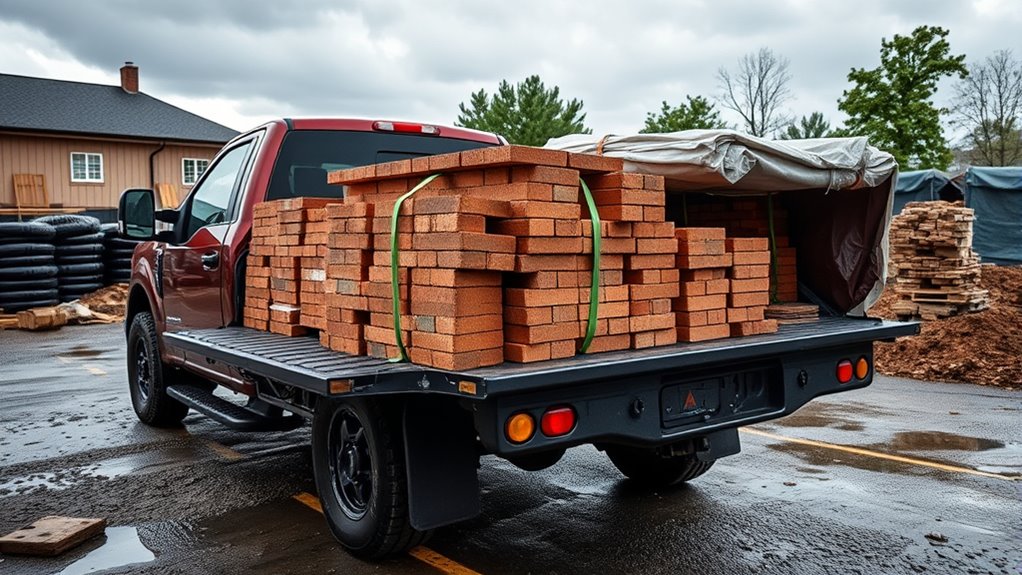
Since external conditions can change rapidly during transit, proactive planning is essential to protect your load from weather-related damage. You need to anticipate conditions like rain, wind, or extreme sun and prepare accordingly. Consider these steps:
- Cover your load with waterproof tarps or shrink wrap to prevent moisture damage.
- Use weather-resistant strapping and securement materials to maintain load stability in wind.
- Plan routes that avoid exposed or high-wind areas, and check the weather forecast before departure.
Frequently Asked Questions
How Can I Estimate Load Weight Accurately Before Loading?
To estimate load weight accurately before loading, start by calculating the weight of each pallet or bundle. Use manufacturer specifications or scales if available. Count the number of pallets and multiply by the weight per unit. Add any additional materials or equipment. Keep a detailed record to guarantee your total weight stays within truck limits. Double-check your calculations and consider using a portable scale for more precision if needed.
What Are Common Signs of Insecure Heavy Loads During Transit?
Imagine a ship sailing through rough seas—if its cargo isn’t secured, it’ll list or even capsize. Similarly, during transit, you’ll notice shifting or sliding loads, unusual noises, or uneven truck handling. These signs warn you that your load isn’t stable. Check your straps and pallets regularly, and listen for any creaks or bumps. Promptly securing and inspecting your load keeps your journey smooth and safe.
How Often Should Straps Be Inspected During Transportation?
You should inspect your straps every 1 to 2 hours during transportation. Regular checks help make certain straps remain tight and secure, especially if you’re driving over rough roads or in changing weather conditions. Tighten straps as needed to prevent shifting or loosening that could compromise load stability. Consistent inspection and adjustment help keep your load safe, avoid damage, and ensure compliance with safety regulations throughout the journey.
Which Vehicle Features Are Best for Transporting Moisture-Sensitive Pavers?
If you want your moisture-sensitive pavers to arrive looking pristine, you need the right vehicle features. Opt for trucks with waterproof covers or fully enclosed cargo areas—these act like fortress walls against rain, dew, and humidity. Flatbed trucks with waterproof tarps or covered lorries are your best bet, providing a moisture-proof barrier that keeps your pavers dry, safe, and ready to impress upon arrival.
How Do Weather Conditions Affect Load Security and Safety Measures?
Weather conditions directly impact load security and safety measures. When it rains or is wet, you should make certain your load is fully shrink-wrapped and covered with waterproof tarps to prevent moisture damage. Wind can cause straps and tie-downs to loosen, so you should inspect and tighten them periodically. Icy or snowy conditions require extra caution, like reducing speed and increasing securement, to prevent shifting and maintain stability during transit.
Conclusion
By following these tips, you’ll keep your load steady and your journey smooth, like a well-tuned engine. Remember, knowing your limits and securing your materials properly isn’t just about safety—it’s about ensuring your haul arrives in one piece. With the right tools and careful planning, you’ll turn heavy loads into manageable tasks, making every trip a confident stride forward. Keep safety at the forefront, and your heavy hauling will become as effortless as a gentle breeze.
NFL season / tailgating Picks
team gear
As an affiliate, we earn on qualifying purchases.