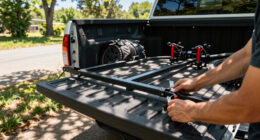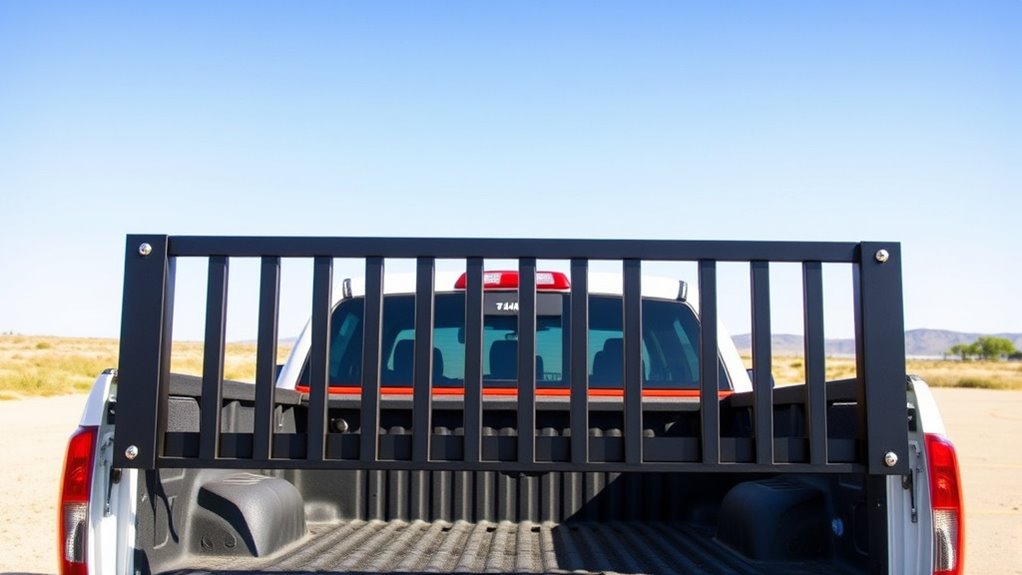

To build a simple cargo barrier for your truck bed‘s front, start by measuring your truck bed to determine the width, height, and length needed, accounting for obstacles like wheel wells. Choose durable materials like plywood or aluminum, and gather necessary tools. Cut and assemble the frame, then secure it using cargo bars, brackets, or clamps to the bed sides for stability. For more detailed steps, continue exploring how to create a secure and versatile cargo barrier.
Prime for Young Adults — start your free trial
Fast free delivery, streaming and member deals for eligible 18–24 year olds.
As an affiliate, we earn on qualifying purchases.
Key Takeaways
- Measure truck bed width, height, and length, accounting for contours and obstacles for an accurate fit.
- Select durable materials like plywood or aluminum and gather necessary tools such as saws and fasteners.
- Cut components precisely, drill holes for mounting, and verify the structural integrity before assembly.
- Secure the barrier using cargo bars, clamps, or brackets attached to bed sides or floor for stability.
- Finish with sanding, painting, and add tie-down hooks or handles for convenience and safety.
As an affiliate, we earn on qualifying purchases.
Planning and Measuring for Your Cargo Barrier

Before building your cargo barrier, you need to carefully plan and measure to guarantee a proper fit. Start by measuring the width of your truck bed from side to side, ensuring you account for any contours or curves. Next, measure the height from the bed floor to the top edge of the bed sides, so your barrier matches or exceeds this height for safety. Don’t forget to measure the depth from the front wall of the bed to the tailgate, in case your design requires a specific length. Mark these measurements clearly and double-check for accuracy. Consider any obstacles or features in your truck bed, like wheel wells or tie-downs, which might influence your barrier’s dimensions. Precise measurements will help you create a barrier that’s secure, effective, and easy to install. Additionally, noting the storage and organization needs will ensure your barrier does not obstruct access to essential compartments.
adjustable cargo bars for truck bed
As an affiliate, we earn on qualifying purchases.
As an affiliate, we earn on qualifying purchases.
Selecting Materials and Tools Needed
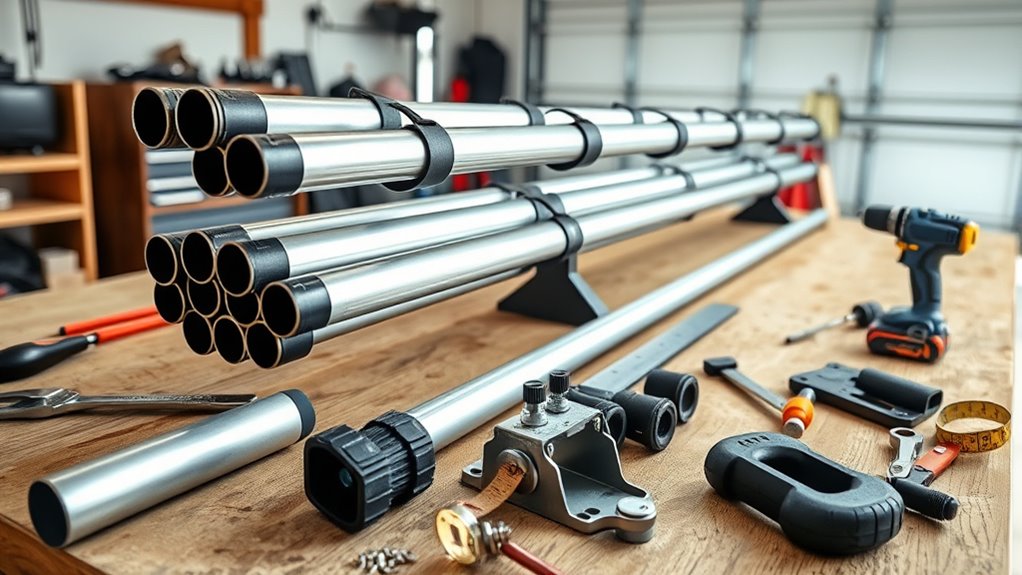
Choosing the right materials and tools is key to building a sturdy and functional cargo barrier. First, select durable materials like plywood, aluminum channels, or lumber, depending on your preferred strength and weight. Second, gather essential tools such as:
- Saws (circular or hand saw) for cutting panels and framing pieces
- Drills for making holes and driving screws or bolts
- Measuring tape to ensure precise dimensions
- Screwdrivers or wrench sets for assembling and tightening fasteners
Optional items include sandpaper, paint, and edge routers for finishing touches. For assembly, you’ll also need hardware like screws, bolts, clamps, and brackets. Having the right materials and tools ready guarantees a smooth construction process and a reliable cargo barrier. Additionally, understanding structural support principles can help ensure your barrier remains secure under load.
As an affiliate, we earn on qualifying purchases.
Designing Your Cargo Barrier for Fit and Function

Start by measuring your truck bed’s dimensions precisely to make certain the barrier fits securely and covers the necessary area. Pay attention to the height, width, and contours so your design provides stability and effectiveness. When planning, consider how the barrier will stay stable during driving and whether it can be easily removed or adjusted when needed. Incorporating energy-efficient materials can also enhance the sustainability and longevity of your cargo barrier.
Measuring Bed Dimensions Precisely
Accurately measuring your truck bed is essential to guarantee your cargo barrier fits securely and functions effectively. Start by taking these measurements:
- Bed length: Measure from the inside of one sidewall to the other at the front and back, noting the shortest distance.
- Bed width: Measure across the interior width between the sidewalls at multiple points to account for any tapering.
- Height of sides: Measure from the bed floor to the top edge of the sidewalls at multiple locations.
- Contour details: Note any bed contours, slopes, or irregularities that could affect barrier placement.
For optimal results, understanding the field of view and how your measurements influence the barrier’s design can help ensure a secure fit and effective containment.
Use a reliable measuring tape, record all measurements carefully, and double-check for accuracy. Precise measurements ensure your barrier will fit snugly and perform effectively.
Ensuring Barrier Stability
To guarantee your cargo barrier remains stable and effective, you need to focus on designing it to fit your truck bed precisely. Start by ensuring the height matches or exceeds your truck bed sides to prevent items from sliding over the top. Use crossbars and reinforcement brackets to add rigidity, preventing the barrier from wobbling or bending under load. Secure the barrier firmly to the bed floor using bolts or clamps, avoiding loose fittings. Incorporate adjustable features like sliding panels or flexible mounting points to accommodate different cargo and conditions. Consider angled or tapered ends to fit bed contours snugly. Regularly check fasteners for tightness and integrity, replacing any worn or loose parts promptly. Properly designed and secured, your barrier will stay stable and effectively protect your cargo. A well-designed cargo barrier can also help manage weight distribution and enhance overall safety during transport.
As an affiliate, we earn on qualifying purchases.
Cutting and Preparing the Components
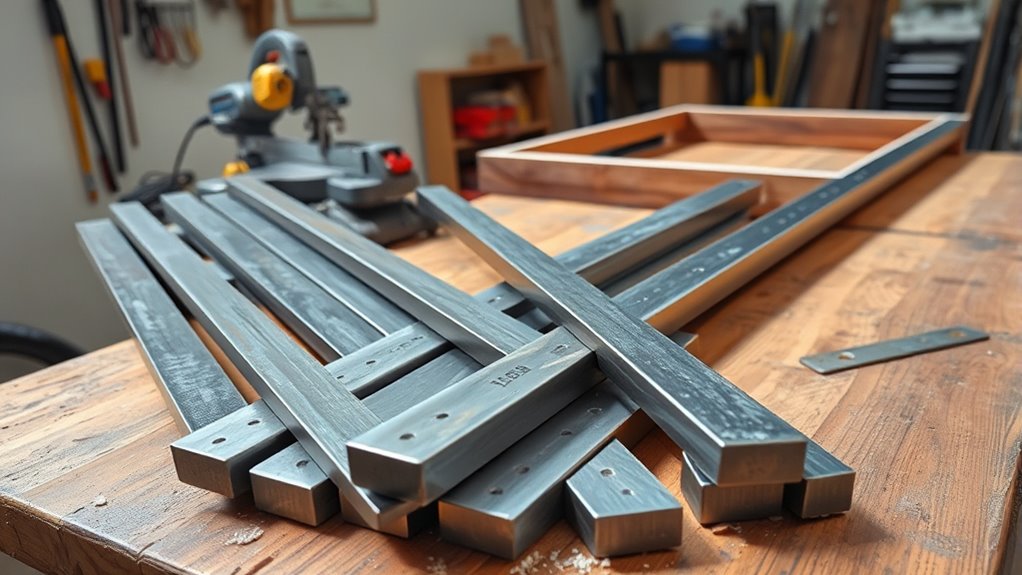
Before assembling your cargo barrier, you need to cut and prepare all components to guarantee a proper fit. First, measure your truck bed and mark the dimensions on your materials. Next, use a saw appropriate for your material—like a circular saw for plywood or aluminum—to cut the pieces precisely. Then, smooth edges with sandpaper or an edge router to prevent injuries and ensure a clean look. Finally, drill any necessary holes for fasteners or brackets, making sure they align with your design. Here’s what you should focus on:
Carefully measure, cut, smooth edges, and drill holes for a precise, secure cargo barrier.
- Measure and mark all dimensions accurately.
- Cut components with the correct tools.
- Smooth and deburr edges.
- Drill holes for fasteners and attachment points.
- Verify the structural integrity of your components before assembly.
These steps set a solid foundation for a secure, well-fitted cargo barrier.
Assembling the Frame of the Barrier
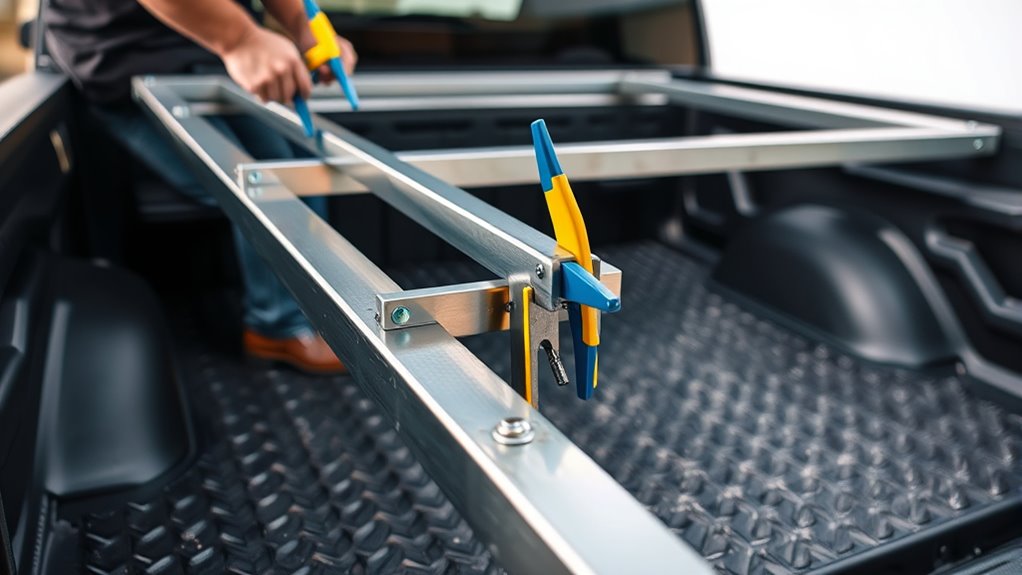
Start by laying out the main frame components on a flat surface, ensuring they are cut to the correct measurements. Connect the vertical side pieces to the horizontal top and bottom rails using clamps and fasteners. For a sturdy structure, reinforce corners with brackets or L-angles. Use a level to keep everything aligned. Here’s a quick overview of the assembly:
| Part | Material | Fasteners |
|---|---|---|
| Vertical supports | Lumber or aluminum | Screws or bolts |
| Top crossbar | Same as supports | Bolts or screws |
| Bottom rail | Same as supports | Screws or bolts |
Ensure all joints are tight, and double-check measurements before moving on. Paying attention to proper alignment is crucial for a strong, safe frame. This creates a solid frame ready for mounting in your truck bed.
Securing the Barrier in Your Truck Bed
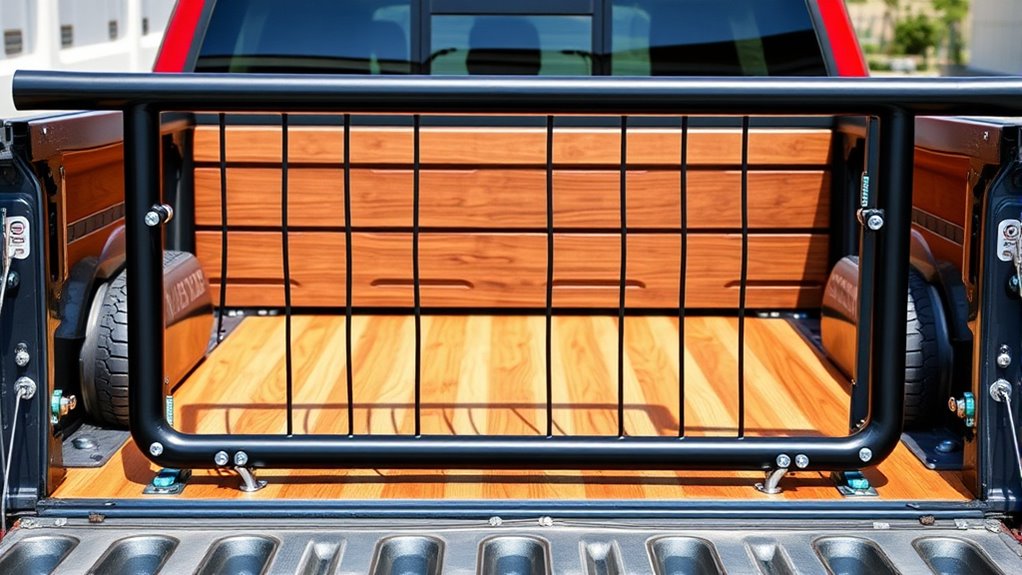
To keep your cargo barrier secure, you can use cargo bars that apply pressure to hold it in place. Clamps are also effective for attaching the barrier firmly to the truck bed sides or floor. Additionally, securing the barrier to bed rails with brackets or specialized hardware provides extra stability and peace of mind. Incorporating smart appliance features into your cargo setup can further enhance safety and monitoring during transport.
Using Cargo Bars
Using cargo bars is an effective way to secure your cargo barrier and prevent it from shifting during transit. To maximize stability, follow these steps:
- Measure your truck bed and select cargo bars that fit snugly between the sides.
- Position the bars horizontally across the top of the barrier, ensuring they press firmly against the bed sides.
- Adjust the tension on the bars if they’re telescoping or ratcheting, making sure they’re tight enough to hold the barrier in place.
- Confirm that the bars are level and securely anchored, preventing any movement during driving.
- For added security, consider choosing weather-resistant cargo bars to withstand outdoor conditions and maintain their grip over time.
These steps help keep your barrier steady, enhancing safety and cargo organization without the need for permanent fixtures.
Securing With Clamps
Clamps provide a quick and versatile way to secure your cargo barrier directly to your truck bed. You can use C-clamps or quick-release clamps to hold the barrier firmly in place. Position the barrier where you want it, then attach the clamps to the bed’s sides or corners. Tighten the clamps until the barrier feels stable and secure. This method is ideal for temporary setups or if you plan to remove the barrier frequently. Make sure the clamps don’t damage the truck’s paint or bed surface by placing a pad or rubber lining between the clamp and the truck. Check the clamps regularly to ensure they stay tight, especially during transit, to prevent any shifting or accidental dislodging. Proper securing methods help maintain a safe and organized truck bed.
Attaching to Bed Rails
Attaching your cargo barrier to the bed rails offers a secure and stable method for installation that minimizes movement during transit. To do this effectively, follow these steps:
- Measure the bed rails to determine best attachment points.
- Use brackets or clamps designed for bed rails to secure the barrier firmly.
- Drill holes if necessary, ensuring they align with the mounting hardware.
- Tighten all fasteners securely, checking for stability.
Ensure the barrier sits flush against the bed sides, with no gaps that could allow cargo to slip through. Use high-quality hardware to prevent loosening over time. Regularly inspect the attachments for wear or damage, and tighten as needed to maintain safety. Proper attachment keeps your cargo secure and your truck safe during transit.
Adding Finishing Touches and Custom Features
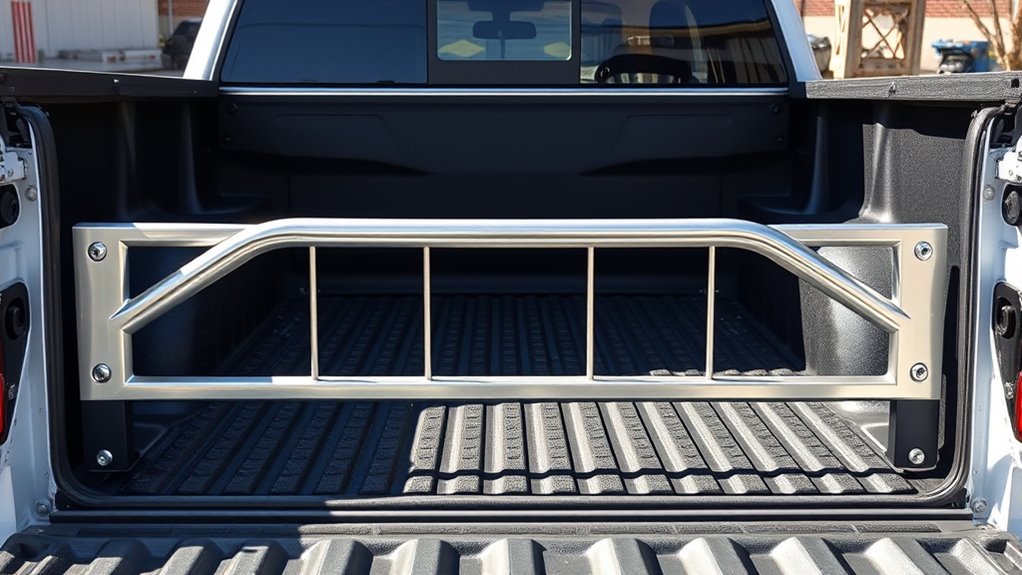
Adding finishing touches and custom features allows you to enhance both the functionality and appearance of your cargo barrier. You can paint or stain the barrier to match your truck’s interior, boosting durability and style. Sanding rough edges guarantees safety and a clean look. Installing hooks or brackets provides convenient tie-down points for securing cargo. Consider adding latches or handles for easy removal or adjustment. Incorporating dividers or storage compartments helps organize your gear and maximizes space. Using textured finishes or rubber coatings can improve grip and reduce slipping. Custom features like adjustable panels or removable sections give you flexibility for different cargo sizes. These enhancements not only improve safety and usability but also give your truck bed a personalized, finished appearance.
Maintaining and Inspecting the Cargo Barrier

Regular maintenance and inspection are essential to keep your cargo barrier functioning safely and effectively. You should perform routine checks to identify issues early. Here’s what to focus on:
- Fasteners – Ensure screws, bolts, and clamps are tight and free of rust or damage.
- Structural Integrity – Look for cracks, bends, or warping in the barrier material.
- Connections – Verify brackets, crossbars, and mounting points are secure and properly aligned.
- Cleanliness – Remove debris, dirt, and water that could cause corrosion or deterioration.
Frequently Asked Questions
Can I Use Recycled Materials for My Cargo Barrier?
Yes, you can use recycled materials for your cargo barrier. Just make certain they’re sturdy, safe, and in good condition. For example, reclaimed wood or aluminum scraps can work if they meet strength requirements. Clean and inspect them thoroughly before use, and reinforce joints if needed. Using recycled materials not only saves money but also helps the environment, as long as safety and durability aren’t compromised.
What Is the Maximum Weight My Barrier Can Support?
Your cargo barrier’s maximum weight support depends on materials, design, and reinforcement. While a plywood barrier with sturdy brackets might handle 200-300 pounds, a lightweight aluminum version may support less. Don’t underestimate the importance of robust fasteners and proper installation—these can considerably boost capacity. Always test your barrier carefully before heavy loads, and avoid exceeding its limits to ensure safety and longevity.
How Do I Remove and Reinstall the Barrier Easily?
To remove and reinstall your cargo barrier easily, first loosen or unscrew any fasteners securing it to the truck bed. If it’s held with clamps or adjustable rails, simply release or slide them out. Keep all hardware organized for quick reassembly. When reinstalling, line up the parts properly, tighten or secure fasteners firmly, and make certain the barrier is stable before driving. This method saves time and keeps your barrier secure.
Are There Safety Standards I Should Follow?
Are you aware of safety standards for cargo barriers? You should follow local regulations and manufacturer guidelines to guarantee your barrier’s safety. Make sure it’s strong enough to withstand impacts, properly secured, and doesn’t obstruct your view or access. Regularly inspect for damage or loose parts, and use appropriate materials like steel or reinforced plywood. Complying with standards helps prevent accidents and keeps you and your cargo safe during every trip.
Can I Customize the Barrier for Different Cargo Sizes?
Yes, you can customize your cargo barrier for different sizes. You should design adjustable panels or removable sections to accommodate various cargo dimensions. Use versatile hardware like clamps, brackets, or E-track rails to easily reposition or resize the barrier. Incorporate features like sliding or foldable parts, so you can adapt it quickly for different loads, ensuring it stays secure and functional no matter the cargo size.
Conclusion
Building your cargo barrier is like creating a sturdy shield for your truck’s cargo, giving you peace of mind on every trip. Just like assembling puzzle pieces, each step fits together to protect what matters most. When you finish, you’ll feel confident knowing your DIY barrier stands strong—ready to keep your gear secure, just like a loyal guard dog. With a little effort, you turn a simple project into lasting peace of mind on the road.
Fall yard work Picks
leaf blowers
As an affiliate, we earn on qualifying purchases.