Choosing between hybrid, plug-in hybrid, and electric trucks depends on your budget, driving habits, and sustainability goals. Hybrids are more affordable and great for long-distance travel, relying mostly on gasoline. Plug-in hybrids offer some electric-only miles and easier charging, balancing fuel savings with flexibility. Electric trucks provide zero emissions and lower operating costs but need charging infrastructure and longer recharge times. To discover which suits you best, explore the details below.
Key Takeaways
- Hybrids are cost-effective with longer range but rely on gasoline; electric trucks offer zero emissions and lower operating costs.
- Plug-in hybrids provide a balance, allowing electric-only driving for short distances and gasoline backup for longer trips.
- Electric trucks excel in urban environments with rapid acceleration and lower fuel and maintenance costs, but have limited range.
- Hybrids are more suitable for long-haul and extensive use due to continuous fuel availability, while electric trucks suit short-distance, urban use.
- The best choice depends on budget, driving habits, range needs, and environmental priorities.
As an affiliate, we earn on qualifying purchases.
Understanding Hybrid Truck Technology and Benefits

Hybrid trucks combine a gasoline engine with an electric motor and a battery that charges itself through the engine and regenerative braking. You don’t need to plug in these trucks; they’re self-charging, which makes ownership simple. This setup improves fuel economy compared to traditional gas trucks, saving you money on fuel. The battery’s charge is maintained automatically, so you don’t worry about finding charging stations. Range isn’t a big issue because the gasoline engine kicks in when the battery runs low, giving you peace of mind on long trips. Hybrid trucks offer a good balance between performance and efficiency, making them ideal if you want better mileage without the hassle of external charging. Plus, they typically cost less upfront than full electric trucks, making them a practical choice for many truck owners. Understanding hybrid truck technology can help you make an informed decision about your next vehicle.
As an affiliate, we earn on qualifying purchases.
Exploring Plug-In Hybrid Capabilities and Charging Options

Ever wondered how plug-in hybrid trucks differ from traditional hybrids when it comes to charging? Unlike traditional hybrids, plug-in hybrids have larger batteries that you can recharge from an external power source. You can charge your truck using a standard 110-volt household outlet or a more powerful 240-volt Level 2 charger, which considerably reduces charging time. With a full charge, you can typically travel 25 or more miles on electric power alone, making short trips cheaper and cleaner. Charging is straightforward—you just plug in when parked, similar to charging an electric car. This flexibility allows you to maximize electric driving for daily commutes while relying on the gasoline engine for longer distances. Keep in mind, charging infrastructure availability varies, but most setups are user-friendly and convenient. Additionally, charge time can be optimized with the right equipment, ensuring quicker transitions between electric and hybrid modes.

EV Charging Station Sign, 8 x 12 Inch Reflective Aluminum
- Sign Size: 8 x 12 inches
- Clear Messaging: Electric Vehicle Charging Station
- High-Contrast Graphics: White graphics for visibility
As an affiliate, we earn on qualifying purchases.
As an affiliate, we earn on qualifying purchases.
Advantages and Limitations of Electric Trucks

Electric trucks deliver impressive advantages, such as instant torque, rapid acceleration, and quiet operation, making them ideal for in-town towing and hauling tasks. Their smooth power delivery means you get quick response without gear shifts, enhancing efficiency and driver experience. Charging is flexible, with options like Level 2 chargers and fast charging stations, allowing you to recharge quickly—though longer trips require planning for charging stops. However, limited range remains a concern; most electric trucks can typically cover around 150-250 miles on a full charge, which may not suit all long-distance needs. Charging times also pose challenges, especially after heavy towing, often taking over two hours to recharge fully. Despite these limitations, electric trucks excel in urban settings, offering lower operating costs and zero tailpipe emissions.

Futuristic Electric Pickup Truck for Kids, 12V Ride on Toys Remote Control
- Realistic Mecha-Style Design: Sturdy shell with off-road tires and LED lights
- Detachable Battery: Removable for charging with safety features
- Dual Fun Modes: Manual and remote control options for versatile play
As an affiliate, we earn on qualifying purchases.
As an affiliate, we earn on qualifying purchases.
Performance and Towing: Hybrid vs. Electric

When it comes to performance and towing, electric trucks deliver instant power and quick acceleration, especially at higher speeds. Hybrids, on the other hand, tend to have slight delays due to transmission kickdown but excel in long-distance towing. Range and refueling speed also play a big role, with electric trucks needing longer charging times after heavy use compared to hybrids’ quick fuel stops. Additionally, European cloud innovation emphasizes the importance of energy-efficient solutions, which can influence the overall sustainability of electric and hybrid trucks.
Instant Power Delivery
If you need immediate torque and quick acceleration, electric trucks deliver a noticeable advantage over hybrids. They respond instantly to throttle input, providing smooth, powerful acceleration right away. This instant power is especially useful when merging onto highways or passing other vehicles. Electric motors generate maximum torque from zero RPM, giving you a responsive driving experience. Hybrids, on the other hand, have a slight delay due to transmission kickdown and engine engagement, which can make acceleration feel less immediate. While hybrids rely on the gasoline engine for power, electric trucks tap directly into their batteries, delivering seamless, rapid torque. This instant power delivery makes electric trucks particularly agile in urban driving, stop-and-go conditions, and when quick acceleration is essential. Additionally, the performance advantages of electric powertrains are often complemented by their quieter operation and reduced emissions, further benefiting drivers seeking efficiency and responsiveness.
Towing Efficiency Differences
Towing efficiency varies considerably between hybrid and electric trucks, largely due to their different powertrain designs. Electric trucks deliver instant torque, making them highly effective for in-town towing and quick acceleration. However, their range drops markedly under heavy loads, and towing can drain the battery faster, reducing overall efficiency. On the other hand, hybrid trucks combine the gasoline engine with an electric motor, providing more consistent towing performance. They can handle heavier loads with less impact on range because the gasoline engine supplies backup power when needed. While electric trucks excel in short, frequent towing tasks, hybrids are better suited for longer hauls where sustained power and range are vital. Your choice depends on your towing needs—short urban trips or longer, demanding hauls. For comprehensive trusted resources, consider consulting local businesses and service providers specializing in electric and hybrid trucks.
Range and Refueling Speed
Electric trucks typically offer limited range compared to hybrids, especially under heavy loads or extended driving. The F-150 Lightning, for example, can go about 170 miles on a full charge, which may fall short for long trips or towing. Charging takes longer than refueling a hybrid, with fast chargers still requiring over 30 minutes for a significant recharge. Hybrids, like the F-150 hybrid, provide a range of around 700 miles thanks to their gasoline engine backup, making long-distance travel easier. Plug-in hybrids offer a balance—they can run on electric power alone for 25+ miles, then switch to hybrid mode, giving you more flexibility. Overall, hybrids and plug-in hybrids are better suited for extended trips, while electric trucks excel in short-distance, urban use. Additionally, some markets and models are increasingly offering more extensive electric vehicle infrastructure to improve long-range capabilities.
Cost Analysis: Purchase Price, Operating Expenses, and Value
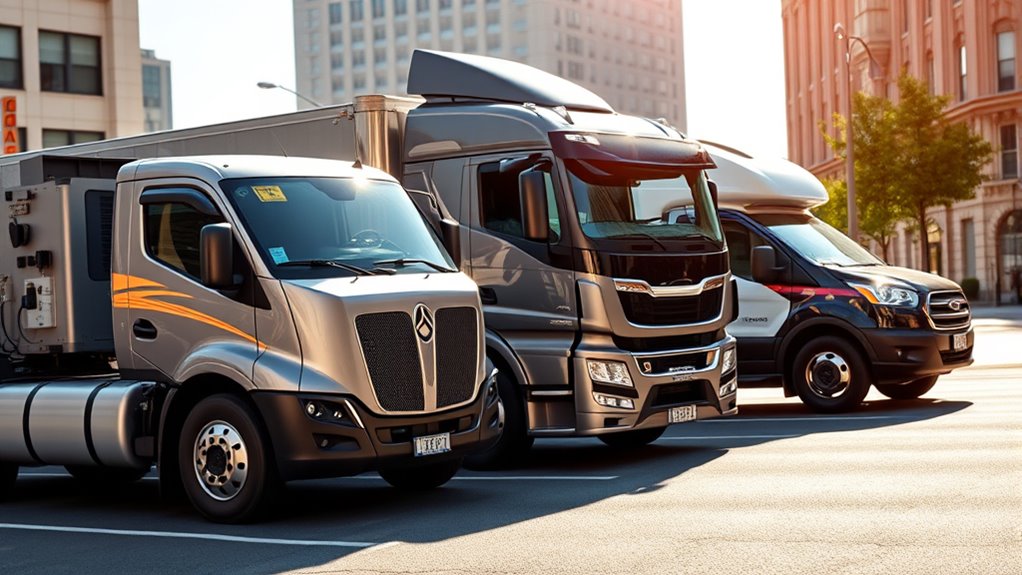
You’ll find that hybrid trucks generally have a lower purchase price than electric models, but the upfront cost for plug-in hybrids can be higher due to larger batteries. Operating expenses vary: hybrids save on fuel costs but don’t eliminate fuel use, while electric trucks have higher charging costs but lower maintenance. Considering the overall value, you should weigh initial investment against long-term savings and fuel efficiency.
Purchase Price Differences
The purchase price of hybrid, plug-in hybrid, and electric trucks varies considerably, impacting your initial investment. Hybrids are typically the most affordable, often costing several thousand dollars less than electric trucks. This lower upfront cost makes hybrids appealing if you’re budget-conscious. Plug-in hybrids usually fall in between, with higher prices than hybrids but less than fully electric trucks, reflecting their larger batteries and charging capabilities. Electric trucks generally require a higher initial outlay due to advanced battery technology and more complex systems. While the upfront cost is significant, it’s important to contemplate potential savings on fuel and maintenance over time. Additionally, considering artistic expression and how it relates to embracing innovative technology can influence your overall satisfaction with your purchase. Your choice depends on your budget, usage needs, and willingness to invest in more advanced technology upfront.
Operating Cost Variations
While the initial purchase price varies considerably among hybrid, plug-in hybrid, and electric trucks, the ongoing operating costs often play a crucial role in your overall investment. Hybrids typically have lower fuel costs and fewer maintenance needs, since they rely on both gas and electric systems. Plug-in hybrids can save money on fuel if you charge regularly, especially for short trips, but may incur higher charging costs. Electric trucks, despite higher upfront prices, boast the lowest operating expenses per mile due to fewer moving parts and no fuel costs. Consider these factors:
- Fuel costs for hybrids and plug-ins depend on usage and fuel prices
- Electric trucks benefit from lower maintenance and energy efficiency
- Charging costs vary based on electricity rates
- Longer-range electric trucks may require higher charging infrastructure investments
- Overall savings depend on driving habits and vehicle usage
Understanding these cost factors can help you make an informed decision aligned with your driving patterns and budget.
Environmental Impact and Sustainability Considerations

Electric trucks produce zero tailpipe emissions, making them the most environmentally friendly option among hybrid, plug-in hybrid, and fully electric vehicles. They eliminate local air pollution and reduce greenhouse gases, especially when charged with renewable energy sources. Hybrids and plug-in hybrids still rely on gasoline, so they emit pollutants and carbon dioxide, but less than traditional trucks. Plug-in hybrids can operate in all-electric mode for short distances, further lowering emissions. Choosing electric reduces your carbon footprint markedly, especially as electricity generation becomes greener. While electric trucks have higher manufacturing emissions due to battery production, their long-term environmental benefits outweigh initial impacts. Overall, electric trucks support sustainability goals by minimizing air pollution and promoting cleaner energy use, making them a solid choice for eco-conscious truck owners. Additionally, advancements in battery technology continue to improve the efficiency and sustainability of electric vehicles, further enhancing their environmental appeal.
Frequently Asked Questions
How Do Maintenance Costs Compare Between Hybrid, Plug-In Hybrid, and Electric Trucks?
You’ll find that maintenance costs are generally lower for electric trucks because they have fewer moving parts and don’t require oil changes or transmission repairs. Hybrids and plug-in hybrids may cost more over time due to additional components like batteries and complex powertrains, but they still tend to be cheaper than traditional gas trucks. Overall, electric trucks typically save you money on maintenance, especially as technologies improve and warranties extend.
What Are the Best Use Cases for Each Truck Type Based on Workload?
You should use hybrid trucks for long-distance hauling and heavy workloads where quick refueling matters. Plug-in hybrids are ideal for short trips and daily commuting, especially if you can charge regularly. Electric trucks excel in city driving and short-distance hauling with overnight charging. For heavy-duty, long-range tasks, hybrids provide the best balance of efficiency and convenience, while electric trucks suit urban environments with easy charging infrastructure.
How Does Towing Capacity Vary Among Hybrid, Plug-In Hybrid, and Electric Trucks?
You might be surprised, but towing capacity varies markedly across truck types. Hybrids usually match conventional trucks, offering solid towing power with better fuel efficiency. Plug-in hybrids, still emerging, promise similar or slightly lower towing capabilities but with added electric benefits. Electric trucks, however, often have reduced towing capacity due to battery constraints, though advancements are improving. So, your choice depends on how much towing you need versus efficiency and electric perks.
Are There Any Government Incentives for Purchasing Electric or Hybrid Trucks?
Yes, you can get government incentives for buying electric or hybrid trucks. Many programs, like federal tax credits, offer significant savings—up to $7,500 for electric trucks and varying amounts for hybrids—reducing your purchase cost. Plus, some states and local governments provide additional rebates or incentives. Check your region’s specific programs, as they can make switching to cleaner trucks more affordable and appealing.
How Long Does It Take to Recharge Each Type of Truck Fully?
You’ll find that recharging times vary depending on the truck type and charging method. For hybrids, you don’t need to recharge; they self-charge while driving. Plug-in hybrids take about 2-4 hours with Level 2 chargers for a full charge. Electric trucks like the F-150 Lightning can reach full charge in roughly 8-10 hours on Level 2, but fast chargers can do it in around 30-45 minutes.
Conclusion
Choosing the right truck depends on your needs and priorities. Hybrids offer a balanced mix, plug-ins give you more electric miles but require charging, and electric trucks lead with zero emissions but may need more planning. Ultimately, it’s about finding the best fit for your work and lifestyle. Remember, it’s not just about the shiny new toy — it’s about making a smart investment that pays off in the long run. Don’t put all your eggs in one basket.