
To turn your truck into the ultimate overlanding rig, start by choosing a full-size truck with a diesel or gas engine based on your needs. Upgrade with all-terrain tires, rugged bumpers, and recovery gear, then create a comfortable living space with modular furniture and good ventilation. Add power solutions like dual batteries, water storage, and propane heating for remote stays. Focus on planning your build wisely—continue exploring to discover how to make your adventure rig truly unstoppable.

Get business pricing on garage and car supplies
- Business-only prices and quantity discounts
- Tax-exempt purchasing
- Multiple users, one account, clear invoices
Key Takeaways
- Choose a suitable full-size truck with enough power, payload, and towing capacity for overlanding needs.
- Upgrade tires, bumpers, and recovery gear for durability and off-road performance.
- Install modular sleeping, living, and storage solutions to maximize comfort and space.
- Incorporate power systems, water tanks, and heating for self-sufficient extended trips.
- Plan your build carefully, prioritize features, and budget for DIY upgrades to create a reliable adventure rig.
all-terrain truck tires for overlanding
As an affiliate, we earn on qualifying purchases.
As an affiliate, we earn on qualifying purchases.
Choosing the Perfect Truck for Overlanding Adventures
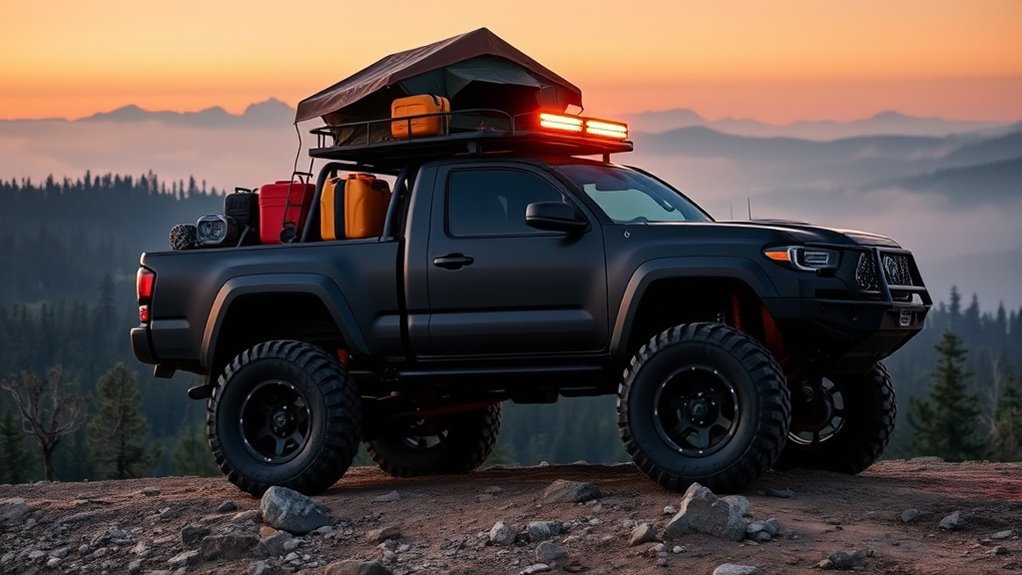
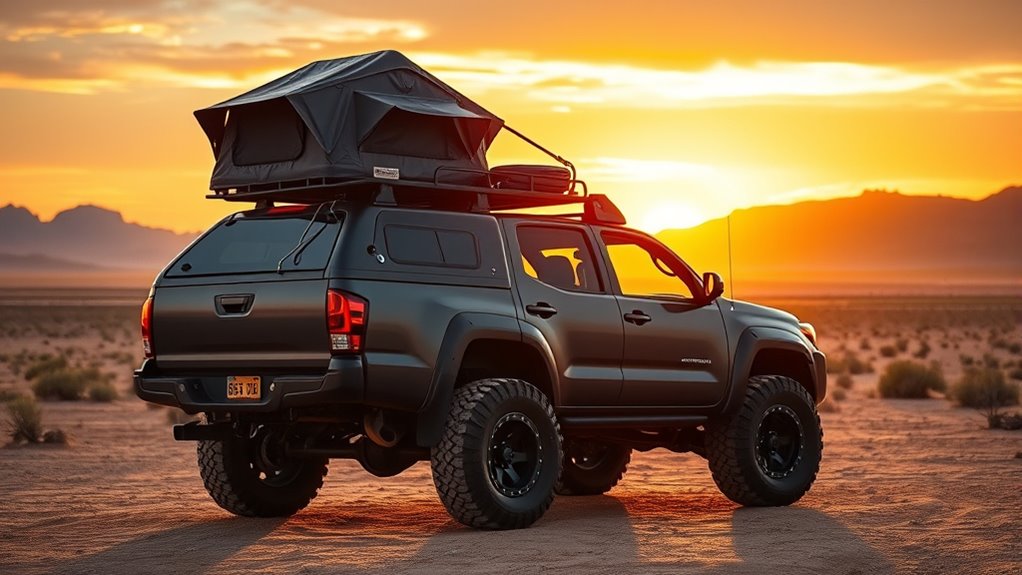
Choosing the right truck is essential for successful overlanding adventures, as it determines your vehicle’s capability to handle tough terrains, carry gear, and support long trips. Full-size trucks provide more power, higher payload, and greater towing capacity, making them ideal for heavy gear and challenging conditions. Diesel engines deliver higher torque and better fuel economy, perfect for remote areas and extended travel. Gas engines offer more horsepower and quicker acceleration, suitable for varied driving styles. Pickups also give you space for larger sleep systems and extra storage. You can start with a stock truck and add aftermarket upgrades, which often cost less than buying a fully loaded model. Focus on your specific needs, terrain, and plans to choose the platform that best fits your overlanding goals. Additionally, selecting a vehicle with advanced safety features can enhance your overall safety during remote adventures.
As an affiliate, we earn on qualifying purchases.
Essential Exterior and Interior Upgrades for Your Rig
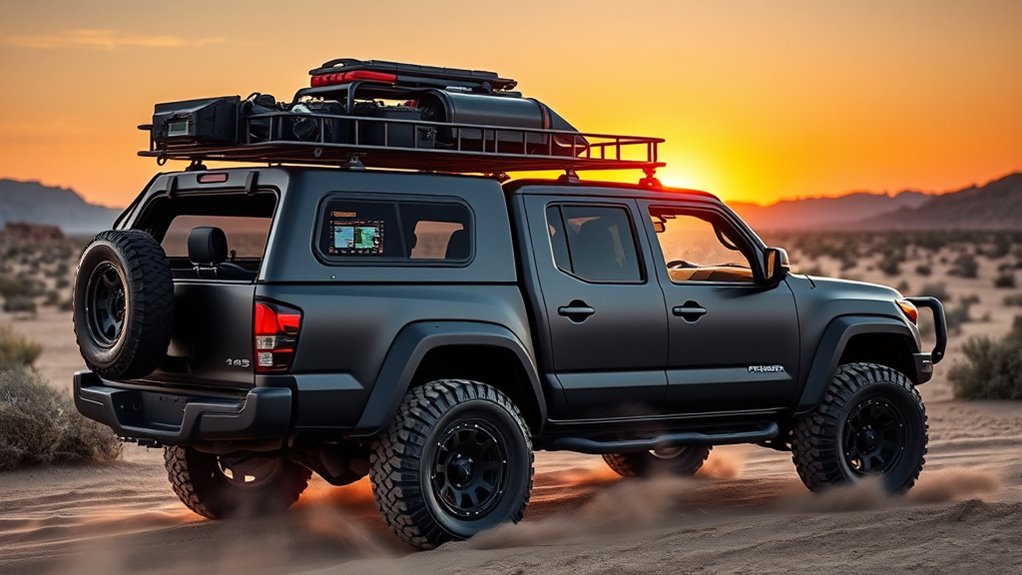
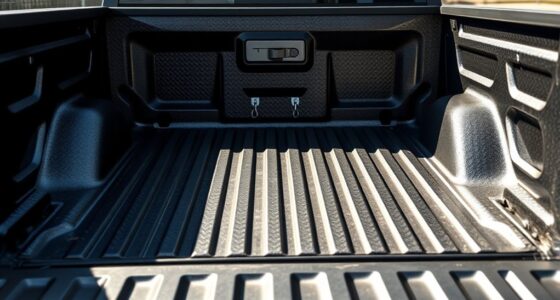
Upgrading your rig’s exterior and interior is essential for enhancing its durability, functionality, and comfort during overlanding adventures. On the outside, install all-terrain tires to improve traction and durability, and add recovery gear like winches and recovery kits for emergencies. Upgraded bumpers and skid plates protect your undercarriage from rough terrain, while spare fuel storage extends your range in remote areas. Inside, focus on organization and convenience—dash-mounted rails keep gear secure, propane furnaces ensure warmth, and ventilation systems maintain comfort. Pass-through access makes moving between cab and camper easier, and rear-view cameras boost safety. These upgrades prepare your rig to handle the demands of overlanding, making your adventures safer, more efficient, and more comfortable. Proper DIY tools and knowledge can make these modifications more achievable and cost-effective.
As an affiliate, we earn on qualifying purchases.
Creating Comfortable Sleeping and Living Spaces
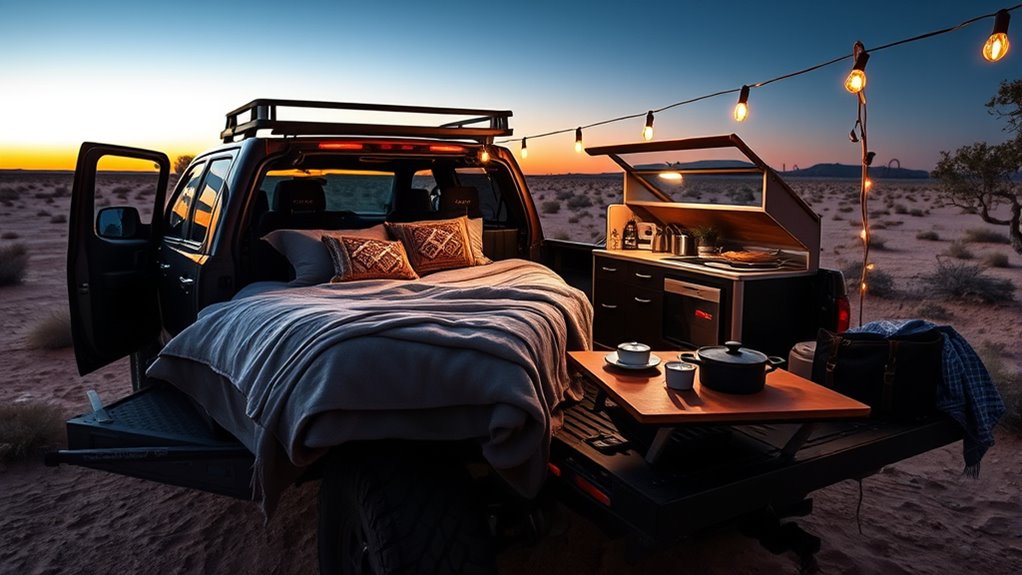
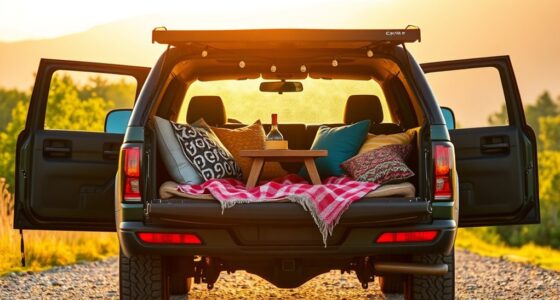
Creating a comfortable sleeping and living space is essential for enjoying extended overlanding trips, and the key is to optimize your vehicle’s interior layout. Start by selecting a sleeping system that fits your needs, like a rooftop tent or a slide-in camper, for quick setup and added comfort. Use modular furniture or DIY builds to maximize space and allow easy reconfiguration. Insulation and proper ventilation are vital to keep the interior warm and moisture-free, especially in colder climates. Secure floor panels and wall sections improve structural integrity and safety. Add storage solutions like wall-mounted organizers and under-bed compartments to keep gear accessible and organized. Finally, consider heating options like propane furnaces to stay cozy during chilly nights, ensuring your space remains comfortable no matter the conditions. Incorporating simple, effective organization systems can make a significant difference in maintaining a calm and functional environment.
As an affiliate, we earn on qualifying purchases.
Power, Water, and Utility Solutions for Remote Travel

Reliable power and water systems are the backbone of any successful overlanding adventure, especially in remote areas. You need dependable sources to run appliances, recharge gear, and stay hydrated. Consider installing dual batteries with a dedicated isolator to keep your main battery safe. Water tanks and pumps supply clean water for cooking and cleaning, while hot water systems use engine coolant for quick heating. Propane tanks fuel your stove and heater, extending comfort far from civilization. Here’s a quick overview:
| System | Key Features |
|---|---|
| Power | Dual batteries, solar panels, inverter |
| Water | Fresh tanks, pumps, filtration systems |
| Utility | Propane, hot water, external storage options |
Additionally, incorporating power management systems can optimize energy use and prolong battery life during extended trips.
Planning Your Build and Budget for a Customized Overlanding Setup
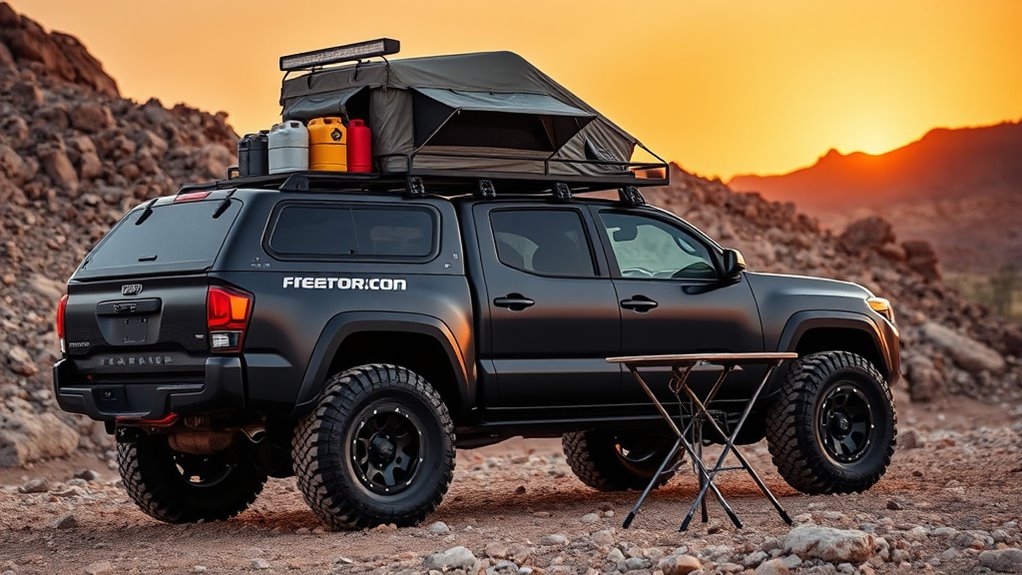
Planning your build and setting a realistic budget are essential steps to creating a customized overlanding setup that suits your needs. Start by clearly defining your priorities: do you need more storage, better off-road capability, or comfort features? Research different options and upgrades, focusing on what aligns with your planned adventures. Be honest about your budget—factor in both initial costs and ongoing maintenance. Consider DIY solutions to save money and tailor your build. Balance your wants with your needs to prevent overspending on unnecessary features. Keep in mind that a well-planned build prevents costly mistakes and upgrades later. Additionally, understanding projector technology can help you select accessories that enhance your overlanding experience, such as portable entertainment options. By carefully planning and budgeting, you’ll create a reliable, functional rig that enhances your overlanding experience without breaking the bank.
Frequently Asked Questions
What Are the Best Safety Accessories for Overlanding?
You should prioritize safety accessories like a reliable winch, recovery gear including straps and shackles, and a sturdy first aid kit. All-terrain tires and skid plates help prevent damage, while a rear-view camera improves visibility. Carry extra fuel and water tanks for emergencies, and consider installing off-road lights to enhance visibility at night. These accessories keep you prepared and secure during your overlanding adventures.
How Do I Maintain My Truck During Long Trips?
Your truck is your lifeline on long trips, so you gotta keep it running like clockwork. Regularly check fluid levels, tire pressure, and brake conditions. Inspect belts, hoses, and filters for wear and tear. Carry essential spare parts, a basic tool kit, and emergency supplies. Stay ahead of problems—think of it as giving your rig a health check—to avoid breakdowns and keep your adventure unstoppable.
Can I Retrofit My Existing Truck for Overlanding?
Yes, you can retrofit your existing truck for overlanding. Start by upgrading tires to all-terrain, adding recovery gear like winches and shackles, and installing exterior protection such as skid plates. Enhance comfort with interior storage solutions, add a roof rack or camper shell for sleeping options, and consider extra fuel and water tanks for extended trips. Prioritize essential modifications based on your adventure plans to maximize functionality and reliability.
What Legal Considerations Should I Know for Remote Camping?
When camping remotely, you should know local laws about camping, parking, and fire use. Always check regulations in the area, as some spots require permits or have restrictions on overnight stays. Respect private property and avoid protected lands. Make sure your vehicle is properly registered and insured. Carry necessary permits, follow fire safety rules, and leave no trace. Being aware of local rules keeps your adventure safe and legal.
How Do I Choose the Right Tires for Different Terrains?
Choosing the right tires is like picking the perfect weapon for battle. For mud, go for aggressive mud-terrain tires that dig in deep. For gravel or rocky trails, all-terrain tires balance durability and traction. If you’re mostly on pavement, highway tires offer comfort and fuel efficiency. Consider your primary terrain, climate, and load capacity, and don’t forget to match tire size and tread pattern for ideal performance and safety.
Conclusion
With your truck transformed into a rugged, personalized adventure rig, you’ll feel ready to conquer endless horizons. Imagine the sun setting behind distant mountains as you relax in your cozy, well-equipped space, water flowing freely, and power humming quietly beneath you. Your customized build becomes more than just a vehicle—it’s your gateway to discovery and freedom. Embrace the journey ahead, knowing your perfect overlanding rig is ready to take you anywhere your spirit desires.
Evergreen bestsellers Picks
bestsellers
As an affiliate, we earn on qualifying purchases.