Use 4-Low when you encounter steep hills, rocky terrain, or deep mud that require maximum traction and control at low speeds. Switch to 4-High for moderate off-road conditions like loose gravel, snow, or light inclines where higher speeds are safe, and more traction is needed. Always shift modes with the vehicle stationary or in neutral, and stay within recommended speed limits. To master the nuances of mode use, avoid common mistakes, and protect your vehicle, keep exploring further.
Key Takeaways
- Use 4L for steep inclines, rocky terrain, deep mud, or soft, loose surfaces requiring maximum torque and low-speed control.
- Engage 4H on slippery surfaces like snow, ice, or wet gravel for better traction without sacrificing higher speeds.
- Switch to 4L when moving slowly over technical terrain or obstacles to prevent drivetrain damage and maintain control.
- Use 4H at moderate speeds (up to 55 mph) on uneven terrain or light off-road conditions for stability and traction.
- Always shift modes with the vehicle stationary or in neutral to avoid damage; avoid high-speed shifts into 4L.

Motoforti Automatic Transmission Shift Lever, Shift Select Lever with Tow Switch, for Chevy Silverado 1500 2500 3500, Rubber Metal, Black
Vehicle Specific Fit: Suitable for Chevrolet Avalanche 1500 2500 2002-2006, for Chevrolet Silverado 1500 1999-2007, for Chevrolet Silverado…
As an affiliate, we earn on qualifying purchases.
As an affiliate, we earn on qualifying purchases.
Understanding the Differences Between 4L and 4H
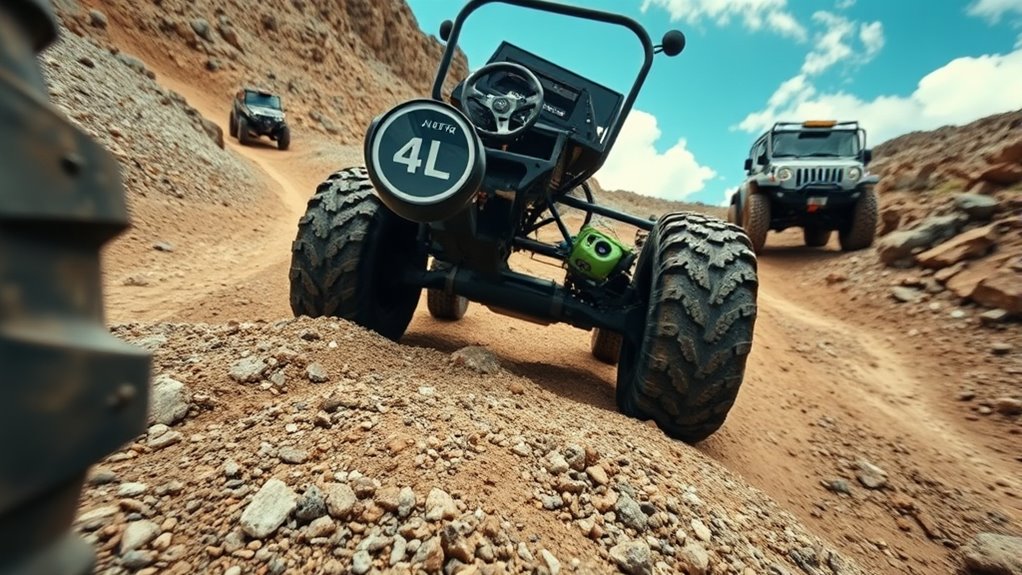
Understanding the differences between 4L and 4H is essential for effective off-road driving. 4-Low (4L) offers a lower gear ratio, which multiplies torque and reduces wheel speed, making it ideal for slow, controlled maneuvers over challenging terrain. With 4L, you get maximum torque delivery, helping you climb steep inclines, crawl over rocks, or navigate muddy or sandy surfaces. It’s designed for low-speed, high-traction situations where precision matters. In contrast, 4H provides a higher gear ratio, suitable for maintaining traction at moderate speeds on slippery or uneven surfaces. It distributes power more evenly across wheels, offering stability and control on snow, gravel, or light off-road conditions. Using the correct mode ensures exemplary performance and prevents damage to your vehicle. Additionally, understanding gear ratios can help you optimize your vehicle’s performance in various off-road scenarios.

GM Genuine Parts 20972859 Transfer Case Selector Switch
Controls the current to the 4WD activator, engaging the transfer case
As an affiliate, we earn on qualifying purchases.
As an affiliate, we earn on qualifying purchases.
Identifying the Terrain Suitable for 4-Low
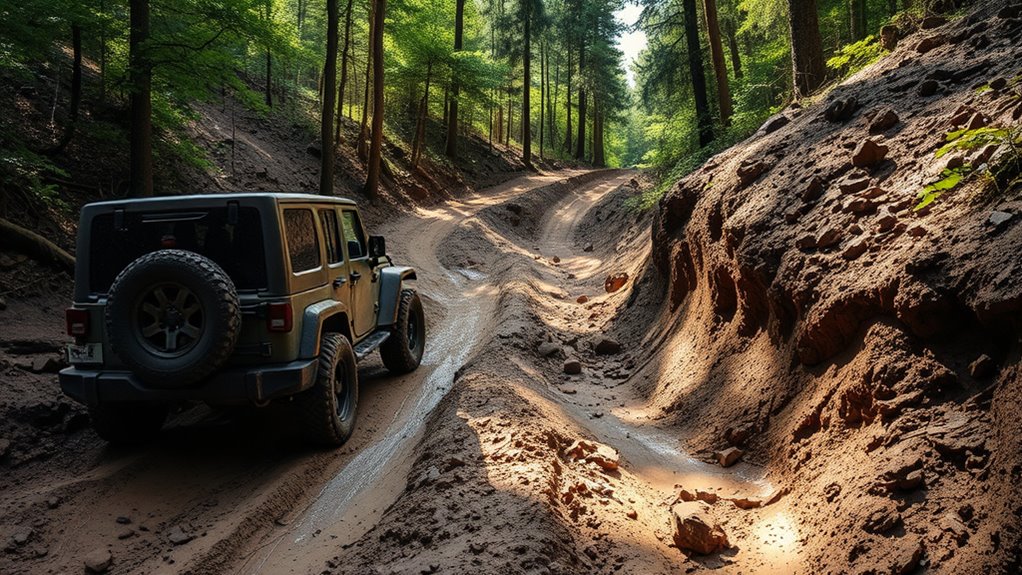
You should use 4-Low when you’re facing technical obstacles that require maximum control, such as crawling over rocks or steering steep inclines. It’s also ideal for traversing deep, soft terrain like mud, sand, or snow where traction is limited. Recognizing these conditions helps make certain you select the right mode to maintain safety and prevent damage. Additionally, understanding energy-efficient cloud solutions can help optimize your overall off-road experience by reducing unnecessary strain on your vehicle’s systems.
Navigating Technical Obstacles
Controlling technical obstacles requires precise control and maximum traction, making 4-Low the ideal choice for challenging terrain. When you face steep inclines, rocky paths, or deep ruts, 4L helps you maintain slow, controlled movements without wheel slip. It multiplies torque, giving you the power needed to crawl over obstacles safely. If you’re steering through rugged terrain with uneven surfaces or technical rock crawling, 4L provides the stability and grip essential for your safety. Use it when your wheels need to spin slowly and steadily, especially when other modes might cause loss of traction or wheel spin. Avoid using 4L at higher speeds, as it’s designed for slow, deliberate movements. Properly engaging 4L ensures maximum control over technical obstacles, preventing stalls or damage. Additionally, understanding your vehicle’s traction management system can further optimize your off-road performance.
Traversing Deep Soft Terrain
Deep soft terrain such as thick mud, deep sand, or marshy ground requires the maximum torque and low-speed control that only 4-Low can provide. When you encounter these conditions, engaging 4L gives you the power needed to keep moving without wheel spin or getting stuck. The low gear ratio multiplies torque, allowing you to crawl through challenging surfaces at a controlled pace. You’ll want to keep your speed under 15-40 mph to prevent drivetrain damage. Using 4L ensures your wheels maintain grip, giving you better traction on unstable terrain. Avoid high speeds or switching into 4H here, as it won’t provide enough torque and could cause your vehicle to get bogged down or stuck. 4L is your best choice for steady, controlled passage through deep, soft off-road terrain. Incorporating connected off-road tech can help monitor your vehicle’s performance and terrain conditions in real-time for safer navigation.
Climbing Steep Inclines
Climbing steep inclines demands maximum torque and low-speed control, making 4-Low the ideal choice. You should use 4L when you face terrain that requires slow, precise power delivery to prevent wheel slip or loss of traction. Consider these situations:
- *Handling* steep, rocky hills where wheel grip is critical.
- Climbing loose gravel or loose dirt on inclines that challenge traction.
- Traversing muddy slopes or soft terrain that risks getting stuck or losing control.
- Free floating systems can enhance stability and traction in challenging off-road conditions.
Using 4L multiplies torque, giving you the power needed for tough ascents. Keep your speed low—generally under 15-20 mph—to avoid damaging your drivetrain. Engage 4L when you need maximum control and power, not for high-speed or flat terrain.

Transfer Case Switch Compatible with Ram 1500 2500 3500 4500 5500 2002-2019 & Wrangler TJ JK JL 2003-2021 – Replaces 05083138AA 5083138AA – 2H 4H 4L Selector
【Precise Fit, Improved 4WD Shifting Performance】This switch directly replaces OE part numbers: 05083138AA / 5083138AA. It resolves issues…
As an affiliate, we earn on qualifying purchases.
As an affiliate, we earn on qualifying purchases.
Recognizing When to Engage 4-High
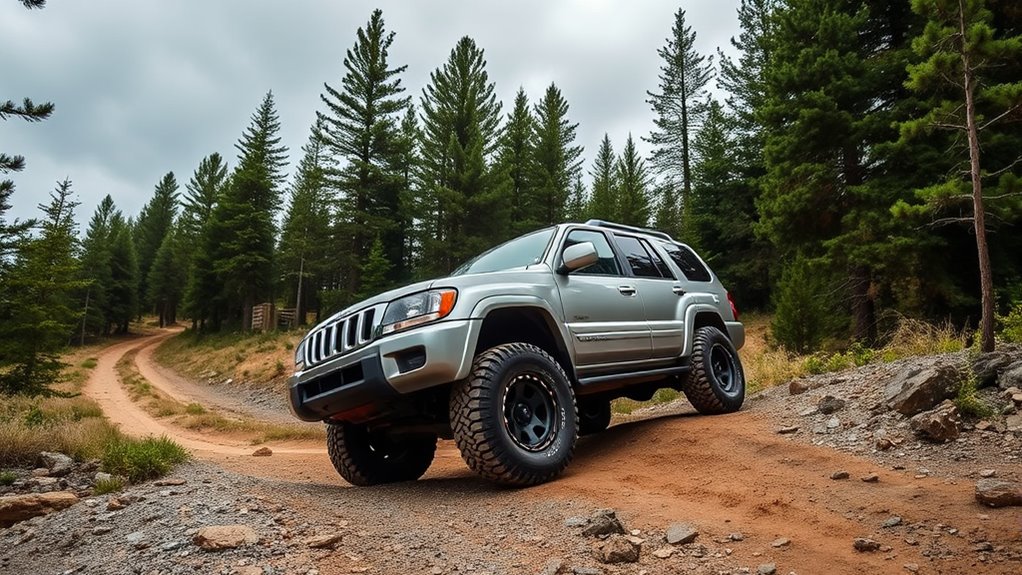
You should engage 4-H when driving on slippery roads like snow, ice, or wet pavement where moderate traction is needed without sacrificing speed. It’s also suitable for light off-road terrain, such as gravel or farm roads, where you want stability and control at higher speeds. Avoid using 4H in extreme conditions or at high speeds to prevent drivetrain damage and reduce control. Additionally, engaging 4-H can help prevent infection risks that may occur on certain terrains if the vehicle’s components are compromised.
Slippery Road Conditions
When driving on slippery roads such as snow, ice, or wet surfaces, engaging 4-high can considerably enhance traction and stability. You should switch to 4H when you notice reduced grip or sliding, especially at moderate speeds. This mode helps distribute power evenly across all wheels, preventing wheel spin and maintaining control. Consider engaging 4H if:
- You’re driving on snow-covered highways or icy roads where traction is compromised.
- You encounter wet or muddy surfaces that cause slipping.
- You need to maintain moderate speeds on slick surfaces without risking drivetrain damage.
Use 4H to improve stability and traction without sacrificing too much speed. Switching should be done with the vehicle stopped or in neutral, ensuring a smooth and safe engagement.
Moderate Off-Road Terrain
Moderate off-road terrain often presents conditions like uneven surfaces, loose gravel, or moderate mud that require increased traction without the extreme gear ratios of low-range. You should engage 4H when driving at moderate speeds over these surfaces, typically up to around 55 mph. Use 4H to improve stability and grip on gravel roads, farm paths, or snow-covered highways. It’s suitable when traction is compromised but the terrain isn’t too technical or steep. Switch into 4H when you encounter these conditions, especially if you notice slipping or reduced control. Remember, 4H provides better traction at higher speeds but isn’t meant for extreme obstacles. Never engage 4H on dry pavement or at high speeds to avoid drivetrain damage. Understanding traction control systems can help in assessing when to switch between drive modes effectively.
Regular On-Road Driving
Engaging 4-High during regular on-road driving helps improve traction and stability in slippery conditions like light snow, ice, or wet pavement. You should activate 4H when driving on roads that are slick but not severe enough for off-road use. Keep in mind these key situations:
- When driving on icy or snow-covered highways where maintaining control is critical.
- On gravel or wet roads that threaten to cause slipping or skidding.
- When steering through farm roads or unpaved surfaces that require extra traction without reducing speed significantly.
Use 4H at speeds up to about 55 mph to prevent drivetrain damage. Remember, engaging 4H on dry, smooth pavement can cause unnecessary wear, so switch back to 2H once conditions improve.

FITHOIST Traction Boards Offroad ,Recovery Traction Boards with Jack Base,Offroad Accessories 4×4 for Truck Vehicle Jeep SUV,Mud,Snow,Sand,Scree with 2 straps&Storage Bag,Black
【Excellent Performance】: Our 41" traction boards are made of high-strength polypropylene, weighing 5.2 kg per pair, which are…
As an affiliate, we earn on qualifying purchases.
As an affiliate, we earn on qualifying purchases.
Speed Limitations and Safety Precautions for 4L
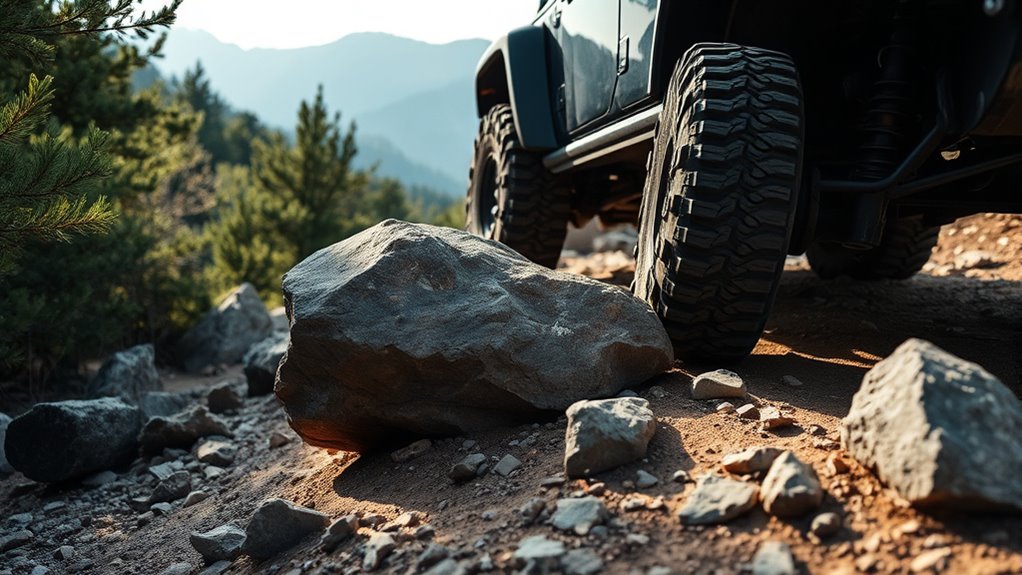
Using 4L effectively requires strict adherence to speed limitations to prevent damage to your vehicle’s drivetrain. Generally, stay under 15 to 40 mph, depending on your vehicle and terrain. Exceeding this range can cause excessive stress on the transfer case, transmission, and axles, leading to costly repairs. Always engage 4L when your vehicle is stationary or in neutral, especially on steep inclines or rough terrain. Avoid using 4L on paved roads or high-speed driving, as it’s designed for slow, controlled movement. Keep an eye on your speed and terrain conditions, and shift out of 4L as soon as the obstacle or challenging terrain is cleared. Proper use guarantees your vehicle’s longevity and safe off-road performance. Understanding safe operation is essential to prevent damage and ensure optimal performance.
Situations That Call for 4L for Maximum Traction
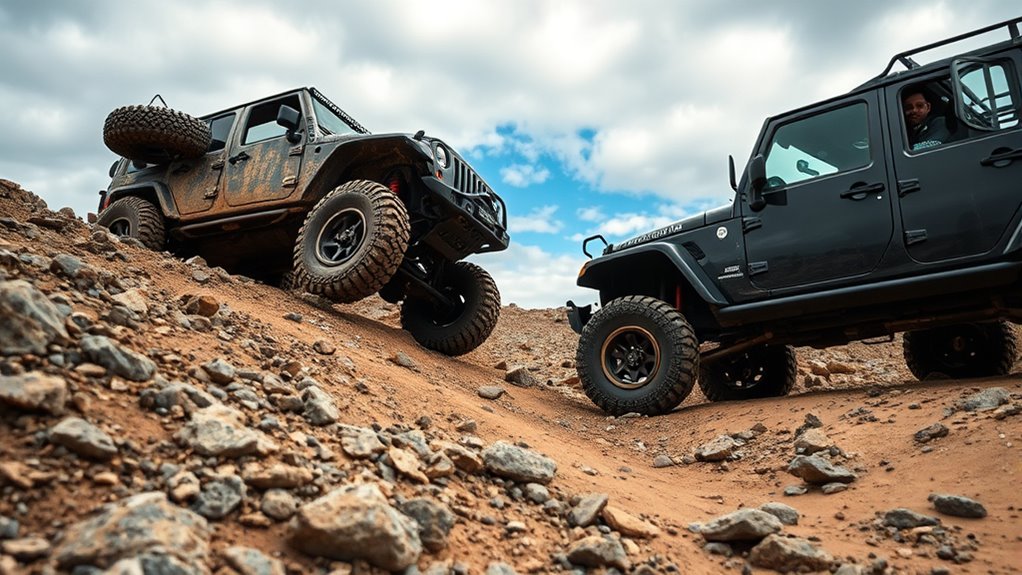
You should switch to 4L when tackling steep inclines that require maximum torque to prevent slipping. It’s also essential for technical terrain, like rocky paths or uneven surfaces, where precise wheel control is critical. Additionally, use 4L to extract your vehicle from deep mud or sand, where higher torque helps you regain traction.
Navigating Steep Inclines
When tackling a steep incline, switching to 4L is essential for maximum traction and control. The lower gear ratio multiplies torque, helping you climb without wheel slip or stalling. Use 4L when:
- The incline exceeds your vehicle’s normal climbing capability.
- The surface is loose, such as gravel, mud, or sand, where traction is limited.
- You need slow, controlled movements to prevent rolling backward or losing balance.
Engaging 4L ensures your wheels maintain grip and your vehicle moves steadily. Keep your speed low—ideally under 10-15 mph—and never attempt a steep climb in 4H or high gear. Remember, 4L is built for power, not speed, so use it prudently for maximum safety and control.
Proper gear selection is crucial to prevent drivetrain damage and ensure optimal off-road performance.
Traversing Technical Terrain
Traversing technical terrain demands maximum traction and precise control, making 4L the ideal choice. When you face uneven surfaces, rocks, or steep obstacles, 4L provides the low gear ratio necessary to boost torque at each wheel. This helps prevent wheel slip and keeps your vehicle moving steadily through challenging conditions. Use 4L when crawling over rocks, maneuvering tight trail sections, or crossing boggy ground where slow, controlled movement is essential. The increased torque allows each wheel to grip firmly, reducing the risk of getting stuck or losing control. Remember, 4L is only safe at low speeds—generally under 15 to 40 mph—so don’t rush through technical terrain. Engaging 4L in these situations ensures maximum traction and optimal handling for your vehicle.
Extracting From Deep Mud
Deep mud can quickly stall your vehicle or cause it to get stuck, especially when traction is lost. When this happens, switching to 4L is your best move. It multiplies torque, giving your wheels the grip they need to crawl through the mud. Without enough traction, you’ll just spin your wheels and sink deeper.
Use 4L when:
- You’re stuck or sinking in deep mud and need maximum grip.
- You’re climbing a steep, muddy incline that demands controlled power.
- You’re pulling yourself out of a muddy rut or bog.
Engaging 4L in these situations helps you maintain slow, controlled wheel movement, reducing the risk of further sinking or damaging your vehicle. Always shift into 4L at low speeds to protect your drivetrain and ensure maximum traction.
When 4H Is Adequate for Off-Road Challenges
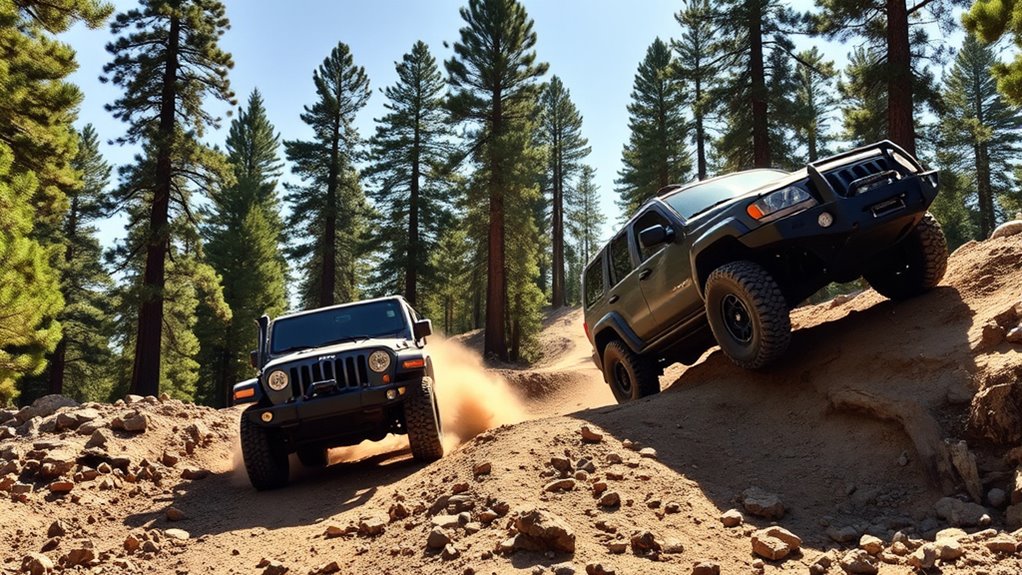
4H is usually sufficient for many off-road challenges where moderate traction and speed are needed. You should use 4H when driving on slippery surfaces like snow, ice, or wet gravel, where maintaining control at moderate speeds is important. It’s also ideal for light mud, farm roads, or uneven terrain that doesn’t require maximum torque. If you’re steering through moderate inclines or loose gravel, 4H provides the traction you need without risking damage. Keep your speed under 55 mph to prevent drivetrain stress. Remember, 4H is not meant for high-speed highway driving or very sticky terrain. Use it when you need enhanced stability and traction at typical off-road speeds, but avoid engaging it if the terrain demands the extra torque of 4L.
Transitioning Between 4H and 4L Safely
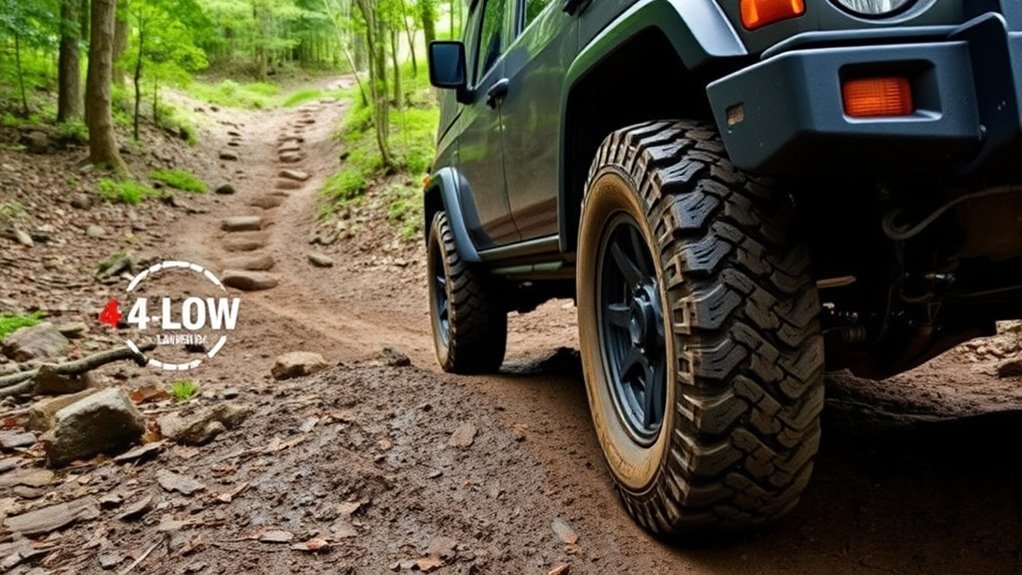
To switch safely between 4H and 4L, it’s important to follow proper procedures to prevent damage to your vehicle’s drivetrain. First, verify your vehicle is stopped or moving very slowly, ideally in neutral. Then, follow these steps:
- Shift to neutral and pause briefly to let gears disengage.
- Engage the desired mode (4H or 4L) according to your terrain needs.
- Confirm the transfer case indicator light or dashboard shows the new mode before moving.
Avoid shifting while the vehicle is moving at high speeds or when the transfer case is under load. Always consult your owner’s manual for specific instructions. Properly switching modes ensures longevity of your drivetrain and safe off-road operation.
Avoiding Common Mistakes in Using 4WD Modes

Misusing 4WD modes is a common mistake that can lead to vehicle damage and safety hazards. You should only engage 4L at low speeds and on tough terrain, never on pavement or high-speed roads. Using 4H on dry, smooth surfaces can cause drivetrain wear and poor handling. Avoid shifting into 4L while moving; always stop and shift to neutral first to prevent damage. Don’t switch between modes unnecessarily; this increases wear on transfer case components and reduces fuel efficiency. Be cautious about using 4H in deep mud or snow; it might not provide enough traction. Remember, each mode has a specific purpose, so select the right one for your terrain and conditions to maintain safety and vehicle longevity.
Impact of Terrain on Mode Selection
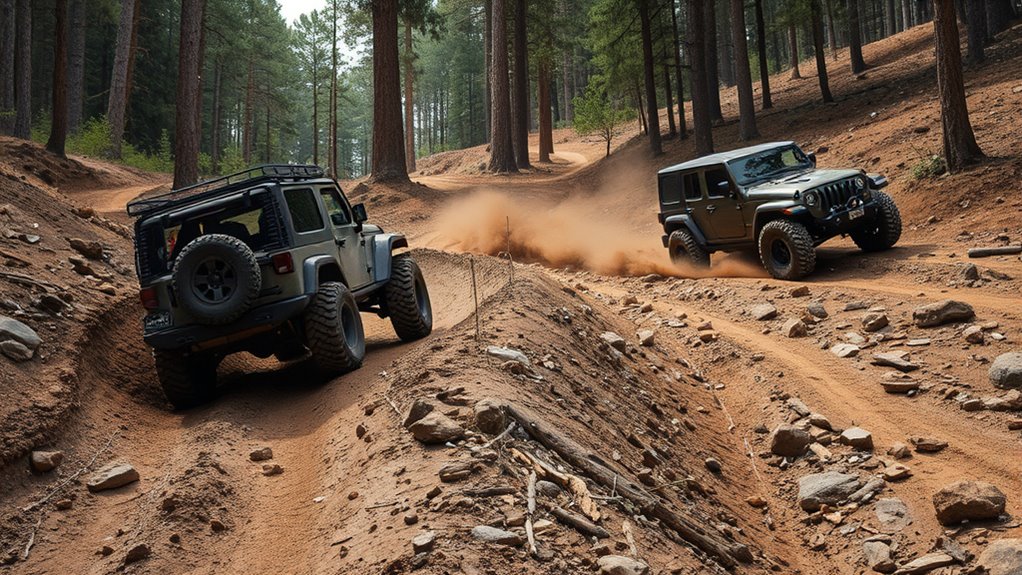
The type of terrain you’re steering through plays a crucial role in choosing between 4-Low and 4-High modes. Your decision depends on how demanding the surface is. For example, you should:
Choosing the right mode depends on terrain demands, ensuring safety and optimal vehicle performance.
- Use 4L for steep inclines, rocky trails, deep mud, or loose sand where maximum traction and low speeds are essential.
- Opt for 4H on slippery surfaces like snow, ice, or wet gravel, where moderate speeds and traction are needed without stressing the drivetrain.
- Switch back to 2H or 4H when returning to smoother, high-speed terrains, avoiding unnecessary wear or damage.
Understanding the terrain’s demands helps you select the right mode, ensuring safety and vehicle performance. Always match your mode to the terrain to prevent damage and maintain control.
Optimizing Vehicle Performance and Longevity in Off-Roading
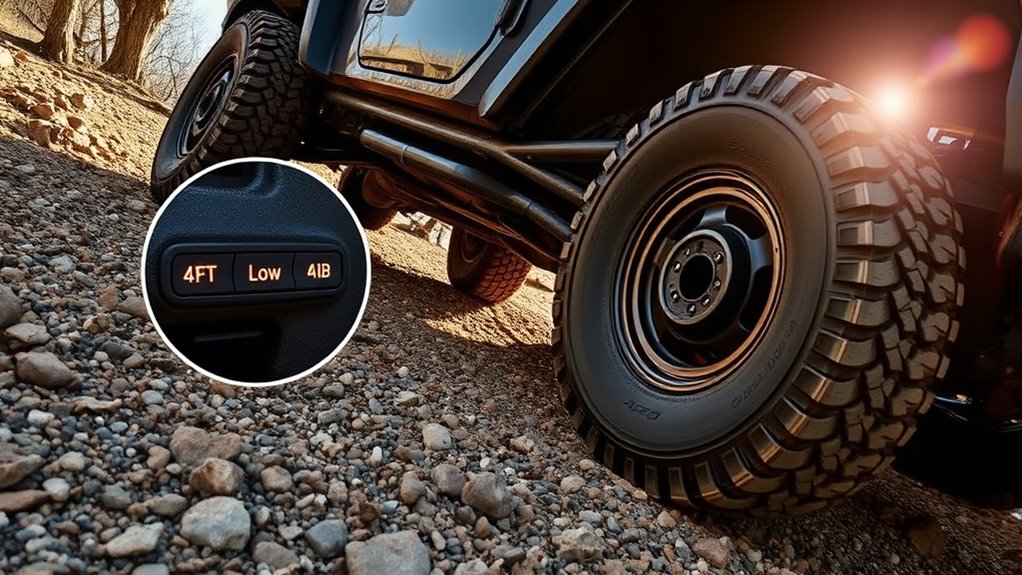
Maximizing your vehicle’s performance and lifespan during off-roading depends on making smart mode choices and proper driving habits. Use 4H for moderate traction needs and maintain speeds up to 55 mph to prevent damage. Switch to 4L for steep climbs, rocky terrain, or deep mud, but keep speeds below 40 mph to avoid stressing the drivetrain. Regularly engage 4H or 4L only when necessary, and avoid engaging them on dry, smooth roads. Properly shifting—often with a full stop or neutral—protects components. Avoid unnecessary gear changes to reduce wear and fuel consumption. Consistent maintenance, like checking fluid levels and inspecting drivetrain parts, extends vehicle life.
| Mode | Terrain/Use Cases | Speed Limit |
|---|---|---|
| 4H | Slippery roads, moderate off-road | Up to 55 mph |
| 4L | Steep inclines, technical terrain | Under 40 mph |
| 2H | Highway, dry pavement | N/A |
| N/A | Regular driving | N/A |
Frequently Asked Questions
Can I Switch Between 4H and 4L While Driving?
You shouldn’t switch between 4H and 4L while driving at high speeds. Instead, you need to bring your vehicle to a stop or shift into neutral before changing modes. This guarantees the transfer case engages smoothly without damaging the drivetrain. Always follow your vehicle’s manual instructions, and never switch modes while the vehicle is moving above the recommended speeds, as this could cause serious mechanical issues.
What Happens if I Engage 4L at High Speeds?
Think of engaging 4L at high speeds like trying to fit a square peg into a round hole—it’s bound to cause trouble. When you do it, you risk serious damage to your drivetrain, transfer case, and transmission. The gears weren’t designed for high-speed stress, so forcing 4L above its recommended limits can lead to costly repairs. Always shift into 4L only when your vehicle is low, under 40 mph, and stationary or in neutral.
Is It Okay to Use 4H on Dry Pavement?
Using 4H on dry pavement isn’t recommended because it can cause mechanical wear and poor handling. When you engage 4H on a smooth, dry surface, the drivetrain locks, which reduces steering flexibility and can lead to increased tire wear. It’s best to reserve 4H for slippery or off-road conditions where traction is needed. Switch back to 2H when on regular roads to guarantee vehicle safety and avoid unnecessary damage.
How Do I Shift Into 4L With the Vehicle Moving?
You generally can’t shift into 4L while the vehicle is moving; most vehicles require you to be stopped or in neutral. Some models allow shifting with a slight roll, but it’s safest to come to a complete stop, shift into neutral, then engage 4L. Always follow your vehicle’s instructions to prevent damage. Never force the transfer case into 4L while moving, as this can cause serious mechanical issues.
Does Engaging 4L Affect Fuel Efficiency Significantly?
Engaging 4L is like throwing a wrench in your fuel efficiency. It markedly reduces your mileage because it demands more torque from the engine, burning more fuel to power the wheels at slow speeds. You’re using the engine to climb steep terrain or crawl over obstacles, which isn’t fuel-friendly. If you don’t need that extra power, sticking to 2H or 4H will save you gas and keep your wallet happy.
Conclusion
Knowing when to use 4-low versus 4-high can make all the difference in your off-road adventures. Remember, about 70% of off-road accidents happen because of improper mode selection. Using 4L for steep climbs or deep mud guarantees maximum traction, while 4H is perfect for moderate terrains and higher speeds. Mastering these modes keeps you safe, protects your vehicle, and helps you enjoy the trail to the fullest. Stay informed and drive smart!