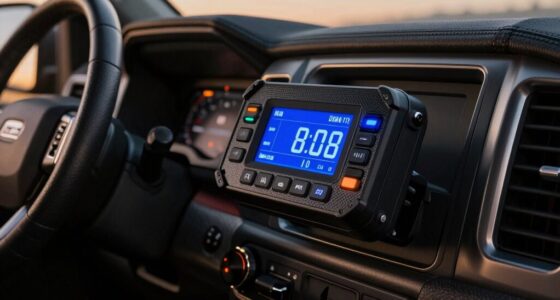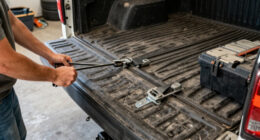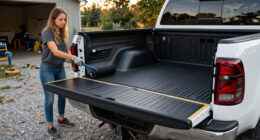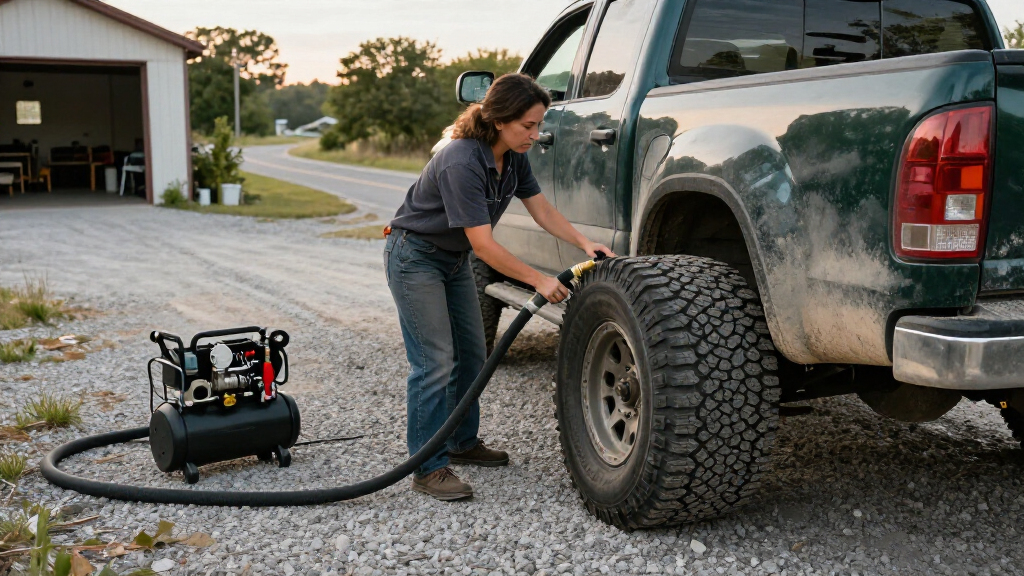
Truck bed air compressors range from portable 12V units to permanently mounted onboard systems and gas-powered compressors. My best overall pick is the maXpeedingrods Wireless Onboard Air Compressor System for buyers who want remote operation and a truck-ready installation; the VIAIR 150 PSI High-Flow Air Source Kit stands out for a tank-based onboard setup, while the ALL-TOP ATACR300 suits drivers who prefer a portable dual-cylinder unit. The main tradeoff is convenience versus capacity: mounted systems are easier to access but take up space and require installation, while portable models can move between vehicles but need setup when used. Gas-powered models offer a different path for heavier air demands, with more size, weight, and fuel considerations. Read on for the full comparison and help matching a compressor to your truck and tasks.

Get business pricing on garage and car supplies
- Business-only prices and quantity discounts
- Tax-exempt purchasing
- Multiple users, one account, clear invoices
Complete the kit


Key Takeaways
- Mounting style is the first dividing line: the maXpeedingrods, LLNSEAUTO, VIAIR, and ARB options are aimed at onboard use, while the ALL-TOP ATACR300 and UUP are portable choices.
- Tank capacity changes how an onboard setup behaves: the VIAIR High-Flow kit pairs its compressor with a 2-gallon tank, while the LLNSEAUTO kit lists a 2.5-gallon tank and the VEVOR heavy-duty model includes a 6L tank.
- Remote access is a distinct advantage: the maXpeedingrods system adds app and remote controls, a feature that separates it from more conventional onboard kits.
- Not every truck bed setup needs a 12V compressor: the two listed XtremepowerUS models use 13 HP gas engines and 30-gallon tanks, so they suit a different scale of work than compact tire-inflation systems.
- Feature-rich portable kits and simple onboard units serve different buyers: the ALL-TOP dual-cylinder inflator includes a digital tire inflator, while the ARB CKMA12 keeps the focus on a compact on-board compressor.
| maXpeedingrods Wireless Onboard Air Compressor System with App and Remote Control |  | Best for Wireless Air-Suspension Control | Maximum pressure: 120 PSI | Controls: Bluetooth app and remote controller | Programmable presets: 3 | VIEW LATEST PRICE | See Our Full Breakdown |
| VEVOR 12V Dual-Cylinder Air Compressor, 1 HP, 4.73 SCFM |  | Best for Off-Road Tire Inflation | Voltage: 13.8 V DC | Maximum pressure: 150 PSI | Airflow capacity: 4.73 CFM | VIEW LATEST PRICE | See Our Full Breakdown |
| XtremepowerUS 13 HP Gas-Powered Horizontal Air Compressor, 30 Gallon |  | Best for Truck-Mounted Service Work | Power source: Gasoline | Maximum horsepower: 13 HP | Tank capacity: 30 gal | VIEW LATEST PRICE | See Our Full Breakdown |
| ALL-TOP Dual-Cylinder 12V Air Compressor with Digital Tire Inflator |  | Best for Straightforward Bed-Side Tire Inflation | Voltage: 12 V | Maximum pressure: 150 PSI | Airflow capacity: 350 CFM (as listed) | VIEW LATEST PRICE | See Our Full Breakdown |
| VEVOR 12V Heavy-Duty Air Compressor with 6L Tank |  | Best for Stored Air in a Portable Package | Voltage: 12 V DC | Airflow capacity: 6.35 CFM | Maximum pressure: 150 PSI | VIEW LATEST PRICE | See Our Full Breakdown |
| UUP Portable 12V Dual-Cylinder Air Compressor, 150 PSI |  | Best Compact Portable Pick | Voltage: 12 V DC | Maximum pressure: 150 PSI | Airflow: 70 L/min | VIEW LATEST PRICE | See Our Full Breakdown |
| ALL-TOP ATACR300 12V Dual-Cylinder Portable Air Compressor |  | Best for Faster Portable Inflation | Voltage: 12 V | Maximum pressure: 150 PSI | Airflow capacity: 350 L/min (12.35 ft³/min) | VIEW LATEST PRICE | See Our Full Breakdown |
| LLNSEAUTO 12V Onboard Air Compressor Kit with 2.5-Gallon Tank, 150 PSI |  | Best Medium-Duty Onboard Tank Kit | Voltage: 12 V | Maximum pressure: 150 PSI | Tank capacity: 2.5 gallons (9.5 liters) | VIEW LATEST PRICE | See Our Full Breakdown |
| VIAIR 150 PSI High-Flow Air Source Kit with 2-Gallon Tank |  | Best for Multi-Accessory Air Systems | Compressor: 280C, 12 V | Maximum pressure: 150 PSI | Tank capacity: 2.0 gallons | VIEW LATEST PRICE | See Our Full Breakdown |
| XtremepowerUS 13 HP Gas-Powered Horizontal Air Compressor, 30-Gallon Tank |  | Best for Service-Truck Tool Work | Power source: Gasoline | Maximum power: 13 hp | Tank capacity: 30 gallons | VIEW LATEST PRICE | See Our Full Breakdown |
| VIAIR 380C 12V Plug-N-Play Air Compressor with 1.5-Gallon Tank and 7-Way Plug |  | Best for Continuous Air Use | Voltage: 12 volts | Tank capacity: 1.5 gallons | Maximum pressure: 200 PSI | VIEW LATEST PRICE | See Our Full Breakdown |
| ARB CKMA12 12V On-Board Air Compressor |  | Best Compact Onboard Pick | Model: CKMA12 | Voltage: 12 volts | Maximum current: 30 A | VIEW LATEST PRICE | See Our Full Breakdown |
| truck bed air compressor | Maximum pressure | Weight | Voltage | Tank capacity |
|---|---|---|---|---|
| maXpeedingrods Wireless Onboar | 120 PSI | 12.9 lb | — | — |
| VEVOR 12V Dual-Cylinder Air Co | 150 PSI | 19.1 lb | 13.8 V DC | — |
| XtremepowerUS 13 HP Gas-Powere | 130 PSI | 391.7 lb | — | 30 gal |
| ALL-TOP Dual-Cylinder 12V Air | 150 PSI | 11.72 kg | 12 V | — |
| VEVOR 12V Heavy-Duty Air Compr | 150 PSI | 28.1 lb | 12 V DC | 6 L |
| UUP Portable 12V Dual-Cylinder | 150 PSI | 3 kg | 12 V DC | — |
| ALL-TOP ATACR300 12V Dual-Cyli | 150 PSI | 24 lb | 12 V | — |
| LLNSEAUTO 12V Onboard Air Comp | 150 PSI | — | 12 V | 2.5 gallons (9.5 liters) |
| VIAIR 150 PSI High-Flow Air So | 150 PSI | — | — | 2.0 gallons |
| XtremepowerUS 13 HP Gas-Powere | 130 PSI | 391.7 lb | — | 30 gallons |
| VIAIR 380C 12V Plug-N-Play Air | 200 PSI | 24 pounds | 12 volts | 1.5 gallons |
| ARB CKMA12 12V On-Board Air Co | 100 | 7.7 pounds | 12 volts | — |
More Details on Our Top Picks
maXpeedingrods Wireless Onboard Air Compressor System with App and Remote Control
I’d choose this system when the truck-bed setup needs to adjust air suspension without opening the hood or reaching for a compressor switch. Its Bluetooth app and remote both work without internet access, while three programmable presets make saved suspension settings easier to recall. The preassembled compressor and manifold can mount vertically or horizontally, giving it more installation flexibility than the portable VEVOR 12V Dual-Cylinder Air Compressor. That difference matters if the goal is an integrated suspension-control system rather than a unit you take out to inflate tires. The tradeoff is a 120 PSI ceiling, below the 150 PSI listed for the VEVOR and ALL-TOP options, and the supplied fitment information does not identify specific vehicles. I’d verify compatibility before committing to an onboard installation.
Pros:- App and remote control work without internet access
- Three presets simplify returning to preferred suspension settings
- Preassembled compressor and manifold allow vertical or horizontal mounting
- Waterproof design with a stated maximum pressure of 120 PSI
Cons:- 120 PSI maximum is lower than the 150 PSI listed for the VEVOR and ALL-TOP compressors
- Product details provide no specific vehicle fitment information
- Designed around onboard air suspension rather than a portable, removable tire-inflation setup
Best for: Truck owners building an onboard air-suspension setup who want saved pressure settings and app or remote control.
Not ideal for: Drivers seeking a portable tire-inflation compressor, or buyers who need confirmed fitment for a specific truck before purchase.
- Maximum pressure:120 PSI
- Controls:Bluetooth app and remote controller
- Programmable presets:3
- Installation orientation:Vertical or horizontal
- Waterproof:Yes
- Weight:12.9 lb
- Dimensions:14.53 × 13.82 × 10.67 in
- Model:SF91YS
Our verdict“Choose this for a truck-bed air-suspension system where wireless controls and saved settings matter more than maximum pressure or portability.”
VEVOR 12V Dual-Cylinder Air Compressor, 1 HP, 4.73 SCFM
For truck owners who air down for trails and need to refill tires at the trailhead, this VEVOR pairs 4.73 CFM airflow with a 150 PSI maximum and a differential-lock harness. Those details make it a more direct fit for off-road tire service than the maXpeedingrods system, which is aimed at controlling air suspension and tops out at 120 PSI. Automatic thermal protection shuts the VEVOR off at 230°F, adding a safeguard during demanding use. Its 5.8 m hose also gives useful reach around a parked truck. The cost of that capability is 19.1 lb of portable equipment, so it is less convenient to move than the lighter ALL-TOP dual-cylinder unit listed here. The supplied data also does not describe a tank, so buyers wanting stored air should compare it with the 6L VEVOR instead.
Pros:- Dual-cylinder design is rated for 4.73 CFM and up to 150 PSI
- Differential-lock harness is included for off-road use
- Automatic thermal protection cuts off at 230°F
- 5.8 m hose provides reach around a vehicle
Cons:- At 19.1 lb, it is a substantial load to move or stow
- No air tank is listed in the supplied product data
- Requires a 13.8 V DC power supply and can draw up to 58 A
Best for: Pickup and off-road vehicle owners who want a portable 12V compressor for trail tire inflation and value airflow, pressure, and thermal protection.
Not ideal for: Buyers who want a lightweight carry-along compressor or a built-in air tank for stored air between inflation cycles.
- Voltage:13.8 V DC
- Maximum pressure:150 PSI
- Airflow capacity:4.73 CFM
- Maximum power:1 HP
- Maximum current:58 A
- Hose length:5.8 m
- Weight:19.1 lb
- Thermal protection cutoff:230°F (110°C)
- Operating temperature range:-4°F to 122°F
Our verdict“Pick this VEVOR for portable trail-side tire inflation if you can accommodate its weight and do not need a listed air tank.”
XtremepowerUS 13 HP Gas-Powered Horizontal Air Compressor, 30 Gallon
This is a different scale of truck-bed compressor: a 13 HP gasoline engine drives a two-stage cast-iron pump and fills a 30-gallon tank. I’d consider it for a service truck or work rig that needs stored air and has room for a substantial fixed installation, not for routine tire top-offs. Compared with the 12V VEVOR and ALL-TOP units, it offers a large tank and independent gasoline power, but its 391.7 lb weight makes vehicle payload, mounting, and transport central concerns. The removable cylinders and extended flywheel fins support maintenance and cooling, which suit sustained work better than a small portable inflator. However, the supplied airflow figure of 1 liter per minute is unusually low for this class, so I would verify that specification with the seller before choosing it for air-tool duty.
Pros:- Gasoline power avoids dependence on a 12V compressor supply
- 30-gallon tank provides substantial stored-air capacity
- Two-stage cast-iron pump is designed for service and maintenance
- Removable cylinders and extended flywheel fins support upkeep and cooling
Cons:- 391.7 lb weight demands a suitable truck, mounting arrangement, and payload allowance
- Listed airflow of 1 liter per minute should be verified before purchase
- Large tank and horizontal form are impractical for casual tire inflation
Best for: Commercial service-truck owners or job-site operators with a suitable mounting platform, payload capacity, and a need for a large gasoline-powered air supply.
Not ideal for: Pickup owners seeking a lightweight bed-mounted tire inflator, or buyers who need dependable air-tool sizing without clarifying the listed airflow figure.
- Power source:Gasoline
- Maximum horsepower:13 HP
- Tank capacity:30 gal
- Maximum pressure:130 PSI
- Listed airflow capacity:1 liter per minute
- Weight:391.7 lb
- Orientation:Horizontal
- Pump design:Two-stage cast iron
Our verdict“Choose this only for a work truck built to carry a heavy gasoline compressor and tank, after confirming the listed airflow.”
ALL-TOP Dual-Cylinder 12V Air Compressor with Digital Tire Inflator
The ALL-TOP’s strongest truck-bed advantage is its 26-foot hose and digital pressure inflator: the compressor can stay near its power connection while the gauge-equipped gun reaches the tires. Its dual-cylinder design is rated to 150 PSI, and thermal cutoff plus a pressure safety valve add protection during use. Compared with the maXpeedingrods wireless onboard system, this is a more direct tire-inflation kit, not a remote air-suspension controller. It also includes a carry bag and adapters, though the supplied data does not give a clear airflow figure that would let me compare inflation speed confidently with the 4.73 CFM VEVOR. At 11.72 kg, it is not a featherweight option, and it needs a 12V source; the listed 74 dB noise level may also be noticeable beside the truck.
Pros:- Digital pressure inflator provides a pressure reading during tire inflation
- 26 ft hose reaches around a truck without moving the compressor
- Thermal cutoff and pressure safety valve are included
- Carry bag and nozzle adapters support flexible use and storage
Cons:- Requires a 12V power source and is not a self-contained onboard suspension system
- Weighs 11.72 kg, making frequent carrying less convenient
- Listed noise level is 74 dB, and no airflow capacity is provided in the supplied specs
Best for: Pickup owners who want a 12V tire-inflation kit with a long hose, digital pressure readout, and included adapters.
Not ideal for: Buyers prioritizing a permanently installed air-suspension controller, low noise, or a clearly documented airflow rate for comparing inflation speed.
- Voltage:12 V
- Maximum pressure:150 PSI
- Airflow capacity:350 CFM (as listed)
- Maximum power:0.2 HP
- Maximum current:1.24 A
- Hose length:26 ft
- Weight:11.72 kg
- Noise level:74 dB
- Warranty:2 years / 24 months; lifetime customer support
Our verdict“Choose the ALL-TOP if you want a long-reach 12V tire-inflation kit with a digital gauge rather than an onboard suspension-control system.”
VEVOR 12V Heavy-Duty Air Compressor with 6L Tank
The 6L tank gives this VEVOR a useful distinction in a truck bed: it can store air between compressor cycles, while the portable VEVOR dual-cylinder model has no tank listed. The package also pairs a 150 PSI maximum and 6.35 CFM stated airflow with a digital tire inflator, 26-foot hose, and adapters, making it suited to tires and other inflatables. Compared with the ALL-TOP, the tank adds stored-air capacity, but it also raises the weight to 28.1 lb and takes up more room at 19 inches long. The 6.5-foot power cord may limit where it can sit relative to the truck’s power source. I’d favor this for buyers who value the tank and included accessories over easy carrying; the supplied information does not specify a thermal protection cutoff.
Pros:- 6L tank stores air between compressor cycles
- Rated for up to 150 PSI and 6.35 CFM
- Digital tire inflator supports pressure monitoring
- Includes a 26 ft hose and three nozzle adapters
Cons:- At 28.1 lb, it is heavier than the ALL-TOP compressor and less convenient to carry
- 19 in length and tank add storage demands in a truck bed
- Power cord is 6.5 ft, and no thermal protection cutoff value is supplied
Best for: Pickup owners who want a portable 12V compressor with a small storage tank, digital tire gauge, and long hose for mixed inflation tasks.
Not ideal for: Drivers who need a light, compact compressor for frequent carrying, or who require a clearly stated thermal cutoff specification.
- Voltage:12 V DC
- Airflow capacity:6.35 CFM
- Maximum pressure:150 PSI
- Tank capacity:6 L
- Weight:28.1 lb
- Dimensions:19 × 5.9 × 15.4 in
- Hose length:26 ft
- Power cord length:6.5 ft
- Material:Iron and aluminum alloy
Our verdict“Pick this VEVOR when a 6L air reserve and included inflation accessories matter more than low weight or compact storage.”
UUP Portable 12V Dual-Cylinder Air Compressor, 150 PSI
The UUP makes the most sense for truck owners who want a stowable tire-and-inflatable compressor rather than a permanently installed air system. Its 70 L/min airflow and dual cylinders give it more breathing room than a basic single-cylinder inflator, while the 3 kg body and storage bag are easier to keep in a truck bed than the 24-pound ALL-TOP ATACR300. The built-in gauge, LED light, and four nozzle options also make it useful for roadside tire checks or inflating sports gear after dark. The tradeoff is that it still needs a 12V supply and does not provide a tank for repeated, ready-to-use bursts of air. I would choose it for portability, not sustained pneumatic-tool work; buyers wanting a fixed air supply should look at the LLNSEAUTO or VIAIR tank kits instead.
Pros:- Dual-cylinder design with 70 L/min airflow
- Compact 3 kg unit with included storage bag
- LED light and built-in gauge aid roadside use
- Adapters cover tires and other inflatables
Cons:- Requires access to a 12V power source
- No tank, so air is not stored for repeated bursts
- Airflow is modest beside the ALL-TOP ATACR300’s stated capacity
Best for: Truck owners who want a lightweight, bagged 12V compressor for tire top-offs and occasional inflatables.
Not ideal for: Drivers who need an onboard tank, frequent high-volume air use, or a compressor for running pneumatic tools.
- Voltage:12 V DC
- Maximum pressure:150 PSI
- Airflow:70 L/min
- Maximum power:220 W
- Maximum current:25 A
- Weight:3 kg
- Dimensions:8.66 × 3.15 × 7.1 in
- Included components:Nozzle adapters, battery-clamp power cord, quick connector, replacement fuse, storage bag
Our verdict“Choose the UUP if compact storage and occasional tire inflation matter more than tank capacity or sustained air delivery.”
ALL-TOP ATACR300 12V Dual-Cylinder Portable Air Compressor
For a truck owner who wants a portable compressor but values air delivery and reach over low carry weight, the ATACR300 is the stronger choice than the compact UUP. It claims 350 L/min airflow, includes a 26-foot hose with pressure gauge, and adds thermal cutoff and over-current protection. That combination can make reaching tires around a parked truck less awkward and help with faster inflation tasks. Its 150 PSI ceiling matches the UUP, but this model is much heavier at 24 pounds, so it is less appealing as a grab-and-go unit. The listed airflow is also a maximum-capacity figure, not a promise of identical output in every use. I would pick it for portable high-volume duty, while the LLNSEAUTO is a better fit for someone who wants a permanently mounted tank.
Pros:- High stated airflow capacity of 350 L/min
- 26-foot hose reaches around a truck without moving the compressor
- Thermal cutoff and over-current protection are included
- Includes nozzle adapters and a storage bag
Cons:- At 24 pounds, it is substantially heavier than the UUP
- Requires a 12V power source
- Portable compressor design does not include an air storage tank
Best for: Truck and off-road vehicle owners who want a portable 12V compressor with a long hose and high stated airflow.
Not ideal for: Anyone who needs a lightweight unit for frequent carrying or a fixed tank for repeated air bursts.
- Voltage:12 V
- Maximum pressure:150 PSI
- Airflow capacity:350 L/min (12.35 ft³/min)
- Weight:24 lb
- Power:307 W
- Hose length:26 ft
- Noise level:74 dB
- Warranty:2 years / 24 months
Our verdict“Pick the ATACR300 when hose reach and high stated airflow matter more than keeping your truck-bed kit light.”
LLNSEAUTO 12V Onboard Air Compressor Kit with 2.5-Gallon Tank, 150 PSI
The LLNSEAUTO is a better match than the UUP or ATACR300 for a truck owner who wants air installed and ready on board, especially for air horns or other intermittent-use accessories. Its 2.5-gallon tank is larger than the VIAIR kit’s 2-gallon tank, and the package includes mounting hardware, wiring, relay, pressure switch, fittings, and a remote-mount air filter. That bundled setup reduces the need to source basic installation pieces separately. The main limit is its 33% duty cycle at 100 PSI, which restricts how long it can run before needing a rest; it is not a substitute for a high-output shop compressor. The 25 A draw also calls for suitable vehicle wiring. I would choose it for a medium-duty onboard supply, not for frequent long tire-inflation sessions or continuous tool use.
Pros:- Includes a 2.5-gallon tank and installation hardware
- Pressure switch automatically controls operation between 120 and 150 PSI
- Designed for 12V vehicle installations
- Includes wiring, relay, fittings, and a remote-mount air filter kit
Cons:- 33% duty cycle at 100 PSI limits sustained operation
- 25 A maximum current draw requires an appropriate electrical setup
- Installation takes more planning than using a portable unit like the UUP
Best for: Truck and SUV owners installing an onboard air supply for air horns and other intermittent-use accessories.
Not ideal for: Buyers who need long continuous run time, high-volume pneumatic-tool support, or a portable compressor to move between vehicles.
- Voltage:12 V
- Maximum pressure:150 PSI
- Tank capacity:2.5 gallons (9.5 liters)
- Duty cycle:33% at 100 PSI
- Maximum current:25 A
- Tank dimensions:20.25 × 6 × 8 in
- Pressure switch range:120–150 PSI
- Item weight:10.18 kg
Our verdict“Choose the LLNSEAUTO for a bundled, medium-duty onboard system when intermittent air use matters more than long run time.”
VIAIR 150 PSI High-Flow Air Source Kit with 2-Gallon Tank
The VIAIR kit stands out for truck owners building a mounted air source for several accessories, rather than shopping for a portable tire inflator. Its 280C compressor and 2-gallon tank are intended for air horns, air suspension, pneumatic tools, and tire top-offs, while the five tank ports give an installation more connection options than the LLNSEAUTO’s listed package. The stated tank fill time—0 to 145 PSI in about 3 minutes 40 seconds—helps set expectations for replenishing stored air. It is not designed to take a truck tire from flat to full, and its 30% duty cycle at 100 PSI limits extended operation. Compared with the LLNSEAUTO, it has a slightly smaller tank and lower duty cycle, but the specified fill time and multi-port tank make its use case clearer for accessory-focused builds.
Pros:- 2-gallon tank with five ports supports multi-accessory installations
- Automatic pressure switch operates between 110 and 145 PSI
- Safety valve and thermal overload protection are included
- Can be mounted inside or outside the vehicle
Cons:- Not intended to inflate truck tires from flat to full
- 30% duty cycle at 100 PSI limits continuous operation
- Smaller tank than the LLNSEAUTO’s 2.5-gallon setup
Best for: Truck owners planning a mounted air system for air horns, air suspension, occasional tool use, and tire top-offs.
Not ideal for: Drivers seeking a portable compressor for filling a flat truck tire or running tools continuously.
- Compressor:280C, 12 V
- Maximum pressure:150 PSI
- Tank capacity:2.0 gallons
- Flow rate:1.59 CFM
- Duty cycle:30% at 100 PSI
- Tank fill time:0 to 145 PSI in 3 minutes 40 seconds
- Pressure switch:110 PSI on / 145 PSI off
- Ingress protection:IP54
Our verdict“Choose this VIAIR kit for a vehicle-mounted accessory air system, not as your main solution for fully inflating truck tires.”
XtremepowerUS 13 HP Gas-Powered Horizontal Air Compressor, 30-Gallon Tank
This XtremepowerUS unit belongs in a different class from the 12V kits: it is a high-output gas compressor for a dedicated service truck or work vehicle, not a compact truck-bed inflator. Its 13 hp engine, 30-gallon tank, and stated 35 CFM at 130 PSI are aimed at running multiple tools and supporting demanding automotive, contractor, or agricultural work. The two-stage cast-iron pump has removable cylinders, a useful maintenance feature for a work setup expected to see regular use. By comparison, the VIAIR and LLNSEAUTO kits are far easier to fit into a 12V vehicle system, but their output and intended tasks are much narrower. The major tradeoff is substantial: at 391.7 pounds, this compressor needs serious mounting and transport planning, and gasoline operation may not suit every job site.
Pros:- 35 CFM airflow at 130 PSI is suited to multiple-tool work
- 30-gallon tank supplies stored air for demanding tasks
- 13 hp gasoline engine avoids dependence on a 12V vehicle circuit
- Two-stage cast-iron pump has removable cylinders for maintenance
Cons:- 391.7-pound weight makes mounting and transport a major undertaking
- Gasoline operation may be unsuitable where fuel-powered equipment is restricted
- Much larger and more involved than the 12V onboard kits in this roundup
Best for: Contractors and fleet operators fitting a service truck for high-volume, multi-tool air work.
Not ideal for: Everyday truck owners who need a light, 12V tire compressor or cannot accommodate a 391.7-pound gasoline unit.
- Power source:Gasoline
- Maximum power:13 hp
- Tank capacity:30 gallons
- Airflow capacity:35 CFM
- Maximum pressure:130 PSI
- Weight:391.7 lb
- Style:Horizontal
- Pump construction:Two-stage cast iron with removable cylinders
Our verdict“Choose this compressor only if your truck is a work platform that needs high-volume air for tools and can support its weight and fuel-powered setup.”
VIAIR 380C 12V Plug-N-Play Air Compressor with 1.5-Gallon Tank and 7-Way Plug
The VIAIR 380C pairs a 1.5-gallon tank with a 100% duty cycle, so it suits truck owners who want a ready air supply for repeated tire inflation, blow cleaning, or compatible pneumatic tools. Its included 7-way plug adapter and pre-wired components can simplify setup compared with a bare compressor, though the vehicle must have a compatible trailer socket. Against the VIAIR 150 PSI High-Flow Air Source Kit, this model offers a higher stated maximum pressure and a continuous-duty rating, but its 1.58 CFM airflow is modest for demanding air tools. At 24 pounds, it is portable enough to move around a truck bed, but not especially light. I’d choose it for sustained, moderate air tasks rather than maximum airflow or a compact emergency kit.
Pros:- 1.5-gallon tank provides stored air for short bursts and repeated tasks
- 100% duty cycle is suited to continuous operation
- Pre-wired design includes a regulator, safety valve, and pressure switch
- 7-way vehicle adapter supports a truck-bed installation without a separate power connection at the battery
Cons:- The listed vehicle power connection requires a compatible 7-way trailer plug
- At 24 pounds, it is heavier than a compressor-only onboard option
- 1.58 CFM airflow may limit performance with air-hungry tools
Best for: Truck owners with a compatible 7-way trailer plug who need a tank-equipped setup for repeated tire service and moderate pneumatic tasks
Not ideal for: Drivers without a compatible 7-way socket, or buyers who need high airflow for demanding air tools and want a lighter compressor
- Voltage:12 volts
- Tank capacity:1.5 gallons
- Maximum pressure:200 PSI
- Airflow:1.58 CFM
- Duty cycle:100%
- Weight:24 pounds
- Noise level:76 dB
- Power connection:7-way vehicle trailer plug adapter
- Warranty:1 year manufacturer warranty
Our verdict“Choose the VIAIR 380C if you have a compatible 7-way plug and want a tank-equipped compressor rated for continuous use, rather than a lightweight or high-flow setup.”
ARB CKMA12 12V On-Board Air Compressor
The ARB CKMA12 is the lighter, compressor-only choice here: at 7.7 pounds, it is easier to fit into a truck-bed or onboard installation than the tank-equipped VIAIR 380C. Its sealed, moisture- and dust-resistant construction and hard-anodized cylinder bore suit owners who expect exposure to trail conditions, while the included wiring and hardware support a fixed 12-volt setup. ARB positions it for tire inflation and Air Locker differentials, not as a tank-based air-tool station. The stated 30-amp maximum current also means the electrical system and wiring need to match the load. The product data lists a 60-gallon tank volume, an unusual figure for this compressor; I would verify that specification before buying on the assumption that it includes a usable tank.
Pros:- At 7.7 pounds, it is substantially lighter than the tank-equipped VIAIR 380C
- Moisture- and dust-resistant sealing suits exposed onboard installations
- Hard-anodized cylinder bore is designed to reduce friction
- Includes wiring and hardware for a 12-volt installation
Cons:- No clearly specified conventional tank capacity is supplied, and the listed 60-gallon volume is unusual
- Requires a 12-volt source capable of supporting up to 30 amps
- Designed around tire inflation and Air Locker use rather than serving as a general tank-based air-tool setup
Best for: Off-road truck owners seeking a compact 12-volt onboard compressor for tire inflation or compatible ARB Air Locker differentials
Not ideal for: Buyers who need a built-in air reservoir for repeated tool use, or anyone who cannot confirm the listed tank-volume specification and expects a tank to be included
- Model:CKMA12
- Voltage:12 volts
- Maximum current:30 A
- Maximum pressure:100
- Weight:7.7 pounds
- Hose length:6 meters
- Listed tank volume:60 gallons
- Recommended use:Tire inflation
- Included components:Compressor, hardware, wiring
Our verdict“Pick the ARB CKMA12 for a lightweight, sealed onboard compressor for tires or Air Lockers, but verify the tank information if stored air is a requirement.”
How We Picked
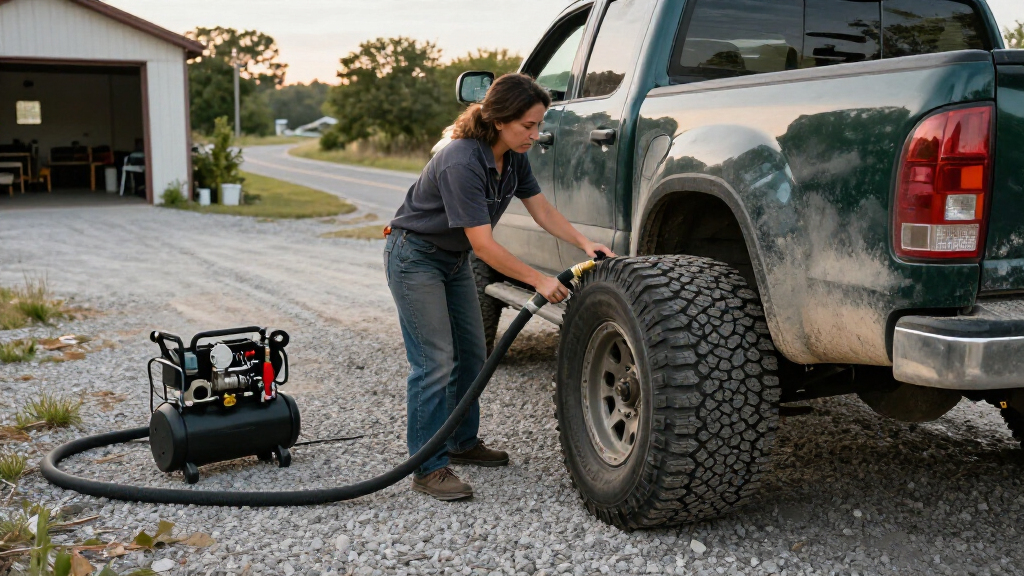
I compared these 12 options through the needs of truck-bed use: whether a unit is portable or designed for permanent installation, its stated pressure and airflow where provided, tank capacity, controls, and power source. I also considered the practical cost of ownership in the form of installation effort, space taken up in the bed or vehicle, and how much flexibility a buyer gets for use across more than one vehicle. Product details vary, so I did not treat a higher pressure figure or a larger tank as a stand-alone measure of suitability.
The ranking favors equipment with a clear truck-use role and a useful balance of access, capability, and setup demands. Onboard systems rank well when their installation or controls offer a clear daily-use advantage; portable models have a place for buyers who value flexibility. The gas-powered 30-gallon options are separated from 12V tire and onboard-air systems because they serve larger air needs and bring a substantially different footprint. Where two entries share the same listed model and specifications, I treat them as duplicates rather than implying a meaningful performance difference.
Factors to Consider When Choosing Truck Bed Air Compressors
Before choosing a compressor, decide what you need it to do and how often it will be used. A unit for occasional tire inflation has different space, power, and installation demands than a fixed system meant to provide air at the truck bed. These factors help narrow the category before you compare individual models.
Match the compressor to the job, not just the PSI
Maximum pressure alone does not tell you how quickly a compressor will handle a tire or other air task. Airflow and duty cycle affect how long the unit can run and how much work it can complete before cooling. A product listing that gives pressure but omits airflow or duty-cycle detail leaves important questions unanswered. Think through your most common job and check the compressor’s specifications against the tool or tire requirements. Avoid paying for a large headline pressure figure if the real bottleneck is airflow or run time.
Choose portable or onboard based on how you use the truck
A portable compressor makes sense if you need to move it between vehicles, store it when not in use, or avoid a permanent installation. The tradeoff is that you must bring it out, connect it, and manage its leads or hoses each time. An onboard system offers quicker access and can keep equipment ready in the truck, but it needs mounting space, wiring, and a plan for routing the air outlet. Buyers sometimes choose onboard equipment before checking where the compressor and tank will fit. Measure the intended location and account for access to controls and maintenance points before ordering.
Treat tank size as a reserve, not a performance guarantee
A tank stores compressed air for short bursts and can reduce how often the motor starts during intermittent use. It does not make a compressor produce air faster once the stored reserve is used up. A larger tank also takes space and adds weight, which can matter in a truck bed already carrying tools or cargo. For repeated use, compare tank capacity with the compressor’s output and duty-cycle information rather than judging the tank by itself. If your needs are mostly occasional tire inflation, a large tank may add bulk without a matching benefit.
Check power, wiring, and installation demands
12V systems draw power from the vehicle, so wiring size, fuse protection, connection points, and the compressor’s electrical demands all matter. Do not assume that a convenient plug or remote control removes the need to check the manufacturer’s installation requirements. Gas-powered compressors avoid relying on the truck’s electrical system but bring fuel, engine maintenance, noise, and storage considerations. A common mistake is to buy based on compressor specs and leave installation planning until the unit arrives. Confirm the power source and mounting plan fit your truck before selecting a model.
Prioritize access and controls for your typical use
Controls shape the experience as much as the compressor itself when the unit is used regularly. Remote operation can reduce trips to the equipment, while a digital inflator may make pressure checks and tire fills more direct. On a portable unit, included controls and connection hardware can save setup steps, but they still need a suitable place to live in the truck. Consider whether you will operate the compressor from the cab, at the bed, or beside the tire. Choose convenience features that solve a real routine problem rather than treating extra controls as a substitute for capacity.
Pay more for capability you will use repeatedly
A more elaborate system can be worthwhile when you need frequent access, a fixed installation, or a larger reserve for repeated tasks. For occasional emergency inflation, portability and simple storage may matter more than a permanently mounted tank or advanced controls. Bigger gas-powered equipment may fit sustained or demanding work, but it is a poor match if your only task is topping up tires. Account for installation parts, wiring, hose reach, and maintenance alongside the compressor itself. The best value comes from avoiding both underpowered gear and capacity that adds cost, weight, or complexity without serving your routine.
Frequently Asked Questions
Should I choose an onboard compressor or a portable unit for my truck bed?
Choose onboard air if you use a compressor often and want it mounted and ready to access from the truck. A portable unit is usually a better fit if you need to share equipment between vehicles or only inflate tires occasionally. Onboard systems require installation and occupy space, while portable models require setup each time. Compare the convenience of permanent access with the flexibility of storage before deciding. The right choice depends more on your routine than on which format sounds more capable.
Is a 2-gallon tank enough for truck-bed air use?
A 2-gallon tank can provide a useful reserve for short bursts, but it does not define how quickly the compressor can refill it or sustain ongoing work. Check the compressor’s airflow and duty-cycle specifications alongside the tank size. For intermittent tasks, a smaller tank may be a reasonable compromise between reserve and cargo space. Repeated or sustained use calls for a closer look at output and run-time limits. If those details are not listed, ask the manufacturer rather than assuming the tank alone indicates capacity.
Can a 12V compressor run air tools, or is it mainly for tires?
Some 12V systems may support certain air accessories, but compatibility depends on the tool’s airflow demand, the compressor’s output, and its duty cycle. Tire inflation is a different load from running a tool continuously. Check the tool’s required air delivery and compare it with published compressor specifications before buying. A tank can help with brief bursts but cannot make a low-output compressor keep up indefinitely. For frequent tool use, a larger gas-powered compressor may be a better match than a compact 12V setup.
What should I check before installing a compressor in my truck bed?
Measure the mounting area and account for cargo, weather exposure, vibration, and access to the compressor’s controls and service points. Review the required wiring, fuse protection, and power connections for a 12V model, or plan for safe fuel storage and engine access with a gas unit. Check whether the kit includes the hoses and fittings needed for the location you have chosen. Keep the air outlet reachable without blocking bed use or creating a snag point. Following the maker’s mounting and electrical instructions can prevent avoidable installation problems.
When does a gas-powered 30-gallon compressor make more sense than a 12V model?
A gas-powered 30-gallon compressor is aimed at heavier or more sustained air work than a compact 12V tire-inflation setup. It can be a better fit when your tasks demand more reserve and the truck can carry its larger, heavier equipment. The tradeoffs include fuel, engine upkeep, noise, and a much larger footprint. For occasional tire fills or a clean onboard installation, those costs may outweigh the added capacity. Match the gas model to regular work that genuinely needs that scale of equipment.
Conclusion
For most buyers seeking a ready-to-access truck setup, I recommend the maXpeedingrods Wireless Onboard Air Compressor System as the best overall choice, with its remote and app controls distinguishing it from more basic onboard options. The ALL-TOP ATACR300 is my best-value direction for buyers who want a portable dual-cylinder unit, while the VIAIR 150 PSI High-Flow Air Source Kit is the best premium-style pick for shoppers who want a tank-based onboard arrangement. Beginners who prefer a clear tire-inflation focus can start with the ALL-TOP dual-cylinder compressor with digital tire inflator. For a larger reserve, compare the VEVOR 6L and LLNSEAUTO 2.5-gallon tank systems; for more demanding gas-powered work, consider the XtremepowerUS 30-gallon options. The two XtremepowerUS entries are listed as the same model, so I would not treat them as separate recommendations without different specifications.
Halloween Picks

11.2-Foot Halloween Inflatable Pumpkin with LED Lights

10 ft Halloween Inflatable Archway with Built-in LEDs

MGparty 14.5 ft Halloween Inflatable Walk-In Pumpkin House with LED Lights
As an affiliate, we earn on qualifying purchases.