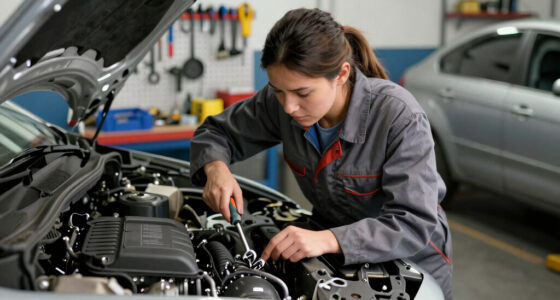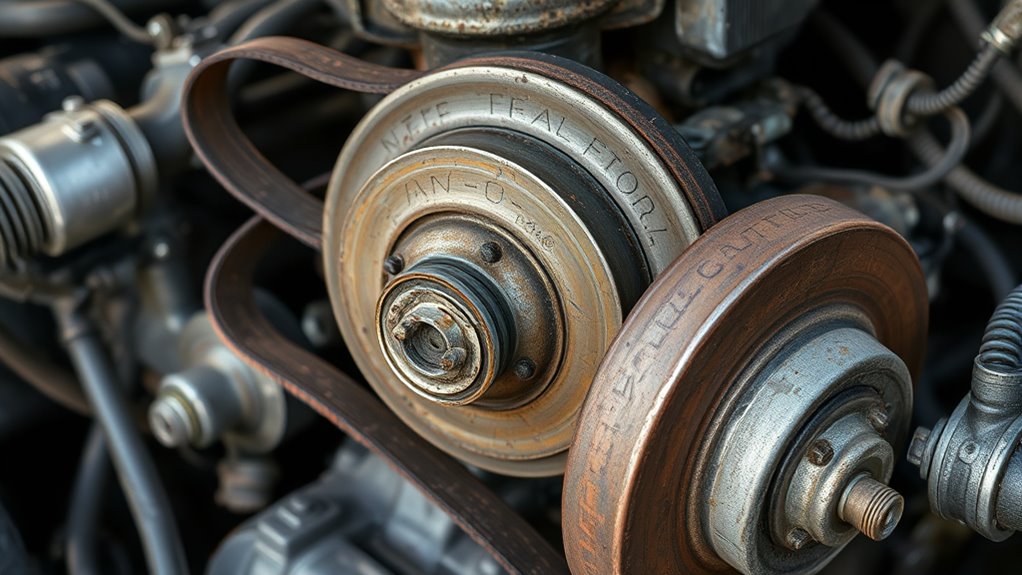

After 100,000 miles, your Ford F-150 might face engine issues like spark plug ejection, water pump failures, or excessive oil consumption, which often need costly repairs or regular maintenance to prevent. Transmission problems such as slipping gears or shifting delays can also develop, along with suspension wear and brake component deterioration. Staying proactive with inspections, fluid changes, and repairs helps keep your truck in top shape. Keep exploring for more tips on tackling these common high-mileage challenges.
Key Takeaways
- Expect spark plug ejection and cylinder head repairs in 5.4L Triton V8 models beyond 100,000 miles; regular inspections can help detect early issues.
- Watch for excessive oil consumption starting around 30,000 miles in 5.0L Coyote V8; regular oil top-offs and leaks check are essential.
- Address transmission problems like slipping or delayed shifts by timely fluid changes every 30,000–50,000 miles.
- Inspect and replace worn brake pads, rotors, and suspension components around 50,000–70,000 miles to maintain safety and ride quality.
- Regularly check electrical wiring, connectors, and modules for corrosion or damage to prevent shorts and electrical failures.

38900 Two Valve Tool Kit for Ford Triton,Spark Plug Repair Kit for Ford
38900 Two Valve Tool Kit for Ford Triton. Direct replacement for Ford 4.6L,5.4L and 6.8L two valve SOHC…
As an affiliate, we earn on qualifying purchases.
As an affiliate, we earn on qualifying purchases.
Common Engine and Cooling System Challenges Past the 100,000-Mile Mark
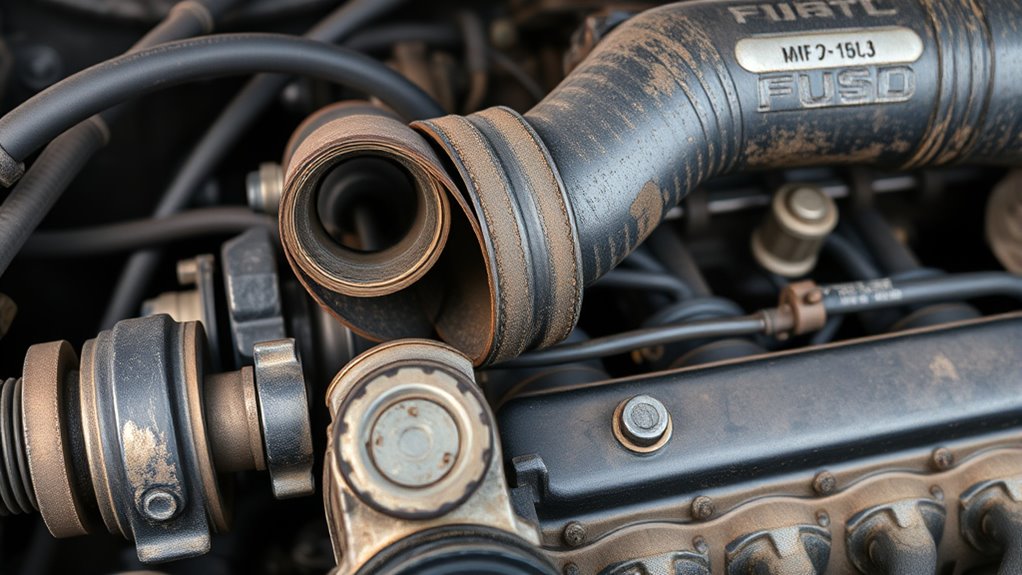
As your Ford F-150 surpasses the 100,000-mile mark, engine and cooling system issues become increasingly common. If you own earlier models with the 5.4L Triton V8, you might notice spark plug ejection, often requiring costly cylinder head repairs. For those with the 5.0L Coyote V8, excessive oil consumption can start as early as 30,000 miles, leading to frequent oil top-offs. The 3.5L EcoBoost V6 may develop a “death rattle” during cold starts, indicating timing chain tensioner problems that can cause severe engine damage if ignored. Water pumps and thermostats frequently fail in the 2015-2020 models, often resulting in overheating. Regular coolant changes every 50,000–60,000 miles help prevent corrosion, leaks, and overheating, but failure to do so can lead to costly repairs.

Automatic 6R140 Transmission Service Kit w/Filter and Gasket & Fluid Compatible with F250/F350 Super Duty Diesel/Gas Powerstroke 2011-2019
Genuine Parts Direct fit replacement 10 quarts of updated Mercon LV fluid
As an affiliate, we earn on qualifying purchases.
As an affiliate, we earn on qualifying purchases.
Transmission and Electrical System Troubleshooting After 100K Miles

After crossing the 100,000-mile mark, transmission and electrical system issues become more prevalent in your Ford F-150. You might notice slipping gears, delayed shifts, or clunking sounds, especially if you have a 6-speed or 10-speed automatic transmission. These problems often stem from lead frame issues or worn-out fluid, so regular fluid changes every 30,000–50,000 miles are essential. Electrical failures, like faulty window motors, infotainment glitches, or wiring shorts, also increase with mileage. You may experience dead batteries, flickering lights, or unresponsive switches. Water damage behind modules can cause shorts, especially in humid climates. To prevent major repairs, keep up with maintenance, address warning signs promptly, and consider professional diagnostics if electrical or transmission problems persist. Additionally, monitoring electrical system health can help detect issues early before they lead to costly repairs. Performing proper wiring inspections can help identify potential problems caused by corrosion or damage before they escalate. Regularly inspecting connectors and terminals can also prevent corrosion-related failures that may be difficult to diagnose later.

A-Premium Engine Water Pump (DOHC 8Cyl 5.0L) Compatible with Ford
[Vehicle Fitment]: Compatible with Ford F-150 2011-2023, fits for Mustang 2011-2023 V8 5.2L —Note: For 3-Bolt Pulley Flange…
As an affiliate, we earn on qualifying purchases.
As an affiliate, we earn on qualifying purchases.
Brake, Suspension, and Maintenance Tips for High-Mileage F-150s
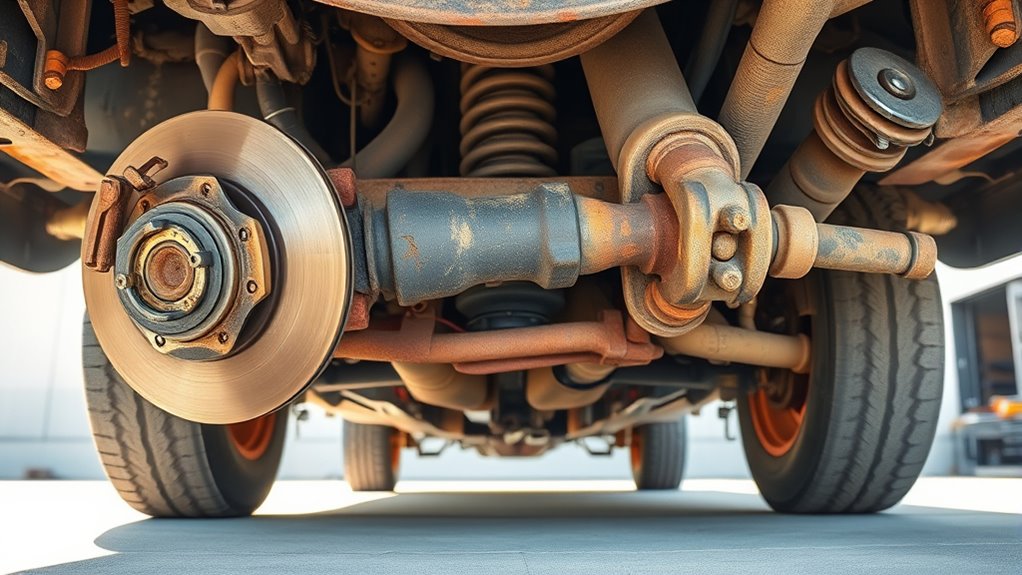
Maintaining your high-mileage Ford F-150’s brake and suspension systems is essential for safe and smooth driving. Regular inspections help catch issues early. Check brake pads and rotors every 50,000–70,000 miles, replacing them as needed. Suspension components like shocks, struts, and bushings wear out over time, affecting ride quality. Replace wheel bearings when you notice noise or vibration, especially after 100,000 miles. Keep an eye on brake booster and master cylinder performance to prevent braking failures. To stay ahead of problems, follow this maintenance schedule:
| Service Item | Recommended Mileage | Signs You Need Service |
|---|---|---|
| Brake pad and rotor | 50,000–70,000 miles | Squealing or soft pedal |
| Wheel bearings | 100,000+ miles | Vibration or noise |
| Suspension bushings | 60,000–100,000 miles | Rough ride or handling issues |
| Brake fluid change | 30,000–50,000 miles | Reduced braking performance |
| Shock absorbers | 50,000–70,000 miles | Excessive body roll |
Regularly reviewing vehicle maintenance and staying proactive can help extend your truck’s lifespan and ensure safe operation. Additionally, understanding the importance of preventive maintenance can help you avoid costly repairs down the line. Paying attention to high-mileage vehicle care can also help identify potential problems early and keep your truck running smoothly.
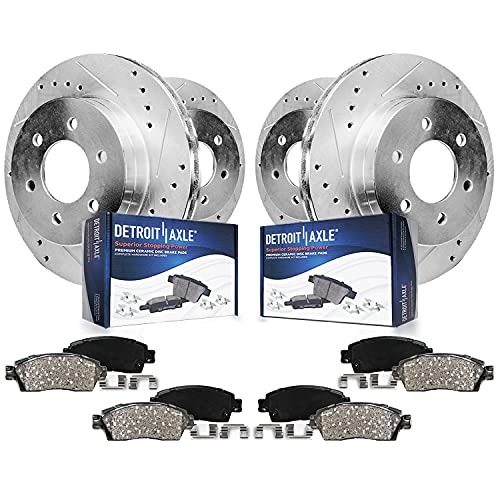
Detroit Axle – Brake Kit for 2012-2020 Ford F-150 Drilled & Slotted Brake
Measurement: Front Rotor Outside Diameter Size: 13.78" inch (350mm); Rear Rotor Outside Diameter Size: 13.70" inch (348mm) -…
As an affiliate, we earn on qualifying purchases.
As an affiliate, we earn on qualifying purchases.
Frequently Asked Questions
How Can I Prevent Water Pump Failures in High-Mileage F-150s?
To prevent water pump failures in high-mileage F-150s, you should regularly inspect and replace the coolant before it becomes dirty or degraded, ideally every 50,000 to 60,000 miles. Keep an eye out for coolant leaks, overheating signs, or unusual noises. Use quality coolant and ensure the cooling system is flushed periodically. Proper maintenance helps extend the water pump’s lifespan and avoids costly breakdowns.
What Are Signs of Transmission Lead Frame Problems Before Failure?
Think of your transmission’s lead frame as its heartbeat—when it shows signs of trouble, your truck warns you. You might notice erratic shifting, hesitation, or a rough ride, like the engine struggling to find its rhythm. Clunking noises during gear changes or warning lights flashing are signals your transmission is under stress. Catch these early, and you can prevent a complete breakdown, keeping your truck running smoothly mile after mile.
How Often Should I Replace Spark Plugs After 100,000 Miles?
You should replace your spark plugs before hitting 100,000 miles to keep your engine running smoothly. It’s recommended to change them every 30,000 to 60,000 miles, depending on your driving conditions and the type of plugs you use. Regular replacement prevents misfires, poor fuel economy, and engine damage. If you notice rough idling, hesitation, or decreased performance, consider inspecting and replacing your spark plugs sooner.
What’s the Best Way to Address Coolant Leaks in Older Models?
To address coolant leaks in older models, start by inspecting hoses, radiator, water pump, and thermostat housing for cracks or corrosion. Replace any damaged or worn parts promptly. Use a coolant dye to locate hidden leaks if visible signs aren’t clear. Keep up with regular coolant flushes every 50,000-60,000 miles to prevent leaks and overheating. If you notice persistent leaks, consult a mechanic for proper diagnosis and repair.
Are There Aftermarket Options to Improve Electrical System Reliability?
You can definitely boost your electrical system reliability with aftermarket options. Upgrading to high-quality wiring harnesses, relays, and fuse boxes helps prevent shorts and corrosion. Installing heavy-duty batteries or auxiliary power systems can also give you peace of mind. Don’t forget to add corrosion-resistant terminals and protective covers. These upgrades can turn lemons into lemonade, making sure your truck stays dependable mile after mile.
Conclusion
As you reach and surpass 100,000 miles, stay vigilant, stay proactive, and stay informed. Keep an eye on your engine, address cooling issues promptly, and don’t ignore transmission or electrical glitches. Regular maintenance, timely repairs, and attentive care will keep your Ford F-150 running smoothly, reliably, and safely. With the right approach, you can enjoy many more miles of dependable performance—because proper care is the key to longevity, durability, and peace of mind.