
TL;DR
A Tesla Model Y, aged three years, has reached 100,000 miles with minimal fast-charging. This suggests strong battery longevity and efficiency, though full details are still emerging.
A three-year-old Tesla Model Y has surpassed 100,000 miles on its odometer with minimal reliance on fast-charging, according to early reports. This case highlights the potential longevity and durability of Tesla’s battery technology, which is a key concern for EV owners and industry analysts alike. The owner, whose identity has not been disclosed, reportedly experienced only limited fast-charging needs over this extensive mileage, raising questions about the battery’s long-term performance and degradation.
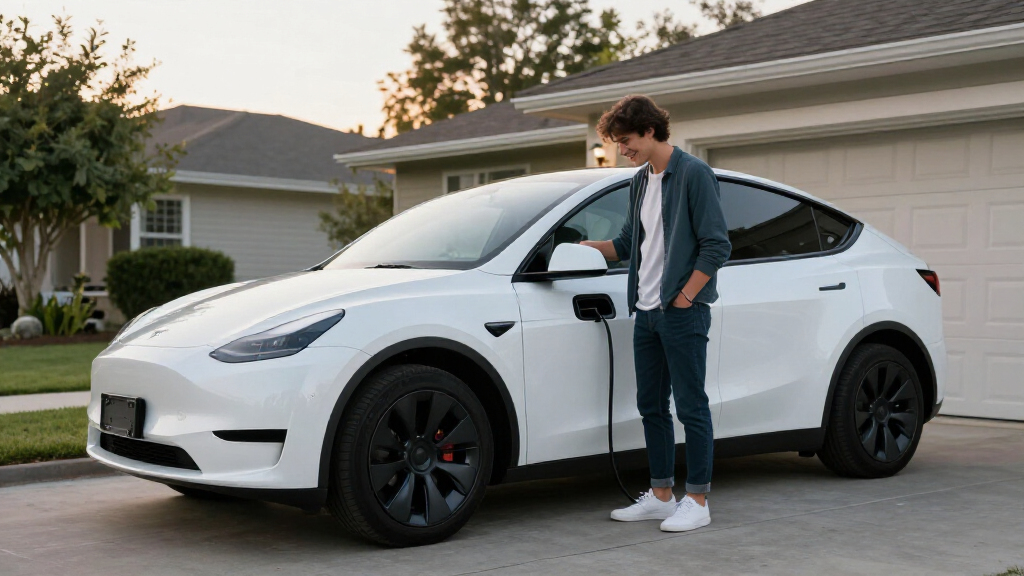
The vehicle in question is a Tesla Model Y that was purchased approximately three years ago. According to sources familiar with the case, the owner has driven over 100,000 miles, primarily using standard charging methods rather than frequent fast-charging. Tesla’s battery packs are known for their longevity, but real-world data on battery degradation over several years remains limited. This case provides a rare, close-up example of how a Tesla battery holds up over time, especially with minimal fast-charging, which is typically more stressful for batteries.
Early assessments suggest that the battery’s capacity has remained relatively high, with only minor degradation reported. The owner indicated that they have not experienced significant range loss, and the vehicle still performs well in daily use. Tesla’s battery management system is designed to optimize longevity, and this case appears to support claims that Tesla batteries can sustain high mileage with limited performance decline. However, detailed technical data and independent testing are not yet available, and Tesla has not officially commented on this specific vehicle.
Implications for EV Battery Longevity and Owner Confidence
This case underscores the potential for Tesla batteries to maintain their performance over extended periods and high mileage, which is a critical factor for consumer confidence and the broader adoption of electric vehicles. If Tesla’s battery technology can reliably deliver over 100,000 miles with minimal degradation and limited fast-charging, it could reduce concerns about battery lifespan and replacement costs. Such durability may influence future vehicle purchasing decisions and impact industry standards for EV battery warranties.
Furthermore, this example may encourage other EV owners to adopt similar charging habits, emphasizing the benefits of slower, regular charging over frequent fast-charging sessions that can accelerate battery wear. Automakers and industry analysts are watching these real-world cases closely to better understand long-term battery performance and to refine battery management strategies.
As an affiliate, we earn on qualifying purchases.
Tesla’s Battery Durability: Industry Expectations and Past Data
Tesla has long claimed that its batteries are designed for long-term durability, with warranties typically covering 8 years or up to 150,000 miles. Previous studies and owner reports have shown varying degrees of battery degradation, often influenced by charging habits, climate, and driving patterns. While laboratory tests suggest Tesla batteries can last well beyond 150,000 miles, real-world data over multiple years remains limited.
Interest in battery longevity has surged amid rising EV adoption, with consumers seeking assurance that their vehicles will remain reliable over time. The recent spike in coverage and search interest appears driven by anecdotal reports like this one, though official data or comprehensive studies are still pending. Industry experts note that fast-charging, especially frequent use, can accelerate battery wear, making this case of limited fast-charging over 100,000 miles particularly noteworthy.
As an affiliate, we earn on qualifying purchases.
Unconfirmed Details and Data Gaps in Battery Performance
While initial reports are promising, detailed technical data on the battery’s capacity retention, degradation rate, and overall health are not yet publicly available. It is unclear how representative this case is of the broader Tesla fleet, and whether similar results can be expected across different driving conditions and climates. Tesla has not issued an official statement or provided data for independent verification, and the long-term outlook beyond three years remains uncertain.
As an affiliate, we earn on qualifying purchases.
Monitoring Long-Term Battery Performance and Industry Response
Further data collection and analysis are expected as more owners report their experiences. Tesla may release additional insights or data in upcoming quarterly reports or through independent research. Industry experts will continue to track such cases to assess whether this example reflects a broader trend. Meanwhile, consumers and industry stakeholders will likely scrutinize the longevity of Tesla batteries as the company’s vehicles age.
As an affiliate, we earn on qualifying purchases.
Key Questions
How typical is this battery performance for Tesla vehicles?
While Tesla batteries are generally regarded as durable, specific long-term performance varies based on factors like charging habits, climate, and driving patterns. This case is promising but not necessarily representative of all Tesla vehicles.
Does limited fast-charging significantly extend battery life?
Many industry experts believe that limiting fast-charging can reduce battery wear, as fast-charging induces more thermal stress. However, individual results depend on various conditions, and more data is needed to confirm this effect broadly.
Will Tesla’s warranty cover battery replacement if degradation occurs?
Tesla’s warranties typically cover battery capacity loss below a certain threshold within 8 years or 150,000 miles. If significant degradation occurs within that period, Tesla would generally replace or repair the battery under warranty.
Are other EV brands experiencing similar battery longevity?
Some EV manufacturers report comparable longevity, but Tesla’s extensive real-world data and longer track record make its batteries a benchmark. Comparative long-term data across brands is still emerging.
What should owners do to maximize their battery lifespan?
Experts recommend avoiding frequent fast-charging, keeping the battery charge level between 20% and 80%, and avoiding extreme temperatures. Regular, moderate charging is generally better for long-term battery health.
Source: rss