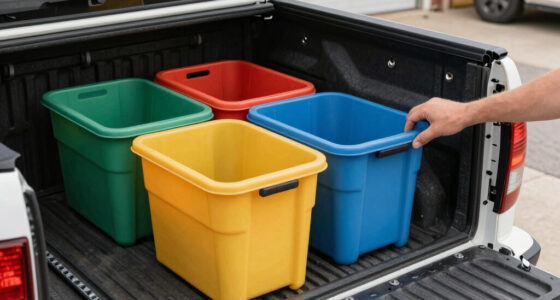

To load like a professional driver, start with a thorough vehicle inspection, ensuring everything is in top shape. Place heavy items on the trailer’s floor near the center, and lighter ones on top, securing everything tightly with quality straps. Distribute weight evenly side to side and front to back to keep the vehicle balanced and stable. Perform final checks and tighten fastenings before departure. If you want to master proper loading techniques, keep exploring for more expert tips.

Get business pricing on garage and car supplies
- Business-only prices and quantity discounts
- Tax-exempt purchasing
- Multiple users, one account, clear invoices
Key Takeaways
- Conduct a thorough vehicle inspection and ensure all systems are functioning properly before loading.
- Organize cargo by placing heavier items on the bottom and lighter items on top, securing all tightly.
- Distribute weight evenly side to side and front to back to maintain vehicle stability.
- Use quality straps, tie-downs, and load bars, and double-check fastenings before departure.
- Perform final walk-around, tighten straps as needed, and drive slowly to assess load security.

Loading a trailer like a professional driver requires more than just tossing items in and hitting the road. You need to think strategically about cargo safety and guarantee your vehicle is ready for the journey. The way you load impacts not only the safety of your cargo but also your driving experience and compliance with regulations. Before you start loading, conduct a thorough vehicle inspection. Check your tires for proper inflation, inspect the brakes, lights, and hitch to make sure everything functions correctly. A well-maintained vehicle reduces the risk of breakdowns or accidents, especially if you’re hauling heavy or delicate goods. Once your vehicle passes inspection, focus on loading with purpose.
Begin by organizing your cargo. Place heavier items on the bottom, close to the trailer’s floor, to lower the center of gravity. This prevents shifting during transit and improves vehicle stability. Lighter items should go on top, but always secure them tightly to prevent movement. Remember, cargo safety isn’t just about avoiding damage—it’s about preventing accidents caused by shifting loads. Use quality straps, tie-downs, and load bars to secure everything firmly in place. Double-check that each piece is fastened securely before hitting the road, and make sure there are no loose items that could become projectiles during sudden stops or turns.
Balance your load from side to side and front to back. An uneven distribution can cause your trailer to sway or become difficult to steer, especially at higher speeds. Take the time to evenly distribute weight to maintain control and avoid unnecessary wear on your vehicle. Properly stacking and securing such items is vital for safety and compliance. Additionally, consider the impact of weight distribution on your vehicle’s handling and safety during transit. Ensuring proper load placement also aligns with best practices for vehicle stability, which is essential for safe transportation. Also, understanding the different types of electric bike conversion kits can help you choose the most suitable setup for your needs, ensuring your load is balanced and secure when using such equipment. Proper load placement not only enhances safety but can also optimize fuel efficiency during your trip. Be mindful that cargo security is an ongoing process, requiring diligent checks throughout your trip.
Throughout the process, keep in mind that cargo safety and vehicle inspection are ongoing priorities. After loading, do a final walk-around to verify all straps are tight, doors are latched, and no tools or loose objects remain. Drive slowly at first to feel how the load responds and make any necessary adjustments. Regularly check your mirrors and be prepared to stop and re-tighten straps if needed during your trip. Loading like a professional isn’t a one-time effort; it’s an ongoing commitment to safety and proper vehicle care. Taking these steps ensures your cargo arrives safely while keeping you and others on the road secure.
As an affiliate, we earn on qualifying purchases.
Frequently Asked Questions
What Tools Do Professional Drivers Use for Loading?
You’ll use essential loading equipment like straps, pallets, and dollies to secure and move cargo efficiently. Safety gear such as gloves, helmets, and reflective vests helps protect you during loading. Professional drivers also rely on load bars and tarps for stability and coverage. These tools guarantee a safe, quick, and organized load, minimizing damage and maximizing safety during the process.
How Do I Secure Unusual or Fragile Cargo?
Think of your cargo as a delicate sculpture, needing gentle yet firm hands. To secure unusual or fragile items, you’ll rely on specialized cargo restraints—straps, padding, and bracing—that act as a safety net. Always check paperwork requirements for fragile cargo, ensuring proper documentation accompanies your load. Tighten restraints carefully, balancing security with care, so your cargo stays safe during the journey, riding the waves of the road like a seasoned pro.
What’s the Best Way to Balance Load Weight?
To balance load weight effectively, focus on proper load distribution and weight distribution across your vehicle. Place heavier items on the bottom and center of the trailer, ensuring they’re evenly spread side to side. Keep the load balanced front to back to prevent swaying or handling issues. Use straps or tie-downs to secure the cargo tightly, maintaining the desired weight distribution throughout your trip for safe, smooth driving.
How Often Should I Check Load Security During Transit?
You should check load security regularly during transit, ideally every 150 miles or every 2 hours, whichever comes first. Conduct cargo inspections to guarantee straps, binders, and other securing devices haven’t loosened. Follow safety protocols diligently, stopping at designated areas if needed. Staying vigilant helps prevent accidents, keeps your cargo secure, and ensures compliance with regulations. Consistent checks are key to a safe, smooth journey.
Are There Legal Limits for Load Height and Width?
Yes, there are legal limits for load height and width. Load height regulations typically restrict how tall your load can be, often around 13.5 to 14 feet, depending on your jurisdiction. Load width restrictions usually cap the width at 8.5 feet on most highways. Always check local, state, or federal regulations before loading to guarantee you stay within legal limits, preventing fines or safety hazards.
As an affiliate, we earn on qualifying purchases.
Conclusion
Loading your vehicle like a pro isn’t just about speed; it’s about precision and care. Think of it like a jigsaw puzzle—each piece, or item, must fit perfectly to create a stable, efficient load. When I first started, I overloaded my truck and learned the hard way that proper loading saves time, money, and stress. Remember, a well-loaded truck isn’t just safer; it’s a reflection of your professionalism. Load smart, and drive with confidence.
As an affiliate, we earn on qualifying purchases.
As an affiliate, we earn on qualifying purchases.
Halloween Picks
halloween
As an affiliate, we earn on qualifying purchases.