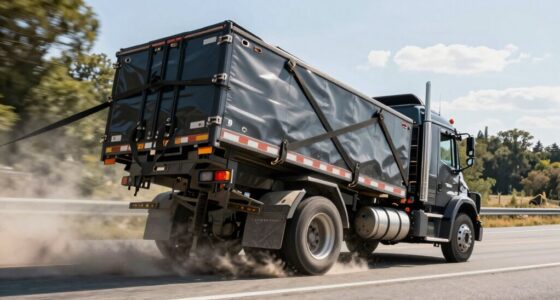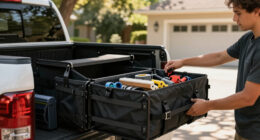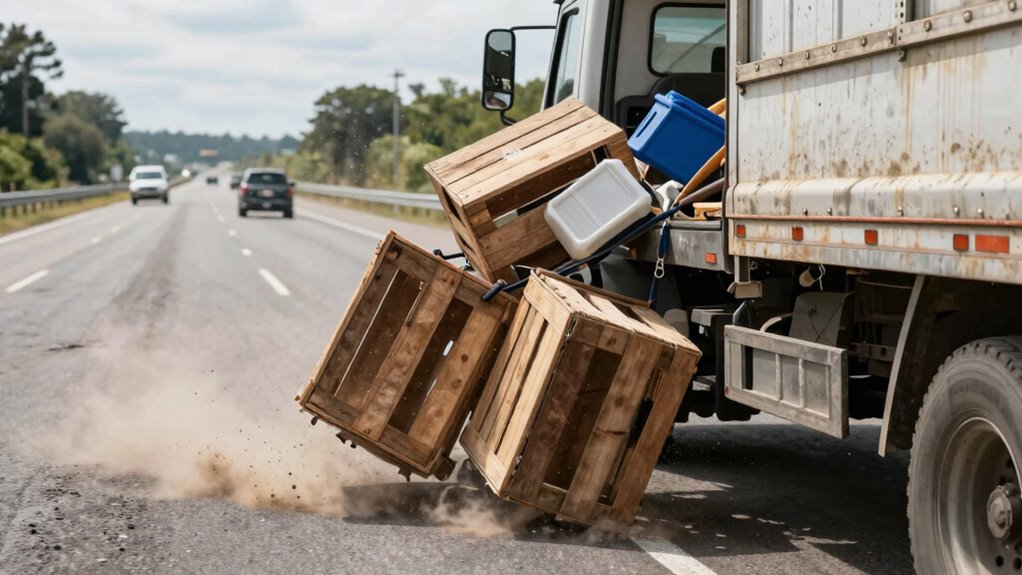
Cargo falls off trucks mainly because it isn’t secured properly, loaded unevenly, or not inspected regularly. Poorly managed securing equipment or vehicle malfunctions can also cause problems. To prevent this, make certain loads are balanced, use effective tie-downs, and check everything before and during transit. Regular vehicle maintenance and driver training are essential, too. Keep these tips in mind, and you’ll better understand how to keep cargo safely in place throughout the journey.
Key Takeaways
- Improper securing of cargo and inadequate tie-downs increase the risk of falling off trucks.
- Regular vehicle maintenance and inspection prevent equipment failures that compromise cargo safety.
- Proper load distribution and use of securing tools like load bars reduce shifting during transit.
- Maintaining chain of custody ensures cargo is properly inspected and documented at each transfer point.
- Well-trained drivers following safety protocols perform routine checks to keep cargo secure throughout transit.
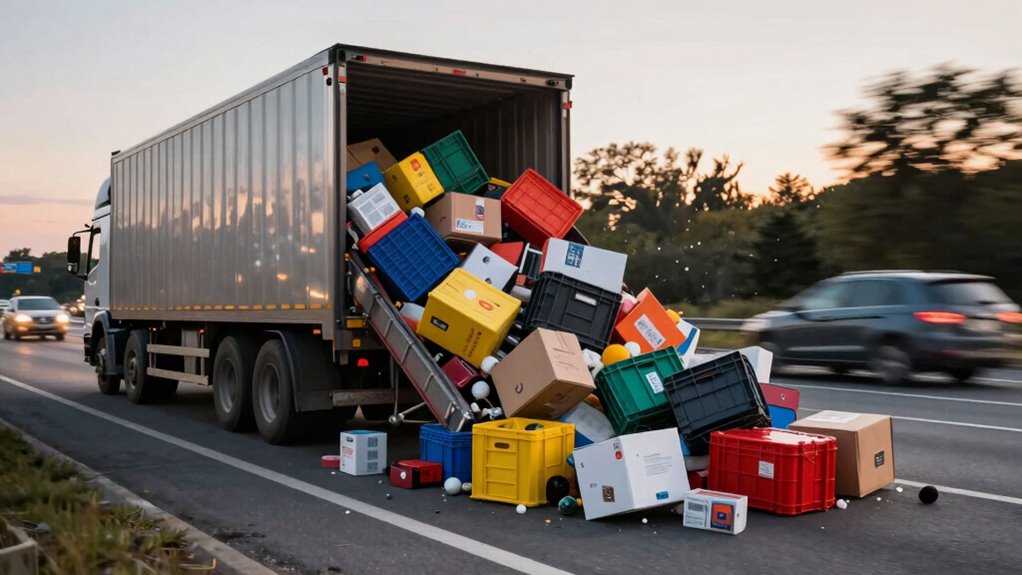
Have you ever wondered what happens when cargo slips off a truck on the highway? It’s a serious issue that can cause accidents, road closures, and injuries. Often, the root of the problem lies in how well the cargo was secured and whether proper procedures were followed. A key factor in preventing cargo loss is maintaining a solid chain of custody. This means tracking the cargo from the moment it leaves the warehouse to the point it’s delivered. When the chain of custody is broken or poorly managed, the chances of improper loading or unsecured goods increase. If cargo isn’t properly documented or inspected at each transfer point, you might unknowingly carry a load that’s not secured correctly, raising the risk of it falling off during transit. Additionally, ensuring that the wiring and electrical systems in the truck are in good condition can prevent malfunctions that might compromise cargo security or vehicle control. Regular vehicle inspections are essential to identify potential issues before they lead to cargo loss. Proper vehicle maintenance not only helps avoid breakdowns but also ensures that all equipment used to secure cargo functions correctly. For example, if your straps, tie-downs, or load bars are worn or damaged, they won’t hold cargo securely, especially during sudden stops or sharp turns. Regular maintenance checks help catch these issues early, so you can replace or repair faulty equipment before it causes problems on the road. Tire condition, brake performance, and suspension systems also play roles in how safely a load is transported. If any part of the vehicle isn’t in peak condition, it can lead to instability, increasing the likelihood of cargo shifting or falling. A comprehensive safety protocol that includes routine checks and adherence to loading standards can significantly reduce these risks. Proper driver training is equally important. Knowledgeable drivers understand how to distribute weight evenly and secure loads properly. They also recognize the importance of inspecting cargo before departure and periodically during transit. This is where a rigorous chain of custody ties into vehicle maintenance; an integrated approach ensures that both cargo security and truck condition are monitored continuously. When drivers follow best practices and adhere to maintenance schedules, you markedly reduce the chance of cargo falling off. Ultimately, preventing cargo loss involves a combination of meticulous planning, consistent truck maintenance, and strict adherence to secure loading procedures. By paying close attention to the entire process—from proper cargo handling to vehicle upkeep—you protect everyone on the road. It’s about taking responsibility from start to finish, ensuring that cargo stays in place, and that your journey ends safely. Proper load distribution and securing techniques are also essential components in this process. When you prioritize these factors, you diminish risks and keep highways safer for everyone.
As an affiliate, we earn on qualifying purchases.
Frequently Asked Questions
How Do Weather Conditions Affect Cargo Stability During Transport?
Weather conditions can markedly impact cargo stability during transport. Weather hazards like rain, snow, and ice make roads slippery, increasing the risk of cargo shifting or falling off. You need to watch the road surface carefully because wet or icy conditions reduce traction, making it harder to keep cargo secure. Always check weather forecasts and adjust your driving or cargo securing methods accordingly to prevent accidents caused by weather-related instability.
What Are the Most Common Types of Cargo That Fall off Trucks?
You’ll often see lightweight items, such as boxes or bags, and loose cargo like gravel or sand fall off trucks. Proper loading techniques are essential — secure heavy items tightly and evenly distribute weight. Cargo insurance can protect you financially if accidents happen. Always check that your cargo is properly secured before transit, and avoid overloading, which increases the risk of items shifting or falling during transport.
How Can Drivers Identify Insecure Cargo Before Hitting the Road?
You can identify insecure cargo before hitting the road by inspecting for signs of load shifting or uneven weight distribution. Check that items are tightly secured, with no loose or shifting materials. Confirm the load is balanced to prevent tipping or sliding during transit. Also, look for any damaged or missing restraints. By doing this, you reduce the risk of cargo falling off and maintain safer driving conditions.
Are There Specific Regulations for Securing Different Cargo Types?
Yes, there are specific regulations for securing different cargo types. You must follow securement guidelines tailored to each cargo, like using appropriate tie-downs, blocks, or bracing. Proper cargo labeling is essential for safety and compliance, ensuring handlers understand the load’s nature. Always review federal and state regulations to meet legal requirements, and consult industry best practices to prevent shifting or falling cargo during transit.
What Innovations Are Improving Cargo Securement Technology?
Did you know that innovative cargo securement tech reduces accidents by up to 30%? You can benefit from automated tie downs, which automatically adjust tension for ideal safety, and smart sensors that monitor cargo stability in real-time. These advancements give you greater control, minimize manual effort, and enhance safety. Embracing these innovations helps you prevent cargo shifts, improve efficiency, and keep everyone safe on the road.

VEVOR Cargo Bar, Cargo Bar Adjustable from 89" to 104", Heavy-Duty Steel Cargo Stabilizer Bar with 309 lbs Capacity, Truck Bed Load Bar for Truck Bed, Trailer, Semi Trailer (4 pcs)
- Wide Adjustable Range: Our ratchet cargo bar provides…
- Quick Ratchet Adjustment: Adjusting the length of the…
- Strong Non-skid Design: Equipped with 4×2.4-inch rubber pads…
As an affiliate, we earn on qualifying purchases.
As an affiliate, we earn on qualifying purchases.
Conclusion
So, next time you see a truck on the road, remember that a simple tie-down or proper weight distribution could be the difference between a smooth journey and chaos. It’s funny how a small oversight can turn a routine trip into a headline. Prevention isn’t just about safety; it’s about avoiding those unexpected moments when cargo unexpectedly falls, reminding us that even in the busiest days, a little extra care can keep everything on track—just like it always should be.
As an affiliate, we earn on qualifying purchases.
As an affiliate, we earn on qualifying purchases.